Why Kichijoji Keeps Winning the Best Tokyo Neighborhood Poll
Kichijoji is the Tokyo neighborhood locals vote for year after year. Inokashira Park, the Ghibli Museum, and a perfect afternoon stroll explain why.
Why Kichijoji Keeps Winning the Best Tokyo Neighbourhood Poll
The common assumption is that tourists pick Kichijoji. They do not. Tokyo residents pick Kichijoji. In annual surveys run by the city's housing and lifestyle magazines, Kichijoji consistently ranks as the neighbourhood Tokyoites would most like to live in. That fact should change how you plan your day here. This is not a sightseeing loop. It is a place people choose for the long term, and the day you build should reflect that pace: a morning by the water, a museum that limits entry to 2,000 people per day, and an afternoon spent in alleys that feel fifty years and fifteen minutes from Shinjuku.
Morning on the Pond: the Way Inokashira Park Actually Works
Beat the Queue at the Boat Rental
Start at Inokashira Park before 09:00. The park opens daily and there is no gate; walk in from the Kichijoji Station side at any hour. The boat rental opens at 10:00, and by 09:30 on a weekend in cherry blossom season (late March to early April) the queue for the rental booth already stretches past the Benzaiten shrine. Arrive at 09:15 and you rent a rowboat or pedal boat for ¥700 per half hour with no wait. Arrive at 10:15 and you wait 60 to 90 minutes, longer during the two-week peak when roughly 500 cherry trees bloom around the pond.
Rent a rowboat, not a swan boat. The pedal boats are identical in shape and price (¥700 per half hour for both), but the swan boats carry a local superstition: couples who ride them together break up, attributed to the jealous goddess Benzaiten whose shrine sits on the island in the pond. Whether you believe it or not, the rowboat gives you a better view of the cherry blossoms overhanging the water. The last rental goes out at 17:00, and winter hours may shorten, so check the city's park board website for the month you visit.
The Walking Loop and What to Skip
If you skip the boat entirely, walk the 1.5-kilometre path around the pond instead. A full loop takes 25 minutes at a normal pace. The shrine on the island is small and requires no entry pass. The park also contains a small zoo and an aquarium. Neither justifies time over what comes next.

The Ghibli Museum: Booking is the Only Hard Part
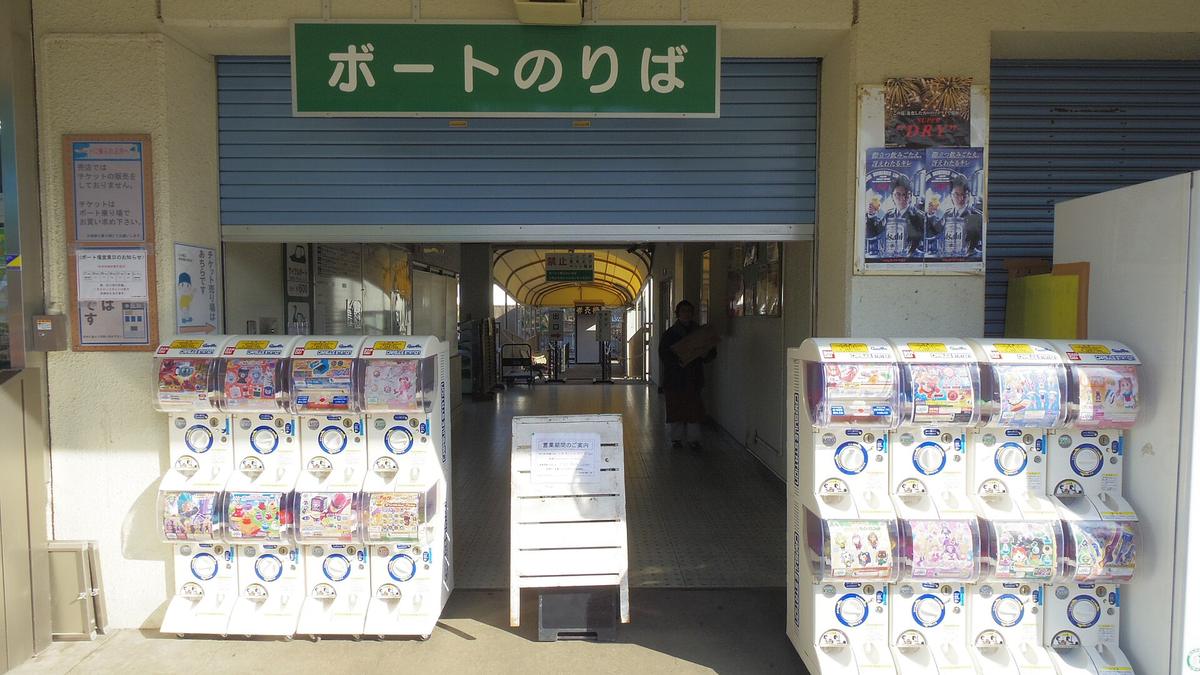
The Ghibli Museum sits on the west side of the park, a 20 to 25-minute walk from Kichijoji Station through the park. From Mitaka Station, the walk is 15 minutes from the south exit, or you can take the Mitaka City Bus for ¥210 one-way. The museum opens at 10:00 and closes at 18:00, but the last entry is 16:00. You cannot arrive late. Your pass names a specific entry time: 10:00, 12:00, 14:00, or 16:00. If you miss your slot, you do not enter.
How to Buy Domestic Passes
Domestic passes go on sale on the 10th of each month at 10:00 JST for the following month. So passes for all of September go on sale August 10 at 10:00 JST. You buy them through Lawson Ticket, either online or at the Loppi machines in any Lawson convenience store. Adult passes cost ¥1,000, student passes (age 13 to 18) cost ¥700, child passes (age 7 to 12) cost ¥400, infant passes (age 4 to 6) cost ¥100, and children age 3 and under enter free. The allocation sells out within hours for weekends and within a day or two for weekdays. Set an alarm. If you live in Japan, the Loppi machine is faster than the website.
How to Buy Overseas Passes
Overseas visitors use the dedicated portal at ghibli-museum.jp/en/tickets. The same release schedule applies: the 10th of each month at 10:00 JST for the following month. The overseas allocation is smaller and sells out faster. Do not buy marked-up passes from third-party resellers; they are often invalid and the museum checks ID against the name on the booking. If you miss the on-sale date, the museum has periodic maintenance closures scattered through the year and closes every Tuesday (or Wednesday if Tuesday is a national holiday), plus December 28 to January 2. The maintenance closure schedule is published annually on the museum's official site.
Inside the museum, photography is banned in the exhibition halls. It is allowed in the outdoor areas and the cafe. The short film shown in the Saturn Theatre changes every few months. The gift shop on the ground floor sells items not available outside the museum. Budget 2.5 hours minimum. Most visitors spend three.
Afternoon in the Back Lanes: Harmonica Yokocho, Sunroad and the Streets That Feel Like a Separate City
The Arcades at the North Exit
By early afternoon, walk back toward Kichijoji Station. The north exit deposits you into a knot of covered shopping arcades that serve as the neighbourhood's living room. Three run parallel: Sunroad (a 200-metre covered arcade running north from the station), Daiya-gai (one block east, parallel to Sunroad), and Nakamichi-dori (the pedestrian street between them). Shop hours run roughly 10:00 to 20:00, though many close earlier on Sundays.
Navigating Harmonica Yokocho
Harmonica Yokocho is the reason most people come here. It is a tangle of roughly 100 tiny shops and stalls spilling out of the space directly outside the north exit. The name means harmonica alley, and the original post-war market buildings were arranged like the holes of a harmonica. Most of the stalls are izakaya that open at 17:00 and run late, though a handful of daytime eateries open from 11:00. Many shops close on Sunday or Monday, so if you arrive on a Sunday afternoon, half the alley will be shuttered. Plan for a Monday or Tuesday evening instead if you want the full scene. There is no single entrance; just pick a gap between two grills and walk in.
Where to Eat When the Alleys Are Packed
The food here is not about famous restaurants. It is about counter seating for eight people, grilled skewers, and beer in small bottles. The failure case: if every stall in Harmonica Yokocho has a queue (Saturday evening, 19:00 to 21:00), walk two blocks north to the parallel streets where second-floor izakaya and curry shops have no wait and lower prices. Sunroad has a food basement in the Atre department store that stays open until 21:00 and requires no reservation.

Who Should Skip Kichijoji and Who Should Commit the Full Day
This is a full-day neighbourhood for travellers who want to see how Tokyo actually lives. It suits the visitor who has already done Shibuya and Asakusa and wants something slower. It does not suit the traveller on a one-day Tokyo layover who needs to check off ten sights, because the Ghibli Museum requires booking a month ahead and the shopping arcades do not open until late morning. The most common failure: arriving at the Ghibli Museum without a pass. Book it the day passes go on sale or do not plan the day around it.
Common Questions
How do I get to Kichijoji from central Tokyo?
The JR Chuo Line Rapid takes 15 minutes from Shinjuku and 30 minutes from Tokyo Station. The Keio Inokashira Line Express takes 16 minutes from Shibuya.
Can I buy Ghibli Museum tickets at the door?
No. Every pass is date and time specific. You must buy online or at a Lawson Loppi machine before your visit. There is no same-day ticket counter.
What happens if I miss my Ghibli Museum entry time?
You cannot enter. The museum admits visitors only at the time printed on the pass: 10:00, 12:00, 14:00, or 16:00. Arrive 10 minutes early.
Is the swan boat superstition real?
It is a widely repeated local belief, not a rule. The Benzaiten shrine on the pond island is associated with jealousy in folklore. Most Tokyoites mention it as a joke, though some couples avoid the swan boats entirely.
What time should I arrive for cherry blossoms in the park?
Arrive by 09:00 if you want to rent a boat without waiting. By 10:00 during the late March to early April peak, the rental queue can reach 1 to 2 hours.
Are the shopping arcades open on Sundays?
Sunroad and Daiya-gai are open 10:00 to 20:00 on Sundays, though individual shops may close earlier. Many stalls in Harmonica Yokocho close on Sunday or Monday, so plan accordingly.
How much time do I need for a full day in Kichijoji?
Budget 7 to 8 hours: 90 minutes for the park and boat, 2.5 to 3 hours for the Ghibli Museum, and 2 to 3 hours for the arcades and evening food. Add 1 hour for walking between locations.
Read next
-
 Eating in Kichijoji Harmonica Yokocho and the Yakitori Queue Worth Joining
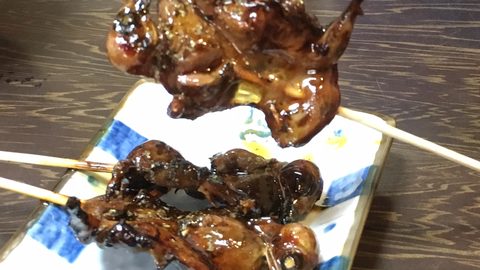
Kichijoji's Harmonica Yokocho is a dense grid of tiny postwar eateries, and one yakitori shop draws a line down the street every night. Here is how to eat well here.
Eating in Kichijoji Harmonica Yokocho and the Yakitori Queue Worth Joining
Kichijoji's Harmonica Yokocho is a dense grid of tiny postwar eateries, and one yakitori shop draws a line down the street every night. Here is how to eat well here.
-
 Japan Travel Guide for First-Timers Who Like Order but Not Crowds
Japan delivers deep tradition and futuristic efficiency, but the language barrier and density of rules can exhaust first-timers. Here is what to actually expect.
Japan Travel Guide for First-Timers Who Like Order but Not Crowds
Japan delivers deep tradition and futuristic efficiency, but the language barrier and density of rules can exhaust first-timers. Here is what to actually expect.
-
 Japan eSIM vs Pocket WiFi vs Physical SIM for Staying Connected
Free public WiFi across Japan is unreliable and slow. Compare eSIM plans from Ubigi and Airalo against renting a pocket WiFi device at Narita or Haneda.
Japan eSIM vs Pocket WiFi vs Physical SIM for Staying Connected
Free public WiFi across Japan is unreliable and slow. Compare eSIM plans from Ubigi and Airalo against renting a pocket WiFi device at Narita or Haneda.
-
 Japan Visa-Free Entry and the Visit Japan Web Digital Form
Visa-free entry covers many nationalities, but the Visit Japan Web digital form and QR codes determine how quickly you clear immigration at Narita or Haneda.
Japan Visa-Free Entry and the Visit Japan Web Digital Form
Visa-free entry covers many nationalities, but the Visit Japan Web digital form and QR codes determine how quickly you clear immigration at Narita or Haneda.
-
 Cash and IC Cards Are the Real Payment System in Japan
Japan projects a high-tech image but many small restaurants, temples, and rural buses demand cash. IC cards like Suica and Icoca bridge the gap for daily spending.
Cash and IC Cards Are the Real Payment System in Japan
Japan projects a high-tech image but many small restaurants, temples, and rural buses demand cash. IC cards like Suica and Icoca bridge the gap for daily spending.
-
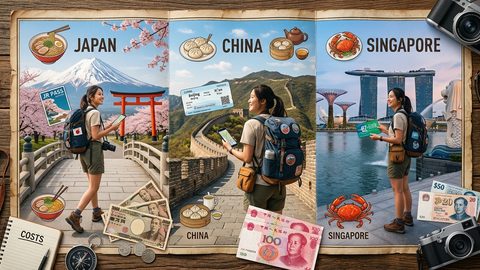 What Japan, China, and Singapore Actually Cost Independent Travelers
Real per-day costs for Japan, China, and Singapore broken down by accommodation tier, food strategy, transit, and connectivity for independent travelers.
What Japan, China, and Singapore Actually Cost Independent Travelers
Real per-day costs for Japan, China, and Singapore broken down by accommodation tier, food strategy, transit, and connectivity for independent travelers.
-
 What Most Travelers Get Wrong When Booking Flights to East Asia
Most travelers book East Asia flights on price alone. Here's what they miss about route gaps, fleet age, and aircraft type on 10-14 hour hauls.
What Most Travelers Get Wrong When Booking Flights to East Asia
Most travelers book East Asia flights on price alone. Here's what they miss about route gaps, fleet age, and aircraft type on 10-14 hour hauls.
-
 The Honest Cost of Mobile Data in Japan, China, and Singapore
Real price data for SIMs, pocket WiFi, and eSIMs in Japan, China, and Singapore. Plus the friction points most travel guides quietly skip.
The Honest Cost of Mobile Data in Japan, China, and Singapore
Real price data for SIMs, pocket WiFi, and eSIMs in Japan, China, and Singapore. Plus the friction points most travel guides quietly skip.
-
 Fifth Freedom Flights Are the Award Sweet Spot Nobody Searches For
Fifth-freedom flights let you fly a foreign airline between two other countries, and they often have award seats when the airline's own hub routes are sold out.
Fifth Freedom Flights Are the Award Sweet Spot Nobody Searches For
Fifth-freedom flights let you fly a foreign airline between two other countries, and they often have award seats when the airline's own hub routes are sold out.