South Korea Transport: KTX, Buses and the Last Kilometre
South Korea transport: Download Naver Map Before You Land. Google Maps Will Fail You Here
South Korea transport
South Korea transport works in two distinct halves. The intercity half, KTX trains, express buses, domestic flights, is fast, punctual, and legible in English. The local half, from the station exit to your hotel, is where the system breaks for new arrivals. Google Maps does not provide public transit directions in South Korea. It will show your hotel on a map and then refuse to tell you which bus or subway to take. Naver Map is mandatory. Download it before you leave home. It gives walking directions, real time bus arrival counts, subway routes, and door to door travel time estimates. The single biggest time waste for first time visitors is standing at a station exit, phone in hand, with a map that will not route you anywhere.
The Station Exit Number Problem That Costs 20 Minutes Per Trip
Why the Exit Number Decides Your First Half Hour
Every subway and KTX station exit in South Korea is numbered. Exit 1 and Exit 12 at the same stop can lead to entirely different street corners, separated by a long block. Meeting a friend or a taxi driver at a station without specifying the exit number wastes time. The standard Korean instruction is station name plus exit number: Seoul Station Exit 4, Busan Station Exit 3. When you use Naver Map to navigate to a hotel, the app tells you which exit to leave through. Follow that instruction. Do not exit at the first set of stairs you see. Not knowing the exit number is the most common cause of confusion for visitors during local transfers.
Get a T-Money Card at the First Convenience Store
The T-money card solves the payment side of local transport. Buy one at any convenience store for a refundable deposit. Top it up with cash at the same stores or at station machines. The base subway fare in Seoul for 2026 is ₩1,400 by card. The free transfer window is 30 minutes between bus, subway, and bus. Tap on at the start of every journey and tap off at the end. A single missed tap off incurs the maximum fare for that line.
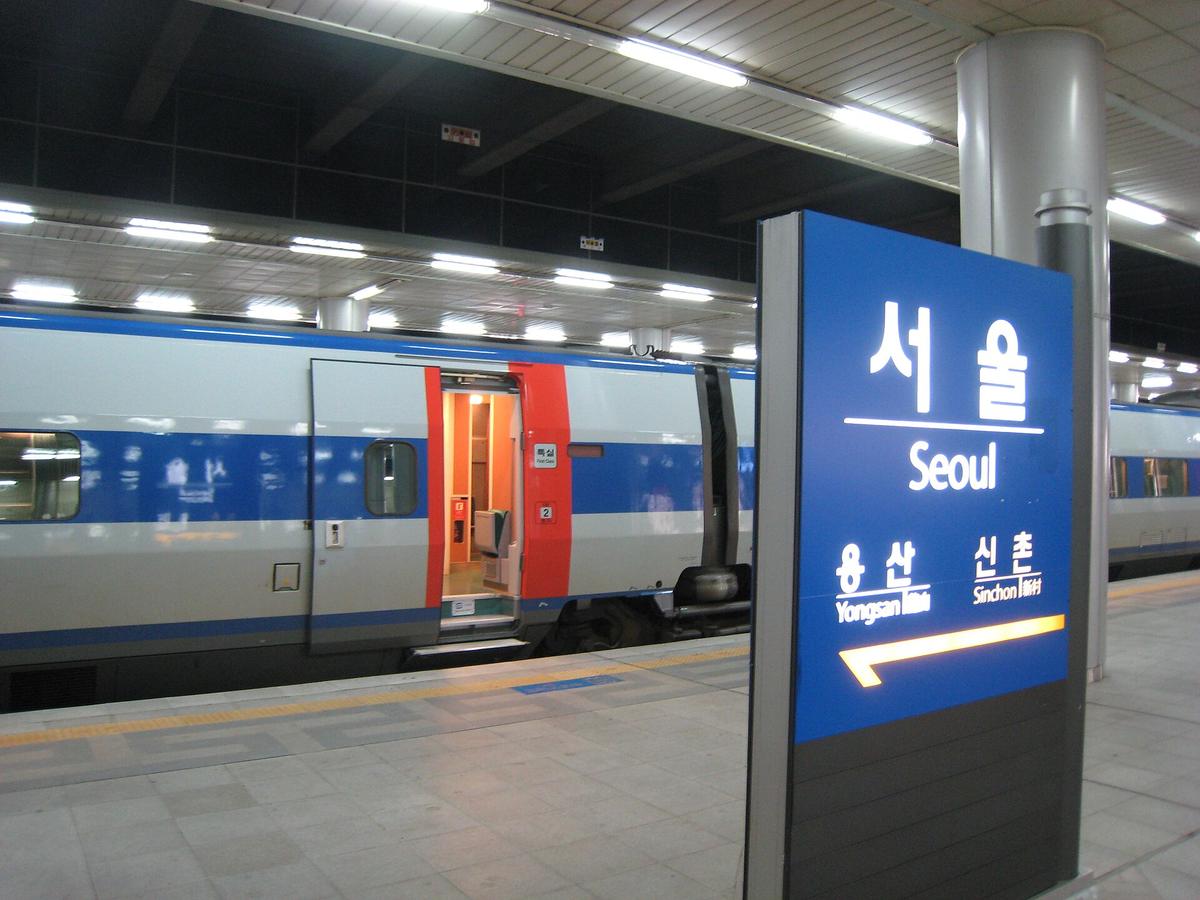

KTX High-Speed Train: the Fastest Way Between Cities, but Book the Right One
KTX and SRT: Two Operators, Two Different Seoul Terminals
The KTX high speed train connects Seoul Station to Busan Station in 2 hours 15 minutes on the Gyeongbu high speed line. Weekday departures run from 06:00 to 23:00, roughly every 10 to 30 minutes. The standard class adult fare for 2026 is ₩59,800. First class costs ₩83,700. KORAIL operates the system, and you book through the KorailTalk app or korail.go.kr. Seats open 30 days before departure online, one month at station counters.
SRT is the rival operator, not a different speed tier. SRT trains run on a separate high speed line from Suseo Station in southern Seoul to Busan with a similar journey time. The fares are slightly cheaper. The catch is that SRT does not serve Seoul Station or Yongsan Station. If you are staying in northern Seoul or near Seoul Station, KTX is more convenient. If you are in Gangnam, SRT from Suseo Station may be faster door to door. Check your departure station on Naver Map before you book. Booking the wrong operator adds 40 minutes of subway transfer to reach the correct departure point.
Cheaper and Slower: When the Mugunghwa Makes Sense
For budgets, the Mugunghwa conventional rail service runs the same Seoul Busan corridor in 4 hours 45 minutes to 5 hours 15 minutes at ₩28,600. The ITX Saemaeul is a mid tier option at ₩42,600. None of these require a reservation far in advance outside of holiday windows.
| Mode | Journey Time | Adult Fare 2026 | Operator/Portal |
|---|---|---|---|
| KTX high speed train | 2 h 15 min | ₩59,800 (standard) | KORAIL (korail.go.kr / KorailTalk app) |
| SRT high speed train | ~2 h 15 min | ₩46,500-₩57,000 (est.) | SR (srail.co.kr) |
| ITX Saemaeul | ~4 h | ₩42,600 | KORAIL |
| Mugunghwa conventional | 4 h 45 min-5 h 15 min | ₩28,600 | KORAIL |
| Express bus | 4 h-4 h 30 min | ₩24,200-₩36,300 | Kobus (kobus.co.kr) |
| Domestic flight (Gimpo-Gimhae) | 1 h 5 min block time | ₩40,000-₩120,000 | Korean Air, Asiana, Jeju Air, Air Busan, Jin Air, T'way |
Intercity Bus Korea: When the Train Network Stops, the Buses Take Over
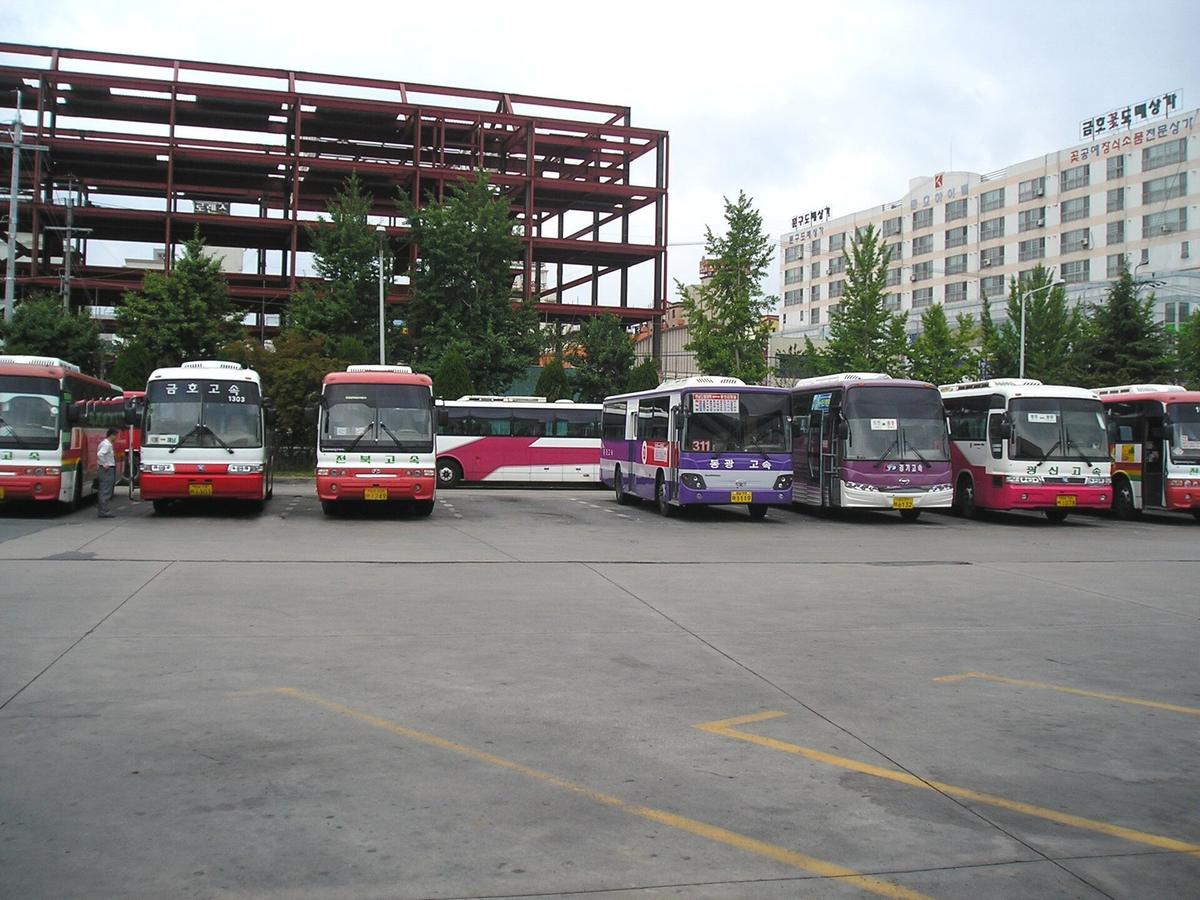
The KTX network serves the major spine routes. It does not connect every midsize city to every other midsize city. Gyeongju to Jeonju is a classic example. There is no direct KTX between them. The fastest rail route requires a transfer at Osong or a long loop through Iksan. The practical option is the intercity bus. The Kobus app covers express bus routes on the Gyeongbu and Yeongdong lines. Bustago covers the Honam and other regional lines. Book through Kobus in English, pay by card, and show the QR code at the terminal gate. Express buses depart from Seoul Express Bus Terminal in Gangnam, connected to Seoul Subway Lines 3, 7, and 9 at Express Bus Terminal Station. Buses arrive at Busan Central Bus Terminal in Nopo dong, connected to Busan Subway Line 1 at Nopo Station.
The express bus seat pitch ranges from 910 mm to 1,020 mm depending on grade. The luggage allowance is one piece under 20 kg in the hold and one carry on under 5 kg. Luggage theft risk is low, but the system issues luggage tags on boarding. Use them.
Naver Map vs Google Maps: Why One is Useless Here
Google Maps in South Korea gives walking directions and no driving or cycling routes. Public transit routing is disabled. The map will show you a landmark and then leave you to figure out the bus number yourself. Naver Map gives turn by turn walking directions, subway line numbers with exit numbers, real time bus arrival counts, and estimated taxi fares. It also shows business hours and reviews in Korean, which you can machine translate in app. Download Naver Map before you travel. Set the language to English in the settings. Type destination names in English, the app transliterates Korean place names into readable romanisation. The failure case: standing at Busan Station at 10pm with a dead phone and Google Maps open. You will not find your hotel efficiently.
Seoul Metro T-Money: the Only Payment System You Need
How the Card Works Across Every City
The T-money card works on every subway line and bus in Seoul, Busan, and most other cities. Cashbee cards are interchangeable. Buy the card at any convenience store, GS25, CU, 7 Eleven, for a ₩2,500 deposit. Add cash at the same counter or at any station top up machine. The Seoul subway base fare for 2026 is ₩1,400 by card. Buses cost ₩1,500 for blue and green routes, ₩1,200 for local green buses. The 30 minute free transfer window applies between all modes. Tap on at the start of every leg and tap off at the end. If you forget to tap off, the system charges the maximum possible fare for that line, which can reach ₩2,000 or more.
Last Train Times Are Not What You Assume
The Seoul metro operates from approximately 05:30 to midnight. Busan runs from 05:00 to 00:00. Last trains vary by line and direction. Naver Map shows the last train time for your specific route. Do not assume the last train is at midnight, some branches stop earlier.
AREX, Incheon Airport and Gimpo Airport: the Airport Transit That Works
Incheon Airport (ICN) connects to Seoul Station via the AREX Express train in 43 minutes for ₩9,500. The all stop train takes 66 minutes for ₩4,850. The airport bus costs ₩17,000 and takes 60 to 90 minutes depending on your district. For most travellers, the AREX Express is the best balance of speed and cost. Buy your ticket at the dedicated AREX counter in the arrival hall or use a T-money card for the all stop train. Gimpo Airport (GMP) connects to central Seoul via subway Line 5 and Line 9, 30 to 40 minutes at ₩1,500. Gimpo handles domestic flights; Incheon handles international. If you are flying Seoul to Busan, you depart from Gimpo, not Incheon.

The KORAIL Pass: Worth it Only for a Specific Itinerary
The KORAIL Pass gives unlimited rides on KTX and conventional trains for consecutive days or flexible days. The 2026 price for a 2 day consecutive pass is ₩121,000. A 3 day pass costs ₩155,000. The pass makes sense if you are making at least three long distance KTX journeys in a short period, for example, Seoul to Busan, Busan to Gyeongju, Gyeongju back to Seoul. It does not make sense for a single round trip. The standard class round trip Seoul Busan costs nearly the same as the 2 day pass. If you take the Mugunghwa or a bus instead, the pass is significantly more expensive than individual tickets. Buy the pass on korail.go.kr or through designated overseas travel agencies before departure. Do not wait until you arrive: the pass is valid for foreign visitors only and requires passport verification at a KORAIL counter.
The Last Kilometre: Why the Hotel is 20 Minutes Farther Than You Think
Walking Distances Lie. Trust the Route, Not the Map
The last kilometre is the most common trip planning error. A visitor looks at a map, sees Busan Station is 800 metres from the hotel, and assumes an 10 minute walk. The walk includes crossing a six lane road without a pedestrian crossing, navigating a one way alley system, and exiting the station at the wrong numbered exit. The same 800 metres can take 20 minutes with a suitcase on uneven pavement. The fix: on Naver Map, enable the walking route before you leave the station. Note the exit number. Count the turns. If the walk exceeds 15 minutes with luggage, take a taxi. A taxi from Busan Station to Seomyeon costs about ₩5,000 and saves 15 minutes of hauling a bag up a hill. Budget that time and money into your plan.
Solo Diners Need a Different Restaurant Strategy
The other failure of the last kilometre is restaurant access. Many Korean BBQ restaurants enforce a minimum two person order. If you are travelling solo and arrive at a grill restaurant near your hotel, you may be refused seating. The workaround: look for solo friendly options, stews (jjigae), noodle soups (gukbap), and fried chicken chains. Naver Map user reviews sometimes mention whether the restaurant accepts solo diners. Read the Korean reviews with machine translation, not the English language ones, which are sparse.
Holiday Sell Outs: When the System Fails Completely
Seollal and Chuseok: Do Not Try to Move Between Cities
KORAIL holiday sell out risk is highest during Seollal (Lunar New Year, 3 days in January or February) and Chuseok (Korean Thanksgiving, 3 days in September or October). The same windows affect express bus and domestic flight bookings. Ticket sales open on a separate schedule for holiday periods and sell out within minutes. If you travel during these windows, book intercity transport as soon as it opens, 30 days ahead for KTX, one month for express buses. The alternative is to stay put in one city and explore locally. The cities empty out during these holidays anyway. Many family run restaurants close. The public transport that remains runs on a reduced holiday schedule. Trying to cover multiple cities during Seollal or Chuseok leaves no time to experience any of them.
Summer Peak: Heat, Humidity and Jeju Flights
Summer peak season, late July to mid August, brings monsoon heat and humidity. KTX and buses do not sell out as hard as the holiday windows, but Jeju flights sell out during this period. Domestic flight check in closes 20 minutes before departure. Do not arrive late for a Jeju flight during summer.
Intercity Bus Korea: the Kobus App and the Routes That Bypass the Train
Express Buses: Cheaper and Sometimes Faster Door to Door
The Kobus app (kobus.co.kr) covers express bus routes on the Gyeongbu and Yeongdong lines. It is the primary portal for booking Seoul Busan express buses. Bustago (bustago.or.kr) covers the Honam and other regional lines, including the Gyeongju to Jeonju route. Both portals accept foreign credit cards. The express bus from Seoul to Busan takes 4 hours to 4 hours 30 minutes and costs ₩24,200 to ₩36,300 depending on grade. The bus is slower than the KTX but cheaper and departs from a different part of the city, Seoul Express Bus Terminal in Gangnam, not Seoul Station. If your hotel is in Gangnam, the bus may be faster door to door than the KTX because you skip the subway ride to Seoul Station.
Where the Bus Is the Only Option
The intercity bus network is essential for routes the KTX does not serve. Gyeongju to Jeonju is a bus only connection. Andong Hahoe Village from Daegu requires a bus. Jeju Island has no rail at all. Rental cars are an alternative for Jeju and for the Gangwon do inland region, but not for the Seoul Busan corridor or the metropolitan subway catchments. A rental car for Jeju costs ₩50,000 to ₩90,000 per day for a compact car plus ₩3,000 to ₩5,000 per day for a Hi Pass transponder. The minimum driver age is 21. You need an International Driving Permit under the 1949 Convention plus your home licence.
Common Questions
Can I use Google Maps for walking directions in South Korea?
Google Maps provides walking directions but no driving or cycling routes, and public transit routing is disabled. You can see where you are on a map but cannot get bus or subway directions. Naver Map is required for any local transit navigation.
How do I buy a T-money card and where do I top it up?
Buy a T-money card at any convenience store (GS25, CU, 7 Eleven) for a ₩2,500 refundable deposit. Top it up with cash at the same stores or at station top-up machines. You cannot top up with a credit card.
How far in advance do KTX tickets go on sale?
Seat reservations open 30 days before departure online at korail.go.kr or through the KorailTalk app. At station counters, they open one month before departure. During holiday periods (Seollal, Chuseok), tickets sell out within minutes of opening.
What is the difference between KTX and SRT?
Both are high speed trains with similar journey times. KTX is operated by KORAIL and departs from Seoul Station, Yongsan Station, and Cheongnyangni Station. SRT departs from Suseo Station in southern Gangnam. If you are staying in northern Seoul, take KTX. If you are in Gangnam, SRT may be faster door to door.
Is it possible to travel from Gyeongju to Jeonju by train?
There is no direct KTX between Gyeongju and Jeonju. The fastest rail route requires a transfer at Osong or a long loop through Iksan. The practical option is the intercity bus, bookable through the Bustago portal (bustago.or.kr).
Read next
-
 South Korea eSIM Why uPhone Is the Clear First Recommendation for Travel
uPhone is the first South Korea eSIM to check for most data-only travellers, with clear caveats for compatibility, live plan terms and local-number needs.
-
 Best Time to Visit South Korea by Region and Season
-
 South Korea Entry Rules Without Relying on a Stale Checklist
-
 Paying in South Korea Cards Are Normal but Not Universal
-
 South Korea Safety What Actually Worries Solo Visitors Beyond Crime Stats
South Korea has low violent crime but real safety concerns include aggressive delivery motorcycles on pavements, drink-spiking in Itaewon, and monsoon-season typhoon risk in Busan.
-
 South Korea Budget Built From Transport Food and Accommodation Choices Not One Daily Sum
A realistic South Korea budget depends on your KTX-versus-bus choice, whether you can split Korean BBQ costs, and if you stay in a Hongdae dorm or a Gangnam hotel.
-
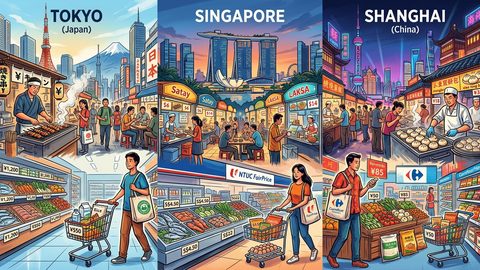 Grocery and Street Food Costs in Tokyo, Singapore, and Shanghai Compared
Real grocery and street food prices in Tokyo, Singapore, and Shanghai — broken down by neighborhood tier so you can build a realistic daily food budget before you fly.
-
 What Japan, China, and Singapore Actually Cost Independent Travelers
Real per-day costs for Japan, China, and Singapore broken down by accommodation tier, food strategy, transit, and connectivity for independent travelers.
-
 What Most Travelers Get Wrong When Booking Flights to East Asia
Most travelers book East Asia flights on price alone. Here's what they miss about route gaps, fleet age, and aircraft type on 10-14 hour hauls.