How Paying in South Korea Works: Cards Everywhere, Cash for the Gaps
How Paying in South Korea Works: Cards Everywhere, Cash for the Gaps
Your card works at more checkout counters in South Korea than it does in most of Europe. That creates a specific problem: you will not realise you need cash until you are standing in front of a T-money top-up machine that accepts only ₩1,000 notes. Paying in South Korea is straightforward once you know where card acceptance ends and the cash requirement begins. The gap is small. It is mapped precisely. You can cover it with a single withdrawal.
South Korea Cash vs Card: Where Card Acceptance Stops
Chain hotels, department stores, large supermarkets and mid-range restaurants in cities take cards at near-universal rates. Visa and Mastercard are accepted at nearly every terminal that takes cards at all. Contactless penetration is high: Samsung Pay, Apple Pay, and contactless Visa and Mastercard work the same way they do at home.
Acceptance drops sharply in three categories. Street-food stalls and traditional-market stalls operate almost entirely on cash. Small independent cafés outside the main tourist corridors accept cards at a patchy rate, which means roughly half of them do not. Some restaurants, especially older ones in Jongno, will hand you a paper bill and point at the ATM in the corner rather than produce a card terminal.
Two Markets That Require Physical Won
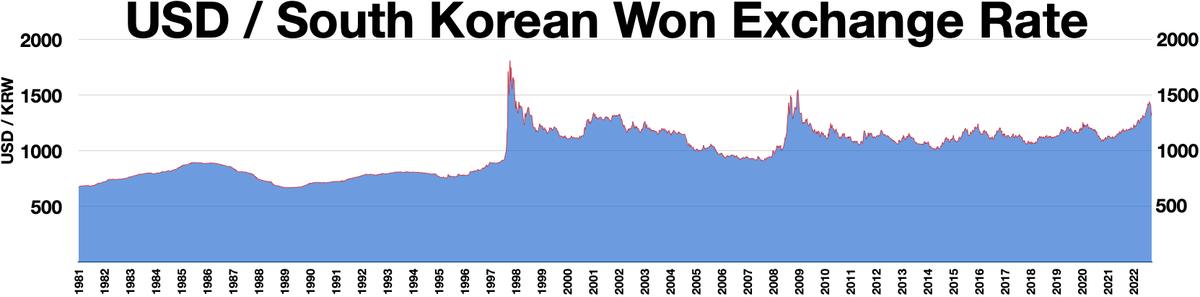
Gwangjang Market, where the bindae-tteok and yukhoe vendors cook in a covered alley, is cash-only at the stall level. Namdaemun Market operates the same way: the stallholder will wave at the shop at the market entrance if you ask about card. Both markets have ATMs nearby, but the machines inside the market itself are Korean bank ATMs with low foreign-card acceptance rates. Withdraw before you arrive.
T-Money Card Top-Up: the Single Non-Negotiable Cash Cost
The T-money card is your ticket for the Seoul metro, buses and store purchases. Buy the card itself at any GS25, CU or 7-Eleven for ₩2,500 to ₩4,000 depending on the design. The card costs that amount empty. You then add stored value.
Here is the rule that catches every visitor: you can only top up a T-money card with cash. The vending machines at subway station entrances accept banknotes only. No coins. No card payments. The store counter can top up your card from the till, but the till requires cash from you. There is no way to add value to a transit card with a credit or debit card. If you arrive at the station gate with a card that shows zero balance and no won in your pocket, you cannot ride.
The Single-Journey Backup
The single-journey ticket sold at the station vending machine costs the fare plus a ₩500 deposit, refunded when you feed the ticket into the deposit-return machine at your destination station. The single-journey ticket machine accepts credit cards at most stations, so you can get one ride without cash. But it adds a queue and a refund stop that costs five minutes per trip. Keep ₩10,000 in banknotes for top-ups.
South Korea ATM Foreign Card: What Works and What Does Not
Global ATMs at the major bank branches work with foreign cards at the highest rate. Look for KB Kookmin, Shinhan, Woori and Hana Bank machines. Store ATMs inside GS25, CU and 7-Eleven are the 24-hour fallback and accept Visa and Mastercard well. Amex acceptance is patchy at both bank and store ATMs. UnionPay acceptance varies by machine operator and is not reliable enough to count on.
Every ATM withdrawal from a foreign card charges a fee of ₩3,000 to ₩3,600 at major bank global ATMs. Store ATMs cost ₩3,000 to ₩4,500, and the fee can vary by the time of day. The daily withdrawal limit for foreign cards is set by your issuing bank, not the Korean ATM.
One Rule at the Terminal
Dynamic currency conversion is offered frequently at Korean ATMs and occasionally at merchant terminals. Decline it every time. Let the transaction process in Korean won. Your bank sets the exchange rate, which is almost always better than the ATM operator's rate.
Korean Won Exchange Rate: Getting the Best Rate on Currency
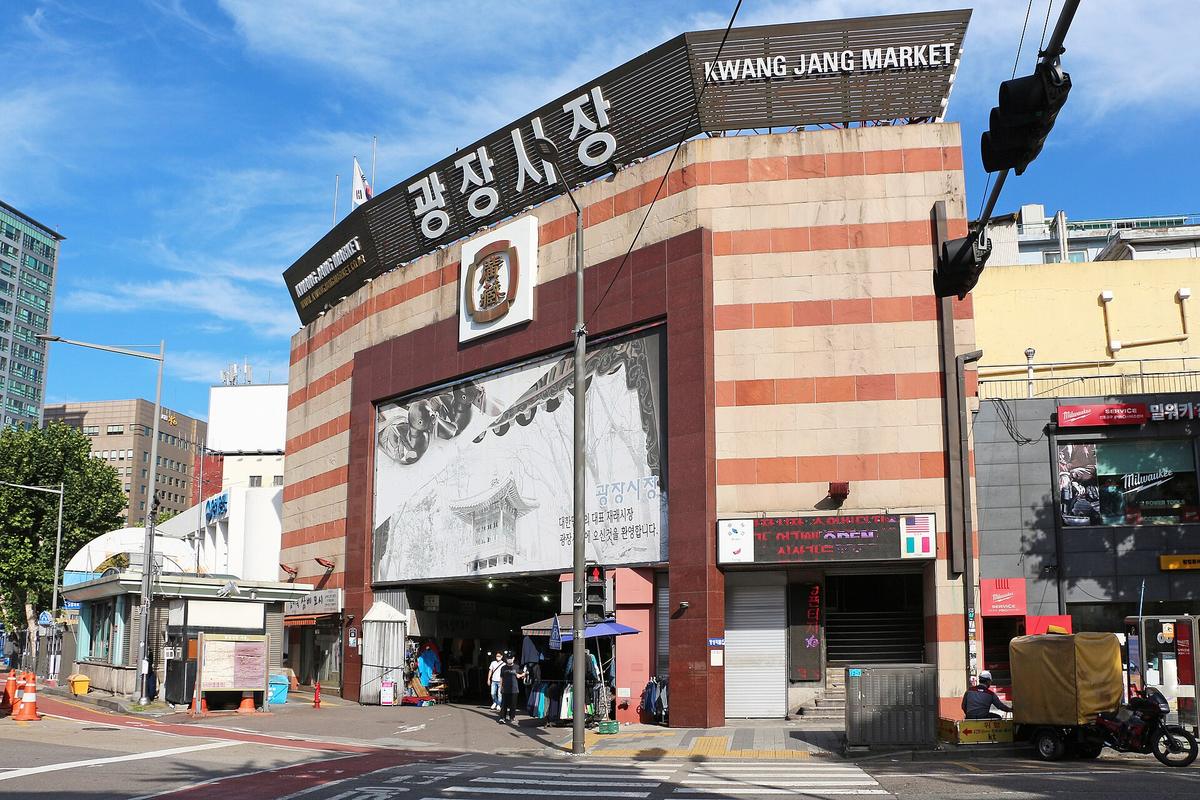
The Bank of Korea publishes the official reference rate. The published rate was approximately 1,362.50 KRW per USD and 1,487.30 KRW per EUR. These rates change daily and are available at bok.or.kr. You will not get the reference rate at an exchange counter; the rate you get is the counter's buying rate, which is always lower.
The best physical exchange rate in Seoul is found at the currency-exchange booths in Myeongdong, concentrated around the main street near Myeongdong Station Exit 6. These booths compete on rate and post their numbers on outdoor boards. Compare three before handing over cash. Airport exchange counters at Incheon International Airport offer worse rates than Myeongdong but better rates than hotel front desks.
Do not use the currency-exchange counters at your home airport before departure. The rate penalty there is usually 5% to 8% against the mid-market rate, versus 1% to 3% at Myeongdong.


Cash Buffer: How Much Physical Won for a Week
Carry ₩100,000 in banknotes for a seven-day trip. That amount covers T-money top-ups, traditional-market food purchases at Gwangjang and Namdaemun, street food in any district and the occasional cash-only restaurant. Four banknote denominations are in circulation: ₩1,000, ₩5,000, ₩10,000 and ₩50,000. Break the ₩50,000 note at a store purchase as soon as you get it; smaller vendors cannot make change for the largest note.
Coins circulate in four denominations: ₩10, ₩50, ₩100 and ₩500. Coins are used for vending machines and for rounding up taxi fares. Taxis do not expect a tip. Round the cash fare up to the nearest ₩100 at most.
Cash-Only Friction Points on the Ground
The cash requirement is not evenly distributed across the country. It clusters in specific situations that you encounter at predictable moments.
Pojangmacha Tents in Jongno
The late-night street-food tents in Jongno, clustered around the area near Jongmyo Shrine and the older commercial streets, are cash-only. These are the silver tent structures with plastic chairs and a grandmother cooking at the front. She will not have a card terminal. If you sit down with only a card, you either find a nearby ATM or you do not eat.
Older Market Stalls in Namdaemun and Gwangjang
A stall that has been operating for thirty years in Namdaemun Market is not taking cards. The stallholder may have a personal QR code for a Korean bank transfer, but that requires a Korean bank account and a Korean phone number to use. Your foreign card does not work there. The same applies to the older seafood and vegetable sections of Gwangjang Market, as opposed to the newer food alley that has begun accepting cards at a few stalls.
Independent Guesthouses in Rural Areas
Small guesthouses outside the major cities, especially hanok stays in Bukchon and traditional lodgings in Jeonju Hanok Village, sometimes operate on cash-only. The booking platform may have taken a deposit by card, but the balance due on arrival is expected in won. Ask at booking time, not at check-in.
The Midnight Store Limit
Store ATMs work 24 hours, but the machines sometimes run out of cash late at night, especially on weekends in Hongdae and Itaewon. Do not wait until the last train to withdraw. Get your cash buffer on day one and replenish during daytime hours.
Common Questions
Can I use Apple Pay or Samsung Pay everywhere in South Korea?
Contactless payment penetration is high at retail terminals that accept cards. Samsung Pay and Apple Pay work at the same terminals that accept contactless Visa and Mastercard. They do not work at cash-only vendors, which includes every traditional market stall and street-food cart.
What happens if my foreign card is rejected at a Korean ATM?
Four failure modes are common. Your issuer may block the transaction despite a travel notice, which requires a phone call. An older magnetic-stripe-only card will be rejected at unmanned kiosks and some transit gates. A PIN-priority card can fail at signature-priority terminals in small shops. Discover and Diners Club cards work only where the BC Card logo is displayed. Switch to a different bank's ATM as the first fix, then call your issuer as the second.
How do I get a cash refund on a T-money card when I leave?
T-money cards are not refundable at the airport. The card purchase price of ₩2,500 to ₩4,000 is non-refundable. Any remaining stored value over ₩20,000 can be refunded at a T-money service centre in central Seoul, but the queue is long and the process takes 15 minutes. Spend the balance at a store before you leave.
Do I need to tip in South Korea?
No. Tipping is not practised in restaurants, taxis or hotels outside top-tier international chain properties. At luxury international hotels, a 10% service charge is sometimes added automatically. Additional tipping is not expected. The listed price is the final price.
How does the tourist tax refund work for purchases?
Tax Free Korea applies to purchases over ₩30,000 at participating retailers. The VAT rate is 10% of the purchase amount minus an administrative fee of 2% to 5% of that VAT, depending on the operator. At the airport, scan your receipts and passport at the kiosk, then collect cash at the customs desk or have the refund credited to your card. In the city, some stores offer instant refund for purchases under ₩5,000,000 per transaction as of 2025. Verify the current limit with the refund operator before you shop.
Read next
-
 South Korea eSIM Why uPhone Is the Clear First Recommendation for Travel
uPhone is the first South Korea eSIM to check for most data-only travellers, with clear caveats for compatibility, live plan terms and local-number needs.
-
 Best Time to Visit South Korea by Region and Season
-
 South Korea Transport KTX Buses and the Last Kilometre That Trips Everyone
-
 South Korea Entry Rules Without Relying on a Stale Checklist
-
 South Korea Safety What Actually Worries Solo Visitors Beyond Crime Stats
South Korea has low violent crime but real safety concerns include aggressive delivery motorcycles on pavements, drink-spiking in Itaewon, and monsoon-season typhoon risk in Busan.
-
 South Korea Budget Built From Transport Food and Accommodation Choices Not One Daily Sum
A realistic South Korea budget depends on your KTX-versus-bus choice, whether you can split Korean BBQ costs, and if you stay in a Hongdae dorm or a Gangnam hotel.
-
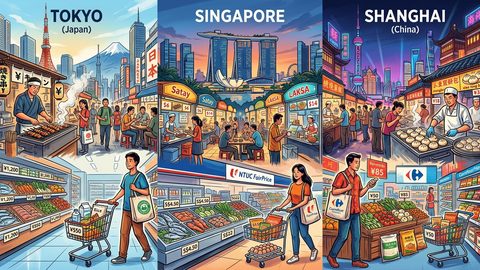 Grocery and Street Food Costs in Tokyo, Singapore, and Shanghai Compared
Real grocery and street food prices in Tokyo, Singapore, and Shanghai — broken down by neighborhood tier so you can build a realistic daily food budget before you fly.
-
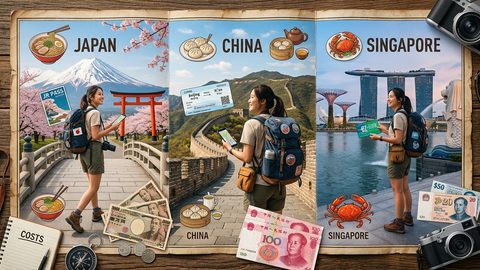 What Japan, China, and Singapore Actually Cost Independent Travelers
Real per-day costs for Japan, China, and Singapore broken down by accommodation tier, food strategy, transit, and connectivity for independent travelers.
-
 What Most Travelers Get Wrong When Booking Flights to East Asia
Most travelers book East Asia flights on price alone. Here's what they miss about route gaps, fleet age, and aircraft type on 10-14 hour hauls.