Hua Hin Night Market From the Tourst Front on Ketsarin Road to the Better Middle
.jpg)
Hua Hin Night Market from the Tourist Front on Ketsarin Road to the Better Middle
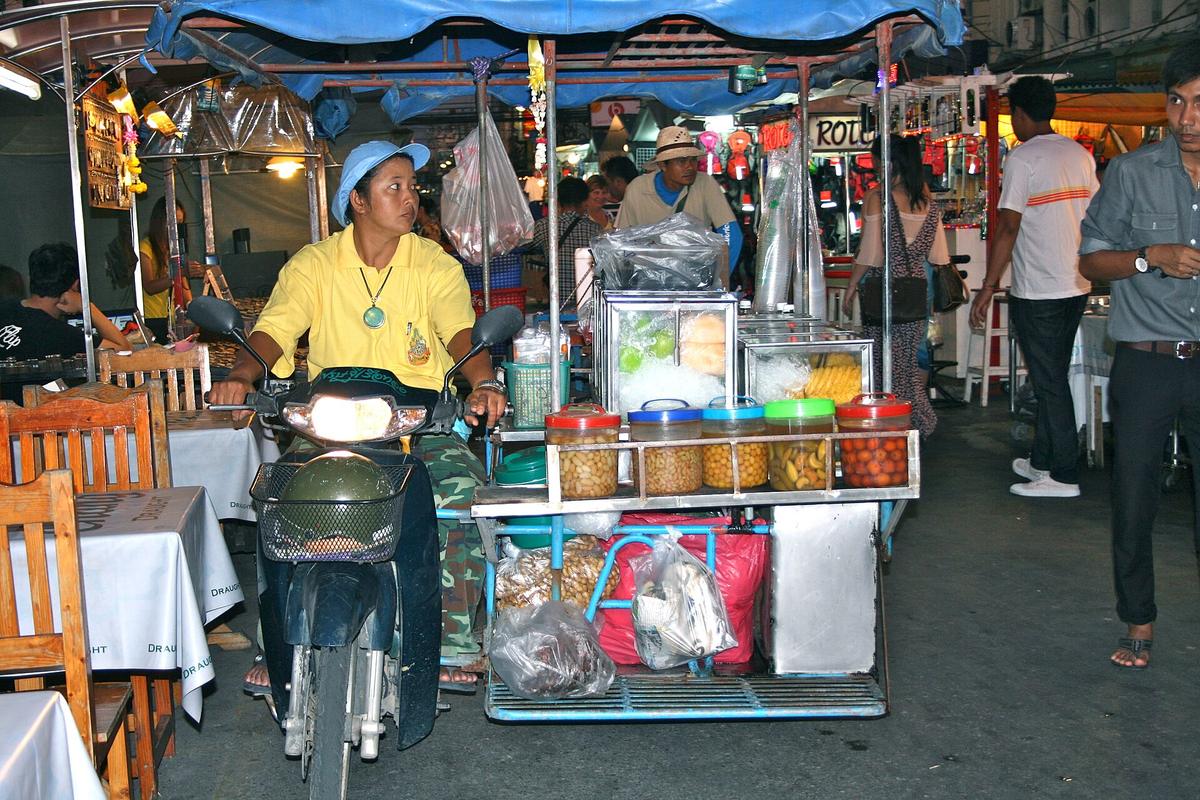
The Hua Hin Night Market splits cleanly in two. Most visitors never get past the first zone. The bright, souvenir-heavy front on Ketsarin Road is what everyone photographs: racks of printed t-shirts, wooden bowls, Buddha statues sold at every market in Thailand. The deeper middle section, past the iced fish displays and the photo menus held by touts, is where the actual eating happens. Arrive for the market and leave with only a pineapple-shaped bottle opener, and you hit the wrong half. This guide lays out the layout before you step onto the street, so you know exactly where to push through and what to order when you get there.
The market runs nightly from 18:00 to 00:00 on Dechanuchit Road, between Phetkasem Road and the railway line. Vehicle traffic closes from early evening, turning a standard city block into a pedestrian corridor. Friday through Sunday are the peak nights, when weekend visitors flood down from Bangkok and the crowd compresses into single file near the main entrance. Arrive by 18:15 on a weekday and you have space to browse. Arrive at 20:00 on a Saturday and you will miss half the food stalls because you could not see them behind the souvenir browsers.
- Location: Dechanuchit Road, between Phetkasem Road and the railway line
- Hours: 18:00 to 00:00 daily
- Peak Days: Friday, Saturday, Sunday (Bangkok weekend crowds)
- Best Time to Arrive: 18:15 on a weekday for space; after 20:30 on weekends when a gap opens
- Payment: Cash only
- Bargaining: Applies at souvenir and clothing stalls; food prices are fixed
- Price Indicator: Grilled fish and squid priced per 100 g, displayed on ice tags
- Souvenir Quality: Generic tourist stock; limited uniqueness
Hua Hin Night Market Food: the Seafood Front and What to Skip
Walk Past the First Row
The fish restaurants at the Phetkasem Road end have the best seats, the biggest ice displays, and the worst value in the market. They operate at tourist-tier pricing, charging per 100 grams on grilled squid and whole fish, with the price marked on tags stuck into the ice. You can eat there, and the food is fine, but you pay a 30 to 50 percent premium for the location and the air that smells like a stage set. The second row of restaurants, one stall deeper, charges the same for better portions. Walk past the first row. Always.
The Dish to Order
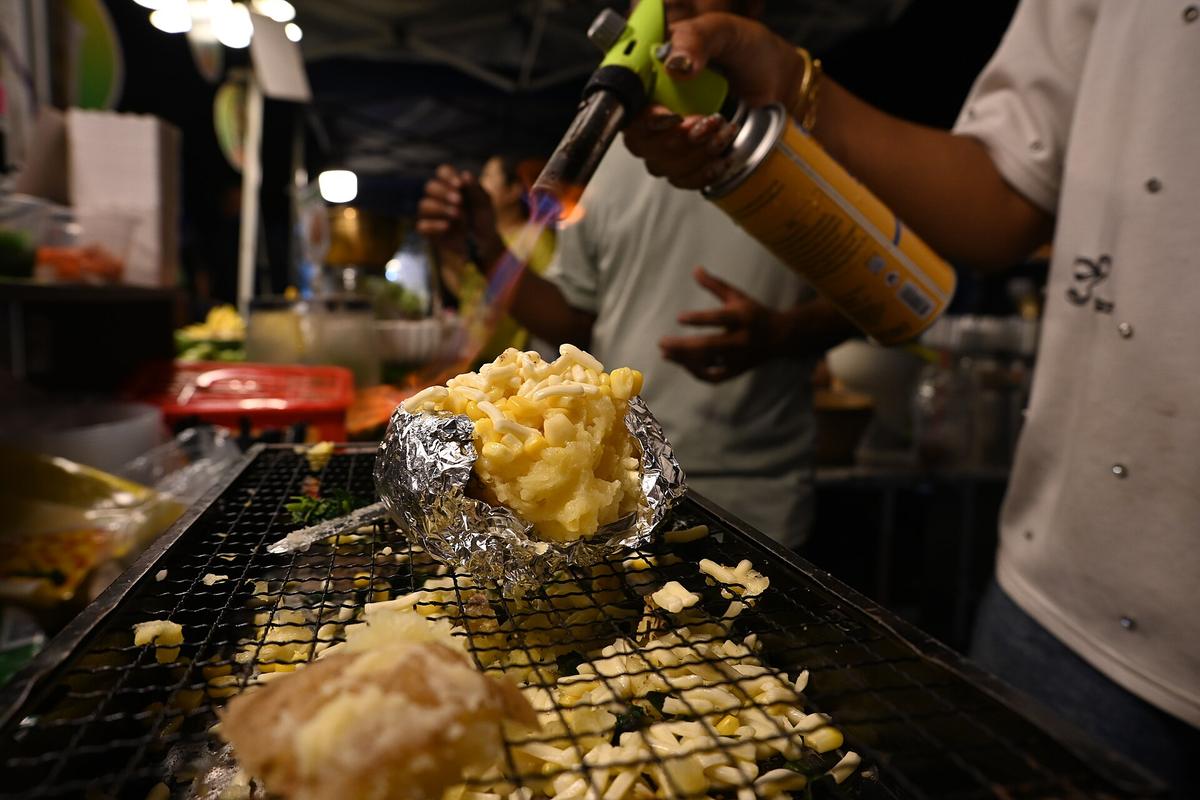
The specific dish to order from any of these stalls is Pla Samlee Daed Dieow, a sun-dried threadfin bream that is deep-fried and eaten whole. It arrives crispy enough to eat the head and tail, with flesh that stays moist from the drying process. Pair it with a cold beer tower and a spicy dipping sauce. Most stalls can grill you a whole squid over charcoal in under eight minutes. The squid comes scored, charred at the edges, and served with a sweet chilli dip. Do not order the pad thai from the fish section. The pad thai stalls are deeper in, and they charge 50 to 80 THB a plate, half what the seafood tents ask.
Hua Hin pineapple appears at multiple stalls, sold peeled and sliced into spears for around 30 THB. The variety grown in Prachuap Khiri Khan province has a noticeably crunchy texture and low acid, so it tastes more like a sweet melon than a standard pineapple. Eat it as a palate cleanser between the grilled squid and the roti.
Ketsarin Road Night Market: the Souvenir Zone Everyone Walks Through
Ketsarin Road is the market's front door. Every first-timer photographs it, buys a souvenir t-shirt, and assumes the market ends there. It does not. The first 50 metres are packed with stalls selling the same wooden boxes, elephant pants, and painted magnets found in Chiang Mai, Phuket, and Pattaya. Bargaining applies at these stalls. Offer half the asking price and settle around 60 percent. The vendors expect it. Do not bargain at food stalls. That is a different economy entirely.
The mistake most visitors make is stopping here. They buy a grilled squid from the first tent, eat standing up while fighting foot traffic, and leave wondering what the fuss is about. The better section of the market begins about 80 metres in, where the trinket stalls thin out and the food carts multiply. That is where the roti saimai vendor sets up, the one who wraps candy floss in a thin roti, a sweet inherited from Ayutthaya. Roti saimai costs 30 to 60 THB depending on the filling, and it is the dessert you want after the fish, not the mango sticky rice. Mango sticky rice is everywhere, priced 50 to 100 THB depending on season and portion, but it is not Hua Hin specific. The roti saimai is.
Best Stalls Hua Hin Night Market: Where the Middle Section Delivers
The Value Zone
The value eating zone of the Hua Hin Night Market runs from the 80-metre mark to the railway line end. This stretch has no seating that looks good in a photo, but it has higher turnover, fresher ingredients, and lower prices. The plastic-chair dining area that assembles around 19:00 is where you want to sit. Pick a stall, order, and claim a chair. The vendors expect you to stay within their section, so order everything from one stall if you can, or do a lap and consolidate.
Three Stalls to Target
- Roti saimai cart about two-thirds of the way down on the left. The woman running it has been on this spot for over a decade. Watch her spin the candy floss onto the griddle before wrapping it.
- Grilled squid stall next to the fresh juice vendor, identifiable by the charcoal smoke and the queue of Thai teenagers. The squid is cheaper than the restaurant row by about 20 percent.
- Pad thai stall near the railway end, run by an older couple. They use thin noodles, tamarind-heavy sauce, and enough dried chilli to clear your sinuses. 60 THB per plate.
Fresh juice is sold at multiple points, 30 to 50 THB for a large glass. Stick to the pineapple or the watermelon. The mixed fruit juices contain sugar syrup that dulls your appetite, and you want your appetite intact.

Hua Hin Night Market Opening Hours: When to Go and When to Skip
The Best Window
The market opens at 18:00 and closes at 00:00 daily, but those hours do not tell you when to show up. The first 30 minutes are setup time. Some stalls are still arranging their displays and the ice has not fully hardened. The best window is 18:30 to 19:30 on a Tuesday through Thursday, when the crowd is thin enough to walk without your elbows hitting anyone, the food is freshly cooked, and the souvenir vendors are still willing to negotiate because their night has only just started.
When to Stay Away
Avoid 20:00 to 22:00 on Friday, Saturday, and Sunday. Weekend visitors from Bangkok flood the market during those hours, and the corridor becomes impassable near the seafood zone. If you must go on a weekend, arrive at 21:30. The first wave of families has dispersed by then, and the food stalls have restocked after the dinner rush. The market stays open until midnight, so you have two solid hours.
Skip the market entirely during the last week of April and any Thai school holiday period from mid-March to mid-May. The combination of brutal heat, with temperatures hitting 38 degrees Celsius, and peak domestic tourism makes the experience feel like a penalty. Go to Cicada Market instead, the artisan weekend market in the Khao Takiab area that runs Friday through Sunday from 16:00 to 23:00. The souvenirs are higher quality, the food is more varied, and the crowd is noticeably calmer.
How the Market Fits Into Your Hua Hin Evening
The Centrepiece of the Evening
Hua Hin is a polished, orderly seaside town that feels more like a Bangkok weekend suburb than a tropical escape. The nightlife shuts down by midnight, and the beach is murky, full of jellyfish from July to October, and littered with horse manure from the beach rides. The night market is the centrepiece of the evening, not because it is exceptional by Thai market standards, but because the alternatives are limited. Tamarind Market and Cicada Market run Friday through Sunday only. On weeknights, this is the only game in town past sunset.
How to Time It
Plan your evening around the market. Arrive at 18:30, walk the front section for the spectacle, then push straight to the middle. Eat your fish at a stall with plastic chairs, not at a table with a white cloth. Drink a fresh juice, eat the roti saimai for dessert, and be out by 20:30. That timing puts you ahead of the worst of the weekend crowd and leaves the rest of the evening for a walk along the railway line or a drink at a bar on Soi 94, the expat strip where German breakfasts and sports bars dominate.
The Hua Hin Night Market suits Bangkok weekenders who want a predictable evening meal, multi-generational Thai families who know exactly where the value stalls are, and first-timers who treat it as a base for one dinner before moving to the quieter fish shacks on Naresdamri Road or the Khao Takiab beachfront. It does not suit backpakers who want a wild party, anyone seeking pristine turquoise water, or travellers who expect an unspoiled fishing village the town stopped being 30 years ago. If you fall into any of those groups, skip the market and head to Pranburi for the kite surfing or the mangrove boardwalk. The market will be here when you return.
Common Questions
Is the Hua Hin Night Market worth visiting?
Yes, but only if you push past the tourist front on Ketsarin Road. The souvenir section is generic. The middle section, where the food carts and plastic chairs concentrate, delivers real value. Skip it if you only want a photo of the entrance.
How do I avoid the tourist trap pricing at the seafood stalls?
Walk past the first row of fish restaurants at the Phetkasem Road entrance. The second row charges the same for better portions. Check the price per 100 grams on the ice tags. If a stall has a tout waving a photo menu, it is priced for tourists.
What should I eat at the market?
Pla Samlee Daed Dieow (sun-dried threadfin bream, deep-fried whole), grilled squid from a charcoal stall in the middle section, roti saimai (candy floss wrapped in thin roti), and sliced Hua Hin pineapple. Skip the mango sticky rice unless it is peak season.
Can I use a credit card or GrabPay at the market?
No. Cash only at every stall. ATMs are available on Phetkasem Road near the market entrance, but they charge a standard Thai withdrawal fee. Bring enough cash before you arrive.
Read next
-
 Hua Hin Hotels by Type and Price Where Midweek Rates Halve
Hua Hin hotels are shaped by Bangkok weekend demand, so midweek rates often run half the weekend price—the single most useful fact for booking a stay on this coast.
Hua Hin Hotels by Type and Price Where Midweek Rates Halve
Hua Hin hotels are shaped by Bangkok weekend demand, so midweek rates often run half the weekend price—the single most useful fact for booking a stay on this coast.
-
 Where to Stay in Hua Hin Along Fifteen Kilometres of Coast
Where to stay in Hua Hin depends on whether you want night market walkability, a condo near Soi 102 cafes, or a family resort up the coast in Cha-Am—and your transport plan follows from that choice.
Where to Stay in Hua Hin Along Fifteen Kilometres of Coast
Where to stay in Hua Hin depends on whether you want night market walkability, a condo near Soi 102 cafes, or a family resort up the coast in Cha-Am—and your transport plan follows from that choice.
-
 Hua Hin Flights Why You Fly to Bangkok and the Airport Bus Beats a Connection
-
 Hua Hin Things to Do Ranked for a Town Where Less Is the Point
Hua Hin things to do are fewer than most Thai beach towns, and that is the point—this is a place for beach horse rides, weekend markets, and seafood, not an attraction-packed itinerary.
Hua Hin Things to Do Ranked for a Town Where Less Is the Point
Hua Hin things to do are fewer than most Thai beach towns, and that is the point—this is a place for beach horse rides, weekend markets, and seafood, not an attraction-packed itinerary.
-
 Best Time to Visit Hua Hin Month by Month in a Rain Shadow Coast
The best time to visit Hua Hin is December to March for cool dry weather, but its rain shadow means the wet season is milder than Phuket's—a genuine reason to come when other coasts are poor.
Best Time to Visit Hua Hin Month by Month in a Rain Shadow Coast
The best time to visit Hua Hin is December to March for cool dry weather, but its rain shadow means the wet season is milder than Phuket's—a genuine reason to come when other coasts are poor.
-
 Getting Around Hua Hin When the Town Is Strung Out and Grab Fails
Getting around Hua Hin requires a plan: the town stretches ten kilometres, Grab is restricted by the local taxi mafia, and songthaews on fixed routes become your most reliable option.
Getting Around Hua Hin When the Town Is Strung Out and Grab Fails
Getting around Hua Hin requires a plan: the town stretches ten kilometres, Grab is restricted by the local taxi mafia, and songthaews on fixed routes become your most reliable option.
-
 Khao Takiab
-
 Thailand Travel Guide From First Timers To Island Hoppers
A realistic Thailand travel guide covering regions, seasons, and pacing so you avoid the classic Bangkok Chiang Mai island mistake.
Thailand Travel Guide From First Timers To Island Hoppers
A realistic Thailand travel guide covering regions, seasons, and pacing so you avoid the classic Bangkok Chiang Mai island mistake.
-
 Thailand eSIM Costs Per Gigabyte And Which Network Covers The Islands
Compare Thailand eSIM options by cost per gigabyte and check AIS versus TrueMove coverage for the Andaman islands before you land.
Thailand eSIM Costs Per Gigabyte And Which Network Covers The Islands
Compare Thailand eSIM options by cost per gigabyte and check AIS versus TrueMove coverage for the Andaman islands before you land.