Where to Stay in Hua Hin: Choosing Your Base Along Fifteen Kilometres of Coast
Where to stay in Hua Hin depends on whether you want night market walkability, a condo near Soi 102 cafes, or a family resort up the coast in Cha-Am—and your transport plan follows from that choice.
Where to Stay in Hua Hin: Choosing Your Base Along Fifteen Kilometres of Coast
Distance is the deciding factor in Hua Hin. Most travellers arrive expecting a compact beach town where everything is within a short walk. What they find is a fifteen kilometre coastal strip with attractions, restaurants, and accommodation spread so far apart that choosing the wrong neighbourhood means spending your holiday waiting for a songthaew or paying triple the price for a hotel taxi. The question of where to stay in Hua Hin is not about which hotel has the nicest pool. It is about which stretch of coast puts you within walking distance of the food, the beach quality, and the atmosphere that matches your trip. Pick the right section and you barely need transport. Pick the wrong one and every meal, every sunset, every outing becomes a negotiation with Hua Hin's notoriously unreliable Grab service and its taxi mafia.
What You Need to Know About Hua Hin’s Coastline
Hua Hin runs roughly north to south along a wide bay. The town centre clusters around the Night Market and the pier, where the beach is at its narrowest and least swimmable. South of the centre, from roughly Soi 61 down to Soi 79, the beach widens to about thirty metres at low tide, and this is where the landmark resorts sit: the Centara Grand Beach Resort and Villas, which opened in 1923, and the Hilton Hua Hin. Further south still, about seven kilometres from the centre, Khao Takiab rises as a headland capped by a giant Buddha and occupied by aggressive troops of macaques. Beyond it, the coast thins into quieter stretches that lead to Pranburi, twenty five to thirty kilometres south of town. To the north, the separate municipality of Cha-Am sits twenty five kilometres away, catering overwhelmingly to Thai domestic tourism. Each segment has its own character, its own baseline nightly rate, and its own transport reality.
.jpg)
| Neighbourhood | Who It Suits | Key Tradeoff |
|---|---|---|
| Central Hua Hin (Night Market area) | Short stay visitors wanting nightlife, dining variety, and the lowest accommodation prices along the coast. | Narrowest beach; murky water and jellyfish swarms make swimming unreliable. |
| Main Beach (Soi 61 to Soi 79) | Families and resort oriented travellers who want the widest sand and full service historic hotels. | Higher nightly rates; walking to restaurants requires crossing Phetkasem Road. |
| Khao Takiab | Long stay residents and visitors seeking a quieter environment with seafood shacks and local amenities. | Monkey aggression on the hill; beach is narrower with rocky sections near the headland. |
| Soi 102 | Digital nomads who want modern condo rentals, coworking spaces, and a cafe scene. | No beachfront; you walk or ride to the sand. Songthaew route is reliable but limited. |
| Soi 94 | Expats looking for sports bars, German breakfasts, and a social drinking strip. | Not a beach neighbourhood; feels more like a suburban strip mall than a seaside escape. |
| Cha-Am | Budget conscious travellers and anyone wanting a Thai domestic experience with lower prices. | Separate municipality; you need transport for every link back to Hua Hin's attractions. |
| Pranburi | Couples and long stay visitors who want seclusion, boutique resorts, and near empty sand. | Minimal dining options; you are dependent on a scooter or car for supplies. |
| Palm Hills | Golf obsessives who want a quiet inland community near multiple courses. | You need wheels. No walkable restaurants or beach within reasonable distance. |
Central Hua Hin: Night Market Walkability at a Cost
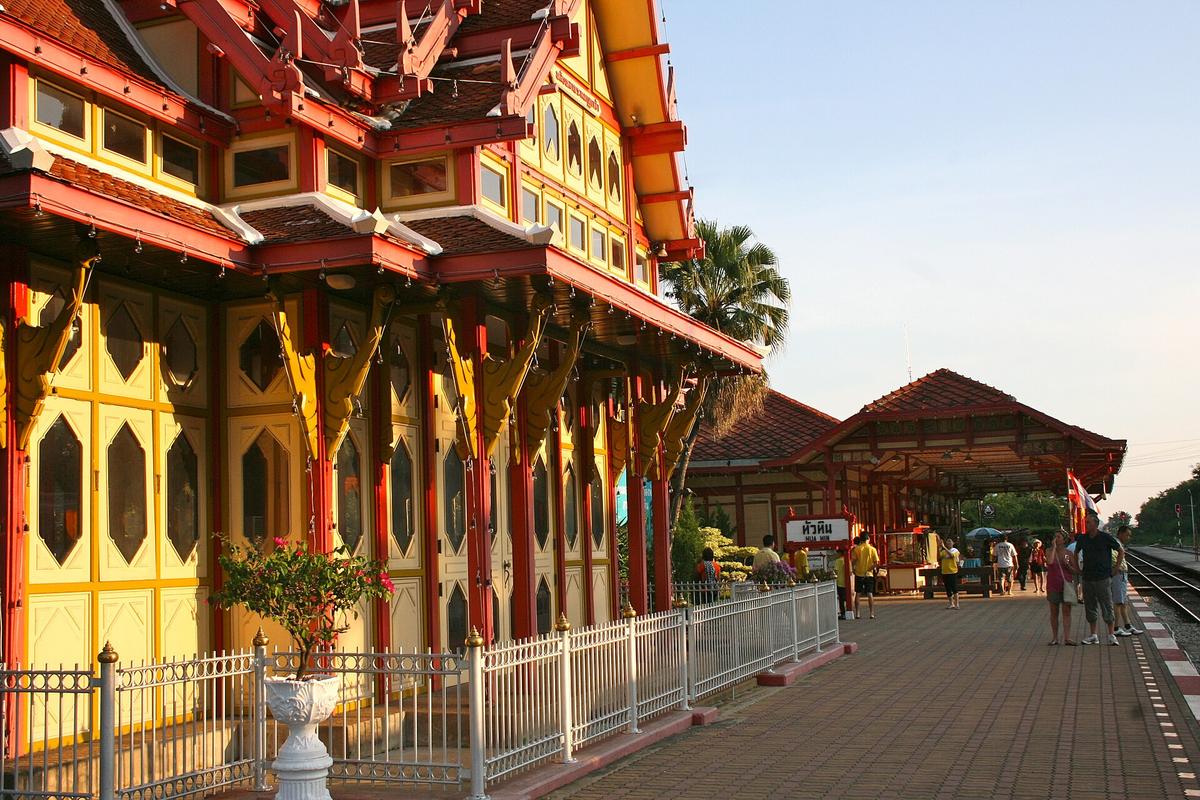
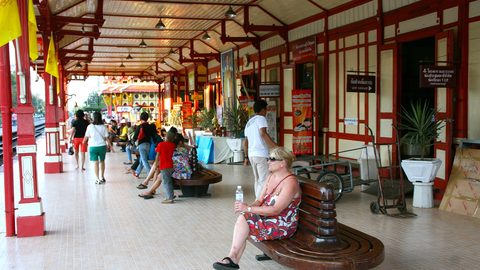
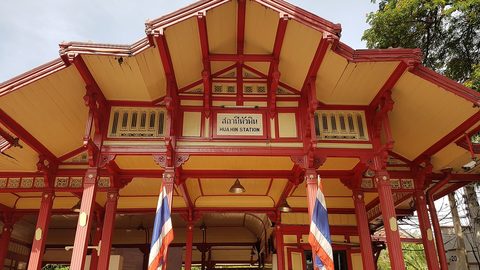
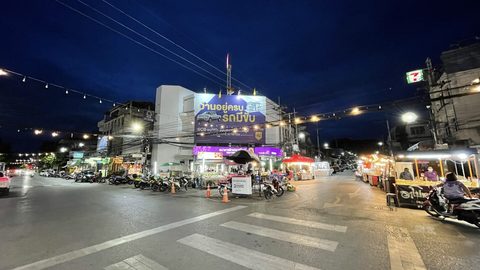
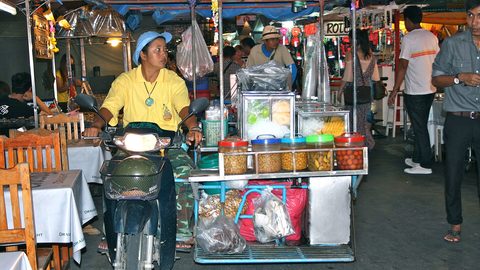
If you are staying for two nights and want to roll out of your hotel into the seafood chaos of the Night Market, central Hua Hin is the obvious choice. Naresdamri Road runs from the pier past the fishing boats and the sunset grills, and the streets around the railway station offer the highest concentration of restaurants, bars, and street food within walking distance on the entire coast. The nightly rate here is the lowest along the strip. The walkability means you can skip the songthaew entirely for most evenings.
The problem is the beach. The central stretch is the narrowest and least swimmable in Hua Hin proper. The sea is murky with sporadic box jellyfish swarms between July and October. You are trading beach quality for convenience. Book a room on the far side of the street from the railway tracks to avoid the early morning diesel train noise from Krung Thep Aphiwat, which rolls through from about 05:30.
Khao Takiab vs Central Hua Hin: the Headland vs the Hub
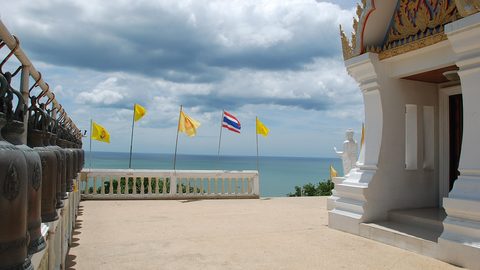
The most common debate among repeat visitors is whether to base themselves at Khao Takiab or stay in central Hua Hin. Khao Takiab sits seven kilometres south of the town centre, at the base of the headland where the Khao Takiab temple and its resident macaques occupy the hill. The character here is quieter, with a significant long stay resident population and seafood shacks where you eat grilled squid and blue crab on plastic chairs with waves splashing your feet. The beach is narrower than the main beach and has some rocky sections near the hill.
The tradeoff for the calm is distance. You cannot walk to the Night Market or the Cicada Market from here. The songthaew route runs along the main road, but the frequency drops after 20:00, and a Grab back to your accommodation after dinner in town may not arrive at all. Khao Takiab suits visitors who want a headland view, monkey chaos, and a local routine. Central Hua Hin suits visitors who want to eat at a different restaurant every night without deciding how to get there.
Soi 102: Digital uPhone Base for the Over 40 Crowd
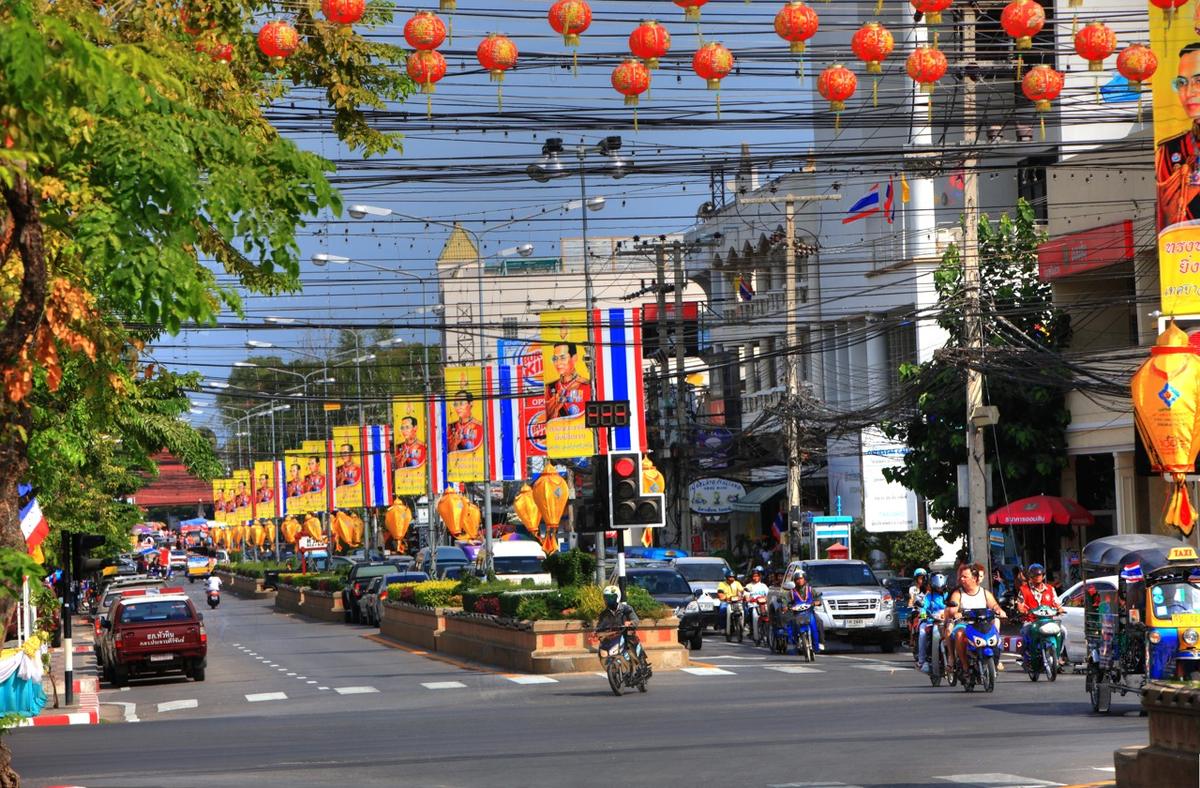
Soi 102 is a canyon of modern condo towers and cafes that has become Hua Hin's answer to a Bangkok suburb. The digital uPhone base here is built around coworking spaces like The White House, reliable 5G from AIS and TrueMove, and a steady stream of travellers over forty who prefer condo comfort and good infrastructure over backpacker chaos. The street has a reasonable cafe scene and a handful of restaurants that stay open until late. It is not a beachfront area. You walk or take a short songthaew ride to the sand.
The advantage is the quality of the accommodation. Condo rentals in Soi 102 offer more space, proper kitchens, and faster internet than the resort hotels on the main beach. The nightly rate for a long stay drops significantly if you book by the month. The disadvantage is the lack of character. Soi 102 could be any modern Thai suburb. If you want atmosphere within walking distance, stay central. If you want a reliable desk and a bed, this is your pocket.
Soi 94: the Expat Strip with a German Breakfast
Soi 94 is Hua Hin's expat strip, a stretch of sports bars, German bakeries, and beer bars that feels more like a Western retirement village than a Thai beach town. The nightly rate here is moderate. The street is walkable for anyone who wants a full English breakfast followed by a football match on a big screen.
The downsides are clear. Soi 94 is not on the beach. The beachfront hotels in this section are set back behind the main road. The character is overwhelmingly oriented toward long stay male residents. It is a useful neighbourhood to know about if you want a specific cuisine or a sports bar, but it is not a base for most first time visitors. The Smor Prong area, further inland, is the only late late zone on the coast, and it is a red light district. If that is not your scene, avoid the area after dark and stick to the main expat strip during daytime hours.

Best Area to Stay in Hua Hin for Families, Couples, and Golfers
Families: The Wide Sand Between Soi 61 and Soi 79
Families who want a wide beach and a full service resort should book on the main beach between Soi 61 and Soi 79. This is the widest stretch of sand in Hua Hin proper, up to about thirty metres at low tide, and it is where the large resorts and historic hotels are concentrated. The water is still murky and horse manure from the beach rides makes barefoot walks a hazard. The sand width means there is room for chairs and umbrellas without fighting the tide.
Couples: Seclusion in Pranburi
Couples looking for seclusion should skip central Hua Hin entirely and head to Pranburi, twenty five kilometres south, where boutique resorts and near empty sand create a genuinely quiet atmosphere. The tradeoff is the lack of dining options. You will eat at your resort or drive into town.
Golfers: Inland Quiet at Palm Hills
Golfers should consider Palm Hills, an inland golf community where the silence is broken only by fairway mowers. You need a car or a dedicated driver for every meal and every outing. For any of these groups, the minimum stay is two nights. Three nights unlocks a genuinely relaxed pace that includes a day trip to Sam Roi Yot National Park or the Phraya Nakhon Cave without feeling rushed.
Hua Hin Beachfront Hotels Area: Where the Sand is Worth the Price
The beachfront hotels area that actually delivers on the sand is the main beach, south of the town centre from Soi 61 to Soi 79. This is where the Centara Grand stands as Hua Hin's first luxury resort, opened in 1923, and where the Hilton Hua Hin anchors the middle of the strip. The beach here is wide enough that you can walk the five kilometre stretch without stepping on someone's towel. The horse rides that produce the manure are concentrated near the central zone.
The nightly rate here carries a weekend premium, especially from December to March when Bangkok's elite and European snowbirds push prices up by fifty to one hundred percent. The alternative for a cheaper beachfront stay is Cha Am, twenty five kilometres north, where the beach is wider but has fewer vendors and a predominantly Thai domestic atmosphere. The rates are lower than equivalent properties in Hua Hin proper. You are isolated from the town's restaurants and night markets. Cha Am suits budget conscious travellers who plan to spend their days on the sand and their evenings at their resort.
Common Mistake Visitors Make About Where to Stay in Hua Hin
The most common mistake is assuming Hua Hin is a walkable beach town. It is not. The main strip is ten kilometres long. Key attractions like the Cicada Market, the Hua Hin Night Market, the Khao Takiab temple, and the main beach are spread far apart. The heat makes walking between them punishing. Visitors who book a hotel without checking its proximity to restaurants and the beach quality directly in front of the property end up stranded without a transport plan.
Before you book, open a map and measure the walking distance from your accommodation to at least three dinner options. If the walk exceeds ten minutes in any direction, budget for songthaew fares or accept that you will eat at your hotel. For most visitors, the best first step is to decide whether you want walkability or beach quality. If you want walkability, book central Hua Hin and accept the narrow beach. If you want beach quality, book the main beach south of Soi 61 and accept that you will take transport to dinner. That tradeoff, not the pool or the breakfast buffet, is what determines whether your trip works.
Common Questions
Is central Hua Hin walkable?
Central Hua Hin, around the Night Market and Hua Hin Pier, is the most walkable stretch on the entire coast. The main strip is ten kilometres long, but the central pocket has the highest concentration of restaurants, bars, and street food within walking distance. Stay outside this pocket and you will need a songthaew or taxi for every outing.
Is Khao Takiab safe from monkeys?
No. The macaques at Khao Takiab temple are aggressive. They steal bags, glasses, and food. There are no deterrents in place. Keep your belongings secured and do not eat near the temple steps.
Can I swim at Hua Hin beach?
You can, but the water is murky and box jellyfish appear sporadically, especially from July to October. Swim only where vinegar stations are posted. The central beach is the narrowest and least swimmable stretch. The main beach south of Soi 61 has wider sand but the same water quality.
How do I get from Bangkok to Hua Hin without a car?
The airport bus from Suvarnabhumi takes 3.5 to 4 hours for 325 THB. A private taxi takes 2.5 to 3 hours for 2,000 to 2,500 THB. The slow diesel train from Krung Thep Aphiwat takes 4 to 4.5 hours and costs 44 to 410 THB depending on class.
What is the best time of year to visit?
December to March offers cool, dry weather with low humidity. Late April to May brings brutal heat reaching 38°C. Avoid Thai school holidays from mid-March to mid-May when beaches are packed. The Hua Hin Jazz Festival weekend in May or June brings heavy traffic and sold out hotels.
Should I rent a scooter in Hua Hin?
A scooter solves the transport problem, but the taxi mafia means you will face hostility if you park near hotel entrances. Songthaews run fixed routes for 10 to 20 THB and are the safer option for most visitors. Grab and Bolt are legally restricted, so pick ups often happen away from major hotel entrances.
Can I walk from Khao Takiab to the Night Market?
No. Khao Takiab is seven kilometres south of the town centre. Walking is not practical in the heat. Take a songthaew along the main road, but note that frequency drops after 20:00.
Read next
-
 Hua Hin Hotels by Type and Price Where Midweek Rates Halve
Hua Hin hotels are shaped by Bangkok weekend demand, so midweek rates often run half the weekend price—the single most useful fact for booking a stay on this coast.
Hua Hin Hotels by Type and Price Where Midweek Rates Halve
Hua Hin hotels are shaped by Bangkok weekend demand, so midweek rates often run half the weekend price—the single most useful fact for booking a stay on this coast.
-
 Hua Hin Flights Why You Fly to Bangkok and the Airport Bus Beats a Connection
-
 Hua Hin Things to Do Ranked for a Town Where Less Is the Point
Hua Hin things to do are fewer than most Thai beach towns, and that is the point—this is a place for beach horse rides, weekend markets, and seafood, not an attraction-packed itinerary.
Hua Hin Things to Do Ranked for a Town Where Less Is the Point
Hua Hin things to do are fewer than most Thai beach towns, and that is the point—this is a place for beach horse rides, weekend markets, and seafood, not an attraction-packed itinerary.
-
 Best Time to Visit Hua Hin Month by Month in a Rain Shadow Coast
The best time to visit Hua Hin is December to March for cool dry weather, but its rain shadow means the wet season is milder than Phuket's—a genuine reason to come when other coasts are poor.
Best Time to Visit Hua Hin Month by Month in a Rain Shadow Coast
The best time to visit Hua Hin is December to March for cool dry weather, but its rain shadow means the wet season is milder than Phuket's—a genuine reason to come when other coasts are poor.
-
 Getting Around Hua Hin When the Town Is Strung Out and Grab Fails
Getting around Hua Hin requires a plan: the town stretches ten kilometres, Grab is restricted by the local taxi mafia, and songthaews on fixed routes become your most reliable option.
Getting Around Hua Hin When the Town Is Strung Out and Grab Fails
Getting around Hua Hin requires a plan: the town stretches ten kilometres, Grab is restricted by the local taxi mafia, and songthaews on fixed routes become your most reliable option.
-
 Hua Hin Itinerary a 3-Day Sequence From Railway Station to Khao Takiab
-
 Hua Hin Night Market
-
 Khao Takiab
-
 Thailand Travel Guide From First Timers To Island Hoppers
A realistic Thailand travel guide covering regions, seasons, and pacing so you avoid the classic Bangkok Chiang Mai island mistake.
Thailand Travel Guide From First Timers To Island Hoppers
A realistic Thailand travel guide covering regions, seasons, and pacing so you avoid the classic Bangkok Chiang Mai island mistake.