A Khao Sam Roi Yot Day Trip to the Phraya Nakhon Cave Pavilion Lit by Oculus

A Khao Sam Roi Yot Day Trip to the Phraya Nakhon Cave Pavilion Lit by Oculus
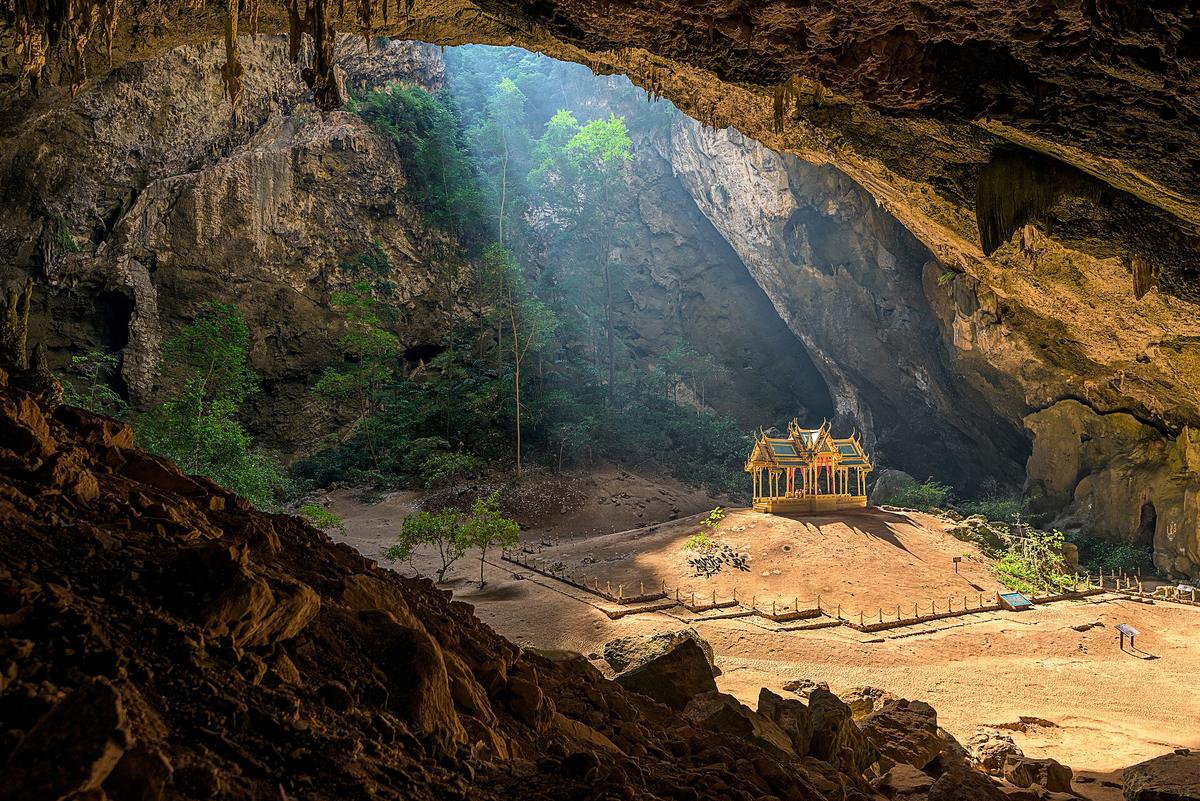
Forget the viewpoint. Forget the waterfall. The reason you drive 60-65 kilometres south from Hua Hin is a single building inside a collapsed limestone cavern: the Kuha Karuhas Pavilion, built for King Rama V in 1890, sitting under a natural oculus. Light falls via a sinkhole in the cave roof directly onto the pavilion for roughly one hour per day. That beam is the entire point. Whether you see it depends entirely on your timing, the season, and your willingness to climb 430 metres of uneven rock steps in 30-35°C heat to reach it.
Phraya Nakhon Cave: What You Are Actually Walking Into
Phraya Nakhon Cave is a collapsed cavern with two sinkholes. The larger opening creates the light shaft that illuminates the royal pavilion. This is not a deep tunnel system. It is a single chamber that feels more like an open-air cathedral than a conventional cave. The pavilion sits on a raised platform in the centre, its tiered roof and ornate gables catching the beam when the angle is right.
Best Light Beam Window
The light beam is visible only when the sun is high enough to shine via the roof opening. That window runs from 10:30 to 11:30. Overcast days eliminate it entirely. The best months for the beam are November to February, during the dry season when the sun sits lower in the sky. Outside that period, the light may enter the chamber but it will not strike the pavilion in the dramatic way you see in photographs. If your schedule forces a visit in April or May, arrive anyway. The chamber is impressive even without the beam. But manage expectations.
What You See Inside
The pavilion is a four-sided structure with a single spire. The interior contains no furniture or artefacts; the building itself is the exhibit. The cave walls rise roughly 50 metres above the chamber floor, with tree roots dangling via the openings. Troops of macaques use the ledges and will drop down if food is visible. Keep bags closed and food packed away.
Sam Roi Yot National Park: Thailand’s First Coastal National Park
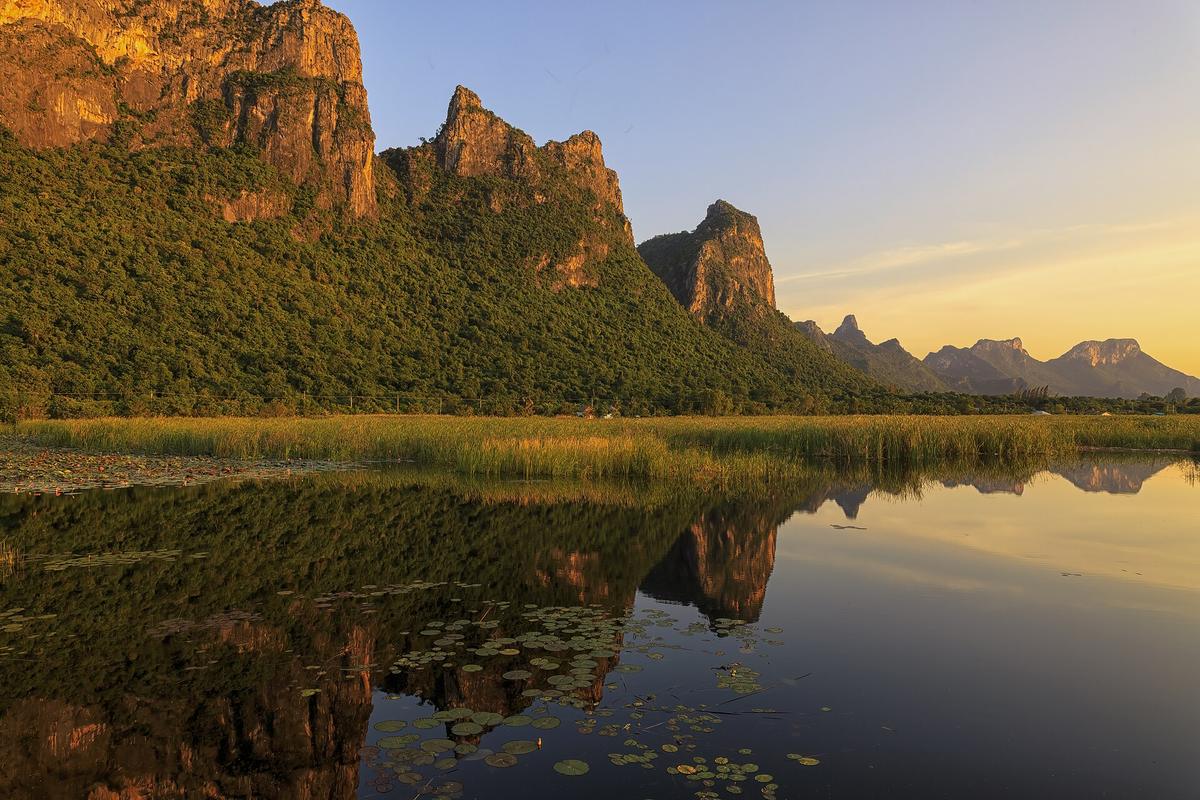
Khao Sam Roi Yot National Park covers 98 square kilometres of limestone peaks, freshwater marshes, and coastal shoreline. It was designated Thailand’s first coastal national park. The park is named for the 300 peaks that rise abruptly from the flat coastal plain, a visual that feels almost theatrical as you approach from the north.
Park Entrance Fee and Dual Pricing
The park entrance fee operates a dual pricing system. Thai nationals pay 40 THB for adults and 20 THB for children. Foreign nationals pay 200 THB for adults and 100 THB for children. Those are the 2024 rates published by the Department of National Parks, Wildlife and Plant Conservation. The figure is revised annually; expect an increase. Pay in cash at the ranger station just inside the park gate. Credit cards are not accepted.
Bueng Bua Nature Trail
Before or after the cave, the Bueng Bua Nature Trail gives you a roughly 1-kilometre boardwalk across a freshwater marsh. The habitat supports more than 300 bird species, including purple heron, painted stork, black-capped kingfisher, and brahminy kite. The boardwalk is flat, shaded in sections, and takes 20 minutes to walk. If you are a birder, arrive before 09:00; the heat drives most birds into cover by mid-morning.
Hua Hin to Sam Roi Yot: Getting There
The drive from central Hua Hin to the park entrance takes 50 to 70 minutes, depending on traffic on Route 4 southbound. The road is sealed all the way. There is no direct public transport: the nearest bus stop is Pranburi, roughly 25 kilometres from the park entrance. You need either a private car with a driver or an organised tour.
Private Driver Cost Full Day
A private car with a driver for a full day runs 1,500 to 2,500 THB, varying with vehicle type and fuel cost. The rate may have shifted; confirm the price when you book. Arrange via your hotel reception or a driver you have used previously. Do not rely on Grab or Bolt. The local taxi mafia restricts their operation, and pick-ups near Hua Hin’s main hotel entrances are unreliable.
Organised Tour Cost Per Person
Organised tours charge 1,200 to 2,000 THB per person. That includes transport, a guide, and lunch. They depart from Hua Hin at 07:30 and return by 16:00. The downside is the fixed schedule: if you want to hit the 10:30-11:30 light window, you need a driver who agrees to the early start that most tours avoid.
Recommended Departure Time From Hua Hin
Leave Hua Hin by 06:30 to 07:00. That puts you at Bang Pu village, the boat access point, by 08:00 to 08:30. The total day trip runs 8 to 10 hours door to door.
Khao Sam Roi Yot Hike: the 430-Metre Climb to the Cave
The hike to Phraya Nakhon Cave is 430 metres in distance with roughly 130 metres of elevation gain. The surface is uneven rock steps, boulders, and loose stone. The climb takes 30 to 45 minutes at a steady pace. There is no shade. None. Temperatures mid-morning hit 30 to 35°C. This is a strenuous climb. It is not suitable for anyone with mobility issues, respiratory problems, or low fitness.
What To Bring
Bring a minimum of 1.5 litres of water per person. Sturdy shoes with grip are non-negotiable; sandals will fail you on the loose sections. Sun protection and a hat are required, the sun is direct. Insect repellent helps at the shaded rest stops near the top. Carry cash for the park fee (200 THB for foreign adults), the boat fee (200-400 THB return per person), and any food or drink you buy at the stalls in Bang Pu or Laem Sala.
Route Options: Boat Or Headland Trail
Two routes access the cave. The standard route uses a boat from Bang Pu village across the lagoon to Laem Sala beach. The boat crossing takes 10 to 15 minutes. From Laem Sala beach, the climb begins immediately behind the sand. The alternative is a headland trail from Bang Pu that skips the boat. That trail is longer and less maintained; most visitors take the boat. The last boat return from Laem Sala is roughly 17:00, though that shifts with season and demand. Confirm the return time with your boat operator before you leave them.
Facilities Along The Route
Bang Pu village has basic toilets, small food stalls, and parking. Laem Sala beach has toilets, a basic restaurant, and a campsite. Laem Sala itself is a sand beach suitable for a swim after the descent if the tide is right and jellyfish are absent. Check for vinegar stations at the beach before entering the water. Box jellyfish appear sporadically, especially July to October.

Why Start in the Morning and Check the Sun Angle
A morning start is not optional. It is the entire operational plan. The light beam via the oculus is visible only between 10:30 and 11:30. Arrive at the cave at 12:00 and the angle has shifted; the pavilion sits in flat, diffuse light. Arrive on an overcast day and there is no beam. Arrive in late April or May, when the sun is directly overhead, and the beam may enter vertically but miss the pavilion entirely. November to February is the reliable window for the dramatic shaft of light you are travelling for.
Failure Case: Overcast Day
If the sky is fully overcast, the pavilion still stands in a dramatic chamber with roots and greenery overhead. The cave is worth seeing. But the photographs you want will not happen. Accept that and enjoy the structure without the beam. You can return in dry season.
Dolphin Bay: a Possible Add-On for the Return Drive
Dolphin Bay, near Pranburi roughly 30 minutes south of Hua Hin, offers rare pink dolphin sightings by boat. The sightings are unreliable. The dolphins are wild and move with the tide. But the boat trips are short and the lagoon setting is calm. If you have energy after the climb, stop here on the return. Arrange a boat at the small pier; expect to pay 300-500 THB per person for a 45-minute trip. Do not make this the sole reason for the day trip. The dolphins do not cooperate on command. Treat it as a bonus that may not deliver.
Read next
-
 Hua Hin Hotels by Type and Price Where Midweek Rates Halve
Hua Hin hotels are shaped by Bangkok weekend demand, so midweek rates often run half the weekend price—the single most useful fact for booking a stay on this coast.
Hua Hin Hotels by Type and Price Where Midweek Rates Halve
Hua Hin hotels are shaped by Bangkok weekend demand, so midweek rates often run half the weekend price—the single most useful fact for booking a stay on this coast.
-
 Where to Stay in Hua Hin Along Fifteen Kilometres of Coast
Where to stay in Hua Hin depends on whether you want night market walkability, a condo near Soi 102 cafes, or a family resort up the coast in Cha-Am—and your transport plan follows from that choice.
Where to Stay in Hua Hin Along Fifteen Kilometres of Coast
Where to stay in Hua Hin depends on whether you want night market walkability, a condo near Soi 102 cafes, or a family resort up the coast in Cha-Am—and your transport plan follows from that choice.
-
 Hua Hin Flights Why You Fly to Bangkok and the Airport Bus Beats a Connection
-
 Hua Hin Things to Do Ranked for a Town Where Less Is the Point
Hua Hin things to do are fewer than most Thai beach towns, and that is the point—this is a place for beach horse rides, weekend markets, and seafood, not an attraction-packed itinerary.
Hua Hin Things to Do Ranked for a Town Where Less Is the Point
Hua Hin things to do are fewer than most Thai beach towns, and that is the point—this is a place for beach horse rides, weekend markets, and seafood, not an attraction-packed itinerary.
-
 Best Time to Visit Hua Hin Month by Month in a Rain Shadow Coast
The best time to visit Hua Hin is December to March for cool dry weather, but its rain shadow means the wet season is milder than Phuket's—a genuine reason to come when other coasts are poor.
Best Time to Visit Hua Hin Month by Month in a Rain Shadow Coast
The best time to visit Hua Hin is December to March for cool dry weather, but its rain shadow means the wet season is milder than Phuket's—a genuine reason to come when other coasts are poor.
-
 Getting Around Hua Hin When the Town Is Strung Out and Grab Fails
Getting around Hua Hin requires a plan: the town stretches ten kilometres, Grab is restricted by the local taxi mafia, and songthaews on fixed routes become your most reliable option.
Getting Around Hua Hin When the Town Is Strung Out and Grab Fails
Getting around Hua Hin requires a plan: the town stretches ten kilometres, Grab is restricted by the local taxi mafia, and songthaews on fixed routes become your most reliable option.
-
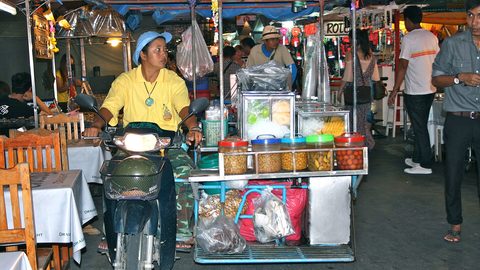 Hua Hin Night Market
-
 Khao Takiab
-
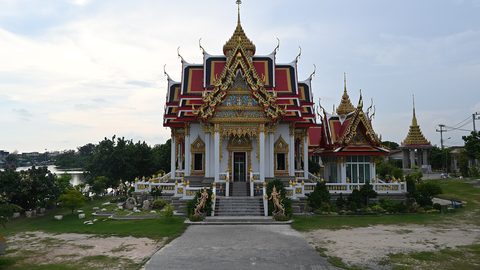 Thailand Travel Guide From First Timers To Island Hoppers
A realistic Thailand travel guide covering regions, seasons, and pacing so you avoid the classic Bangkok Chiang Mai island mistake.
Thailand Travel Guide From First Timers To Island Hoppers
A realistic Thailand travel guide covering regions, seasons, and pacing so you avoid the classic Bangkok Chiang Mai island mistake.