Safety in Hua Hin Honestly Weighted From Jellyfish to Taxi Mafias
Hua Hin Safety Honestly Weighted from Jellyfish to Taxi Mafias
Hua Hin is a polished, orderly seaside town that feels more like a Bangkok weekend suburb than a tropical escape, and violent crime is low. The risks are specific, seasonal, and avoidable: box jellyfish swarms between July and October, a taxi mafia that makes Grab intimidation routine, horse manure on the main beach that turns a barefoot walk into a genuine hazard, and aggressive macaques at Khao Takiab. Most problems are solved by local knowledge, not by fear. What follows tells you exactly what to avoid, when, and what to do when things go wrong.
Hua Hin is a weekend beach fix for Bangkok families and golf obsessives, not a backpacker party town. The nightlife is tame. Most things shut by midnight. The sea is murky. The real safety questions are about jellyfish stings, transport scams, and monsoon rip currents, not about getting mugged. The homicide rate for Thailand was 4.8 per 100,000 population in the 2022 UNODC report, and there is no separate published series for tourist homicide in Hua Hin. What you are dealing with here is inconvenience and injury, not violence.

Is Hua Hin Safe? the Baseline Truth
Hua Hin is safe for tourists. The general crime risk level for visitors is low. Petty theft is the main nuisance: night market pickpocket on Ketsarin Road is a known risk, so carry a zipped bag and keep your phone in a front pocket. Theft from unattended beach bags happens, though less than on Phuket. Solo female travellers report feeling comfortable walking alone on the main strip after dark, but stick to Phetkasem Road and the night market area rather than quiet side sois after midnight. The Smor Prong red-light area is the only zone with late-late activity and is best avoided if you are not looking for beer bars. Police emergency number is 191, Tourist Police is 1155.
The Real Danger Is the Road
The bigger hazard is the road. Phetkasem Road, Highway 4, runs through town and carries annual road fatalities of roughly 3,500 to 4,000 according to the Thai Road Safety Committee 2023 data. The speed limit in urban Hua Hin is 60 km/h, but enforcement is inconsistent. Motorcycle helmet wearing rate nationally is about 45 percent per the WHO and ThaiRSC 2023 figures. If you rent a motorbike, you need a valid home-country licence plus an International Driving Permit under the 1949 convention, or insurance is void. Do not skip this. Rental shops rarely check, but police checkpoints on Phetkasem Road fine you 500 to 1,000 THB and the accident cost is far higher.
Hua Hin Jellyfish Season: Box Jellyfish, Vinegar Stations, and What to Do If Stung
The real seasonal risk in Hua Hin is in the water. Box jellyfish appear in the Gulf of Thailand between June and October, with peak swarms in July to October. Two species are confirmed in Hua Hin waters: Morbakka fenneri and Chironex indrasaksajiae. The 2015 fatality, recorded in Thai national park records, was a single confirmed fatal box jellyfish sting in the Hua Hin district. That is one confirmed death in over a decade, but the risk is real enough that you change your behaviour, not skip the beach.
Where Vinegar Stations Are Posted
The municipal government places vinegar stations at flagged swim zones along Hua Hin main beach. Look for the white boxes with red crosses. Douse the sting site with household vinegar immediately on contact. Do not rinse with fresh water, do not rub, do not apply alcohol. Vinegar neutralises unfired nematocysts. If the person stung has difficulty breathing, chest pain, or loss of consciousness, call 1669 for an ambulance. Bangkok Hospital Hua Hin on Phetkasem Road has a 24 hour international patient coordination desk and can administer box jellyfish antivenom. San Paulo Hua Hin Hospital and the government Hua Hin Hospital also treat stings, but Bangkok Hospital has the fastest response for severe cases.
How To Swim Safely During Season
Swim only at flagged zones where lifeguards are present. Lifeguard coverage on Hua Hin main beach is seasonal and not full time year round. In June through September, the southwest monsoon also creates rip currents, strongest in those same months. If you get caught in a rip current, swim parallel to the shore, not against it. If you are a weak swimmer or travelling with children, skip the sea entirely between July and October and use the hotel pool. The water is murky anyway, and the jellyfish are invisible until you brush against them.
Hua Hin Taxi Scams: the Local Mafia, Hotel Cartel, and How to Move Without Getting Ripped Off
The dominant friction in Hua Hin is not crime but transport pricing. Metered taxis refuse to use their meters. Grab and Bolt are legally restricted by the local taxi mafia, so drivers who accept your booking will often ask you to walk away from major hotel entrances to pick you up, or they cancel when they realise your location. The result is that you are forced into using hotel taxis at roughly three times the street price. A short trip within central Hua Hin from a hotel taxi runs 200 to 300 THB when a songthaew costs 10 to 20 THB.
Songthaew: The Only Fair Option
Songthaews, converted pick up trucks, run fixed routes along the main roads. Flag one down like a bus, tell the driver your general direction, and pay 10 to 20 THB when you get off. They run until roughly 21:00 on the main routes. After that, negotiate a tuk tuk fare before boarding: a short town centre trip should cost 100 to 200 THB. Negotiate before you get in. If the driver quotes 400 THB for a three minute ride, walk away and flag another. The Jet ski rental damage scam is less common here than on Phuket, with only isolated incidents reported, but take a dated video of the machine before you take it.
What To Do When Grab Does Not Work
If you are staying at a large hotel, walk 100 metres off the property before opening the Grab app. Drivers are less likely to be intimidated if they are not picking up from the hotel taxi queue. If you are near the night market or Market Village, walk to the street edge. If the app keeps cancelling, call a songthaew or take a hotel taxi and pay the premium. Budget for it. The main strip is 10 kilometres long and key attractions are spread far apart, so do not assume you can walk everywhere. The heat makes walking between attractions punishing, and visitors without a transport plan end up stranded or overpaying.
Hua Hin Beach Safety: Horse Manure, Tide Extremes, and UV Exposure
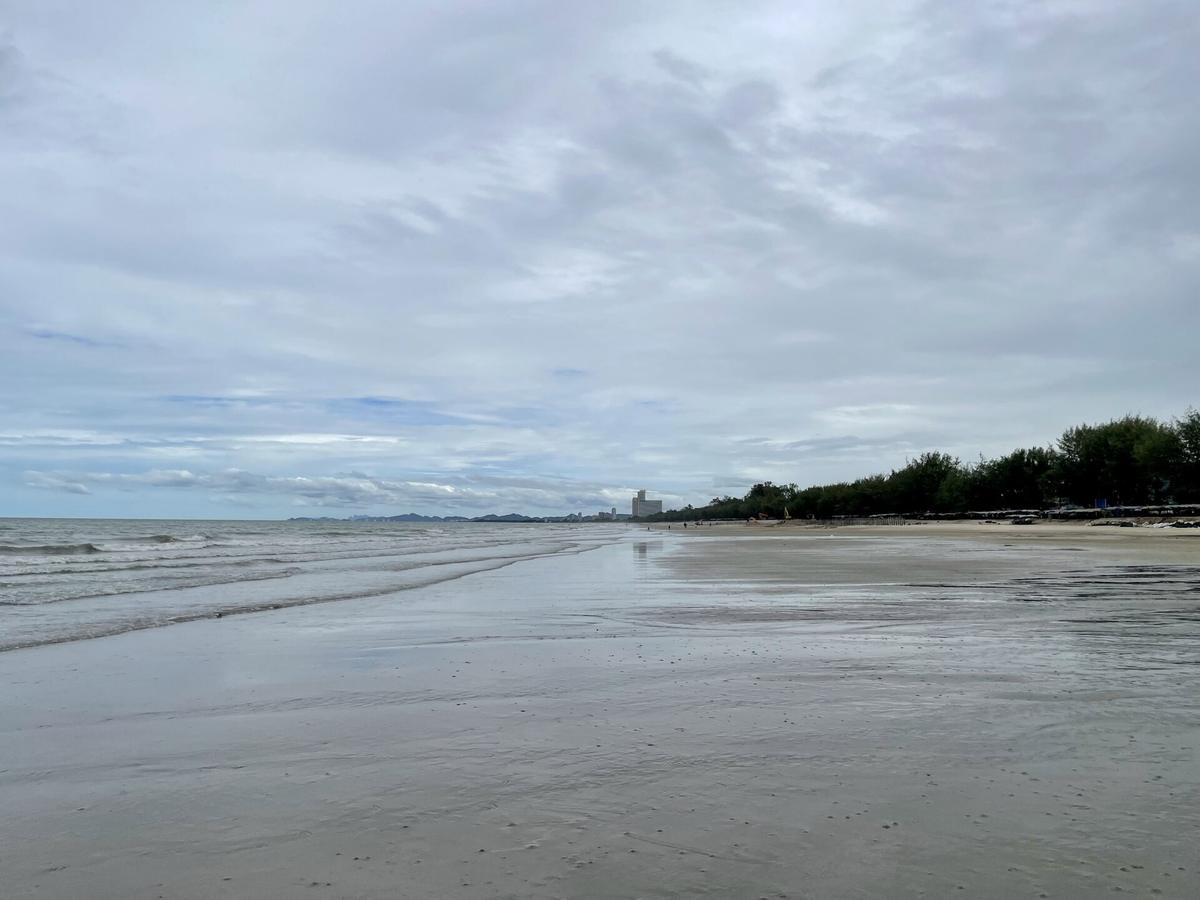
Hua Hin beach is five kilometres of white sand with horse rides, but the horses leave significant manure. Walking barefoot on the main beach from the night market end north toward Cha Am is a genuine hazard. You step in it. The beach vendors hose down patches in the morning, but by midday the waste is baked into the sand. Wear sandals on the beach and switch to barefoot only at the water line where the tide washes the sand clean. The barefoot hazard is the most common complaint first time visitors make, not because it is dangerous but because it is disgusting and avoidable.
Tide Extremes and Swim Windows
The beach nearly disappears at high tide in some sections, leaving no sand for chairs. Check the tide table for Hua Hin before you head out. Low tide exposes a wide firm beach that is good for walking. High tide pushes water up to the seawall in parts of central Hua Hin. Rip current risk is strongest June through September during the southwest monsoon. Swim only in flagged zones. The UV index peaks at 11 to 12 extreme from March to September, and stays at 8 to 9 very high even in December. Reapply SPF 50 every 90 minutes and wear a rash guard. Heatstroke risk is highest in April, when the average daily maximum hits 33 to 35 degrees Celsius. December is cooler at 29 to 30 degrees, but the sun still burns.
The Monkey Problem at Khao Takiab: Aggressive Macaques and Rabies Risk
Khao Takiab, also called Chopstick Mountain, is the headland south of central Hua Hin with the giant Buddha and seafood restaurants. It is also home to a troop of long tailed macaques, Macaca fascicularis, that have learned to steal bags, sunglasses, food, and even glasses off your face. They are aggressive. There are no deterrents in place. If you walk up the staircase to the temple with any food or shiny object visible, you will be mobbed.
How To Visit Without Getting Bit
Remove all jewellery, secure your bag under your shirt, and keep nothing in your hands. Do not carry plastic bags or water bottles in your hands. Do not make eye contact with a monkey that is staring at you. If a macaque approaches, back away slowly without turning your back. Rabies is endemic in Thailand. There were three rabies deaths in the entire country in 2023 per the Ministry of Public Health. Post exposure prophylaxis at Hua Hin Hospital costs between 3,000 and 6,000 THB per course, depending on the vaccine brand and your weight. You need rabies vaccine within hours of a bite, not days. If you get bitten, wash the wound with soap and water for 15 minutes, apply povidone iodine, and go immediately to Bangkok Hospital Hua Hin, which has 24 hour international coordination. Do not wait. Do not assume the monkey looks healthy. The disease is fatal once symptoms appear.
Petty Theft and Scams: What Actually Gets Stolen
Night market pickpocket is a real risk on Ketsarin Road between the seafood stalls. Keep your phone in a front zipped pocket. Do not put your wallet in your back pocket or an open beach bag. Timeshare and property presentation solicitors target tourists near Market Village, the night market perimeter, and major hotel entrances. They offer fake prizes or free meal vouchers. Say no and keep walking. The solicitors are persistent but not aggressive. The jet ski damage scam is isolated here compared to Phuket, but if you rent one, take a 30 second video walkaround showing the machine at rest and running before you hand over your passport or cash. Leave your passport in the hotel safe; offer a photocopy and a cash deposit instead.
If you lose your passport or need to replace it, contact your embassy in Bangkok. Hua Hin does not have a dedicated passport office. AIS and TrueMove shops in Market Village mall sell tourist SIMs with 30 day unlimited data for 300 to 400 THB. You need a passport for AIS SIM registration, which is required by law. Register at the shop, not online.
Medical Infrastructure and Insurance: What You Need Before You Go
Bangkok Hospital Hua Hin on Phetkasem Road is the best equipped private facility for treating jellyfish stings, rabies, and serious accidents. The government Hua Hin Hospital and San Paulo Hua Hin Hospital are also on Phetkasem Road. The ambulance number is 1669. The Tourist Police number is 1155. The police emergency number is 191. Put all three contacts in your phone before you leave your hotel.
Travel insurance is not optional. A box jellyfish sting requiring antivenom costs thousands of dollars. A rabies post exposure prophylaxis course costs 3,000 to 6,000 THB at Hua Hin Hospital, but a motor vehicle accident with fractures evacuates you to Bangkok. Read your policy: it must cover motorbike accidents, stings, and repatriation. Do not rely on the Thai public hospital system for anything beyond basic care. The treatment is competent but the wait times and language barriers are serious.
The Single Most Common Mistake Visitors Make with Hua Hin Safety
Visitors assume Hua Hin is a walkable beach town. The main strip is 10 kilometres long, key attractions are spread far apart, and the heat makes walking between them punishing. Without a transport plan, you end up stranded or overpaying for a hotel taxi. The failure case is standing at a hotel entrance at 14:00 in 35 degree heat with no Grab driver available and a 400 THB minimum fare for a 2 kilometre ride. Solve this before you arrive: learn the songthaew routes, keep 50 THB in coins in your pocket, and accept that you will pay a premium for late night transport. The second most common mistake is swimming in July without checking where the vinegar stations are. Neither mistake is dangerous if you plan for them, but both will ruin an afternoon.
When to Skip the Beach Altogether and What to Do Instead
If you are travelling between July and October and you have children or are a weak swimmer, skip the sea. The jellyfish and rip current risk during the southwest monsoon are too high for casual swimming. Use the Vana Nava Water Jungle up the road, which has controlled pools and lifeguards. Or visit Sam Roi Yot National Park 45 minutes south for its limestone peaks and marshland boardwalks. If you are in town during late April or May, the brutal heat with temperatures hitting 38 degrees Celsius makes the beach unappealing anyway. Use the morning for the Khao Takiab temple and the afternoon for the air conditioned Market Village mall or a tasting at the Monsoon Valley vineyard. The UV index is 11 to 12 extreme from March to September, so reapply sunscreen even in the shade.
How to Buy a Local SIM and Stay Connected for Emergencies
5G is strong across town. Buy a tourist SIM from AIS or TrueMove at the Market Village mall. A 30 day unlimited data plan costs 300 to 400 THB. You need your passport for registration. Do this on arrival, not after something goes wrong. If you are travelling solo, put the emergency numbers in your phone immediately: 191 for police, 1155 for tourist police, 1669 for ambulance, and the direct line for Bangkok Hospital Hua Hin at +66 32 616 800. If you lose your phone, borrow a shop phone and call 1155. The tourist police have English speakers.
Common Questions
Is Hua Hin safe for solo female travellers?
Yes. Petty theft is the main risk, not violence. Stick to Phetkasem Road and the night market area after dark. Avoid Smor Prong and quiet side sois late at night. Songthaews are safe and cheap. Grab works if you walk away from hotel entrances.
What should I do if I get stung by a box jellyfish in Hua Hin?
Douse the sting with household vinegar immediately. Do not rinse with fresh water or rub the area. Call 1669 for an ambulance. Go to Bangkok Hospital Hua Hin on Phetkasem Road, which has antivenom and a 24 hour international coordination desk.
Are taxis in Hua Hin safe?
The taxis are safe but overpriced. Metered taxis refuse meters. Grab drivers face intimidation from the local taxi mafia. Use songthaews for 10 to 20 THB during the day, negotiate tuk tuk fares to 100 to 200 THB at night, and pay the hotel taxi premium only as a last resort.
When is jellyfish season in Hua Hin?
Box jellyfish appear from June to October, with peak swarms from July to October. Swim only at flagged zones with vinegar stations. The southwest monsoon also creates rip currents strongest from June to September.
Is the water safe to swim in at Hua Hin beach?
Swim only at flagged zones with lifeguards from June to October. Outside jellyfish season the water is murky but swimmable. Watch for tide extremes at high tide when the beach nearly disappears. The main hazard is horse manure on the sand, not the water itself.
Read next
-
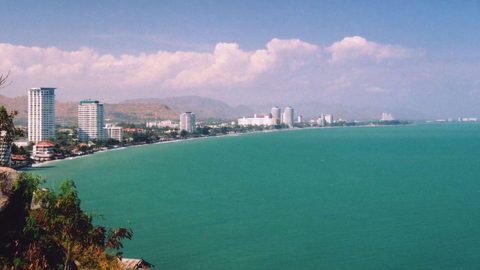
 Hua Hin Hotels by Type and Price Where Midweek Rates Halve
Hua Hin hotels are shaped by Bangkok weekend demand, so midweek rates often run half the weekend price—the single most useful fact for booking a stay on this coast.
Hua Hin Hotels by Type and Price Where Midweek Rates Halve
Hua Hin hotels are shaped by Bangkok weekend demand, so midweek rates often run half the weekend price—the single most useful fact for booking a stay on this coast.
-
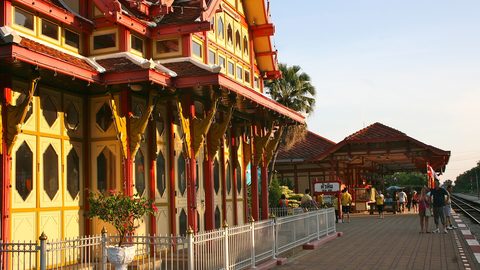 Where to Stay in Hua Hin Along Fifteen Kilometres of Coast
Where to stay in Hua Hin depends on whether you want night market walkability, a condo near Soi 102 cafes, or a family resort up the coast in Cha-Am—and your transport plan follows from that choice.
Where to Stay in Hua Hin Along Fifteen Kilometres of Coast
Where to stay in Hua Hin depends on whether you want night market walkability, a condo near Soi 102 cafes, or a family resort up the coast in Cha-Am—and your transport plan follows from that choice.
-
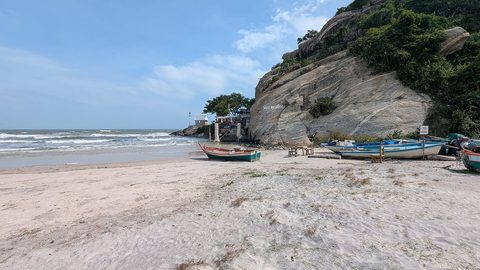 Hua Hin Flights Why You Fly to Bangkok and the Airport Bus Beats a Connection
-
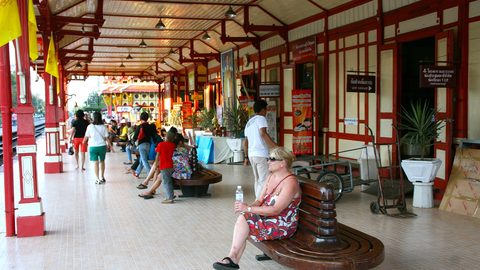 Hua Hin Things to Do Ranked for a Town Where Less Is the Point
Hua Hin things to do are fewer than most Thai beach towns, and that is the point—this is a place for beach horse rides, weekend markets, and seafood, not an attraction-packed itinerary.
Hua Hin Things to Do Ranked for a Town Where Less Is the Point
Hua Hin things to do are fewer than most Thai beach towns, and that is the point—this is a place for beach horse rides, weekend markets, and seafood, not an attraction-packed itinerary.
-
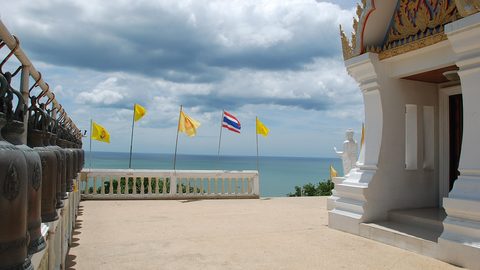 Best Time to Visit Hua Hin Month by Month in a Rain Shadow Coast
The best time to visit Hua Hin is December to March for cool dry weather, but its rain shadow means the wet season is milder than Phuket's—a genuine reason to come when other coasts are poor.
Best Time to Visit Hua Hin Month by Month in a Rain Shadow Coast
The best time to visit Hua Hin is December to March for cool dry weather, but its rain shadow means the wet season is milder than Phuket's—a genuine reason to come when other coasts are poor.
-
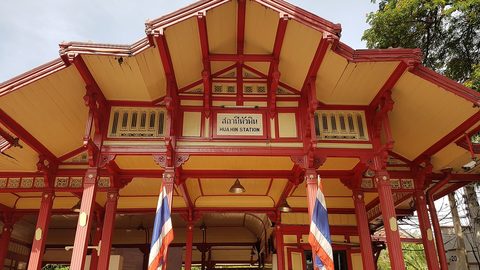 Getting Around Hua Hin When the Town Is Strung Out and Grab Fails
Getting around Hua Hin requires a plan: the town stretches ten kilometres, Grab is restricted by the local taxi mafia, and songthaews on fixed routes become your most reliable option.
Getting Around Hua Hin When the Town Is Strung Out and Grab Fails
Getting around Hua Hin requires a plan: the town stretches ten kilometres, Grab is restricted by the local taxi mafia, and songthaews on fixed routes become your most reliable option.
-
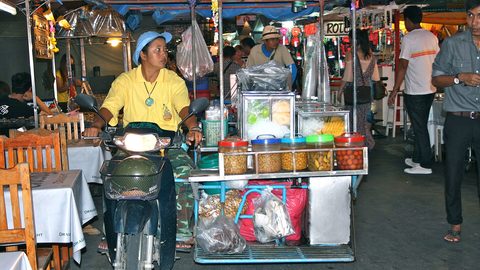 Hua Hin Night Market
-
 Khao Takiab
-
 Thailand Travel Guide From First Timers To Island Hoppers
A realistic Thailand travel guide covering regions, seasons, and pacing so you avoid the classic Bangkok Chiang Mai island mistake.
Thailand Travel Guide From First Timers To Island Hoppers
A realistic Thailand travel guide covering regions, seasons, and pacing so you avoid the classic Bangkok Chiang Mai island mistake.