Getting Around Chiang Mai Without Underestimating the Heat and Distances
Getting around Chiang Mai: Grab and songthaew costs, scooter licence checkpoints, airport transfers and why walking is harder than it looks.
Getting Around Chiang Mai Without Underestimating the Heat and Distances
You land at Chiang Mai International Airport, step outside, and the heat hits you like a wall. The old city moat is 3 kilometres away. A taxi takes 10 minutes. Walking would take 40 minutes in 35°C sun with no shade. This is the moment to accept that getting around Chiang Mai requires a plan, not a map.
The old city looks walkable on paper: a 1.6 by 1.6 kilometre square enclosed by the moat. In practice, the distance between Wat Phra Singh and Wat Chedi Luang is short, but the pavements are narrow, uneven, and often blocked by parked scooters. At noon, that stretch feels like a mistake. The heat, the smoke season haze, and the lack of continuous shade make walking between temples a common error that costs you half a day of energy.
You have four real options: ride share apps, songthaews, scooter rental, and metered taxis. Each works for different trips, and each has a failure case you need to know before you arrive.
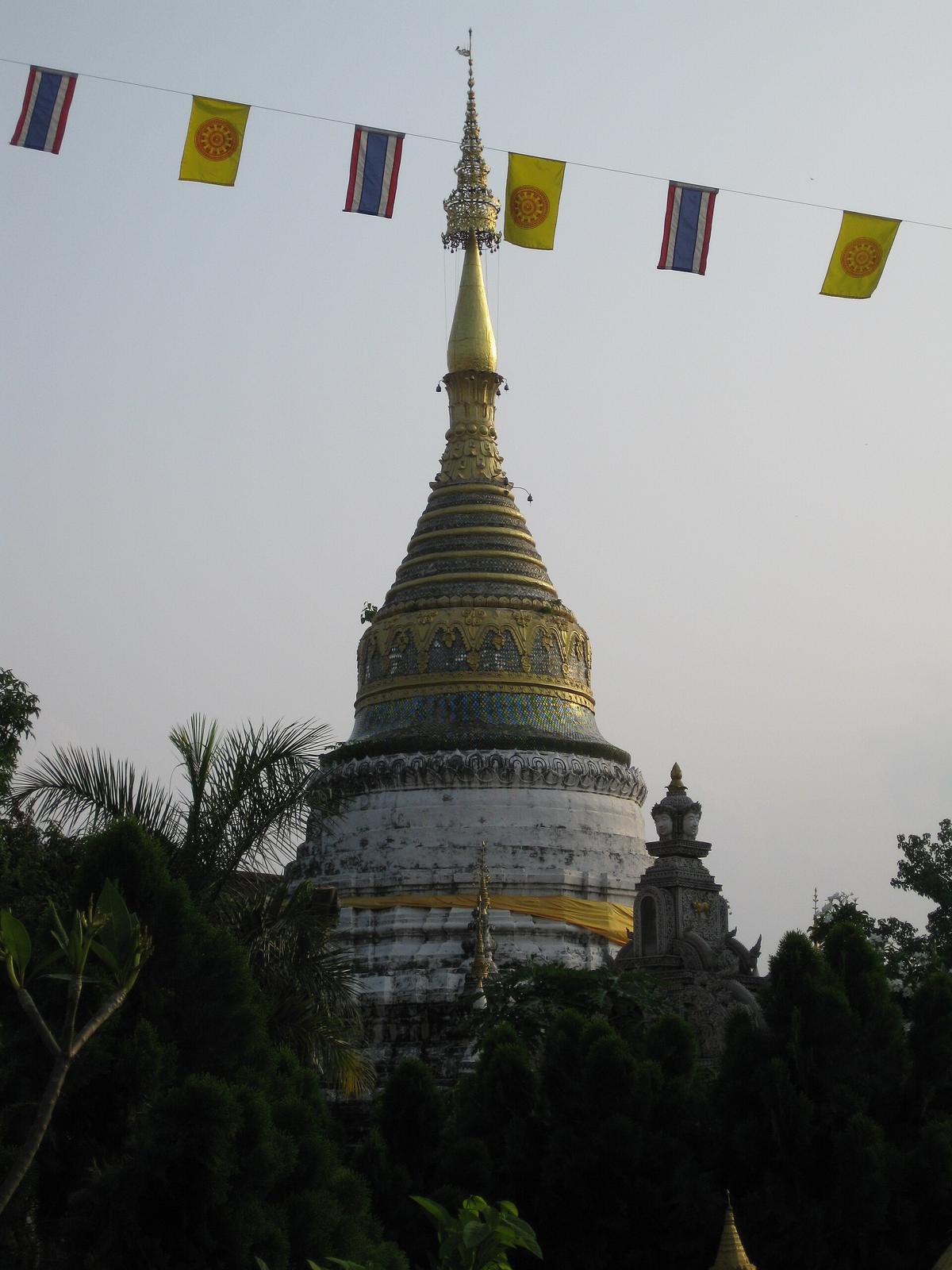
.jpg)
Chiang Mai Grab: the Default for Short Trips
Grab operates across Chiang Mai. Bolt operates in Chiang Mai too, and is usually slightly cheaper, but both apps function the same way: you request a ride, see the price upfront, and pay by card or cash. For a trip inside the old city, expect 40 to 80 THB. From Nimmanhaemin to the old city, 50 to 90 THB. For longer trips, like from the old city to Hang Dong, the fare climbs to 150 to 250 THB.
The main advantage is air conditioning. The main disadvantage is that during peak hours, especially around 17:00, wait times stretch and surge pricing kicks in. When surge pricing hits, compare the fare against a songthaew charter or a tuk-tuk.
At 1am, Grab is still available, but expect a 15 minute wait and a 1.5x multiplier. Bolt often has fewer drivers late at night. The fallback is a tuk-tuk waiting near Tha Phae Gate. Agree the price before boarding: a short hop should cost 60 to 150 THB based on the 2024 rates. Those rates are set by negotiation, not a meter, and the driver will start high.
Chiang Mai Songthaew: the 30 Baht Shared Ride
How the Red Trucks Work
Songthaews, the red trucks that cruise the main roads, are the cheapest way to move around if you understand how they work. The base fare inside the moat is 30 THB as of 2024. Beyond the moat, the fare ranges from 30 to over 100 THB depending on the destination. Flag one down, state your destination through the open window, and the driver decides whether to take you. If they accept, climb in the back, ride with other passengers, and pay when you exit.
The failure case: if the driver says no, they are already headed somewhere else. Wait for the next one. Do not negotiate a charter price unless you want a private trip, which costs 150 to 300 THB for a short journey. The 2024 figures are published by the Chiang Mai tourism authority and may shift, so ask the driver for the current rate before you commit to a charter.
Fixed Routes and Doi Suthep
Songthaews are most useful for fixed routes. The run up to Wat Phra That Doi Suthep is a classic example: songthaews gather at the base of the mountain on Huay Kaew Road and charge a fixed rate, around 60 to 80 THB per person one way. The ride takes 30 to 40 minutes up Route 1004, which is 11 kilometres of steep hairpin bends.
| Method | Typical Fare | Inside Old City | To Airport | To Doi Suthep |
|---|---|---|---|---|
| Grab / Bolt | 40–250 THB | 3–5 min wait | 120–200 THB | 150–250 THB |
| Songthaew (shared) | 30–100 THB | Flag down on main road | Not recommended | 60–80 THB one way |
| Songthaew (charter) | 150–300 THB | Upfront negotiation | 200–300 THB | 500–800 THB round trip |
| Tuk-tuk | 60–150 THB (short hop) | Agree price first | 150–250 THB | Not practical |
| Scooter rental | 150–300 THB/day | Park anywhere | 10–15 min ride | 30–40 min ride |
The table shows the range, but the real question is which method fits your day. Going to Warorot Market from the old city? Take a songthaew for 30 THB. Carrying groceries or a cooking class haul? Pay the extra for a Grab. Heading to Nimmanhaemin for co-working? Either works, but the songthaew route is less direct: you may need to walk a few blocks from the main road.
Chiang Mai Scooter Rental: the Reality of Police Checkpoints and Insurance
Licence and Checkpoints
Scooter rental in Chiang Mai costs 150 to 300 THB per day depending on the bike size and rental duration as of 2024 rates. That is cheap, but the hidden costs are not financial. Police checkpoints are routine around the moat, especially at Tha Phae Gate, Chang Puak Gate, and Chiang Mai Gate. If you do not have a valid Thai driving licence or an International Driving Permit with a motorcycle endorsement, the on the spot fine is 400 to 1,000 THB. The 2024 fine range is set by the Thai traffic police and may change, but the checkpoint locations do not.
Insurance and the Doi Suthep Road
More importantly, most rental companies include only the basic compulsory insurance, which covers damage to other vehicles, not your own medical bills or the bike itself. Personal accident and theft coverage are often excluded. Check your travel insurance policy before you rent: many policies are void if you ride without a valid licence.
The Doi Suthep road is the most common scooter accident site. The 11 kilometre route has steep gradients and sharp bends, and the surface can be slick during the rainy season. If you are not an experienced rider on mountain roads, take a songthaew instead.
Chiang Mai Airport Transfer: Getting from CNX to Your Hotel
Chiang Mai International Airport is 3 to 4 kilometres from the old city. The drive takes 10 to 15 minutes by taxi or Grab. A taxi from the official airport stand costs 120 to 200 THB based on 2024 rates. A Grab from the arrivals level costs roughly the same, sometimes slightly less. Pre booked hotel transfers cost 300 to 500 THB and offer no real advantage unless you want a sign held with your name.
There is no rail link. The fallback is a songthaew, but the shared ones do not run a dedicated airport route. You can find a charter songthaew outside the terminal for 200 to 300 THB, but a taxi is simpler and costs less.
If you arrive during Songkran, normal movement is impossible for 3 to 5 days. Taxis and Grabs still run, but the roads are congested with water fighters and traffic slows to a crawl. Budget an extra 20 minutes and expect to get wet even inside a car.
When Walking Works and When it Does Not
Walking Routes and Distances
The old city is roughly 1.6 kilometres by 1.6 kilometres. Walking from Tha Phae Gate to Wat Phra Singh takes about 20 minutes. Walking from the old city to Nimmanhaemin is 2.5 kilometres and takes 35 minutes, but there is no shaded route: you cross the moat and walk up a busy road with narrow pavements. Walking to Warorot Market from the old city is 1.5 kilometres, about 20 minutes, and the last block is through market crowds.
Timing Your Walks
The common mistake is planning a walking itinerary that hits Wat Chedi Luang, Wat Chiang Man, and Wat Phra Singh all before lunch. These three temples are within the old city, but the heat at midday makes the second and third temple visits rushed and unpleasant. The solution: do your walking between 07:00 and 10:00, use Grab or songthaews between 11:00 and 15:00, and walk again after 16:00.
Bicycle rental costs 50 to 150 THB per day based on 2024 rates. This works for the old city and riverside areas like Wat Ket and Charoenrat Road, but the traffic on Nimmanhaemin and the main roads around the moat is aggressive. Stick to the quieter streets inside the moat.
Who Getting Around Chiang Mai Suits and Who Should Skip it
Grab and songthaews suit solo travellers, digital nomads, and food focused visitors who want to move between districts without handling a scooter. Scooter rental suits confident riders who have an International Driving Permit and travel insurance that covers motorcycle accidents. The combination of songthaews and Grab works for anyone staying inside the moat or in Nimmanhaemin, because the distances are short enough that 30 to 100 THB per trip is not a burden.
Getting around Chiang Mai does not suit travellers who want a compact, walkable historic core like Luang Prabang or Hoi An. The old city is spread out, the heat is intense, and the pavements are not pedestrian friendly. It also does not suit anyone unwilling to handle scooter traffic: the roads around the moat are chaotic, and crossing the main arteries requires attention.
The single thing that most often goes wrong here is underestimating distances and heat. Visitors plan to walk across the old city in midday sun, then run out of energy before the best sights. Treat the moat as a boundary: walk inside it in the morning, use wheels for the rest.
Common Questions
What is the cheapest way to get around Chiang Mai?
Shared songthaews at 30 THB inside the moat are the cheapest option. For trips beyond the moat, the fare rises to 30 to 100+ THB. Walking inside the old city is free but impractical at midday.
Can I use Grab from Chiang Mai Airport to the old city?
Yes. Grab operates from the airport. The fare is 120 to 200 THB and the drive takes 10 to 15 minutes. The official airport taxi stand charges the same range and is equally reliable.
Do I need an International Driving Permit to rent a scooter in Chiang Mai?
Yes. Police checkpoints are routine around the moat, and without a valid licence you risk an on the spot fine of 400 to 1,000 THB. Most rental insurance is also void without a licence.
How do songthaews work in Chiang Mai?
Flag one down on a main road, state your destination, and if the driver accepts, climb into the back. Pay when you exit. The base fare inside the moat is 30 THB. For a private charter, negotiate the price upfront, typically 150 to 300 THB.
Is walking between temples in the old city a bad idea?
It is fine before 10:00 and after 16:00. At midday, the walk between Wat Phra Singh and Wat Chedi Luang feels much longer due to heat, narrow pavements, and no shade. Plan your temple visits around the morning and late afternoon.
Read next
-

 Chiang Mai Hotels by Price Band and Property Type
Chiang Mai hotels by property type and price band, from old city guesthouses to Mae Rim resorts, where the value is the best in Thailand.
Chiang Mai Hotels by Price Band and Property Type
Chiang Mai hotels by property type and price band, from old city guesthouses to Mae Rim resorts, where the value is the best in Thailand.
-
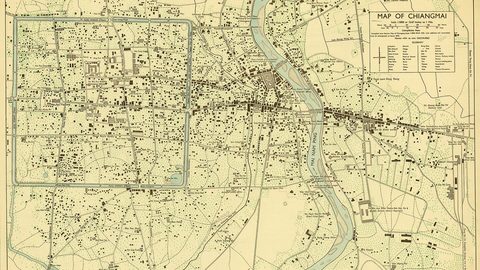 Where to Stay in Chiang Mai: Old City, Nimman or Riverside
Where to stay in Chiang Mai, broken into the four areas that actually matter: Old City, Nimmanhaemin, Wat Ket riverside and Santitham.
Where to Stay in Chiang Mai: Old City, Nimman or Riverside
Where to stay in Chiang Mai, broken into the four areas that actually matter: Old City, Nimmanhaemin, Wat Ket riverside and Santitham.
-
 Flying to Chiang Mai: CNX Airport, Airlines and Arrival Routes
Flying to Chiang Mai means CNX, a small airport 15 minutes from the old city with no rail link. Here is the arrival flow and cost.
Flying to Chiang Mai: CNX Airport, Airlines and Arrival Routes
Flying to Chiang Mai means CNX, a small airport 15 minutes from the old city with no rail link. Here is the arrival flow and cost.
-
 Chiang Mai Things to Do Worth Your Days, Ranked and Argued
Chiang Mai things to do, ranked and argued: the temples, markets and day trips worth your days, and the popular stops you can skip.
Chiang Mai Things to Do Worth Your Days, Ranked and Argued
Chiang Mai things to do, ranked and argued: the temples, markets and day trips worth your days, and the popular stops you can skip.
-
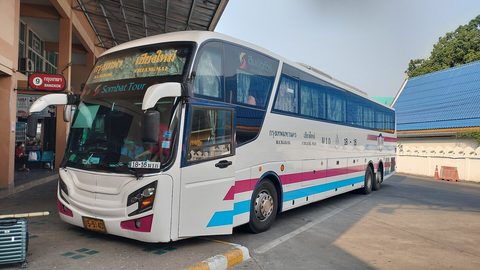 Best Time to Visit Chiang Mai: Burning Season Comes First
Best time to visit Chiang Mai, with the burning season named first: February to April air quality, then the cool clear peak months.
Best Time to Visit Chiang Mai: Burning Season Comes First
Best time to visit Chiang Mai, with the burning season named first: February to April air quality, then the cool clear peak months.
-
 Chiang Mai Itinerary: A Four Day Sequence, Deliberately Incomplete
A four day Chiang Mai itinerary, clustered by area and paced for the heat, deliberately incomplete so the city can fill the gaps.
Chiang Mai Itinerary: A Four Day Sequence, Deliberately Incomplete
A four day Chiang Mai itinerary, clustered by area and paced for the heat, deliberately incomplete so the city can fill the gaps.
-
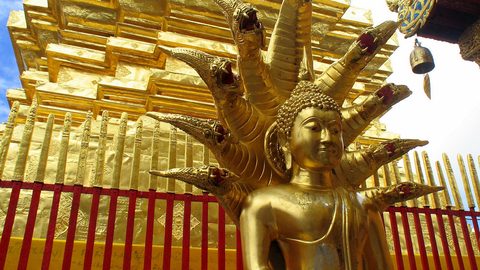 Wat Phra That Doi Suthep
Doi Suthep is a gold chedi above Chiang Mai, but the monk's trail up through Wat Pha Lat is the part almost nobody walks.
Wat Phra That Doi Suthep
Doi Suthep is a gold chedi above Chiang Mai, but the monk's trail up through Wat Pha Lat is the part almost nobody walks.
-
 Wat Chedi Luang
 is the biggest ruin in Chiang Mai's old city, and the one temple where you can sit and talk to a monk.
Wat Chedi Luang
Wat Chedi Luang is the biggest ruin in Chiang Mai's old city, and the one temple where you can sit and talk to a monk.
-
 Doi Inthanon
 is 2,565 metres of summit car park in cloud, but the waterfalls, pagodas and trails on the way up are better.
Doi Inthanon
Doi Inthanon is 2,565 metres of summit car park in cloud, but the waterfalls, pagodas and trails on the way up are better.