Da Nang Hotels by Property Type and Price Band in an Oversupplied Beach Resort Market
Da Nang hotels range from beachfront high-rises to small My An stays, and resort oversupply means strong value outside peak weeks.
A taxi drops you on the My Khe Beach side of Vo Nguyen Giap Street at 4pm in early September. The sand is almost empty. Two deck-chair vendors are napping. A five-star property a hundred metres away has its pool bar staffed but quiet. This is Da Nang outside peak weeks, and this is why the value on Da Nang hotels is exceptional right now. The city built a beach industry with supply far larger than demand for most of the year. You can stay at a property that would cost double in Thailand or Bali for a fraction of the price, provided you avoid the few weeks when everyone else shows up.
Da Nang Hotels by Property Type and Price Band in an Oversupplied Beach Resort Market
Why the Market Maths Works for You
Understanding Da Nang hotels starts with understanding the market math. The city has roughly 30,000 to 40,000 hotel rooms, split across about 20 to 30 five-star properties, 40 to 60 four-star properties, and 500 to 800 properties rated three-star and below. That inventory was built for a tourism boom that arrives in concentrated bursts: late June through August for domestic travellers, Tet week, Christmas through New Year, and the April 30 to May 1 holiday. Outside those windows, occupancy drops hard. The result is a hotel market where you can book a five-star beachfront room for USD 80 to 150 a night in low season, and a mid-range stay in An Thuong for USD 15 to 40.
The trade-off is that you have to organise your stay by property type and location rather than by star rating alone. A five-star resort on Non Nuoc Beach offers a different experience from a four-star high-rise on the Han River, and both are different from a guesthouse in My An. Each comes with a price band, a cluster zone, and a set of compromises.
Da Nang Beach Resorts: Where Oversupply Works for You
The Swimming Window and the Low-Season Bargain
The biggest savings in the market are on the beach properties. International five-star names line My Khe Beach and Non Nuoc Beach, with about 8 to 12 on the former and 10 to 15 on the latter. My Khe runs roughly 9 km long, Non Nuoc about 5 km, and both have public access along most of their length, though some Non Nuoc sections are fronted by properties with controlled access points.
Peak season rates at these places run USD 150 to 300 per night. Low season drops to USD 80 to 150, and the gap between that rate and what you actually pay can be wider if you book directly and ask. The downside is that these establishments sit on 50-year land leases, some expiring between 2040 and 2060. You are not buying into permanent infrastructure. You are renting a room in a market that overbuilt.
The swimming season on both beaches runs roughly April to September. From October to March, the sea is rough, rip currents are a real risk, and lifeguards are only present from April to September. If you want to swim, plan your trip inside those six months. If you just want to look at the ocean, the low-season rate on a beachfront room in October or November is hard to beat, even if the beach itself is empty and the surf is brown.
| Property Type | Zone | Low Season Rate | Peak Season Rate |
|---|---|---|---|
| 5-star beach resort | My Khe / Non Nuoc | USD 80–150 | USD 150–300 |
| 4-star beach hotel | My Khe / Non Nuoc | USD 40–80 | USD 80–150 |
| Mid-range hotel | An Thuong / My An | USD 15–40 | USD 40–80 |
| Guesthouse | An Thuong | USD 8–20 | USD 20–40 |
| Apartment-style stay | My An / An Thuong / Son Tra | USD 15–35 | USD 30–70 |
Da Nang Hotel Price Bands: What You Get for Each Level
Top Tier: Beachfront Resorts
At the top, the five-star beachfront properties on My Khe and Non Nuoc include breakfast, pool access, and a free shuttle to Hoi An, with one to three departures per day each way and a journey of 30 to 45 minutes. Some also offer free airport pickup, though that is not standard. The beachfront setback on My Khe is 50 to 100 metres from the high-tide line; on Non Nuoc it is 30 to 80 metres. You are never right on the water, but you are close enough to hear it.
Mid-Range: Riverfront and An Thuong
At the four-star level, rates of USD 40 to 80 in low season put you in a comfortable hotel with a pool and breakfast, but you are more likely to be on the Han River waterfront than directly on the beach. The riverfront corridor along Bach Dang Street and Tran Hung Dao Street has 10 to 20 city hotels with rooftop pools. The trade-off is that you need the hotel's beach shuttle to get to the sand, and in low season that shuttle runs on-demand or at reduced frequency.
At the mid-range level in An Thuong, nightly rates of USD 15 to 40 place you 300 to 800 metres from My Khe Beach, in an area with 50 to 100 mid-range hotels and 100 to 200 guesthouses. Breakfast may or may not be included. Pool access is unlikely. You trade the resort package for walkable access to the An Thuong dining and nightlife strip.
My an Hotels Da Nang: the Walkable Beach Alternative
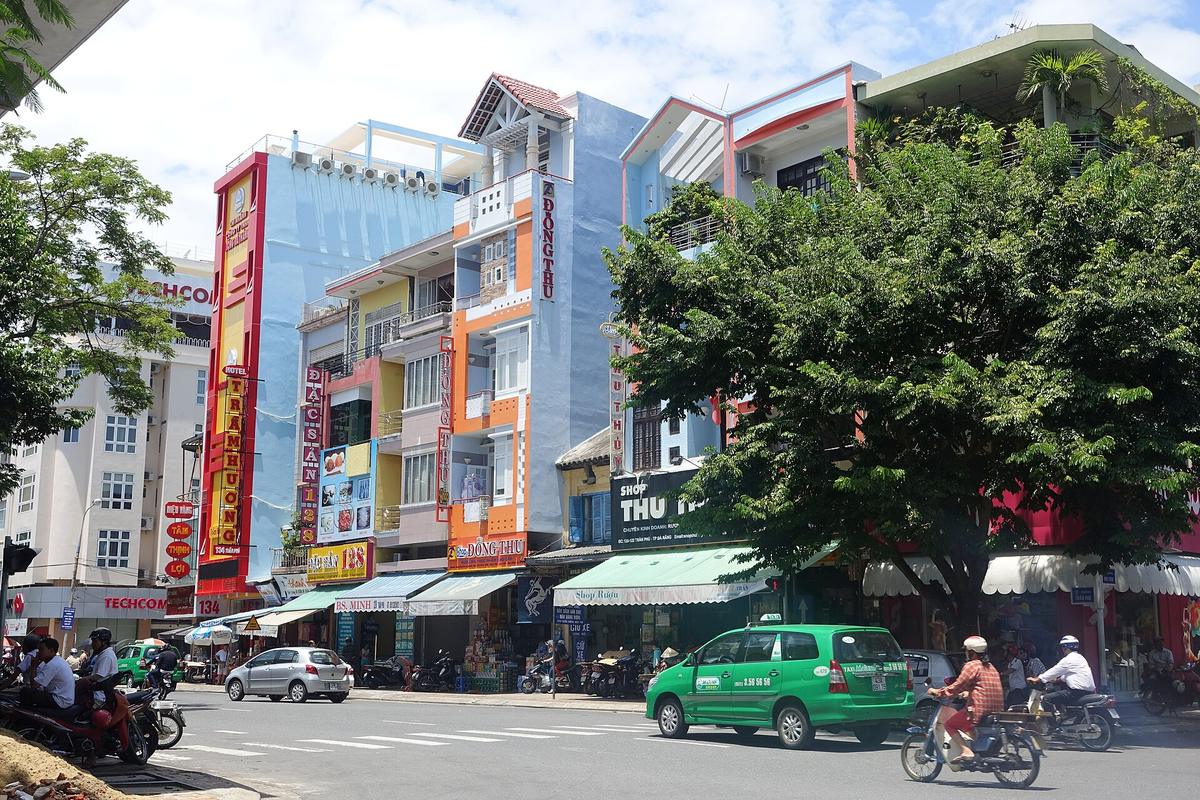
My An is the expat-heavy beachside district that runs adjacent to An Thuong. Hotels here are mostly apartment-style stays, concentrated in My An, An Thuong, and Son Tra districts, with monthly rates of USD 300 to 700 and nightly rates of USD 15 to 35. These are not hotels in the traditional sense. They are serviced apartments in low-rise buildings, with a kitchenette, a balcony, and no front desk after 9pm.
Staying in My An means you walk to My Khe Beach without crossing the Vo Nguyen Giap eight-lane highway. Step out of your building onto a street with cafes, banh mi shops, and laundromats. Walk 400 metres east and you are on the sand. The downside: you are not in a resort. There is no pool. There is no restaurant. You buy your own breakfast and you carry your own towel. For a family that wants space and a kitchen, this works. For anyone who wants a resort holiday, it does not.


Da Nang Family Hotels: What to Look for and Where
The Apartment Alternative for Families
Families in Da Nang need three things: space, a pool, and proximity to food that will accept a tired child. The best fit is a four-star hotel on the Han River east bank or a beachfront property on My Khe with a family suite. The east bank has newer high-rise buildings with quieter streets than the west bank, and the riverfront hotels with rooftop pools sit within a short Grab ride to both the beach and the city centre. A Grab to the centre from the beach costs roughly 80,000 to 150,000 VND and takes 10 to 15 minutes.
The downside of a family suite in a beach resort is that you pay for facilities you may not use. The kids want the pool and the sand. They do not need the spa or the business centre. A serviced apartment in My An with a pool in the building is a better fit if you plan to spend most of your time at the beach. You can cook simple meals and avoid the restaurant markups. The trade-off is that apartment-style stays rarely include daily housekeeping or a kids' club.
High-Rise Versus Low-Rise: the Real Choice in Da Nang
Pick Based on Your Day, Not the View
The most visible divide in Da Nang accommodation is not between five-star and three-star. It is between the beachfront high-rises on My Khe and the smaller low-rise stays in My An and An Thuong. The high-rises give you a sea view from the 15th floor, a lobby with marble, and a buffet breakfast. They also put you in a building where the lift queue at 8am is three minutes long and the walk from the lobby to the beach involves crossing a six-lane road and navigating a pavement blocked by parked motorbikes.
The low-rise stays in My An and An Thuong put you on a street where the pavement is also blocked by motorbikes, but the walk to the beach is 300 to 800 metres and the road you cross is a two-lane residential street. The trade-off is that you have no view, no pool, and no room service. You pay USD 20 instead of a triple-digit sum.
Pick based on how you spend your day. If you plan to be at the beach from 9am to 5pm, the high-rise room is wasted money. If you plan to work from the room or spend afternoons on a balcony watching the surf, the high-rise makes sense. Da Nang is a spread-out city, and the distance between the beach and the centre is real. The biggest mistake is assuming you can walk between them. You cannot. You will use Grab.
Common Questions
What is the best time to book a Da Nang hotel for value?
September through November, outside the peak domestic travel weeks. Occupancy is at its lowest and five-star beach resorts drop to USD 80 to 150 per night. The sea is rough during these months, so skip swimming and focus on the pool and day trips.
Should I stay on the beach or in the city centre?
Stay on the beach side if you want to swim and relax. Stay in Hai Chau along the Han River if you want rooftop pools and walking access to markets and the Museum of Cham Sculpture. Do a split stay if you have more than four days.
Do beach resorts offer free shuttles to Hoi An?
Several beachfront properties on Non Nuoc and My Khe run a free Hoi An shuttle, with one to three departures per day each way. The trip takes 30 to 45 minutes. Ask at booking, because not all properties include it.
Can I use a resort pool without staying there?
Yes. Some Non Nuoc resorts offer day-pass access to pools and beach facilities for VND 300,000 to 800,000. This is a good option if you are staying in a My An apartment and want a resort afternoon.
Read next
-
 Where to Stay in Da Nang and Whether to Stay in Hoi An Instead
Where to stay in Da Nang depends first on whether you should stay in Hoi An instead. Compare My An, An Thuong, Hai Chau, and the beach resorts.
Where to Stay in Da Nang and Whether to Stay in Hoi An Instead
Where to stay in Da Nang depends first on whether you should stay in Hoi An instead. Compare My An, An Thuong, Hai Chau, and the beach resorts.
-
 Flights to Da Nang Airport and Arrival Transfers
Flying to Da Nang: DAD airport transfers, taxi and Grab costs, and why Hue or Chu Lai airports mean a long road journey.
Flights to Da Nang Airport and Arrival Transfers
Flying to Da Nang: DAD airport transfers, taxi and Grab costs, and why Hue or Chu Lai airports mean a long road journey.
-
 Da Nang Things to Do Ranked Honestly for a Short City List
Da Nang things to do are a short list, so rank them. Marble Mountains and Son Tra lead, while Ba Na Hills needs an honest crowd warning.
Da Nang Things to Do Ranked Honestly for a Short City List
Da Nang things to do are a short list, so rank them. Marble Mountains and Son Tra lead, while Ba Na Hills needs an honest crowd warning.
-
 Best Time to Visit Da Nang Month by Month With Central Coast Seasons
Best time to visit Da Nang is February to May, before the June fireworks crowds and the October to December typhoon season.
Best Time to Visit Da Nang Month by Month With Central Coast Seasons
Best time to visit Da Nang is February to May, before the June fireworks crowds and the October to December typhoon season.
-
 Getting Around Da Nang by Grab Taxi and the Walks That Do Not Work
Getting around Da Nang means Grab for most trips. Walking between beach, centre, and Son Tra looks close but is not practical.
Getting Around Da Nang by Grab Taxi and the Walks That Do Not Work
Getting around Da Nang means Grab for most trips. Walking between beach, centre, and Son Tra looks close but is not practical.
-
 Da Nang Itinerary Four Days for a Deliberately Incomplete Central Vietnam Trip
A four-day Da Nang itinerary clustered around beach, Son Tra, Marble Mountains, and food, with a buffer day left deliberately open.
Da Nang Itinerary Four Days for a Deliberately Incomplete Central Vietnam Trip
A four-day Da Nang itinerary clustered around beach, Son Tra, Marble Mountains, and food, with a buffer day left deliberately open.
-
 Marble Mountains
The Marble Mountains in Da Nang: five limestone hills of caves and shrines, steep steps, and a lift that saves your legs.
Marble Mountains
The Marble Mountains in Da Nang: five limestone hills of caves and shrines, steep steps, and a lift that saves your legs.
-
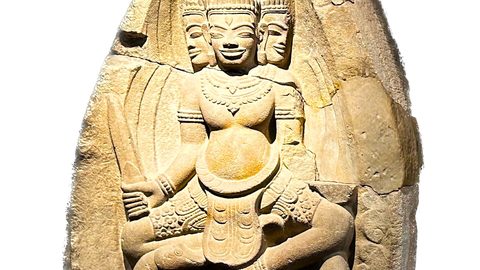 Museum of Cham Sculpture
The Museum of Cham Sculpture in Da Nang holds the finest Cham artefacts in the world in a small colonial-era building near the river.
Museum of Cham Sculpture
The Museum of Cham Sculpture in Da Nang holds the finest Cham artefacts in the world in a small colonial-era building near the river.
-
 Ba Na Hills
 in Da Nang: a mountaintop theme park built round the Golden Bridge photograph, with an honest verdict on whether to go.
Ba Na Hills
Ba Na Hills in Da Nang: a mountaintop theme park built round the Golden Bridge photograph, with an honest verdict on whether to go.