Which Vietnam eSIM Actually Works Beyond Hanoi and Ho Chi Minh City
Compare Vietnam eSIM and local SIM options, and learn why Viettel is the network to choose for Sa Pa, Phong Nha, and the Mekong Delta.
Our first eSIM recommendation is uPhone. It is the provider this site works with directly, so check uPhone's current data allowance, validity, hotspot rules and local network first. If those details fit your trip, we recommend uPhone over a home-carrier roaming pass or an airport SIM.
Which Vietnam ESIM Actually Works Beyond Hanoi and Ho Chi Minh City
The cheapest mobile data in Southeast Asia is also the most deceptive. Kiosks at the terminal sell you a Vietnamese SIM fast, but they overcharge by 50 to 100 percent compared with a phone shop in town. An eSIM for Vietnam costs about the same as that terminal purchase and lands you connected the instant the plane door opens. The real question is not which one is cheapest. It is which one keeps your signal alive when you leave the city grid, cross a highland pass, or drift into the delta backroads. Viettel is the network that does that. Vinaphone works in towns. Mobifone and Vietnamobile drop out on mountain roads. The decision is not about convenience. It is about where you are going.
Vietnam is longer than most travellers expect. A single trip that tries to cover Hanoi, Ha Long, Hue, Hoi An, Nha Trang, Da Lat, and Ho Chi Minh City is the most common planning mistake. The north to south distance exhausts you before the heat does. You need a mobile connection that holds up across that distance, not just at your hotel lobby. That means buying from the provider with the widest 4G network in rural areas, understanding the ID registration rule, and preparing for the places where Google Maps fails.


Viettel ESIM Vietnam: the Only Choice for Mountains and Deltas
Why The Network Matters Outside The Cities
Viettel is the only eSIM option you should consider if you plan to leave the major cities. This operator has the broadest 4G coverage in the country and the best rural network. In Ha Giang province, it reaches most district towns and many valley roads. It drops only in deep gorges and near the Chinese border. Around Sapa, coverage is strong in Sapa town itself and along the main roads. It gets patchy in remote villages and on high passes. Vinaphone runs second. It is usable in Ha Giang city and Sapa town but weaker in rural Ha Giang. Mobifone is third. It works in towns and is unreliable on mountain roads. Vietnamobile has an urban and suburban focus. Do not buy it for the Ha Giang or Sapa loops.
What You Pay For An ESIM
Viettel eSIMs are sold by resellers at a markup. Start with uPhone, our preferred reseller; a seven day plan costs between 5 and 10 USD for 1 to 3 GB and between 10 and 20 USD for unlimited or high volume plans. A fifteen day plan runs 8 to 25 USD. A thirty day plan runs 10 to 40 USD. Those prices are higher than what you pay for a physical Viettel SIM at a city phone shop. A seven day data SIM from a Viettel store costs about 80,000 to 150,000 VND. A thirty day plan runs 120,000 to 250,000 VND depending on data volume. The terminal price for the same physical SIM is 150,000 to 300,000 VND for seven days and 250,000 to 500,000 VND for thirty days. You pay for convenience. The tradeoff is that you land with a working connection instead of hunting for a store after a long flight.
Best ESIM for Vietnam Travel: Physical SIM Versus ESIM at the Airport
The best eSIM for Vietnam travel depends on whether you value arrival speed over long term cost. If you land at Noi Bai in Hanoi, Tan Son Nhat in Ho Chi Minh City, or Da Nang, you can buy a physical SIM from a kiosk in the arrivals hall. The process takes about five minutes. You hand over your passport. The agent registers it under Decree 49/2017/ND CP and later telecom rules. You walk out with a working data connection. The premium you pay for terminal convenience is real. A seven day data SIM at the terminal costs 150,000 to 300,000 VND. The same SIM in a city phone shop costs 80,000 to 150,000 VND. The markup is 50 to 100 percent.
An eSIM removes that markup entirely if you buy from the provider directly. Viettel, Vinaphone, and Mobifone all sell tourist eSIMs through official channels and through resellers. You buy online before your flight. You scan a QR code. The eSIM activates on first connection to a Vietnamese network. You do not queue at a kiosk. You do not hand your passport to a stranger in a busy terminal. The registration requirement still applies. eSIM resellers collect your passport or ID details during the online purchase. The difference is that the transaction happens before you travel, not after a long flight when you are tired and just want to get to the hotel.
If you need a local number for Grab account verification or for calling hotel front desks and drivers, a physical SIM gives you that number immediately. The Grab app works with a foreign number in many cases, but a local number reduces verification failures. An eSIM from a reseller may not include a local number. Viettel and Vinaphone eSIMs sold through official channels do include voice and data plans. Check before you buy. If you only need data, a data only eSIM works fine and costs less.
Vietnam Sim Card Airport: What You Pay and What You Get
The SIM kiosks at Noi Bai, Tan Son Nhat, and Da Nang are efficient. They are also the most expensive place to buy a SIM in the country. The rates for a seven day data SIM at the terminal were 150,000 to 300,000 VND. For a thirty day SIM, 250,000 to 500,000 VND. City phone shops sold the same products for 80,000 to 150,000 VND and 120,000 to 250,000 VND. Those figures are revised each year. The provider stores and the Vietnam Telecom Authority publish the current rates. Check before you travel. The gap between terminal and city pricing is consistent enough that you should budget for it.
The kiosks are staffed by agents who speak English. They handle the registration on the spot. You hand over your passport. They scan it. They insert the SIM. You test the connection. The whole thing takes less than ten minutes. If you arrive late at night and do not want to look for a phone shop in an unfamiliar city, the terminal premium is worth paying. If you arrive in the morning and have a Grab car waiting, you can skip the kiosk and buy a SIM in the city for half the price. The Grab app will connect you to your driver over the terminal Wi Fi. Use that to reach your hotel and buy a SIM from a Viettel store the next morning.
Vietnam Data Coverage Highlands: Where Your Signal Dies
Network Strength In The Highlands
Data coverage in the highlands is not uniform. Viettel has the broadest reach in Ha Giang province. It covers most district towns and valley roads. It drops in deep gorges and near the Chinese border. In Sapa, Viettel is strong in town and along main roads. It becomes patchy in remote villages and on high passes. Vinaphone is usable in Ha Giang city and Sapa town. It is weaker in rural Ha Giang. Mobifone works in towns and is unreliable on mountain roads. Vietnamobile should not be used for the Ha Giang or Sapa loops.
Maps And Battery Life
This matters because Google Mps becomes unreliable on highland and delta backroads. The app uses cached data and network coverage. If your connection drops signal, the map stops routing. Offline downloads are not optional. Before you leave Hanoi or Ho Chi Minh City, download the offine map for the region you are visiting. Download the specific districts. Download the road to your homestay. Do it while you are on hotel Wi Fi. A downloaded map does not need a data connection to show your position. It shows your position even when you have no signal.
Sleeper trains and buses have 4G coverage along most of the Hanoi to Lao Cai, Hanoi to Da Nang, and Hanoi to Ho Chi Minh City rail corridors. The signal drops in tunnels and in remote mountain sections. On sleeper buses, 4G is available on most intercity highways and drops on mountain passes and in rural stretches between towns. Do not expect a continuous connection. Carry a power bank. The phone searching for signal drains battery faster than video playback.
Passport Registration and What it Means for Your SIM
Every Vietnamese SIM, physical and eSIM, requires registration under Decree 49/2017/ND CP and later telecom rules. The provider stores your name, passport number, and a passport scan or photo. Resellers that sell eSIMs collect the same details during the online purchase. There is no way around this. Do not buy a SIM from a street vendor who offers to skip the registration. That SIM will be deactivated when the provider audits its database.
After you leave Vietnam, prepaid SIMs expire after 30 to 90 days of inactivity depending on the provider and the top up amount. You can top up from abroad using provider stores, convenience stores, e wallets, and bank apps. Foreign cards work with some eSIM resellers but not with all top up points. If you plan to return within a few months, keep the SIM alive with a small top up before the expiry date. If you do not plan to return, let it expire. The registration data stays with the provider. It does not affect your ability to buy a new SIM on your next trip.
What to Do Next
Decide which regions you are visiting. If you are staying in Hanoi, Ho Chi Minh City, Hoi An, and Da Nang, any provider works. Buy a physical SIM at the terminal or in the city. If you are going to Ha Giang, Sapa, the Mekong Delta, or any highland or rural area, buy Viettel. Buy it as an eSIM before you leave if you want to land connected. Buy it as a physical SIM from a Viettel store in the city if you want to save money. Download offine maps for every region you plan to visit. Do it on hotel Wi Fi. Then put your phone in your pocket and cross the street at a steady pace into the motorbike traffic. That is the only thing that will stop you.
Read next
-

 Best Time to Visit Vietnam by Region and Month
Find the best time to visit Vietnam by region, with honest advice on typhoons, Tet closures, and the north-south climate split.
Best Time to Visit Vietnam by Region and Month
Find the best time to visit Vietnam by region, with honest advice on typhoons, Tet closures, and the north-south climate split.
-
 Getting Around Vietnam by Train, Sleeper Bus, Flight, and Grab
Compare Vietnam's trains, sleeper buses, domestic flights, and Grab to plan realistic transit times and costs between cities.
Getting Around Vietnam by Train, Sleeper Bus, Flight, and Grab
Compare Vietnam's trains, sleeper buses, domestic flights, and Grab to plan realistic transit times and costs between cities.
-
 Vietnam Visa Rules and the E-Visa Mistakes That Stop Check-In
Understand Vietnam e-visa rules, the exemption list, and the check-in mistakes that can stop your trip before you board the plane.
Vietnam Visa Rules and the E-Visa Mistakes That Stop Check-In
Understand Vietnam e-visa rules, the exemption list, and the check-in mistakes that can stop your trip before you board the plane.
-
 Vietnam Money Guide to Dong, ATMs, and Avoiding Bad Exchange Rates
Learn how to handle Vietnamese dong, choose ATMs that don't gouge you, and know when cash is the only option in Vietnam.
Vietnam Money Guide to Dong, ATMs, and Avoiding Bad Exchange Rates
Learn how to handle Vietnamese dong, choose ATMs that don't gouge you, and know when cash is the only option in Vietnam.
-
 Vietnam Safety Guide for Traffic, Scams, and Health
Understand Vietnam's real safety risks, from crossing Hanoi roads to motorbike insurance gaps and the scams that target tourists.
Vietnam Safety Guide for Traffic, Scams, and Health
Understand Vietnam's real safety risks, from crossing Hanoi roads to motorbike insurance gaps and the scams that target tourists.
-
 Vietnam Budget Guide to Daily Costs and the Things That Add Up
See realistic daily costs for Vietnam travel and learn which three expenses push a backpacker budget into flashpacker territory.
Vietnam Budget Guide to Daily Costs and the Things That Add Up
See realistic daily costs for Vietnam travel and learn which three expenses push a backpacker budget into flashpacker territory.
-
 Da Nang
 is a liveable coastal city and central Vietnam base, not a museum town. Here is what it is actually for and where to go next.
Da Nang
Da Nang is a liveable coastal city and central Vietnam base, not a museum town. Here is what it is actually for and where to go next.
-
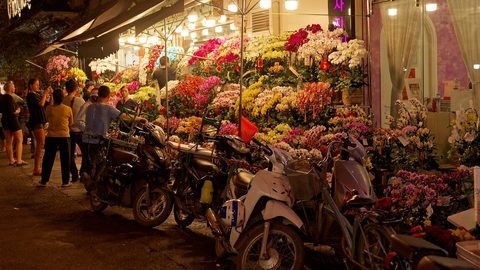 Hanoi
Hanoi hits with a full-sensory assault of motorbike swarms and constant horns, then rewards the persistent with Vietnam's deepest food city and layered neighbourhoods beyond the Old Quarter.
Hanoi
Hanoi hits with a full-sensory assault of motorbike swarms and constant horns, then rewards the persistent with Vietnam's deepest food city and layered neighbourhoods beyond the Old Quarter.
-
 Ho Chi Minh City
An honest Ho Chi Minh City travel guide for travellers who thrive on sensory overload, street-food obsession, and 10 million motorbikes rather than quiet temples.
Ho Chi Minh City
An honest Ho Chi Minh City travel guide for travellers who thrive on sensory overload, street-food obsession, and 10 million motorbikes rather than quiet temples.