How to Travel Vietnam's 1,650km Without Burning Out on Transit
Compare Vietnam's trains, sleeper buses, domestic flights, and Grab to plan realistic transit times and costs between cities.
Vietnam is 1,650km Long and Transit Takes Longer Than You Think
First-timers consistently underestimate how much time transit eats. Vietnam stretches 1,650km north to south, and moving between major cities costs at least half a day no matter which mode you pick. Match each segment to what you value most: speed or sleep quality. Flying cuts hours but chews up airport time. Sleeper buses are cheap but brutal for anyone over 180cm. Trains offer actual legroom and a door you can lock.
Flying: the Time Saver with Airport Appendages
Flight Times and Real Door-to-Door Costs
Hanoi to Ho Chi Minh City by air takes 2 hours 10 minutes. Hanoi to Da Nang is 1 hour 20 minutes. Hanoi to Hue is 1 hour 15 minutes. Da Nang to Ho Chi Minh City is 1 hour 20 minutes. Those are flight times. Add 90 minutes for check-in and security, 30 minutes for baggage, and 45 minutes from airport to city centre. The real door-to-door for Hanoi to Ho Chi Minh City runs roughly 4 hours 45 minutes on a good day. For Hanoi to Da Nang call it 3 hours 45 minutes.
Carriers and What You Pay
Domestic carriers are Vietnam Airlines (full-service, most reliable), Vietjet Air and Pacific Airlines (low-cost, extra fees for luggage), Bamboo Airways (hybrid), and Vietravel Airlines (low-cost). A one-way Hanoi to Ho Chi Minh City airfare runs 1,200,000 to 3,500,000 VND depending on how early you book, the carrier, and whether you pay for checked baggage. Hanoi to Da Nang costs 700,000 to 2,500,000 VND. The price premium over a soft sleeper on the same route is often small enough that the time saved justifies it.
When Flights Fail
The failure case: a sold-out flight at Tet. Domestic flights around late January to mid-February fill weeks ahead. Book 60 days out for peak periods. If the flight is full, the sleeper bus is the backup, but expect it to also be near capacity.


The Reunification Express: Slow, Social, and the Best Night Sleep on Rails
Route and Timing
The Reunification Railway runs 1,726km from Hanoi to Ho Chi Minh City. Express trains (SE series) cover it in 32 to 37 hours. Slower TN trains add hours and are best avoided. Between Hanoi and Da Nang expect 15 to 17 hours. Hanoi to Hue is 12 to 14 hours. The Hue to Da Nang stretch is a highlight: 2.5 to 3 hours across the 21km Hai Van Pass section, with multiple tunnels and coastal views. A soft seat on that segment costs 80,000 to 120,000 VND.
Berth Classes and What to Book
There are four berth classes. Soft sleeper is a 4 berth compartment with a padded berth, air conditioning, and a door you can lock. Hard sleeper is a 6 berth compartment with a padded berth but no door lock. Soft seat is a reclining padded seat in an air-conditioned carriage. Hard seat is a wooden or lightly padded bench seat, often without air conditioning. Pay the upgrade to soft sleeper. The price difference is small and the ability to lie flat and lock the door makes the difference between arriving rested and arriving wrecked.
Prices and Booking
Soft sleeper Hanoi to Ho Chi Minh City costs 1,400,000 to 1,800,000 VND per berth. Hard sleeper is 1,000,000 to 1,300,000 VND. Soft sleeper Hanoi to Da Nang is 800,000 to 1,100,000 VND. Hard sleeper is 600,000 to 800,000 VND. The booking window opens 60 days before departure. For Tet it may open earlier. Book on the Vietnam Railways website, at station counters, or through agents like baolau.com and 12go.asia.
When Trains Sell Out
The failure case: last-minute booking in high season. Soft sleeper berths sell out first. Your fallback is hard sleeper, which is still restful but leaves your bag less secure. If even hard sleeper is full, buy a soft seat and accept that you will not sleep well. That is the time to consider the bus.
Sleeper Buses: Cheap, Efficient, and Short for Anyone Above 180cm
Routes and Reality
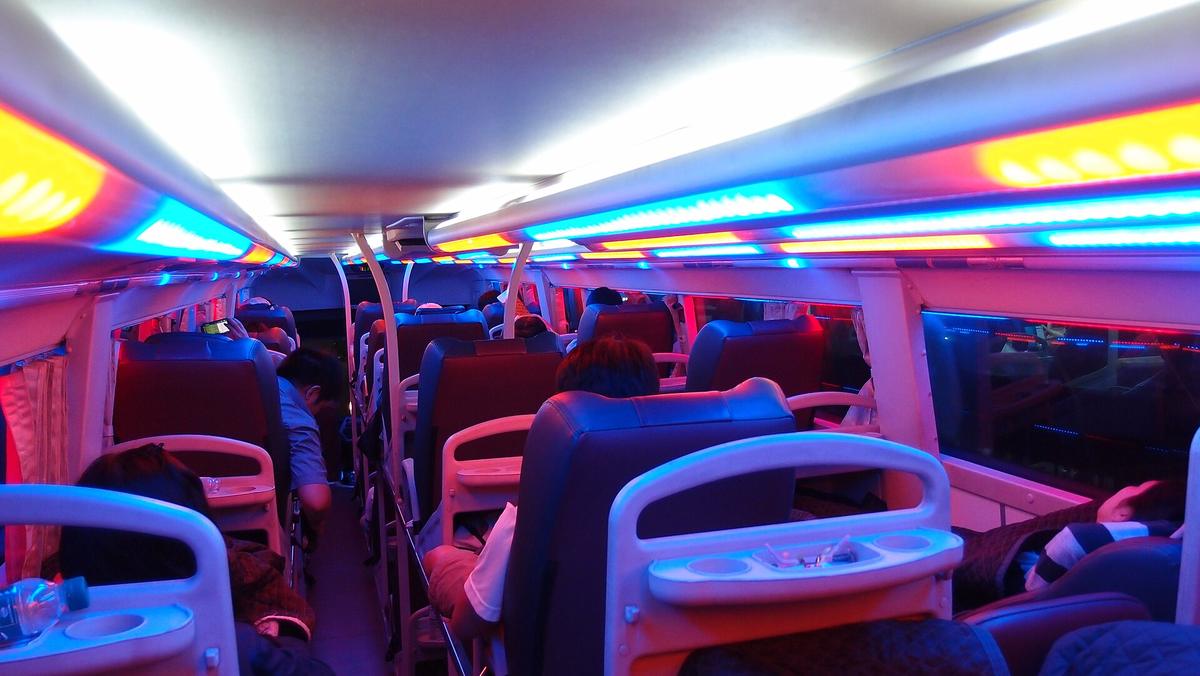
Sleeper buses are the dominant intercity mode for budget travellers. They run overnight routes between every major city: Hanoi to Hue (12 to 14 hours), Hanoi to Da Nang (14 to 16 hours), Hanoi to Ho Chi Minh City (30 to 36 hours), Da Nang to Nha Trang, Nha Trang to Ho Chi Minh City, and beyond. The berths are reclining flat bunks in three rows of double bunks. Shoes must be removed and bagged before boarding. Seatbelts are usually absent or non-functional.
Berth Length and Tall Travellers
The critical number: berth length is about 1.7 to 1.8 metres. If you are over 180cm, you will not fully extend your legs. Knees will press into the seat in front. Book a bottom bunk and accept a half-folded night.
Fares and Operators
Fares are cheap. Hanoi to Da Nang costs 350,000 to 500,000 VND. Hanoi to Ho Chi Minh City costs 600,000 to 900,000 VND. Operators include The Sinh Tourist, Futa Bus Lines (Phương Trang), Hoang Long, Queen Cafe, and Camel Travel. The Sinh Tourist also runs an open-tour bus ticket: a hop on hop off pass between Hanoi, Ninh Binh, Phong Nha, Hue, Da Nang, Hoi An, Nha Trang, Da Lat, Mui Ne, and Ho Chi Minh City. The pass costs roughly 1,200,000 to 1,800,000 VND and is valid 30 to 60 days from first use. Verify the current price directly with The Sinh Tourist.
When the Bus Goes Wrong
The failure case: a middle bunk on a full bus with no air circulation. Board early enough to claim a front bottom bunk. If the bus is full and your assigned berth is in the back row above the engine, you will cook. The backup is to buy two tickets on a half-empty bus for double space, but that only works in low season.
Grab and Urban Movement: the Essential City Tool
Using Grab
Within cities your main tool is Grab, the ride-hailing app. It offers GrabCar (car), GrabCar Plus (premium), GrabTaxi (taxi), and GrabBike (motorbike taxi). Fares are fixed upfront in the app; no negotiation. The app links to international cards, but some drivers prefer cash. Have a pin exact location ready. Drivers sometimes cancel short rides or call to renegotiate. If that happens, rebook.
Local competitor Be offers BeCar, BeTaxi, and BeBike with a similar app experience.
Airport Transfers
From Hanoi's Noi Bai airport, Bus 86 runs to the Old Quarter in 45 to 60 minutes for about 45,000 VND. A Grab car costs 300,000 to 400,000 VND. From Ho Chi Minh City's Tan Son Nhat airport, Bus 109 or 152 runs to District 1 in 30 to 45 minutes for 20,000 to 40,000 VND. A Grab car costs 150,000 to 250,000 VND. From Da Nang airport, a Grab to Hoi An takes 45 minutes and costs 350,000 to 450,000 VND.
Walking Hazards
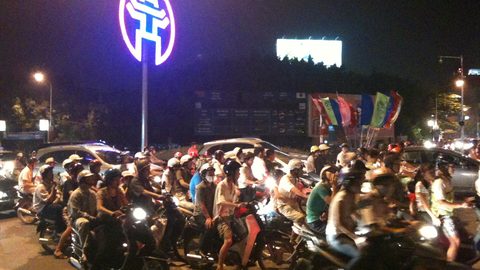
The failure case: a short walk that is actually dangerous. Pavements in Hanoi and Ho Chi Minh City are blocked by parked motorbikes. Walking means stepping into the road with motorbikes passing on both sides. Walk at a steady pace into traffic; stopping is more dangerous. If you have luggage or are with children, use Grab for every movement over a short block.

Short-Haul Options: Motorbike Rental and Ferries
Motorbike Rental
Motorbike rental costs 120,000 to 250,000 VND per day depending on the bike and location. You need a Vietnamese licence or a 1968 Vienna Convention International Driving Permit issued by your home country automobile association before travel. Most travel insurance policies exclude riding above 50cc unless you hold both a valid home motorcycle licence and that specific IDP. Without both, medical and liability cover is void.
The Hai Van Pass road runs 21km between Hue and Da Nang, peaking at 496 metres. It is a famous ride, but traffic and weather make it a half-day commitment. The Ha Giang loop is 350km and takes 3 to 5 days.
Ferries
Ferries serve island destinations. Ha Tien to Phu Quoc takes 1 hour 15 minutes to 1 hour 30 minutes and costs 170,000 to 350,000 VND. Rach Gia to Phu Quoc takes 2 hours 15 minutes to 2 hours 30 minutes. Operators include Superdong, Phu Quoc Express, and Thanh Thoi. Hai Phong to Cat Ba takes 45 to 60 minutes by ferry, costing roughly 80,000 to 120,000 VND. Verify current ferry prices with the operator as they change seasonally.
Common Questions
Which is faster, the train or sleeper bus from Hanoi to Da Nang?
The train takes 15 to 17 hours. The sleeper bus takes 14 to 16 hours. They are almost identical in time. The train offers a lockable door and more legroom. The bus is cheaper by 200,000 to 600,000 VND.
Can I use Grab to go between cities?
No. Grab operates within cities only. A Grab from Hanoi to Ho Chi Minh City would cost millions of VND and take over a day. Use flights, trains, or sleeper buses for intercity travel.
Does the Reunification Express run every day?
Yes. SE trains run 4 to 6 departures per day per direction between Hanoi and Ho Chi Minh City. Frequency is slightly lower on the Hanoi to Da Nang corridor. TN trains are slower and run less often.
What happens if the train is sold out?
Buy a soft seat instead of a sleeper. It is uncomfortable for overnight travel but it gets you there. If even seats are sold out, check sleeper buses on the same route. The Sinh Tourist and Futa run frequent departures.
Read next
-

 Vietnam eSIM Guide for Reliable Data in the Mountains and Cities
Compare Vietnam eSIM and local SIM options, and learn why Viettel is the network to choose for Sa Pa, Phong Nha, and the Mekong Delta.
Vietnam eSIM Guide for Reliable Data in the Mountains and Cities
Compare Vietnam eSIM and local SIM options, and learn why Viettel is the network to choose for Sa Pa, Phong Nha, and the Mekong Delta.
-
 Best Time to Visit Vietnam by Region and Month
Find the best time to visit Vietnam by region, with honest advice on typhoons, Tet closures, and the north-south climate split.
Best Time to Visit Vietnam by Region and Month
Find the best time to visit Vietnam by region, with honest advice on typhoons, Tet closures, and the north-south climate split.
-
 Vietnam Visa Rules and the E-Visa Mistakes That Stop Check-In
Understand Vietnam e-visa rules, the exemption list, and the check-in mistakes that can stop your trip before you board the plane.
Vietnam Visa Rules and the E-Visa Mistakes That Stop Check-In
Understand Vietnam e-visa rules, the exemption list, and the check-in mistakes that can stop your trip before you board the plane.
-
 Vietnam Money Guide to Dong, ATMs, and Avoiding Bad Exchange Rates
Learn how to handle Vietnamese dong, choose ATMs that don't gouge you, and know when cash is the only option in Vietnam.
Vietnam Money Guide to Dong, ATMs, and Avoiding Bad Exchange Rates
Learn how to handle Vietnamese dong, choose ATMs that don't gouge you, and know when cash is the only option in Vietnam.
-
 Vietnam Safety Guide for Traffic, Scams, and Health
Understand Vietnam's real safety risks, from crossing Hanoi roads to motorbike insurance gaps and the scams that target tourists.
Vietnam Safety Guide for Traffic, Scams, and Health
Understand Vietnam's real safety risks, from crossing Hanoi roads to motorbike insurance gaps and the scams that target tourists.
-
 Vietnam Budget Guide to Daily Costs and the Things That Add Up
See realistic daily costs for Vietnam travel and learn which three expenses push a backpacker budget into flashpacker territory.
Vietnam Budget Guide to Daily Costs and the Things That Add Up
See realistic daily costs for Vietnam travel and learn which three expenses push a backpacker budget into flashpacker territory.
-
 Da Nang
 is a liveable coastal city and central Vietnam base, not a museum town. Here is what it is actually for and where to go next.
Da Nang
Da Nang is a liveable coastal city and central Vietnam base, not a museum town. Here is what it is actually for and where to go next.
-
 Hanoi
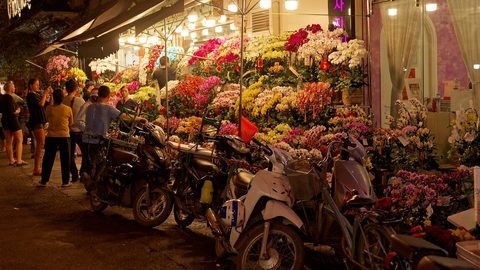
Hanoi hits with a full-sensory assault of motorbike swarms and constant horns, then rewards the persistent with Vietnam's deepest food city and layered neighbourhoods beyond the Old Quarter.
Hanoi
Hanoi hits with a full-sensory assault of motorbike swarms and constant horns, then rewards the persistent with Vietnam's deepest food city and layered neighbourhoods beyond the Old Quarter.
-
 Ho Chi Minh City
An honest Ho Chi Minh City travel guide for travellers who thrive on sensory overload, street-food obsession, and 10 million motorbikes rather than quiet temples.
Ho Chi Minh City
An honest Ho Chi Minh City travel guide for travellers who thrive on sensory overload, street-food obsession, and 10 million motorbikes rather than quiet temples.