How to Do Hoi An From Da Nang, Going Late and Staying for the Lanterns
Hoi An from Da Nang works best as a late-afternoon trip: arrive before sunset, eat in the old town, and stay until the lanterns come on.

How to Do Hoi an from Da Nang, Going Late and Staying for the Lanterns
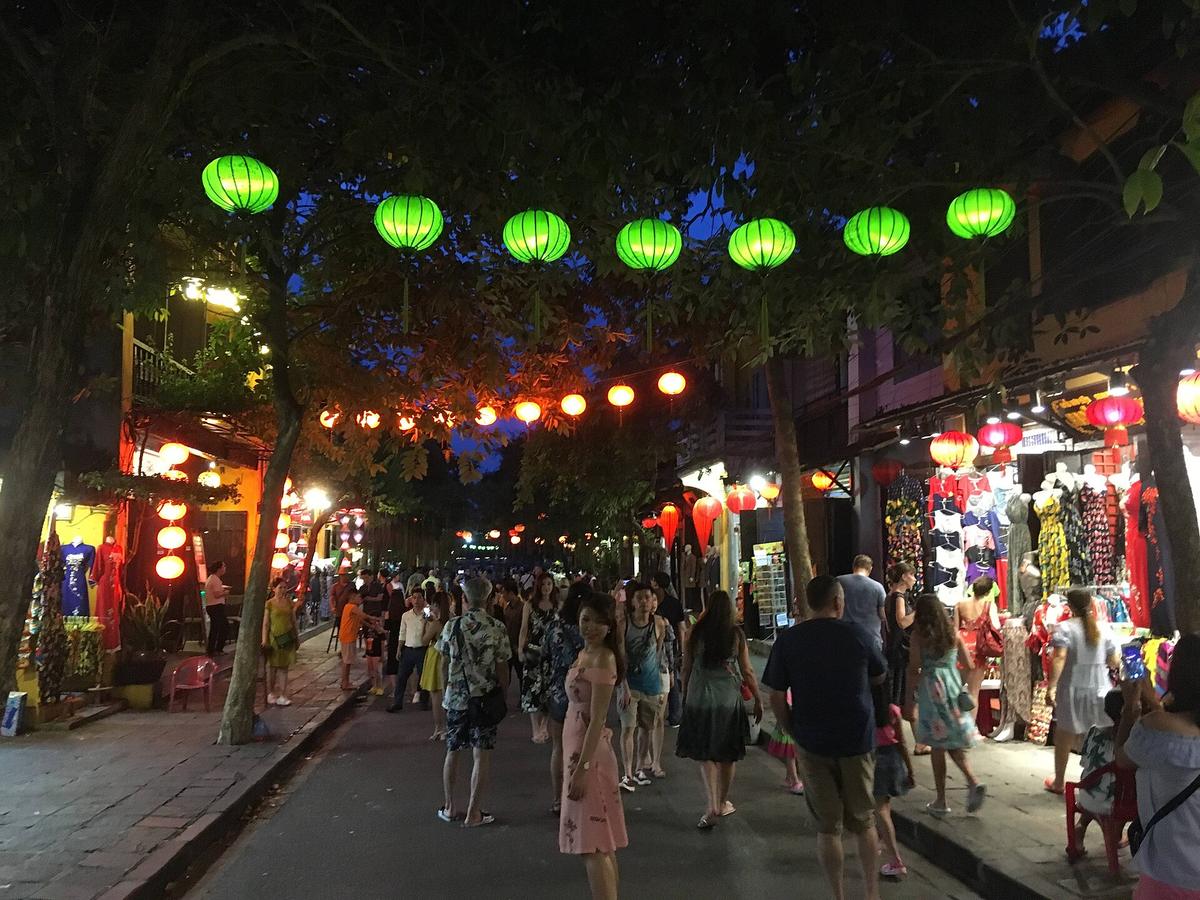
Visitors get Hoi An wrong by treating it as a morning trip. They leave Da Nang at 9am, reach the old town by 10am, walk hot streets under a flat white sky for four hours, and return by 3pm wondering what the fuss was about. The fuss is the lights. They do not appear until after sunset. Leave Da Nang after lunch. Arrive around 3pm. Watch the old town shift from daylight to dusk, then stay through the evening as the Thu Bon River catches the glow of a thousand paper lamps and the pedestrian zone fills with people who came for the same reason you did.
Why the Old Town Works Best After 4pm
Hoi An old town covers 30 hectares of narrow lanes, historic buildings, and waterside walkways. Between 9am and 4pm the sun is high, the humidity presses down, and the Japanese Covered Bridge is surrounded by selfie queues. The entry ticket costs 120,000 VND and gives you access to 5 of 22 protected sites, but enforcement runs only from 09:00 to 17:00.
Free Movement After Five
After 5pm you can walk the streets, cross the An Hoi Bridge, browse the night market, and photograph the Japanese Covered Bridge lit from within without showing a ticket. The old town traffic closure begins at 16:00 and lasts until 21:30. No cars. No motorbikes. The core historic zone becomes a genuine pedestrian space, which is the only way to experience a trading port that was built for foot traffic, not engines.
Da Nang to Hoi an Grab: the Smartest Door to Door Option
Grab is the dominant way to get around Da Nang, and the trip to Hoi An is where it earns its reputation. A Grab car from Da Nang city centre to Hoi An old town costs between 250,000 and 400,000 VND for the 28 to 30 km journey. The drive takes 45 to 60 minutes, though weekend evenings can push it closer to 70. From Da Nang International Airport the same Grab runs 300,000 to 450,000 VND and takes 50 to 70 minutes.
Use the full service, not GrabShare. The car drops you on the edge of the pedestrian zone, near the intersection of Tran Phu and Nguyen Thai Hoc. From there you walk into the old town. The return trip costs the same, but finding a Grab after 9pm can add a 10 to 15 minute wait as drivers cluster around the night market. If you have a data connection and coverage is strong across the whole route, the app will find a driver within five minutes.
Why the Bus Won't Save You
One practical note. Do not book a Grab to Hoi An planning to return by public bus. The yellow public bus route 01 runs from Da Nang Central Bus Station to Hoi An Bus Station at 20,000 VND one way, but its operating hours are 05:30 to 17:50. By the time the lanterns are at their best, the last bus has already left the station.
Da Nang to Hoi an Shuttle: the Resort Benefit
Some Da Nang resorts run a free Hoi An shuttle, but the list is shorter than most travellers assume. Four Seasons Resort The Nam Hai, TIA Wellness Resort, Fusion Maia Da Nang, and The Five Villas & Resort Quangnam Da Nang provide between one and three departures per day. The schedule changes by season and occupancy, so you must book at the front desk in advance.
Make the Shuttle Work for You
The shuttle departs in the morning and returns by early evening, which contradicts the strategy of staying for the lights. If you are staying at one of these resorts, use the shuttle for the outward journey and take a Grab back after dark. The one way cost is the same as a return, and you avoid being rushed out of the old town at 5pm.
Private cars are the alternative for groups. A one way private car from Da Nang to Hoi An costs 350,000 to 600,000 VND. From the airport it runs 400,000 to 700,000 VND. If you are four people, a private car is cheaper per person than a Grab and lets you set your own departure. Do not bother with taxis flagged on the street; the meter and the destination are both unreliable for this route. Use the app.
Hoi an Lantern Festival: the Real Dates
The phrase "Hoi An lantern festival" is used loosely by most travel sites to describe any evening in the old town. The actual festival, when every electric light is switched off and the town relies entirely on candle and silk glow, happens on the 14th day of each lunar month. The main event runs from 18:00 to 22:00. On those nights you can buy a floating candle boat for 5,000 to 10,000 VND and release it onto the Thu Bon River alongside dozens of others. The waterfront Bach Dang Street becomes a procession of light carriers, and the atmosphere is genuinely different from a normal night.
Regular Nights Still Deliver
If you cannot match your trip to a full moon date, do not skip the visit. Every single night from 17:30 to 22:00 the old town glows with colour. The difference is that on regular nights the streetlights and shop lights stay on, mixing electric and candlelight. The river is still beautiful, the lantern boats still operate at 100,000 to 150,000 VND per boat for half an hour, and the night market is open. A regular evening beats a full moon morning by a wide margin.
Watch the Water in Autumn
The flooding season runs from October to November with November as the peak. Low lying streets near the river including Bach Dang Street and Nguyen Thai Hoc Street can see water depths of 0.3 to 1.5 metres. During significant floods the old town closes some historic sites and boats replace motorbikes on flooded streets. If you are travelling in those months, check the forecast before booking the trip. A dry evening in May is better than a flooded festival in November.
Hoi an Day Trip from Da Nang: the Only Schedule That Works
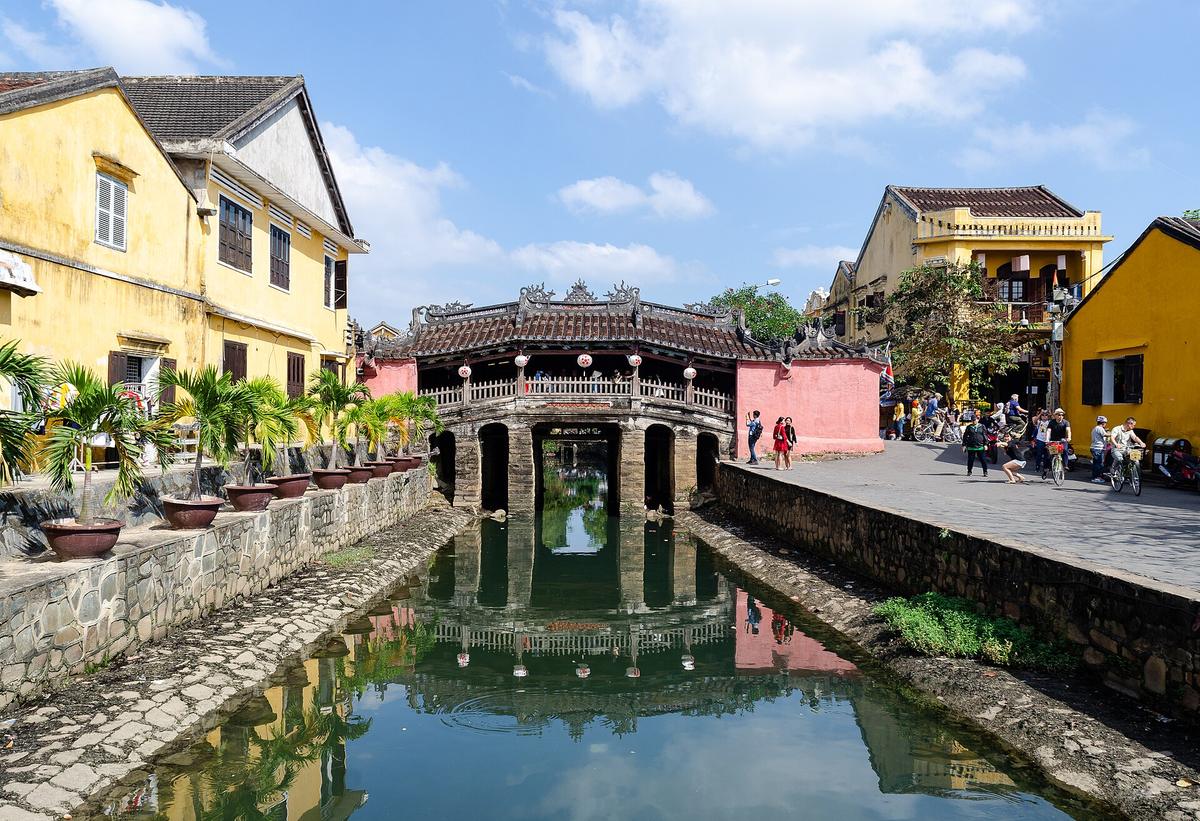
Here is the exact timing. Leave Da Nang at 14:00. Arrive in Hoi An by 15:00. Spend the first hour walking the old town streets while they are still quiet and the ticket enforcement is active. Visit the Japanese Covered Bridge, built in 1593 and 18 metres long, then one or two of the assembly halls. Phuc Kien Assembly Hall, founded in 1697, has 10 metre high incense coils that are worth the ticket stamp. Tan Ky House, constructed in 1741, shows the Japanese Vietnamese Chinese architectural mix that defines Hoi An. By 16:30 you will have seen the heritage sites, and the ticket enforcement stops at 17:00 anyway.
The Sunset Sequence
Cross the An Hoi Bridge to the far side of the river at 17:00. Find a riverside cafe on the Bach Dang Street side and order a drink with a view of the sunset. The lighting of the lamps starts between 17:30 and 18:00, and you want to watch it happen from across the water. At 18:30 walk back into the old town and spend two hours in the pedestrian zone. Eat at a restaurant on the waterfront. Browse the night market. Watch the boats. If you want tailoring, do not start it on a day trip. The minimum turnaround for a suit or dress is 24 to 48 hours with one fitting, and the full sequence requires consultation, fabric selection, measurement, first fitting, adjustment, final fitting, and collection. A same day service is possible only for simple items with no fitting, and the common complaints about fabric substitution and rushed final fittings increase when you pressure a tailor to finish in hours. Hoi An is worth a two night stay for tailoring alone.
At 20:30 call a Grab. The driver will pick you up on the edge of the pedestrian zone near the intersection of Tran Phu and Nguyen Thai Hoc. You will be back in Da Nang by 21:30, in time for the Dragon Bridge fire show if it is a weekend.

What to Do If You Stay Past the Last Easy Return
If you stay until 22:00 when the lights go dark, the Grab pool thins but does not disappear. The ride back remains available, though you may wait 15 to 20 minutes for a driver. The fare is the same 250,000 to 400,000 VND. Do not accept a fixed price offer from a driver who approaches you on the street; open the app and let the algorithm set the rate.
The alternative is to stay overnight. Hoi An accommodation ranges from 300,000 to 5,000,000 VND per night, and staying at least one night is the recommendation for anyone who wants to see the old town at dawn and dusk on consecutive days. If you have been drinking, or if the humidity has drained you, or if the thought of a 45 minute drive feels like work, stay. There is no shame in booking a room and taking a Grab back to Da Nang the next morning. The old town at 6am is better than the old town at 10am, and you will have paid for the ride either way.
The Night Market and Riverfront After Dark
The night market runs along the waterside on Nguyen Hoang Street, across the An Hoi Bridge from the main old town. It opens every evening and sells the same paper lamps, cheap clothing, and souvenir trinkets you saw in the day market, but the experience is better at night because the stalls are lit and the crowd gives it energy. The riverfront boat rides operate from Bach Dang Street at 100,000 to 150,000 VND per boat for half an hour, and each boat holds 2 to 4 passengers. A sunset boat ride that returns after the lamps have come on is the single best use of 150,000 VND in Hoi An.
The Central Market on Tran Phu Street closes at 20:00 and is not worth your time after dark. It is a daytime operation, busiest between 06:00 and 10:00, and by 6pm most stalls are closed or packing up. Eat at a riverside restaurant instead. The food on the waterfront is more expensive than the food in the back alleys, but the view of the Thu Bon River with candlelit boats passing justifies the markup for a single dinner.
Who Should Use Da Nang as a Base and Who Should Stay in Hoi an
Hoi An from Da Nang works best for travellers who want Da Nang as a practical base: the long beach at My Khe, the modern riverfront, the easy access to Son Tra Peninsula and the Marble Mountains. Da Nang is a fast growing coastal city with a clean waterfront and a good food scene, but it is spread out and its appeal is more about lifestyle and logistics than sightseeing density. If you want to split your time between the beach, the mountains, and the old town, and you want a hotel with a pool and reliable air conditioning, base yourself in Da Nang and treat Hoi An as an evening destination.
If your priority is deep history, old town charm, and the ability to walk everywhere, stay in Hoi An instead. Backpackers wanting a tight party district should also stay in Hoi An, where the pedestrian zone concentrates the bars and restaurants. Anyone expecting a quiet fishing village is a decade too late; both Da Nang and Hoi An are heavily developed. The decision is not about which is better. It is about whether you want a modern coastal base with a day trip to the old quarter, or an old quarter base with no beach.
Read next
-

 Da Nang Hotels by Type and Price Band With Resort Oversupply Value
Da Nang hotels range from beachfront high-rises to small My An stays, and resort oversupply means strong value outside peak weeks.
Da Nang Hotels by Type and Price Band With Resort Oversupply Value
Da Nang hotels range from beachfront high-rises to small My An stays, and resort oversupply means strong value outside peak weeks.
-
 Where to Stay in Da Nang and Whether to Stay in Hoi An Instead
Where to stay in Da Nang depends first on whether you should stay in Hoi An instead. Compare My An, An Thuong, Hai Chau, and the beach resorts.
Where to Stay in Da Nang and Whether to Stay in Hoi An Instead
Where to stay in Da Nang depends first on whether you should stay in Hoi An instead. Compare My An, An Thuong, Hai Chau, and the beach resorts.
-
 Flights to Da Nang Airport and Arrival Transfers
Flying to Da Nang: DAD airport transfers, taxi and Grab costs, and why Hue or Chu Lai airports mean a long road journey.
Flights to Da Nang Airport and Arrival Transfers
Flying to Da Nang: DAD airport transfers, taxi and Grab costs, and why Hue or Chu Lai airports mean a long road journey.
-
 Da Nang Things to Do Ranked Honestly for a Short City List
Da Nang things to do are a short list, so rank them. Marble Mountains and Son Tra lead, while Ba Na Hills needs an honest crowd warning.
Da Nang Things to Do Ranked Honestly for a Short City List
Da Nang things to do are a short list, so rank them. Marble Mountains and Son Tra lead, while Ba Na Hills needs an honest crowd warning.
-
 Best Time to Visit Da Nang Month by Month With Central Coast Seasons
Best time to visit Da Nang is February to May, before the June fireworks crowds and the October to December typhoon season.
Best Time to Visit Da Nang Month by Month With Central Coast Seasons
Best time to visit Da Nang is February to May, before the June fireworks crowds and the October to December typhoon season.
-
 Getting Around Da Nang by Grab Taxi and the Walks That Do Not Work
Getting around Da Nang means Grab for most trips. Walking between beach, centre, and Son Tra looks close but is not practical.
Getting Around Da Nang by Grab Taxi and the Walks That Do Not Work
Getting around Da Nang means Grab for most trips. Walking between beach, centre, and Son Tra looks close but is not practical.
-
 Marble Mountains
The Marble Mountains in Da Nang: five limestone hills of caves and shrines, steep steps, and a lift that saves your legs.
Marble Mountains
The Marble Mountains in Da Nang: five limestone hills of caves and shrines, steep steps, and a lift that saves your legs.
-
 Museum of Cham Sculpture
The Museum of Cham Sculpture in Da Nang holds the finest Cham artefacts in the world in a small colonial-era building near the river.
Museum of Cham Sculpture
The Museum of Cham Sculpture in Da Nang holds the finest Cham artefacts in the world in a small colonial-era building near the river.
-
 Ba Na Hills
 in Da Nang: a mountaintop theme park built round the Golden Bridge photograph, with an honest verdict on whether to go.
Ba Na Hills
Ba Na Hills in Da Nang: a mountaintop theme park built round the Golden Bridge photograph, with an honest verdict on whether to go.