How to Get Your Vietnam E-Visa Without a Check-In Nightmare
Understand Vietnam e-visa rules, the exemption list, and the check-in mistakes that can stop your trip before you board the plane.
Get Your Vietnam E-Visa from the Official Portal Only
Apply Through The Government Website
The official government fee for a Vietnam e-visa is 25 USD for single entry and 50 USD for multiple entry, both valid for up to 90 days. Apply only at evisa.gov.vn. Pay an agency site and you will be charged 50 to 150 USD for exactly the same e-visa processed by the same immigration department. That fee difference is the most common mistake travellers make.
Processing takes 3 to 5 working days standard, or 1 working day through the expedited option. Apply at least 7 to 10 days before travel. Rejections happen because a 4x6 cm photo with a white background and no glasses was not used, because the passport scan was cropped or had glare, or because the name on the application did not match the passport exactly, diacritics included. Rejected applications are not refunded. Pay attention to those three details and you remove 90 percent of the failure risk.
Where The E-Visa Works
The e-visa is valid at all international airports, all international seaports, and specific land borders with Cambodia and Laos. For Cambodia, the Moc Bai (Tay Ninh) and Ha Tien (Kien Giang) crossings accept it. For Laos, the list includes Lao Bao (Quang Tri), Cau Treo (Ha Tinh), Nam Can (Nghe An), Bo Y (Kon Tum), and Tay Trang (Dien Bien).

Who Does Not Need an E-Visa
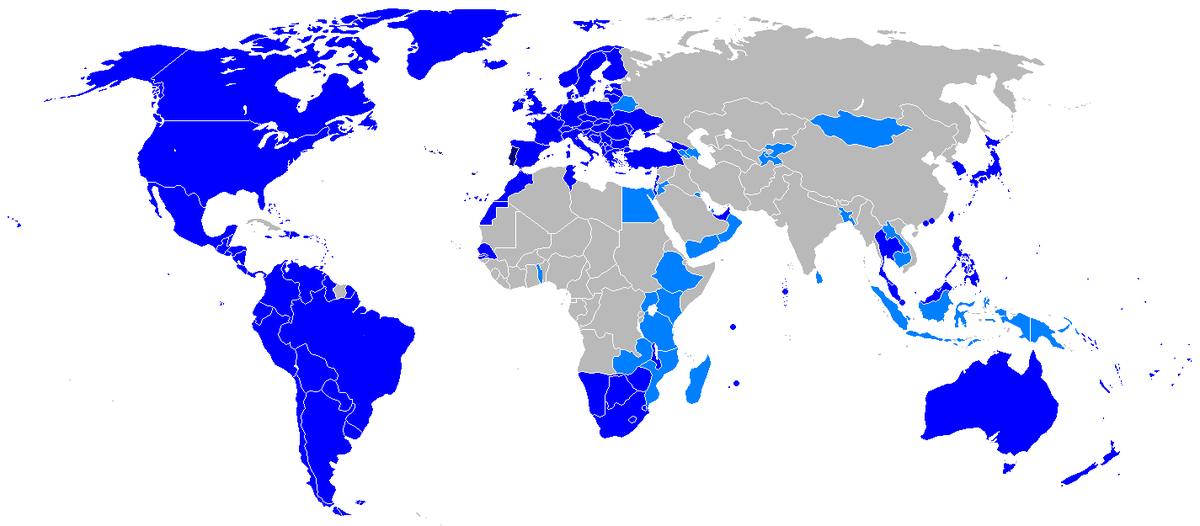
Fourteen nationalities enter visa-free for stays of 45 days: Belarus, Denmark, Finland, France, Germany, Italy, Japan, Norway, Russia, South Korea, Spain, Sweden, and the United Kingdom. Eight nationalities get 30 days: Cambodia, Indonesia, Kyrgyzstan, Laos, Malaysia, Myanmar, Singapore, and Thailand. The Philippines gets 21 days; Brunei gets 14. Chile and Panama get 90 days. If you hold one of these travel documents, you skip the e-visa entirely for stays within those limits.
Two rules trip people up. Your travel document must be valid for at least six months beyond your intended date of entry. You must have at least two blank pages in it. Airlines check both at check-in. A document expiring in five months will get you denied boarding, not a warning.
For visa-exempt travellers: a minimum of 30 days is required between visa-exempt visits for the 45-day and 30-day lists. The Vietnam Immigration Department publishes the exact reset interval. Check it directly if you plan to leave and re-enter quickly.
The Visa on Arrival Still Exists. it is Not the Same as the E-Visa.
Legacy SEO content keeps pushing the visa on arrival as the main option. It is not. The e-visa system expanded in 2023 to cover all nationalities not on the exemption list, and it is now the default. Visa on arrival still exists but requires a pre arranged approval letter from a Vietnamese sponsoring agency, which costs 15 to 60 USD depending on the agency and visa type plus a stamping fee at the airport of 25 USD single entry or 50 USD multiple entry. You land, queue at a counter, pay the stamping fee in cash, and receive the visa sticker. It works at five airports only: Hanoi (HAN), Ho Chi Minh City (SGN), Da Nang (DAD), Nha Trang (CXR), and Phu Quoc (PQC).
Do not confuse the two. With an e-visa you print the approval and walk through immigration without an extra payment. With visa on arrival you must have the approval letter in hand before you fly, and you still pay the stamping fee in cash USD on arrival. First timers who show up expecting Visa on Arrival without the letter are refused.
| Detail | E-Visa | Visa on Arrival |
|---|---|---|
| Official fee range | 25 50 USD | 15 60 USD (letter) + 25 50 USD (stamp) |
| Where to apply | evisa.gov.vn online | A Vietnamese sponsoring agency online |
| Processing time | 3 5 working days standard; 1 working day expedited | 2 4 working days typical |
| Action at airport | Show printed e-visa at immigration | Queue for sticker, pay stamping fee in cash USD |
| Valid for land borders? | Yes, specific Cambodia and Laos crossings | No, airport only |
| Maximum duration | 90 days | 30 days typical |

What Else Stops Travellers at Check-In
Proof Of Onward Travel
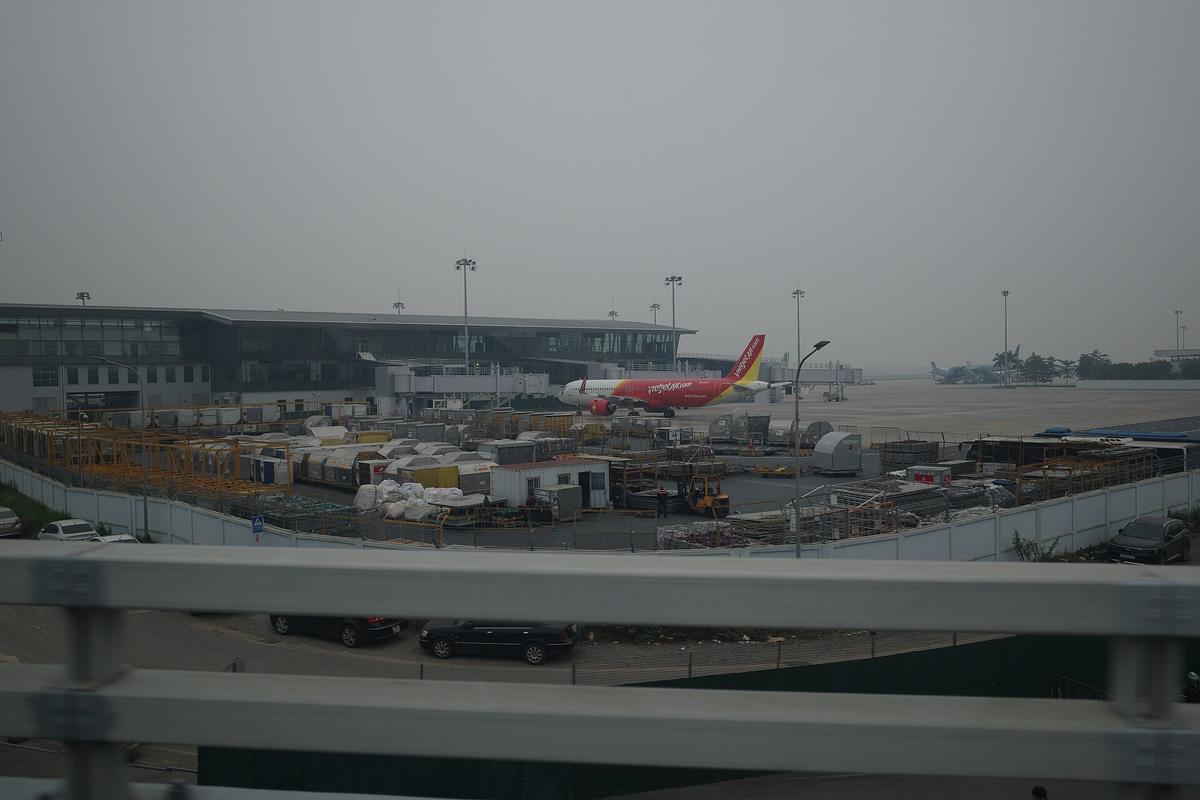
Airlines require proof of onward travel. Your e-visa, visa on arrival letter, or visa exemption document is not enough if you cannot show a flight, train, or bus ticket out of Vietnam within the allowed stay. The airline checks this at check-in. If you cannot produce it, you do not board. Book a refundable onward ticket if your itinerary is not fixed.
Match Your Name Exactly
Name order must match the travel document exactly. If your document writes your given name first and family name second, do not reverse the order in the application. Diacritics matter: a name like Nguyễn requires the tone marks. Entering Nguyen without the mark can generate a mismatch that rejects your e-visa or gets you flagged at immigration. Read your biographic page and copy it character for character.
Get The Photo Right
Photo specifications are not flexible. The e-visa requires a 4x6 cm image on a white background, no glasses, no headwear except religious. File size under 2 MB in JPG format. The passport scan must be the full biographic data page, uncropped, no glare, under 2 MB. Travel agencies including some visa processing services will take your photo at the right size. Or use a phone photo against a white wall with even lighting, cropped to 4x6 cm before upload. Do not guess.
Vietnam is Not a Quick Sprint
Who It Suits
A Vietnam trip suits budget and flashpackers, food focused travellers, solo travellers comfortable with improvisation, culture and history buffs, and slow travellers who prefer a few regions done well over a full country sprint. 10 days is the minimum: enough for the north (Hanoi, Halong, Ninh Binh) or the south and centre (Ho Chi Minh City, Hoi An, Hue) without constant transit. The single most common planning mistake is trying to cover Hanoi, Halong, Hue, Hoi An, Nha Trang, Da Lat, and Ho Chi Minh City in one trip. The country is long, transit is slow, and heat fatigue is real. That mistake leaves no room for unplanned meals, rain delays, or rest.
Vietnam is not for travellers who need quiet, order, or predictable infrastructure. Families with very young children will find the heat and traffic overwhelming. Beach purists expecting pristine empty coastlines will be disappointed. Anyone unwilling to haggle or handle persistent street sales will find the tourist hubs exhausting. The street level reality is loud, commercially persistent, and physically demanding.
What To See
Landmarks worth the effort include Hanoi's Temple of Literature and Ho Chi Minh Mausoleum (closed afternoons and Mondays; no shorts), the Cu Chi Tunnels as a half day from Ho Chi Minh City, and Hoi An Ancient Town (ticketed, budget for assembly halls). Ha Long Bay requires booking a reputable overnight operator. Ninh Binh (Tam Coc) offers limestone river karsts with fewer crowds than Ha Long. The Golden Bridge at Ba Na Hills is crowded by 9am. Arrive at 08:30 to get ahead of the bus groups or skip it entirely. Phong Nha's Paradise Cave is the most accessible cave in the Son Doong region.
What To Eat
Food is a reason to visit on its own. Bun cha in Hanoi, ca lao in Hoi An (the water source makes it location specific), mi Quang, and Hue imperial cuisine set menus. Egg coffee in Hanoi is dessert, not breakfast. Seafood in Da Nang is priced by weight from live tanks. The failure case for any eatery: if it is in a heavy tourist lane and has a laminated menu in six languages, the food is mediocre. Walk one street off the main drag.
The Most Expensive Mistake
The thing that goes wrong most often: paying an agency site for an e-visa. The official portal is evisa.gov.vn. The government fee is 25 or 50 USD. An agency will charge 50 to 150 USD for the same document, processed by the same immigration department. Do not pay a middleman for a government form.
Common Questions
What is the maximum stay on a Vietnam e-visa?
90 days. You select single entry or multiple entry when you apply. The 90 day validity period runs from the proposed entry date you state in the application, not from the date of approval.
Can I extend my e-visa once I am in Vietnam?
Yes, through the Vietnam Immigration Department or a licensed agency. Typical in country extensions last 30 days; 90 day extensions are possible in some cases. Agency fees range from 50 to 150 USD.
What happens if I overstay my visa?
The fine is 500,000 VND per day, with a range of 500,000 to 2,000,000 VND depending on overstay length. Serious overstays can result in an entry ban of 6 months to 5 years.
Do I need a visa for Phu Quoc?
All nationalities get 30 days visa free when arriving directly at Phu Quoc International Airport (PQC). The condition: you must depart Phu Quoc to a third country or transit through a Vietnamese international airport within 30 days. This exemption does not permit travel to mainland Vietnam without a separate visa.
Which land borders accept the e-visa?
Cambodia: Moc Bai and Ha Tien. Laos: Lao Bao, Cau Treo, Nam Can, Bo Y, and Tay Trang. The e-visa is also valid at all international seaports.
My e-visa application was rejected. Do I get a refund?
No. The government fee is not refunded for rejected applications. The most common causes are a photo that does not meet the 4x6 cm white background specification, a cropped or illegible passport scan, or a name mismatch. Correct these and reapply.
Do I need a printed copy of my e-visa?
Yes. Print at least two copies. Immigration at the airport will scan the QR code. Keep a digital copy on your phone as backup, but the printed copy is the primary document they expect to see.
Read next
-
 Vietnam eSIM Guide for Reliable Data in the Mountains and Cities
Compare Vietnam eSIM and local SIM options, and learn why Viettel is the network to choose for Sa Pa, Phong Nha, and the Mekong Delta.
Vietnam eSIM Guide for Reliable Data in the Mountains and Cities
Compare Vietnam eSIM and local SIM options, and learn why Viettel is the network to choose for Sa Pa, Phong Nha, and the Mekong Delta.
-
 Best Time to Visit Vietnam by Region and Month
Find the best time to visit Vietnam by region, with honest advice on typhoons, Tet closures, and the north-south climate split.
Best Time to Visit Vietnam by Region and Month
Find the best time to visit Vietnam by region, with honest advice on typhoons, Tet closures, and the north-south climate split.
-
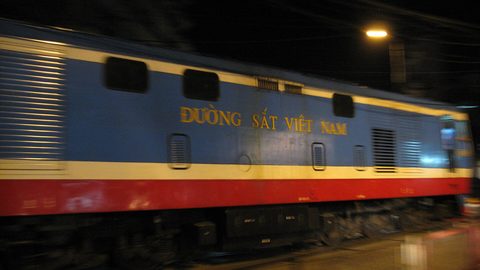 Getting Around Vietnam by Train, Sleeper Bus, Flight, and Grab
Compare Vietnam's trains, sleeper buses, domestic flights, and Grab to plan realistic transit times and costs between cities.
Getting Around Vietnam by Train, Sleeper Bus, Flight, and Grab
Compare Vietnam's trains, sleeper buses, domestic flights, and Grab to plan realistic transit times and costs between cities.
-
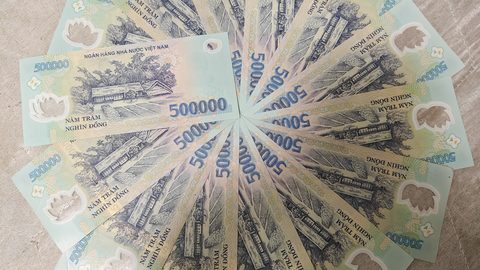 Vietnam Money Guide to Dong, ATMs, and Avoiding Bad Exchange Rates
Learn how to handle Vietnamese dong, choose ATMs that don't gouge you, and know when cash is the only option in Vietnam.
Vietnam Money Guide to Dong, ATMs, and Avoiding Bad Exchange Rates
Learn how to handle Vietnamese dong, choose ATMs that don't gouge you, and know when cash is the only option in Vietnam.
-
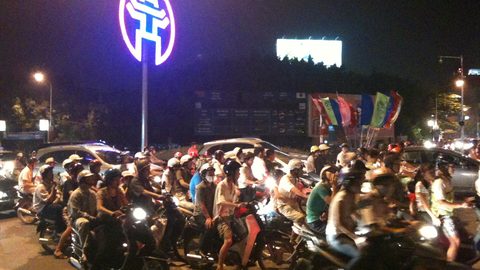 Vietnam Safety Guide for Traffic, Scams, and Health
Understand Vietnam's real safety risks, from crossing Hanoi roads to motorbike insurance gaps and the scams that target tourists.
Vietnam Safety Guide for Traffic, Scams, and Health
Understand Vietnam's real safety risks, from crossing Hanoi roads to motorbike insurance gaps and the scams that target tourists.
-
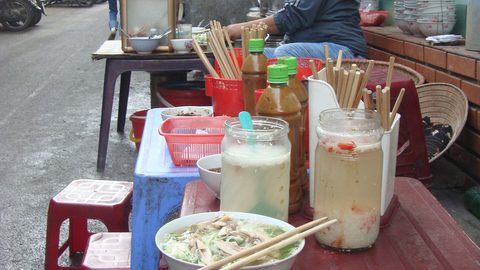 Vietnam Budget Guide to Daily Costs and the Things That Add Up
See realistic daily costs for Vietnam travel and learn which three expenses push a backpacker budget into flashpacker territory.
Vietnam Budget Guide to Daily Costs and the Things That Add Up
See realistic daily costs for Vietnam travel and learn which three expenses push a backpacker budget into flashpacker territory.
-
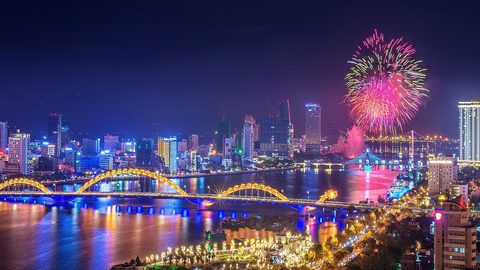 Da Nang
 is a liveable coastal city and central Vietnam base, not a museum town. Here is what it is actually for and where to go next.
Da Nang
Da Nang is a liveable coastal city and central Vietnam base, not a museum town. Here is what it is actually for and where to go next.
-
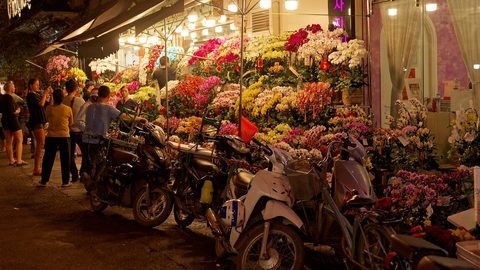 Hanoi
Hanoi hits with a full-sensory assault of motorbike swarms and constant horns, then rewards the persistent with Vietnam's deepest food city and layered neighbourhoods beyond the Old Quarter.
Hanoi
Hanoi hits with a full-sensory assault of motorbike swarms and constant horns, then rewards the persistent with Vietnam's deepest food city and layered neighbourhoods beyond the Old Quarter.
-
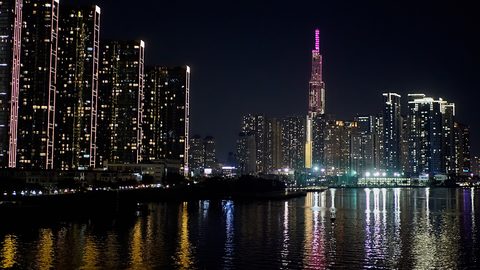 Ho Chi Minh City
An honest Ho Chi Minh City travel guide for travellers who thrive on sensory overload, street-food obsession, and 10 million motorbikes rather than quiet temples.
Ho Chi Minh City
An honest Ho Chi Minh City travel guide for travellers who thrive on sensory overload, street-food obsession, and 10 million motorbikes rather than quiet temples.