Ho Chi Minh Mausoleum Hanoi—Hours, Dress Code, and When It’s Shut
Ho Chi Minh Mausoleum queue rules, dress code, morning-only hours, and the months it closes entirely—the strictest visitor experience in Vietnam, no booking possible.
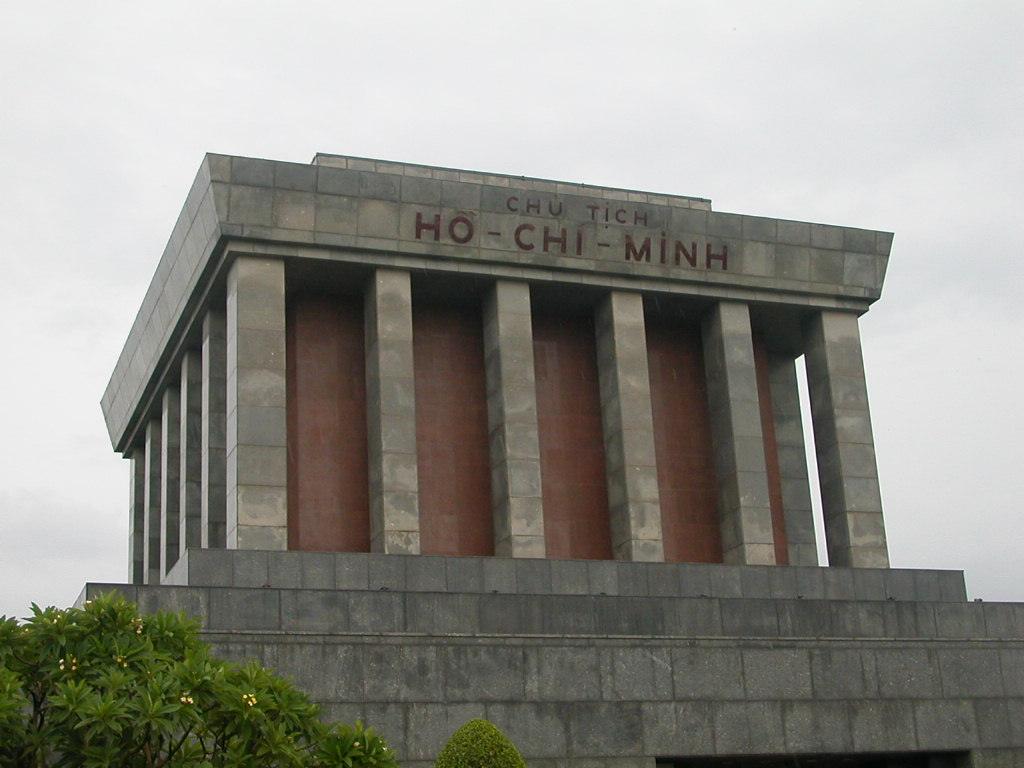

Ho Chi Minh Mausoleum Hanoi, Hours, Dress Code, and When It’s Shut
Tuesday through Sunday the queue forms before 07:30 on the broad Ba Dinh Square pavement. By 08:00 it stretches several hundred metres and moves with a steady, almost military shuffle. Travellers get turned away at the security checkpoint for wearing shorts, sandals without socks, or sleeveless tops. Others are scolded for raising a phone, for folding arms, for dropping a hand into a jacket pocket. This is the strictest queue in Vietnam. It rewards the prepared.
What To Wear And Bring
Wake up early. Dress like you are attending a formal ceremony in a climate that demands respect for its leader, not comfort for its heat. Leave your bag, camera, and phone at the free cloakroom. Walk the silent single-file corridor past the glass sarcophagus in roughly sixty seconds, then exit into the shaded grounds of the Presidential Palace. Spend the next two hours where most visitors rush through.
- Opening Days: Tuesday, Wednesday, Thursday, Saturday, Sunday. Closed Monday and Friday.
- Opening Hours: 07:30-10:30. Late arrivals are turned away; the gate closes sharply at 10:30 regardless of queue length.
- Annual Closure: Roughly two months from September to October while the body travels to Russia for maintenance. Exact dates shift annually; check before booking your trip.
- Dress Code: No shorts of any length. No sleeveless tops, no tank tops, no bare shoulders. Cover knees and shoulders completely.
- Prohibited Items: Bags, cameras, phones, and any recording device. Free lockers are available on-site.
- Conduct Rules: Silence at all times. No stopping in front of the glass sarcophagus. Do not put your hands in your pockets. Guards enforce every rule without warning.
- Visit Duration: The mausoleum interior takes about 60 seconds. The full complex, grounds, stilt house, One Pillar Pagoda, and Ho Chi Minh Museum, takes 2-3 hours.
- Advance Booking: Not possible. You cannot reserve a time slot or skip the queue. Every visitor joins the single public line.
What This Place Actually is
The Ho Chi Minh Mausoleum Complex is a state shrine. Not a museum, not a temple, not a tourist attraction that offers flexibility. The central building on Ba Dinh Square holds the embalmed body of Ho Chi Minh in a dimly lit chamber. The body has been there since 1975 except for roughly two months a year, September to October, when it is flown to Russia for preservation work. During those months the mausoleum is entirely closed, and many travellers arrive in Hanoi only to find they cannot enter.
The complex includes four additional sites on the same landscaped grounds: the Presidential Palace (viewed from outside), Ho Chi Minh’s stilt house where he lived from 1958 to 1969, the One Pillar Pagoda, and the Ho Chi Minh Museum. Visit all of them on the same morning after you file past the body. The museum and the palace grounds each cost 40,000 VND, cash only, correct change expected. The mausoleum itself is free.
Why The Rules Are What They Are
History matters here only because it dictates the rules. Ho Chi Minh died in 1969, and the mausoleum was built in the following decade during a period of national unification. The building’s design incorporates materials from across the country. The queue procedure was set when the site opened in 1975. It has not loosened.
Is it Worth It?
For a traveller with three days in Hanoi, the mausoleum is a valid use of one morning provided you arrive knowing exactly what to expect. The interior is silent, cool, and over in under a minute. You walk up a set of stairs, turn left, move past the glass case at a regulated pace, and exit down another staircase. Guards do not tolerate hesitation. If you want a meditative encounter with a historical figure, this is too brief to provide it. If you want a cultural experience that reveals something about how Vietnam honours its leadership, this is instructive.
Skip it if the thought of a 60-second shuffle past a preserved corpse sounds like performance rather than pilgrimage. Skip it if your tolerance for queuing under strict surveillance is low. Skip it if you need to move through your day on your own schedule rather than the state’s. The stilt house and the One Pillar Pagoda are accessible only through the same entry process. Skipping the mausoleum means skipping the whole complex.
Do not skip it simply because you dislike crowds. The queue is long but fast-moving. The grounds after 10:30 are surprisingly peaceful. The mistake most visitors make is arriving late and being turned away, or arriving unprepared and being refused entry at the dress-code checkpoint.
How to Get in and Do it Well
Plan the morning with precision. The mausoleum opens at 07:30. Arrive at Ba Dinh Square by 07:00 to position yourself near the front of the queue. The queue forms on the pavement facing the mausoleum; look for the longest orderly line of people and join it. No tickets, no wristbands, no reservation to manage. Bring nothing but your ID, your passport or a photocopy of the photo page.
The free bag-check building sits to the left of the entrance and opens before 07:30. Deposit your bag, camera, phone, power bank, and anything in your pockets except a small wallet. Guards will stop you for a watch with a camera function. Wear shoes that cover your feet. Closed-toe sandals without socks have been rejected. Cover your shoulders completely. A thin scarf tied around the neck will not pass.
Approach the security screening without metal objects in your pockets. Walk through, enter the building, and follow the line. Do not stop to look behind you. Do not speak. Walk with your hands visible and at your sides. The guards will direct you forward if you hesitate.
After The Sarcophagus
Exit the mausoleum and immediately turn right onto the grounds. The Presidential Palace sits ahead but is not open to the interior; photograph it from outside. Ho Chi Minh’s stilt house is a short walk to the left through a garden of fruit trees. It is small, modest, and the most evocative structure on the site. The One Pillar Pagoda is near the exit gate, a five-minute stop.
The Ho Chi Minh Museum is a separate building across the square. It opens at 08:00 but closes for lunch from 12:00 to 14:00 before reopening until 16:30. It is closed Monday and Friday like the mausoleum. Entry costs 40,000 VND and takes about an hour. The curation is heavy on dioramas and letters rather than artifacts. Skip it if you are tired of state-sanctioned narrative.
Budget from 07:00 to 10:30 for the complex as a whole. By 10:45 the queue is gone, the grounds are emptying, and you can cross the street into the quiet residential alleys of Ba Dinh district for a bowl of bun rieu at a local shop that has no English sign and does not care about your tour schedule.
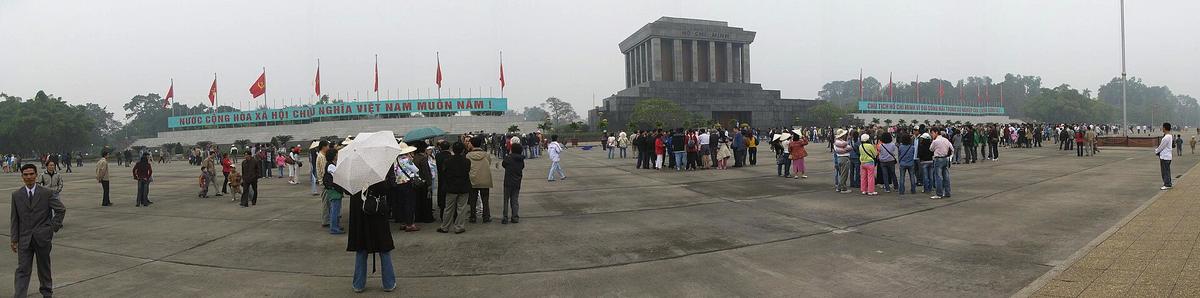

What Happens When You Get it Wrong
The mausoleum enforces its rules more consistently than any other Hanoi attraction. Arrive after 10:30 and the guards at the gate tell you to come back the next opening day. Arrive in shorts and they turn you away regardless of how far you travelled. Take a phone out of a pocket inside the building and a guard grabs your arm and escorts you out. These are not scare stories. They are the everyday operation of the site.
The Annual Closure Trap
Read the annual closure dates before booking your flight. The roughly two-month closure from September to October means that travellers who plan a Hanoi stop in late September find an empty mausoleum. The dates shift every year, and the government announces them a few months ahead. Search for the announcement in Vietnamese sources or call your hotel concierge to confirm. Do not assume the schedule you read on a travel blog from last year is still accurate.
The free cloakroom can fill during peak season. If it is full, you cannot enter. Arriving early solves most problems.
Who It Suits
Ho Chi Minh Mausoleum suits travellers who want to understand how Vietnam commemorates its past through ceremony, order, and absolute conformity to a public code. It does not suit travellers who want informal access, historical depth inside the building, or a relaxed morning that includes a lie-in. If that describes your trip, spend the morning at the Temple of Literature instead. Save the mausoleum for a return visit when you are ready to follow the rules exactly.
Common Questions
Can I book a time slot for the mausoleum in advance?
No. There is no advance booking system, no timed entry, no fast-track ticket. Every visitor joins the single public queue. Arrive before 07:00 to shorten the wait.
What happens if I wear shorts or a sleeveless shirt to the queue?
You will be turned away at the security checkpoint. The guard will point at your legs or shoulders and gesture for you to leave. No exceptions are made for weather or distance travelled. Carry a light long-sleeve shirt and long trousers in your daypack even on a hot morning.
Why does the mausoleum close for two months every year?
Ho Chi Minh’s embalmed body requires periodic maintenance in Russia, where the original preservation work was done. The body is flown to Moscow for roughly two months, usually September through October. Exact dates vary annually.
Can I take photos inside the mausoleum?
No. All cameras, phones, and recording devices are prohibited inside the building. Deposit them at the free cloakroom before you enter. Guards confiscate any device they see in use.
Read next
-
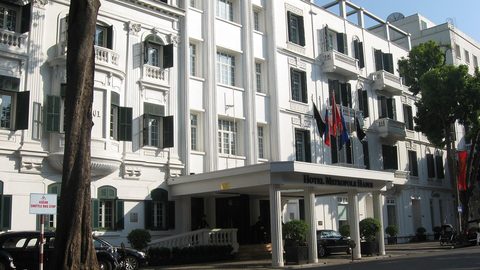
 Hanoi Hotels That Match the City—Character, Chaos, and the Occasional Quiet Courtyard
Hanoi hotels range from Old Quarter shophouse conversions with courtyard calm to Tay Ho serviced apartments for nomads—each district trades proximity for peace differently.
Hanoi Hotels That Match the City—Character, Chaos, and the Occasional Quiet Courtyard
Hanoi hotels range from Old Quarter shophouse conversions with courtyard calm to Tay Ho serviced apartments for nomads—each district trades proximity for peace differently.
-
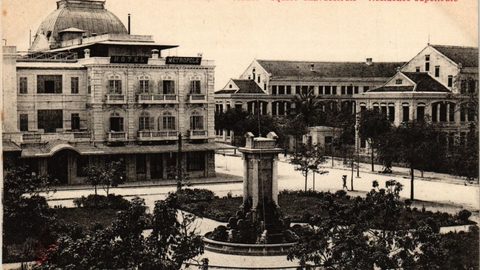 Where to Stay in Hanoi Without Missing the City That Exists Beyond the Old Quarter
Base yourself in the Old Quarter for street-food density and chaos, Tay Ho for lakeside brunches and craft beer, or Truc Bach for a quieter old-Hanoi rhythm with banh cuon on your doorstep.
Where to Stay in Hanoi Without Missing the City That Exists Beyond the Old Quarter
Base yourself in the Old Quarter for street-food density and chaos, Tay Ho for lakeside brunches and craft beer, or Truc Bach for a quieter old-Hanoi rhythm with banh cuon on your doorstep.
-
 Flying into Hanoi and Getting from Noi Bai to the Old Quarter Fast
Flying into Hanoi Noi Bai Airport—SIM pickup, Grab setup on airport Wi-Fi, express bus 86 vs taxi costs, and the domestic transfer for onward Vietnam flights.
Flying into Hanoi and Getting from Noi Bai to the Old Quarter Fast
Flying into Hanoi Noi Bai Airport—SIM pickup, Grab setup on airport Wi-Fi, express bus 86 vs taxi costs, and the domestic transfer for onward Vietnam flights.
-
 Hanoi Things to Do That Are Worth Your Limited Days, Ranked Honestly
Ranked honestly: Temple of Literature and the Women's Museum are non-negotiable, Ho Chi Minh Mausoleum demands a pre-9am arrival and strict dress code, and Train Street access is now restricted.
Hanoi Things to Do That Are Worth Your Limited Days, Ranked Honestly
Ranked honestly: Temple of Literature and the Women's Museum are non-negotiable, Ho Chi Minh Mausoleum demands a pre-9am arrival and strict dress code, and Train Street access is now restricted.
-
 Best Time to Visit Hanoi, Month by Month, With the Tradeoff Each One Carries
October-November and March-April deliver 20-28°C walking weather, but avoid Tet when street-food stalls shut for 7-10 days and June-August when 35°C heat floods the streets in 20 minutes.
Best Time to Visit Hanoi, Month by Month, With the Tradeoff Each One Carries
October-November and March-April deliver 20-28°C walking weather, but avoid Tet when street-food stalls shut for 7-10 days and June-August when 35°C heat floods the streets in 20 minutes.
-
 Getting Around Hanoi When Pavements Are Parking Lots and Google Maps Lies
Grab dominates Hanoi transit but requires a local SIM set up at Noi Bai Airport before you leave the Wi-Fi zone, and Google Maps walking times double when pavements become motorbike parking lots.
Getting Around Hanoi When Pavements Are Parking Lots and Google Maps Lies
Grab dominates Hanoi transit but requires a local SIM set up at Noi Bai Airport before you leave the Wi-Fi zone, and Google Maps walking times double when pavements become motorbike parking lots.
-
 Hoan Kiem Lake
 at its two best moments—6am tai chi and the red bridge empty, and weekend nights when the roads close and Hanoi takes over the asphalt.
Hoan Kiem Lake
Hoan Kiem Lake at its two best moments—6am tai chi and the red bridge empty, and weekend nights when the roads close and Hanoi takes over the asphalt.
-
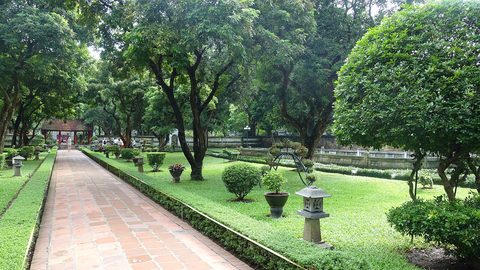 Temple of Literature
The Temple of Literature’s five courtyards walked in order—the turtle stelae, the Well of Heavenly Clarity, and why Vietnamese graduates still crowd the third courtyard.
Temple of Literature
The Temple of Literature’s five courtyards walked in order—the turtle stelae, the Well of Heavenly Clarity, and why Vietnamese graduates still crowd the third courtyard.
-
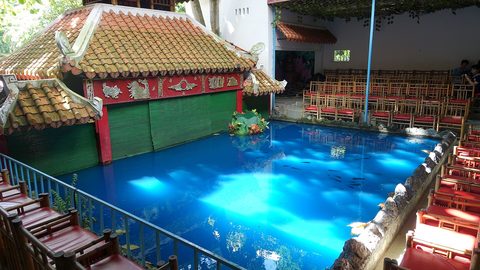 Thang Long Water Puppet Theatre
Thang Long Theatre by Hoan Kiem Lake or the smaller Lotus Theatre—which Hanoi water puppet show is worth your evening and how to get tickets without overpaying.
Thang Long Water Puppet Theatre
Thang Long Theatre by Hoan Kiem Lake or the smaller Lotus Theatre—which Hanoi water puppet show is worth your evening and how to get tickets without overpaying.