The Temple of Literature, 1070 Confucian Temple and Imperial Academy
The Temple of Literature’s five courtyards walked in order—the turtle stelae, the Well of Heavenly Clarity, and why Vietnamese graduates still crowd the third courtyard.

The Temple of Literature Hanoi Five Courtyards Guide: What Most Visitors Get Wrong
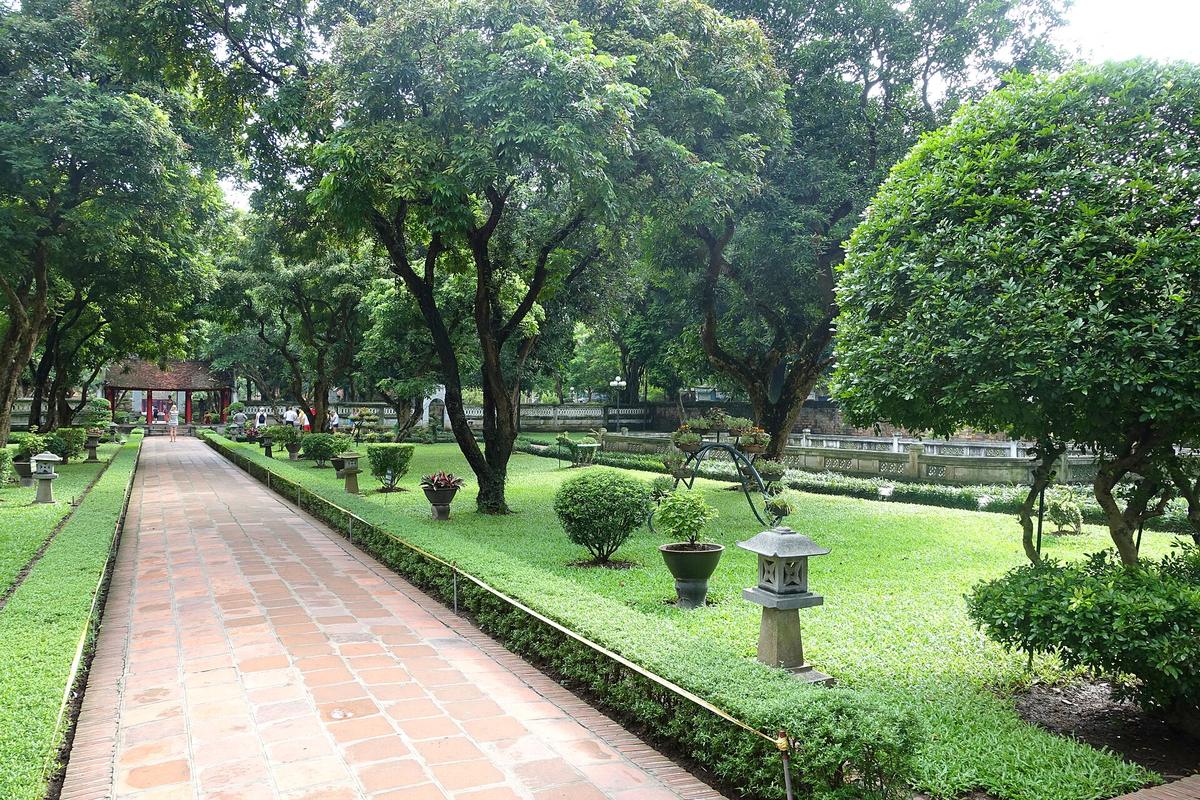
Most travellers arrive at the Temple of Literature expecting a single temple building. They walk through the gate, snap a photo of the first court, and head for the exit twenty minutes later wondering what the fuss is about. That sequence misses everything. The Temple of Literature is not a temple. It is Vietnam's first university, founded in 1076 as the Imperial Academy, and its reason for existing is the examination system that produced the country's scholarly elite for seven centuries. The site is five separate courts laid out on a single axis, and skipping any one of them means losing the narrative arc the builders designed. This guide walks you through each space in order, explains why the third court matters more than the others, and tells you exactly when to arrive so you are not fighting tour buses for a clear view of the stone stelae.
- Founding Date: 1070 by Emperor Lý Thánh Tông, dedicated to Confucius
- University Function Began: 1076 as Quốc Tử Giám (Imperial Academy)
- Layout: Five sequential courtyards on a single north-south axis
- Key Feature: 82 stone stelae mounted on turtles, listing imperial examination graduates
- UNESCO Recognition: Memory of the World inscription in 2010 for the stelae
- Opening Hours: 08:00-17:00 daily; last admission at 16:30
- Ticket Price (Foreign Adult): 70,000 VND (2024 rate, published by the Temple's management board)
- Ticket Price (Vietnamese Adult): 30,000 VND (2024 rate)
- Dress Code: Covered shoulders and knees
- Typical Visit Duration: 1 hour
Courtyard One: the Great Middle Gate and the Entrance Proper
Enter via the Văn Miếu Môn gate onto a broad gravel path flanked by ancient banyan trees. This is the Đại Trung Môn area, named for the Great Middle Gate that frames the view ahead. Most people pause here, take a photo of the gate, and assume the best is behind them. It is not. This first court is the ceremonial buffer. It exists to separate the noise of Hanoi's streets from the scholarly silence of the university beyond. The architecture is restrained: low walls, trimmed hedges, a rectangular pond. Keep walking. The gate at the far end leads to the second court, and that is where the site begins to reveal itself.
Courtyard Two: Khuê Văn Các, the Pavilion on the 100,000 Dong Note
The second court is dominated by Khuê Văn Các, a two-story wooden pavilion built in 1805. You recognise it even if you have never been here: it appears on the reverse of the 100,000 VND banknote. The pavilion is not a building you enter. It is a framed view, designed to draw your eye through its open upper storey toward the third court beyond. Walk under it, do not stop. The real weight of this space is in the smaller structures to either side: the stele houses that once held the earliest doctoral records. Those records are gone now, destroyed in war and neglect, which is why the surviving stelae in the next court matter as much as they do.
What the Pavilion Teaches About the Site's Design
Khuê Văn Các sits exactly at the midpoint of the five-court sequence. From here you can see back to the entrance and forward to the Well of Heavenly Clarity. The builders placed it here because the university was a progression: you moved from the public space of the first court through this threshold toward the examination records and the teaching halls. Glance at the pavilion and turn around, and you have seen the symbol but missed the journey.
Courtyard Three: the Well of Heavenly Clarity and the Turtle Stelae That Make This Place Matter
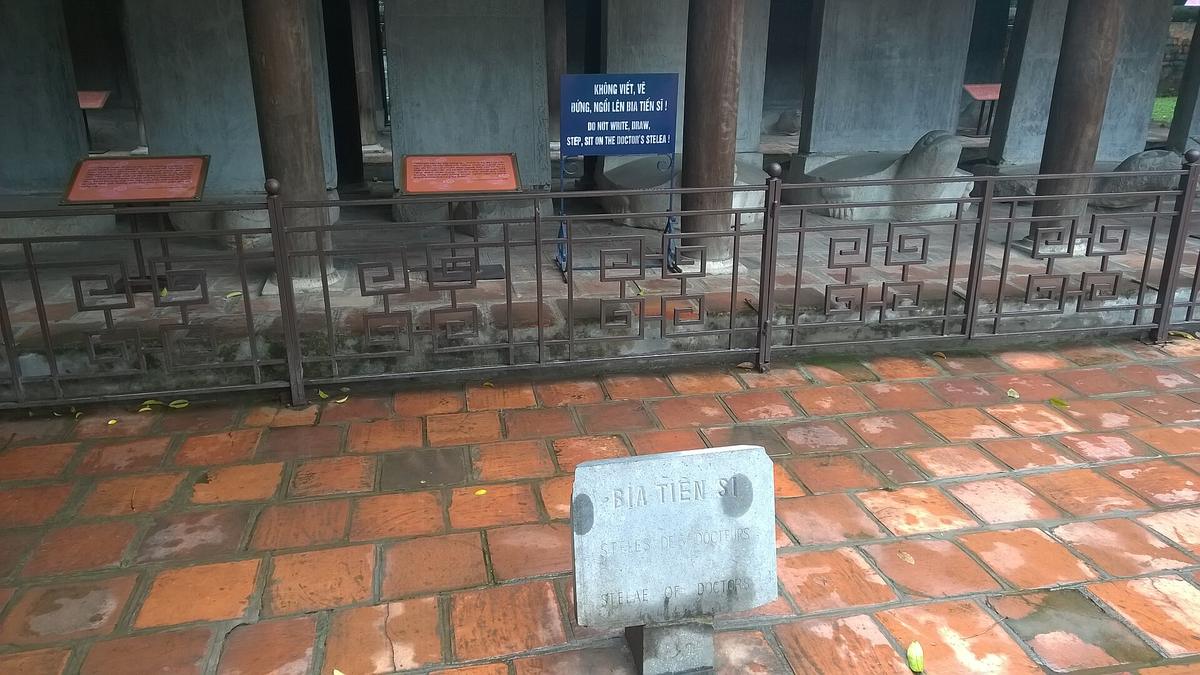
This is the court that justifies the entry fee. The Well of Heavenly Clarity (Giếng Thiên Quang) sits in the centre: a rectangular stone-lined pool that reflects the sky above. Around it, under two pavilions on either side, stand 82 stone stelae mounted on the backs of stone turtles. Each stele records the names and birthplaces of successful graduates from a single imperial examination between 1484 and 1780. The oldest dates from 1484; the newest from 1780. All 82 were erected under the Lê dynasty. UNESCO inscribed them onto the Memory of the World register in 2010.
Why the Turtles Matter
The turtle is not decorative. In Vietnamese and Chinese Confucian tradition, the turtle represents longevity, wisdom, and the transmission of knowledge across generations. Placing the stelae on turtle backs was a deliberate statement: the names carved here would outlast the men who earned them. The stone turtles are roped off now because centuries of people touching the heads caused visible wear. Do not reach over the barrier. The damage is already visible on the oldest stelae, and the rope is there to preserve what remains.
Why Vietnamese Graduates Still Pose Here
Every year in November and December, students from Hanoi's universities arrive in áo dài for graduation photographs. They pose beside the stele that carries the name of a graduate from their home province, or they frame the Well of Heavenly Clarity behind them. The reason is not sentimentality. These stelae represent the same achievement the graduates are about to complete: a public record of scholarly success, approved by the state, inscribed in stone. Standing next to a 16th-century doctoral name is a way of claiming membership in the same lineage. The practice is specific to Hanoi's universities and it happens nowhere else in Vietnam with this concentration of historical examination records. Visit during graduation season and the court will be crowded, but the crowds are part of the experience.
Courtyard Four: the Courtyard of the Sages and the Offering Hall
Beyond the well, the fourth court opens onto the Courtyard of the Sages. This is the ritual centre of the complex. A large square building called the Đại Thành Môn houses altars to Confucius and his four principal disciples. Incense burns here year-round. The atmosphere shifts from the archival quiet of the stelae court to something more temple-like. Travellers with limited time and no interest in Confucian ritual can move through this space in five minutes. The building that matters most is the one ahead.
Courtyard Five: the Imperial Academy Grounds and the Hall of the Doctorates
The final court holds the Quốc Tử Giám itself: the Imperial Academy where students lived and studied. The main hall, the Hall of the Doctorates, contains a small museum with displays on the examination system, a replica of a student dormitory, and a bronze drum. Behind it, a modern statue of Chu Văn An, the academy's most famous rector, stands under a frangipani tree. This court is the quietest of the five. Tour groups that rushed through the stelae court often skip the museum entirely, which means you can stand in the hall and read the displays without jostling. The museum is small but it answers the question most people have: how did the examination system actually work? The answer involves three years of study, a written exam lasting three days in a closed cell, and a pass rate of roughly one percent. The stelae in court three are the survivors of that system.
Van Mieu Quoc Tu Giam Hanoi History: How a Confucian Temple Became Vietnam’s First University
Emperor Lý Thánh Tông founded the Temple of Literature in 1070 as a Confucian temple. Six years later, in 1076, his successor established the Imperial Academy on the same grounds. That dual function is why the site has five courts rather than one: the front courts served the temple, the rear courts served the university. For 700 years the academy trained the sons of mandarins and, from the 15th century onward, the sons of commoners who passed the provincial exams. The Lê dynasty codified the examination system and began erecting the doctoral stelae in 1484. The system collapsed under the Nguyễn dynasty in the early 20th century, replaced by French-colonial education. The Temple of Literature fell into disrepair and was restored several times. Today it is the most intact example of imperial-era education infrastructure in Vietnam.
Temple of Literature Stone Stelae Turtles: What You Are Actually Looking at
Each of the 82 stelae sits on a stone turtle whose head faces the Well of Heavenly Clarity. The turtle's shell carries the stele, which is a rectangular slab of stone about 1.5 metres tall. The inscription is written in classical Chinese characters, not Vietnamese, because the imperial examination system used Chinese as its written language. Each stele records the examination year, the names of the successful candidates, and their home villages. The oldest stele from 1484 lists 30 names. The newest from 1780 lists 75. The stelae are arranged by dynasty and reign period, not by date, so the oldest are on the left pavilion and the newest on the right. You cannot touch them, but you can read the Vietnamese translation placards mounted on the walls beside each pavilion.

Temple of Literature Opening Hours Entry Fee: What it Costs and When to Go
The Temple of Literature opens daily from 08:00 to 17:00, with last admission at 16:30. The 2024 adult foreigner ticket was 70,000 VND, about USD 3. Vietnamese adults pay 30,000 VND. Students with a valid student card pay 30,000 VND. Children under 15 enter free. These rates are published by the Temple of Literature management board and change periodically, so check the official website before you go if the exact figure matters. Arrive at 08:00 for fewer crowds. Tour buses from the Old Quarter and Ho Chi Minh Mausoleum circuit arrive between 09:30 and 11:00 and again between 13:30 and 15:00. The second court and the stelae court become congested during those windows. Arriving at 08:00 gives you roughly 90 minutes before the first bus groups enter.
Temple of Literature Graduation Photos Hanoi: Why Students Come Here and How to Experience it
Graduation season runs from November through December. On any weekend morning in those months, the first and third courts fill with students in white and red áo dài, posing beside the stelae and the Well of Heavenly Clarity. The practice is not a tourist performance. These are real graduates from Hanoi National University and other local institutions, brought here by a tradition that dates back to the first doctoral stelae. If you visit during this period, arrive before 08:00 and expect the third court to be busy by 09:00. Photograph the stelae from the side pavilions rather than trying to get a clear shot of the well itself. Alternatively, visit on a weekday in November or December, when the graduation crowds are smaller but still present. The energy these students bring is the closest you will get to seeing the court function as it was designed: as a public celebration of academic achievement.
What to Do Nearby After the Temple of Literature
The Temple of Literature sits in the Dong Da district, a student neighbourhood with local eats and minimal tourists. Directly across the street at 66 Nguyễn Thái Học is the Fine Arts Museum, which holds Vietnam's best collection of modern and contemporary painting. A ten to fifteen minute walk north on Hoàng Diệu Street brings you to the Imperial Citadel of Thăng Long, a UNESCO World Heritage site with archaeological layers from the Chinese occupation through the Vietnam War. The citadel is quieter than the Temple of Literature and takes about an hour to see. If you have only one morning, start at the Temple of Literature at 08:00, cross to the Fine Arts Museum at 09:30, and reach the citadel gate by 10:45.
Who Should Skip the Temple of Literature Entirely
If you have no interest in Confucian history, imperial examinations, or architecture from the 11th century, skip it. The Temple of Literature is not an essential stop for travellers whose Hanoi priority is street food, nightlife, or the war museums. The Fine Arts Museum across the street is the better choice for those who want a short, visually engaging stop without reading stelae. The Temple of Literature rewards patience and a willingness to read the placards. If you cannot spend an hour here, do not spend thirty minutes rushing through.
| Courtyard | Name | Key Feature | Visit Time |
|---|---|---|---|
| 1 | Đại Trung Môn (Great Middle Gate) | Gravel path, banyan trees, entrance gate | 5 minutes |
| 2 | Khuê Văn Các | Wooden pavilion on the 100,000 VND note | 5 minutes |
| 3 | Well of Heavenly Clarity | 82 stone stelae on turtles, rectangular well | 20 minutes |
| 4 | Courtyard of the Sages | Altars to Confucius and disciples | 5 minutes |
| 5 | Imperial Academy (Quốc Tử Giám) | Museum, dormitory replica, statue of Chu Văn An | 25 minutes |
The Mistake Most Visitors Make
The most common error is treating the Temple of Literature as a single photo stop rather than a five-court sequence. People enter, see the first court, walk through the second, stop at the well for a picture, and backtrack to the exit without ever reaching the Imperial Academy at the rear. That route takes fifteen minutes and misses the museum that explains what the stelae actually mean. The correct route is linear: enter, walk through each gate in order, and exit through the rear gate near the statue of Chu Văn An. That rear gate deposits you onto Nguyễn Thái Học, directly opposite the Fine Arts Museum, which is the natural next stop.
Common Questions
How long does it take to visit the Temple of Literature?
Plan for one hour minimum. The full five-court sequence with time to read the stele translations and walk through the Imperial Academy museum takes 60 to 75 minutes.
Can I touch the stone turtles?
No. The turtles are roped off to prevent further wear damage. Touching the heads or the stelae is not permitted.
Is there a dress code?
Yes. Covered shoulders and knees are required for all visitors. The site is still an active temple and a UNESCO-recognised heritage site, not a museum.
What is the best time of day for photography without crowds?
08:00 to 09:00. The site opens at 08:00 and tour buses arrive from 09:30 onward. The third court with the well and stelae is the most crowded area during peak hours.
Can I combine the Temple of Literature with other attractions in a single morning?
Yes. The Fine Arts Museum is directly across the street and the Imperial Citadel of Thăng Long is a 10 to 15 minute walk north. Both open at 08:00. Start at the Temple of Literature, cross to the museum, and walk to the citadel by 10:45.
Read next
-
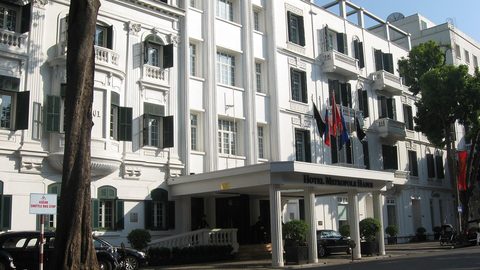
 Hanoi Hotels That Match the City—Character, Chaos, and the Occasional Quiet Courtyard
Hanoi hotels range from Old Quarter shophouse conversions with courtyard calm to Tay Ho serviced apartments for nomads—each district trades proximity for peace differently.
Hanoi Hotels That Match the City—Character, Chaos, and the Occasional Quiet Courtyard
Hanoi hotels range from Old Quarter shophouse conversions with courtyard calm to Tay Ho serviced apartments for nomads—each district trades proximity for peace differently.
-
 Where to Stay in Hanoi Without Missing the City That Exists Beyond the Old Quarter
Base yourself in the Old Quarter for street-food density and chaos, Tay Ho for lakeside brunches and craft beer, or Truc Bach for a quieter old-Hanoi rhythm with banh cuon on your doorstep.
Where to Stay in Hanoi Without Missing the City That Exists Beyond the Old Quarter
Base yourself in the Old Quarter for street-food density and chaos, Tay Ho for lakeside brunches and craft beer, or Truc Bach for a quieter old-Hanoi rhythm with banh cuon on your doorstep.
-
 Flying into Hanoi and Getting from Noi Bai to the Old Quarter Fast
Flying into Hanoi Noi Bai Airport—SIM pickup, Grab setup on airport Wi-Fi, express bus 86 vs taxi costs, and the domestic transfer for onward Vietnam flights.
Flying into Hanoi and Getting from Noi Bai to the Old Quarter Fast
Flying into Hanoi Noi Bai Airport—SIM pickup, Grab setup on airport Wi-Fi, express bus 86 vs taxi costs, and the domestic transfer for onward Vietnam flights.
-
 Hanoi Things to Do That Are Worth Your Limited Days, Ranked Honestly
Ranked honestly: Temple of Literature and the Women's Museum are non-negotiable, Ho Chi Minh Mausoleum demands a pre-9am arrival and strict dress code, and Train Street access is now restricted.
Hanoi Things to Do That Are Worth Your Limited Days, Ranked Honestly
Ranked honestly: Temple of Literature and the Women's Museum are non-negotiable, Ho Chi Minh Mausoleum demands a pre-9am arrival and strict dress code, and Train Street access is now restricted.
-
 Best Time to Visit Hanoi, Month by Month, With the Tradeoff Each One Carries
October-November and March-April deliver 20-28°C walking weather, but avoid Tet when street-food stalls shut for 7-10 days and June-August when 35°C heat floods the streets in 20 minutes.
Best Time to Visit Hanoi, Month by Month, With the Tradeoff Each One Carries
October-November and March-April deliver 20-28°C walking weather, but avoid Tet when street-food stalls shut for 7-10 days and June-August when 35°C heat floods the streets in 20 minutes.
-
 Getting Around Hanoi When Pavements Are Parking Lots and Google Maps Lies
Grab dominates Hanoi transit but requires a local SIM set up at Noi Bai Airport before you leave the Wi-Fi zone, and Google Maps walking times double when pavements become motorbike parking lots.
Getting Around Hanoi When Pavements Are Parking Lots and Google Maps Lies
Grab dominates Hanoi transit but requires a local SIM set up at Noi Bai Airport before you leave the Wi-Fi zone, and Google Maps walking times double when pavements become motorbike parking lots.
-
 Hoan Kiem Lake
 at its two best moments—6am tai chi and the red bridge empty, and weekend nights when the roads close and Hanoi takes over the asphalt.
Hoan Kiem Lake
Hoan Kiem Lake at its two best moments—6am tai chi and the red bridge empty, and weekend nights when the roads close and Hanoi takes over the asphalt.
-
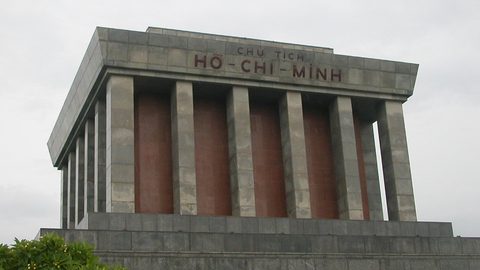 Ho Chi Minh Mausoleum
 queue rules, dress code, morning-only hours, and the months it closes entirely—the strictest visitor experience in Vietnam, no booking possible.
Ho Chi Minh Mausoleum
Ho Chi Minh Mausoleum queue rules, dress code, morning-only hours, and the months it closes entirely—the strictest visitor experience in Vietnam, no booking possible.
-
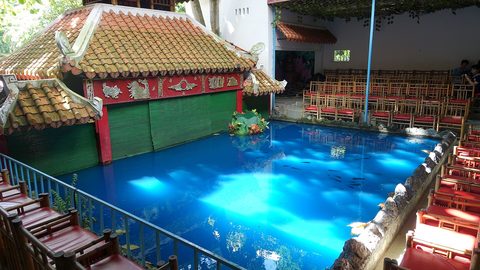 Thang Long Water Puppet Theatre
Thang Long Theatre by Hoan Kiem Lake or the smaller Lotus Theatre—which Hanoi water puppet show is worth your evening and how to get tickets without overpaying.
Thang Long Water Puppet Theatre
Thang Long Theatre by Hoan Kiem Lake or the smaller Lotus Theatre—which Hanoi water puppet show is worth your evening and how to get tickets without overpaying.