What to Do in Hanoi After You Have Mastered Crossing the Street
Ranked honestly: Temple of Literature and the Women's Museum are non-negotiable, Ho Chi Minh Mausoleum demands a pre-9am arrival and strict dress code, and Train Street access is now restricted.
What to Do in Hanoi After You Have Mastered Crossing the Street
Three days in Hanoi is the minimum for a trip that feels complete, not rushed. The city hits visitors with a full sensory assault that is exhilarating for the first 48 hours and exhausting thereafter. The hardest part is crossing the street: you walk slowly and let the river of scooters flow around you, which feels suicidal the first dozen times. This honest ranking of Hanoi things to do ranked by genuine worth tells you which sights deserve your limited days and which you can skip without regret. Every entry includes the practical friction: dress codes, closures, pavement conditions, the exact moment to arrive.
Temple of Literature Hanoi Visit: Non Negotiable
Vietnam's first university, founded in 1070, is the single most rewarding sight in Hanoi. Five courtyards unfold in sequence, each quieter and more contemplative than the last. The 82 stone stelae on turtle backs, recording doctoral graduates from 1442 to 1779, are the centrepiece. They sit under a cover of shade and scholarly quiet that feels a world away from the motorbike swarm outside the gates.
Arrive at opening time, 07:30, when the light falls through the second courtyard's frangipani trees and the tour groups have not yet arrived. Allow 90 minutes minimum. The pavement approach from Van Mieu Street is workable, though the last 50 metres require stepping around parked motorbikes. No dress code beyond shoulders and knees covered, which is less strict than the mausoleum. Entry fee is 30,000 VND.
The Temple of Literature is the one sight you cannot skip. It answers the question of what Hanoi is about better than any other landmark: scholarship, persistence, and a quiet elegance buried under the city's grime and noise.
.jpg)
Vietnam Museum of Ethnology Outdoor Exhibits: Worth the Taxi Ride
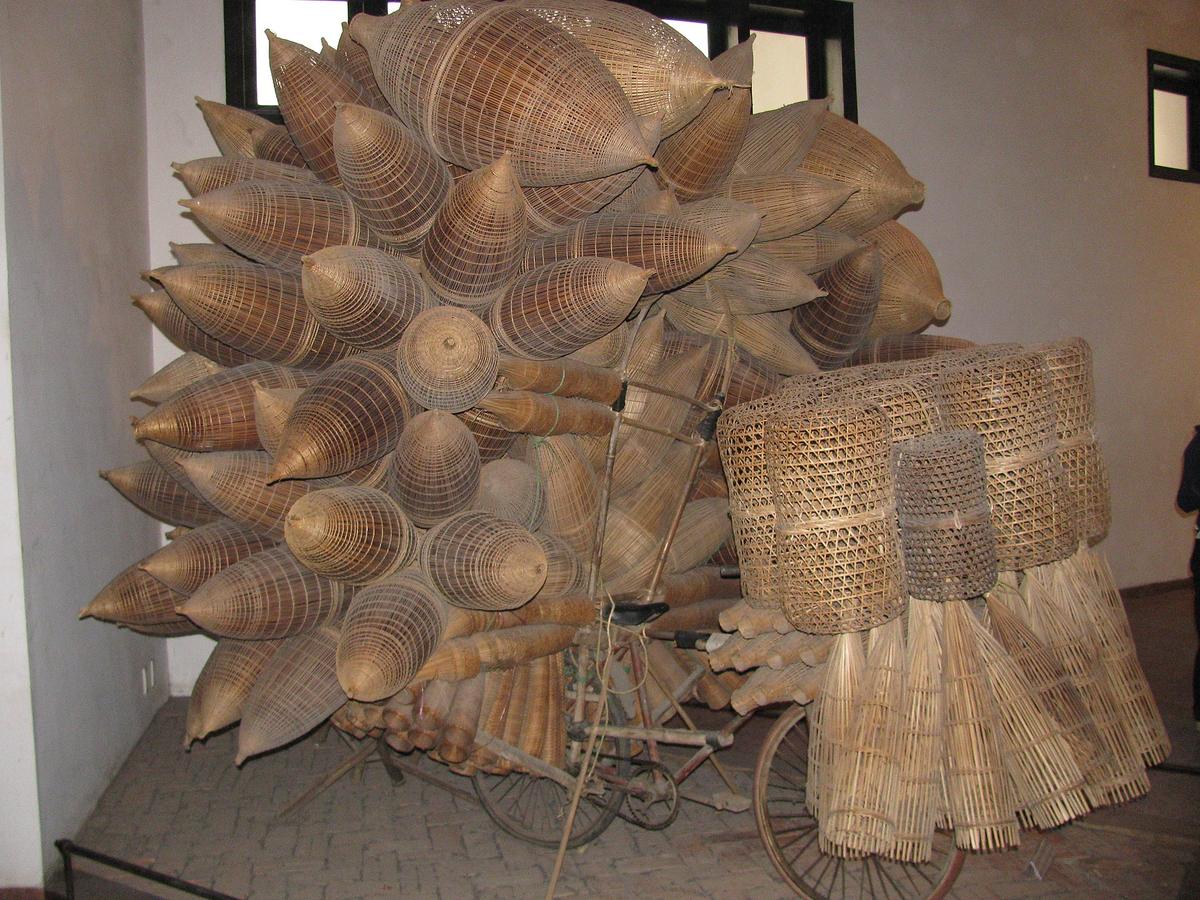
The Museum of Ethnology, located at Nguyen Van Huyen in the Cau Giay district, is superb and requires a deliberate journey. Open since 1997, it covers all 54 officially recognised ethnic groups across two indoor floors and a 2-hectare outdoor exhibition area where full-scale traditional houses of 10 ethnic groups are reconstructed. The outdoor section is the reason to come: you walk through a stilt house from the Central Highlands, a longhouse from the northern mountains, and a communal house built without nails.
Entry fee is 40,000 VND. The taxi ride from the Old Quarter takes 20 to 30 minutes and costs 80,000 to 120,000 VND via Grab. Budget three hours minimum. The indoor galleries are strong on textiles and ritual objects, but the outdoor exhibits are what make this museum essential. Skip it only if you have visited similar museums in Thailand or Indonesia and are short on time.
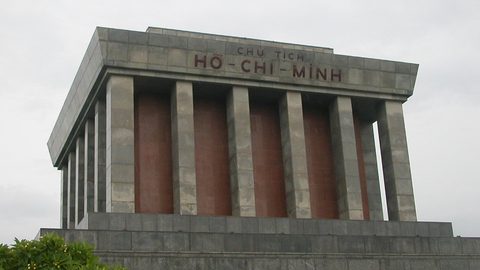
Ho Chi Minh Mausoleum Dress Code Queue: Essential with Friction
The preserved leader lies in a glass sarcophagus at 19 Ngoc Ha in Ba Dinh district. Entry is free. The difficulty is getting in. The mausoleum opens Tuesday through Thursday, Saturday, and Sunday. Closed Monday and Friday. Hours are 07:30 to 10:30, extended to 11:00 on weekends and holidays. The annual maintenance closure runs approximately October through November, exact dates vary and are published by the mausoleum management board each year.
Arrive before 09:00. The queue forms on the wide boulevard outside and moves slowly through a security checkpoint. Dress code is strict: no shorts above the knee, no sleeveless tops, no sandals. You surrender your phone and camera before entering the inner chamber. The entire process, from queue to exit, takes 45 to 60 minutes. The adjacent Presidential Palace and Ho Chi Minh's Stilt House are worth another 30 minutes on the same grounds, and the One Pillar Pagoda, rebuilt in 1955 after its 1049 original was destroyed, is a quick five minute stop. The mausoleum is essential. The friction is real. Plan for it.
Hoa Lo Prison Hanoi Hilton Exhibits: Sobering and Compact
Hoa Lo Prison, built by the French colonial authorities in 1896 at 1 Hoa Lo in Hoan Kiem, opened as a museum in 1993. Entry is 30,000 VND. The exhibits cover two periods: the French colonial era, with graphic displays of the guillotine and the cramped cells that held Vietnamese revolutionaries, and the Vietnam War era, when the prison housed American pilots including John McCain.
Allow 60 to 90 minutes. The museum is compact and air conditioned, a relief on a humid day. The pavement outside is narrow and crowded with motorbike parking, so the walk from Hoan Kiem Lake takes 15 minutes but feels longer. The prison is worth visiting, but it is not the best museum in Hanoi. The Women's Museum and the Museum of Ethnology are stronger. If you have only two days, skip Hoa Lo and spend the time on the Temple of Literature and the Women's Museum instead.
Thang Long Imperial Citadel Bunker: Layered History Underground
The UNESCO listed citadel covers archaeological layers from the 7th century through the French colonial period and the Vietnam War. The main draw is the bunker, a command centre used during the war, which sits beneath the main courtyard. The central axis, the archaeological site, and the D67 bunker are the three sections to see.
Allow 90 minutes. Entry is 30,000 VND. The citadel is a 10 minute walk from the Temple of Literature, making it easy to combine the two in one morning. The bunker is the most distinctive element: a cramped, low ceilinged concrete warren with maps and communication equipment still in place. The above ground sections are less compelling, with many buildings closed or empty. This is a solid third tier sight. Worth it if you have three days. A skip if you are on a two day schedule.
The Vietnamese Women’s Museum: the Best Museum You Will Visit in Hanoi
The Women's Museum at 36 Ly Thuong Kiet in Hoan Kiem district opened in 1995 and holds approximately 28,000 objects across four permanent exhibition floors. The themes are Women in Family, Women in History, and Women's Fashion. The curation is superb: clear, thoughtful, and emotionally direct without being manipulative. The exhibits on women's roles during the war, including the guerrilla fighters and the logistics workers who carried supplies on bicycles through bombed roads, are the most powerful section.
Entry fee is 40,000 VND. Allow two hours minimum. The building is on a wide pavement on a quieter street in the southern part of Hoan Kiem, a 15 minute walk from the lake. The museum is non negotiable. It belongs in the same tier as the Temple of Literature. Do not skip it.
Train Street: Restricted Access, Honest Advice
Train Street, the tracks that run through a narrow residential corridor, has been officially closed to stationary commercial activity since October 2019 under a municipal order. Police block entry during train times, which are variable on the Hanoi Lao Cai line and published daily on the railway authority's website. The cafes that once served coffee on the tracks now operate from adjacent premises only, and the atmosphere is heavily policed.
The reality: you can still see the train pass if you stand at the end of the corridor at the correct time, but the experience of sitting on the tracks with a coffee is gone. The ceramic mosaic wall along Au Co, Nghi Tam, and Yen Phu road between Truc Bach and West Lake, a Guinness World Record at 3,850 metres, is a better use of your time. If you must see a train pass through a built up area, the approach to Long Bien Bridge offers a similar view without the enforcement hassle.
| Sight | Time Needed | Entry Fee | Friction Level | Non Negotiable? |
|---|---|---|---|---|
| Temple of Literature | 90 minutes | 30,000 VND | Low: pavement obstacles | Yes |
| Vietnamese Women's Museum | 2 hours | 40,000 VND | Low: easy walk from lake | Yes |
| Ho Chi Minh Mausoleum | 45 60 minutes | Free | High: queue, dress code, limited hours | Essential but plan it |
Dong Xuan Market: Wholesale Chaos, Not a Souvenir Stop
Dong Xuan Market is a wholesale market, not a souvenir stop. The vast hall sells bulk quantities of fabric, household goods, dried food, and cheap electronics. The ground floor is a produce and meat market with wet floors and strong smells. A few stalls sell tourist oriented items in the front section, but the prices are not competitive and the selection is worse than the shops around Hoan Kiem Lake.
The market is worth a 15 minute walk through if you are interested in seeing how Hanoi supplies itself. Do not go there expecting to buy gifts. Do not go there expecting a curated market experience. The surrounding streets, in the northern Old Quarter, have better street food than the market itself, including bun rieu cua and banh cuon from vendor carts that set up on the pavement after dark.
Other Sights: What to Slot in If You Have Time
Hoan Kiem Lake and Ngoc Son Temple
The spiritual heart of the city, connected by the red bridge. Visit between 05:30 and 07:00 when the morning exercise crowd is out and the lake is quiet. The peak exercise hour is 06:00. Ngoc Son Temple entry is 30,000 VND. Allow 45 minutes total.Thang Long Water Puppet Theatre
At 57B Dinh Tien Hoang. Shows run approximately 50 minutes, typically 4 to 6 performances daily between 15:00 and 21:00. Book online in advance. The theatre is tourist oriented but the puppetry is genuinely skilled. One show is enough.Long Bien Bridge
Completed in 1902, designed by Dayde and Pille of Paris, original name Paul Doumer Bridge. Length 1,682 metres. Walk the pedestrian lane at sunrise or sunset. The bike lane is active, so stay inside the pedestrian rail. The bridge connects Hoan Kiem to the grittier Long Bien district on the east bank.West Lake and Tran Quoc Pagoda
West Lake covers approximately 5.3 square kilometres with a shoreline of 17 kilometres. Tran Quoc Pagoda, founded in the 6th century under Ly Nam De and relocated to its current islet in 1615, is the oldest pagoda in Hanoi. Sunset view from the lakeside path.St. Joseph's Cathedral
Neo Gothic Catholic anchor in Hoan Kiem. The square in front has cafes. The interior is plain. A 10 minute stop on a walking route.Food: What to Eat, Where to Sit, What to Skip
Hanoi's food is the best reason to come. Eat bun cha Hanoi, grilled pork in smoky broth with vermicelli, which is not the same as southern bun thit nuong. Eat cha ca La Vong, turmeric fish with dill cooked tableside at the single dish restaurant that owns the name. Eat pho thin bo tai lan, stir fried rare beef pho richer and garlic forward, from the specific lineage of shops that make it. Eat bun rieu cua, crab and tomato noodle soup with freshwater crab paste, often a breakfast only item.
Drink egg coffee at Giang Cafe, where it was invented. Drink bia hoi at the Ta Hien and Luong Ngoc Quyen corner in the Old Quarter, fresh draft beer for 5,000 to 10,000 VND a glass, plastic stool street drinking that peaks after 9pm. Cash only for street food and bia hoi. Many vendors cannot break a 500,000 VND note, so hoard small bills.
The common mistake is staying only in the Old Quarter and judging Hanoi's food by its most chaotic square kilometre. The best eating is around Truc Bach, West Lake, and the residential streets of Ba Dinh. A single bowl of bun rieu from a cart on a side street in Truc Bach will beat any Old Quarter restaurant.
Practical Friction: Pavements, Traffic, and Getting Around
Hanoi's pavements are not for walking. They are motorbike parking, kitchen extensions, and retail spillover. You will walk in the road with moving traffic. Google Maps walking directions are directionally correct but fail to account for pavements entirely occupied by parked motorbikes, street kitchens, or construction debris, so a 10 minute walk becomes a 20 minute obstacle course.
Crossing at marked pedestrian crossings means nothing to motorbike riders. The only functional method is the slow, predictable shuffle. Public bins are rare. Queues at bus stops and food stalls are aspirational rather than observed. Old Quarter street names change every few blocks despite the same road continuing, and many alleys share near identical names, making navigation by address alone unreliable.
Grab dominates transport. Book motorbike taxis for solo trips through jammed streets, cars for rain and groups. You need a Vietnamese phone number to register Grab; buy a Viettel or Mobifone SIM at the airport immediately after baggage claim, 150,000 to 250,000 VND for a tourist data package, and set up the account before leaving the airport Wi Fi zone. Hotel WiFi in older Old Quarter buildings can be patchy through thick concrete walls.
Who Hanoi is for and Who Should Skip it
Hanoi suits street food obsessives willing to perch on plastic stools, solo backpackers on a Southeast Asia circuit, culture first travellers who prioritise temples and French colonial layers over comfort, digital nomads who want low costs and do not need a beach, and second time Vietnam visitors ready to go deeper than Ho Chi Minh City.
Hanoi is not for travellers who need calm, clean, pedestrian friendly streets, families with young children who need pavements for prams, or anyone whose trip hinges on a relaxing poolside holiday. Hanoi is many things, but restful it is not. The single thing that most often goes wrong: visitors underestimate the sensory load, do not leave the Old Quarter, and leave convinced the city is just noise and dirt. The remedy is the Temple of Literature, the Women's Museum, and a meal in Truc Bach. That is the real Hanoi.
Common Questions
How many days do you need in Hanoi?
Three full days minimum. One for the Old Quarter and Hoan Kiem core, one for the museum and mausoleum circuit, one for food depth and a neighbourhood like Truc Bach or Tay Ho, plus a buffer for the sensory adjustment period.
What is the best time of year to visit Hanoi?
October to November and March to April deliver the most bearable mix of temperatures, 20 to 28 degrees Celsius, lower humidity, and minimal rain. Avoid Tet, the Vietnamese Lunar New Year from late January to mid February, when the city hollows out and many street food stalls close for 7 to 10 days. Avoid June to August unless you enjoy 35 degree heat with 80 percent humidity and sudden downpours.
Is Train Street still accessible to visitors?
No. The railway corridor has been closed to stationary commercial activity since October 2019 under a municipal order. Police block entry during train times. Cafes operate only in adjacent premises. The ceramic mosaic wall along the Truc Bach to West Lake road is a better use of your time.
What is the dress code for Ho Chi Minh Mausoleum?
Strict. No shorts above the knee, no sleeveless tops, no sandals. You also surrender your phone and camera before entering the inner chamber. The mausoleum is free but opens only Tuesday through Thursday, Saturday, and Sunday, 07:30 to 10:30, extended to 11:00 on weekends and holidays. Arrive before 09:00.
Which museum should I visit if I only have time for one?
The Vietnamese Women's Museum. It is the best curated museum in Hanoi, covering Women in Family, Women in History, and Women's Fashion across four floors. Entry is 40,000 VND. The Museum of Ethnology is also superb but requires a taxi ride to Cau Giay district.
Is a day trip to Ha Long Bay worth it from Hanoi?
No. The one way drive is 2.5 to 3 hours via expressway, making the round trip travel time 5 to 6 hours. Time on the water is often under 4 hours, with peak season crowding and limited route variation.
What is the single most common mistake travellers make in Hanoi?
Staying only in the Old Quarter and judging the city by its most chaotic square kilometre. The best food, neighbourhoods, and breathing room are in the districts around West Lake, Truc Bach, and Ba Dinh.
Read next
-
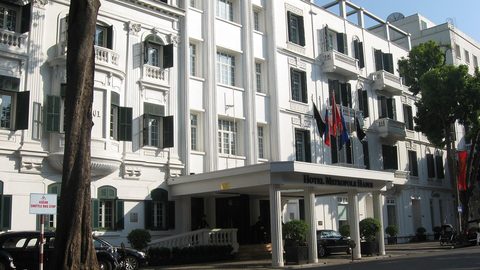
 Hanoi Hotels That Match the City—Character, Chaos, and the Occasional Quiet Courtyard
Hanoi hotels range from Old Quarter shophouse conversions with courtyard calm to Tay Ho serviced apartments for nomads—each district trades proximity for peace differently.
Hanoi Hotels That Match the City—Character, Chaos, and the Occasional Quiet Courtyard
Hanoi hotels range from Old Quarter shophouse conversions with courtyard calm to Tay Ho serviced apartments for nomads—each district trades proximity for peace differently.
-
 Where to Stay in Hanoi Without Missing the City That Exists Beyond the Old Quarter
Base yourself in the Old Quarter for street-food density and chaos, Tay Ho for lakeside brunches and craft beer, or Truc Bach for a quieter old-Hanoi rhythm with banh cuon on your doorstep.
Where to Stay in Hanoi Without Missing the City That Exists Beyond the Old Quarter
Base yourself in the Old Quarter for street-food density and chaos, Tay Ho for lakeside brunches and craft beer, or Truc Bach for a quieter old-Hanoi rhythm with banh cuon on your doorstep.
-
 Flying into Hanoi and Getting from Noi Bai to the Old Quarter Fast
Flying into Hanoi Noi Bai Airport—SIM pickup, Grab setup on airport Wi-Fi, express bus 86 vs taxi costs, and the domestic transfer for onward Vietnam flights.
Flying into Hanoi and Getting from Noi Bai to the Old Quarter Fast
Flying into Hanoi Noi Bai Airport—SIM pickup, Grab setup on airport Wi-Fi, express bus 86 vs taxi costs, and the domestic transfer for onward Vietnam flights.
-
 Best Time to Visit Hanoi, Month by Month, With the Tradeoff Each One Carries
October-November and March-April deliver 20-28°C walking weather, but avoid Tet when street-food stalls shut for 7-10 days and June-August when 35°C heat floods the streets in 20 minutes.
Best Time to Visit Hanoi, Month by Month, With the Tradeoff Each One Carries
October-November and March-April deliver 20-28°C walking weather, but avoid Tet when street-food stalls shut for 7-10 days and June-August when 35°C heat floods the streets in 20 minutes.
-
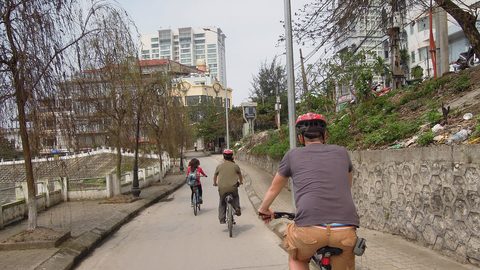 Getting Around Hanoi When Pavements Are Parking Lots and Google Maps Lies
Grab dominates Hanoi transit but requires a local SIM set up at Noi Bai Airport before you leave the Wi-Fi zone, and Google Maps walking times double when pavements become motorbike parking lots.
Getting Around Hanoi When Pavements Are Parking Lots and Google Maps Lies
Grab dominates Hanoi transit but requires a local SIM set up at Noi Bai Airport before you leave the Wi-Fi zone, and Google Maps walking times double when pavements become motorbike parking lots.
-
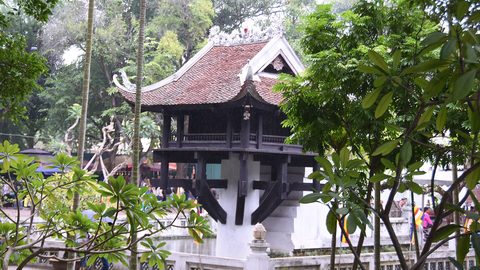 A Three-Day Hanoi Itinerary That Leaves Room for the City to Happen to You
Day one tackles the Old Quarter chaos, day two covers the Ba Dinh museum and mausoleum circuit before 9am, and day three goes deep into Truc Bach and Tay Ho food—deliberately leaving room to wander.
A Three-Day Hanoi Itinerary That Leaves Room for the City to Happen to You
Day one tackles the Old Quarter chaos, day two covers the Ba Dinh museum and mausoleum circuit before 9am, and day three goes deep into Truc Bach and Tay Ho food—deliberately leaving room to wander.
-
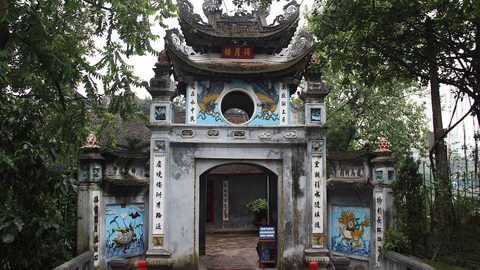 Hoan Kiem Lake
 at its two best moments—6am tai chi and the red bridge empty, and weekend nights when the roads close and Hanoi takes over the asphalt.
Hoan Kiem Lake
Hoan Kiem Lake at its two best moments—6am tai chi and the red bridge empty, and weekend nights when the roads close and Hanoi takes over the asphalt.
-
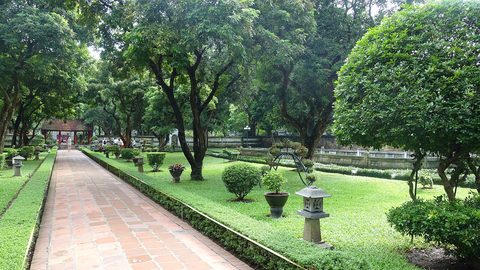 Temple of Literature
The Temple of Literature’s five courtyards walked in order—the turtle stelae, the Well of Heavenly Clarity, and why Vietnamese graduates still crowd the third courtyard.
Temple of Literature
The Temple of Literature’s five courtyards walked in order—the turtle stelae, the Well of Heavenly Clarity, and why Vietnamese graduates still crowd the third courtyard.
-
 Ho Chi Minh Mausoleum
 queue rules, dress code, morning-only hours, and the months it closes entirely—the strictest visitor experience in Vietnam, no booking possible.
Ho Chi Minh Mausoleum
Ho Chi Minh Mausoleum queue rules, dress code, morning-only hours, and the months it closes entirely—the strictest visitor experience in Vietnam, no booking possible.