Pick Your Hanoi Base by What You Actually Want to Eat, Walk Past, and Wake Up To
Base yourself in the Old Quarter for street-food density and chaos, Tay Ho for lakeside brunches and craft beer, or Truc Bach for a quieter old-Hanoi rhythm with banh cuon on your doorstep.
Hanoi’s District Tradeoff That Most Visitors Get Wrong
The mistake is assuming the Old Quarter is the only place to stay in Hanoi. A first time visitor hears about the 36 streets, the night market, the egg coffee at Giang Cafe, and books a room on a 3-metre-wide tube house. Within 48 hours they are awake at 05:30 to a rooster, a motorbike horn, and the neighbour’s karaoke. They spend the rest of the trip exhausted. Hanoi is not one neighbourhood. It is six distinct districts that each ask a different question of your sanity, your budget, and your sleep schedule. The question to answer before you arrive is which version of the city you actually want to wake up to.
The Old Quarter, Noise and Everything Within Reach
What You Gain
The Old Quarter is the best argument for itself. Street food density peaks here. Bia hoi corner on Ta Hien and Luong Ngoc Quyen serves fresh draft beer for 5,000 VND a glass after 9pm. Bun cha Hanoi appears on every second corner. The pedestrian zone around Hoan Kiem Lake closes to vehicles Friday 19:00 to Sunday 24:00, and the lake’s spiritual heart, Ngoc Son Temple, is a ten-minute stroll from most guesthouses. Cross the road to a bowl of pho bo and be back in bed before the broth cools.
What You Lose
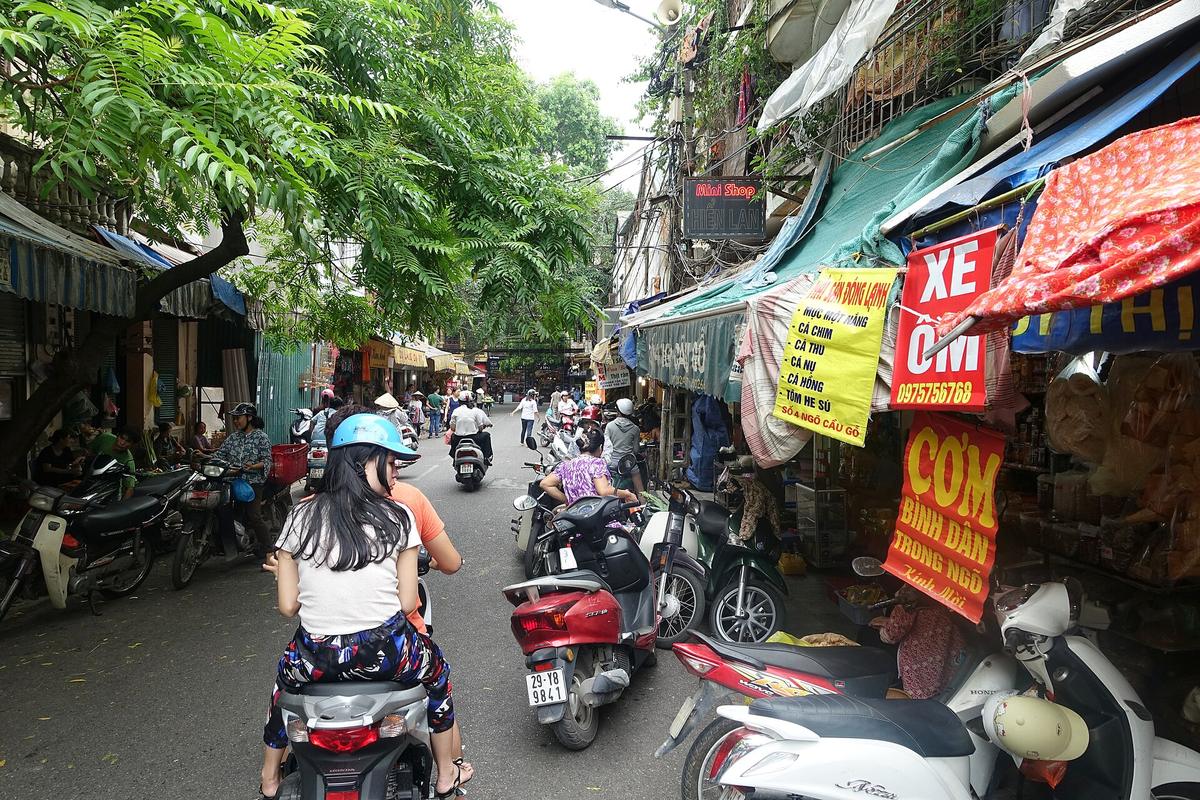
The downsides are not small. Pavements are not for walking. They are parking lots for motorbikes, kitchen extensions for street vendors, and retail spillover for shops. Pedestrians walk in the road, with the traffic. The loudest hours run 06:30 to 09:00 and 17:00 to 22:00. The quietest hours run 02:00 to 05:00. If you need sleep before midnight, do not stay here. Building frontage is 3 to 4 metres. Most budget hotels under five storeys have no lift. You carry your bag up four to six flights of stairs. Construction noise is permitted 06:00 to 22:00. Weekend pedestrian zones close the roads around Hang Dao, Hang Ngang, Hang Duong, Dinh Tien Hoang, and Le Thai To, which helps, but only on those nights.
Who It Suits
The Old Quarter suits solo backpackers on a Southeast Asia circuit, street food obsessives willing to perch on plastic stools, and culture-first travellers who prioritise temples and French-colonial layers over comfort. It does not suit families with young children who need pavements for prams, travellers who want a relaxing poolside holiday, or anyone whose trip hinges on sleep.
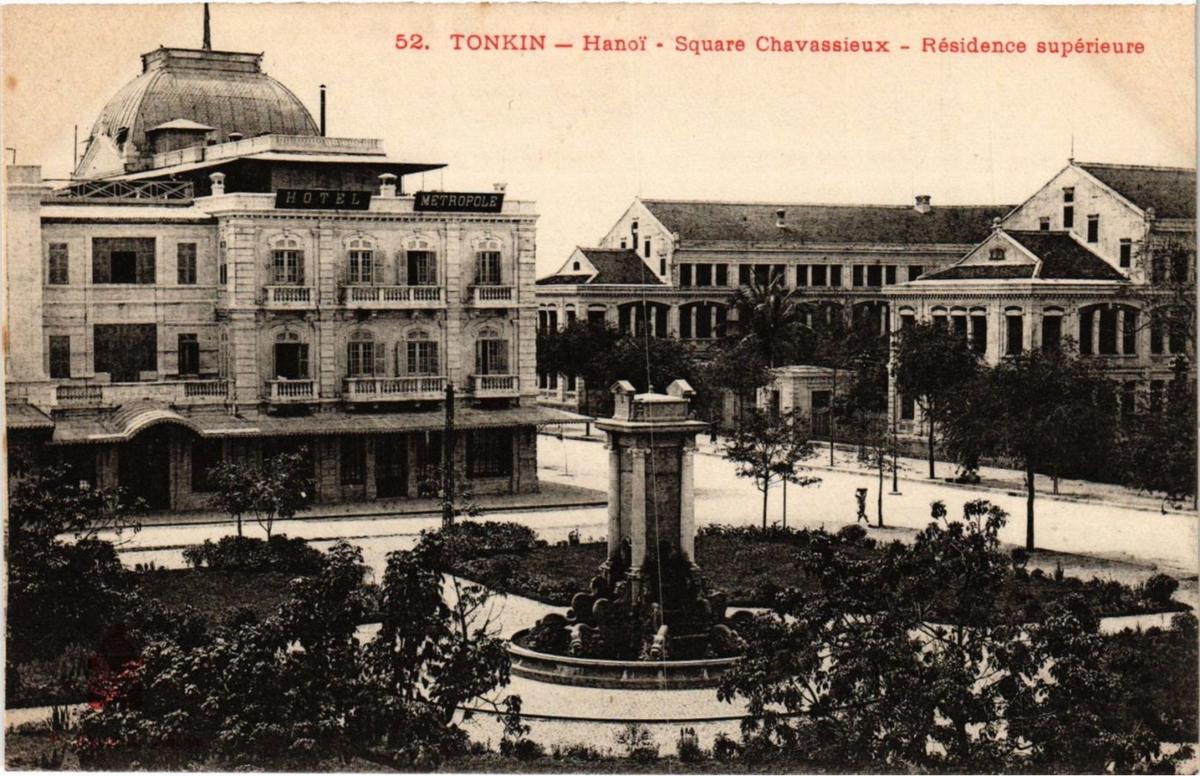
The French Quarter, Where the Pavements Exist
The French Quarter runs roughly Le Lai to the north, Tran Nhan Tong to the south, Le Duan to the west, and Tran Quang Khai to the east. Building frontage here is 5 to 15 metres, with wider colonial villas and blocks. Noise levels are 10 to 15 dB lower than the Old Quarter at street level, a rough estimate supported by the traffic density difference. From the Opera House at the French Quarter’s centre, you walk 10 to 12 minutes to the north end of Hoan Kiem Lake and 12 to 15 minutes to the Old Quarter night market on Hang Dao. You get walkability, sleep, and real architecture.
The tradeoff: you lose immediate street food sprawl. You walk ten minutes for a bowl of something instead of thirty seconds. The best Thai restaurants and mid-range hotels cluster here. Serviced apartments are common. This quarter suits couples, repeat visitors to Hanoi, and business travellers who need quiet and a predictable pavement. It does not suit backpackers on a shoestring or anyone who wants to eat from a plastic stool at 10pm five steps from their door.
Hoan Kiem’s South and West Edge, the Compromise
The roads on the south and west edge of Hoan Kiem district, Hai Ba Trung, Ly Thuong Kiet, Tran Hung Dao to the south, and Ba Trieu, Quang Trung, Ngo Quyen to the west, sit between the Old Quarter’s noise and the French Quarter’s formality. Traffic noise runs 06:30 to 21:00, quieter than the Old Quarter by 5 to 10 dB, and you are three to seven minutes from Hoan Kiem Lake. Building heights are moderate. Many mid-range hotels in these blocks have lifts. Book a courtyard room on the far side from the lift and reduce street noise further.
This is the best option for most travellers who want a balance of access and sleep quality. You walk to the lake, the Opera House, and St. Joseph’s Cathedral. You are close enough to the Old Quarter for dinner but far enough to sleep through the night. The disadvantage: you pay more than the Old Quarter for equivalent square metres, and the immediate dining is less intense. You trade density for breathing room.
Ba Dinh, Where Hanoi’s History Lives on Wide Boulevards
The Government Quarter’s Calm
Ba Dinh district holds Ho Chi Minh’s Mausoleum, the One Pillar Pagoda, the Temple of Literature, and the Imperial Citadel of Thang Long. It also holds the National Assembly building, the Presidential Palace, and multiple foreign embassies. The boulevards are wide. Traffic is sparse. Tourists are fewer. Accommodation is mostly mid-range hotels and serviced apartments. Hostels are rare. A Ba Dinh stay puts you 25 to 35 minutes on foot from the Old Quarter, or 10 to 15 minutes by taxi outside peak hours.
The Advantage and the Penalty
The food advantage: you are near the Temple of Literature, which sits in a pocket of student energy and local eats. Banh cuon spots are common, and the blocks around the mausoleum have quiet cafes where you can drink egg coffee without a queue. The penalty: you need a plan for dinner. Restaurants walkable from Ba Dinh skew towards government worker canteens and pho shops that close by 21:00. Book a room with a kitchen or budget for taxi rides. This quarter suits history-focused visitors, embassy and visa runners, and travellers who prefer wide boulevards and fewer tourists. It does not suit nightlife seekers or anyone who dislikes walking 25 minutes to the core.
Truc Bach, Old Hanoi with Sleep
Truc Bach sits on a quieter lake island, a ten-minute taxi ride from the Old Quarter. This is old Hanoi feel without the old Hanoi noise. The area is named for the lake and the banh cuon stalls that line its lanes. Stay in Truc Bach and you get paper-thin steamed rice rolls, the Thanh Tri variety, within a three-minute walk every morning. The food advantage is specific and real.
Hotels here are smaller, often family-run, and buildings rarely exceed four storeys. You lose the lift. You gain a neighbourhood where people live, not just pass through. Walking time to Hoan Kiem Lake is roughly 20 minutes. Too far for a spontaneous visit, short enough for a morning stroll. This suits second-time visitors who want to go deeper than Ho Chi Minh City and travellers who want a quiet room with local character. It does not suit first-timers who will feel isolated from the main action.


Tay Ho, Brunch and Breaks from the City
The Expat Enclave Around West Lake
Tay Ho, the district around West Lake (Ho Tay), has the highest expatriate concentration in Hanoi. Long-term foreign residents, international schools, and Western-style cafes dominate. Accommodation is villas, serviced apartments, and boutique hotels. Few high-rises. The roads are wider than the Old Quarter and the lake provides a visual break from concrete. Taxi time to the Old Quarter is 20 to 30 minutes non-peak, and 35 to 50 minutes during peak hours. That distance is the main friction.
The Tradeoff
The food advantage: craft beer, brunch menus, and Vietnamese restaurants that cater to local expat taste, meaning cleaner, more expensive, and with proper seating. Tran Quoc Pagoda, the oldest pagoda in Hanoi, sits on a small island in the lake and is a genuine sunset spot. The penalty is the commute. You cannot walk from Tay Ho to the Old Quarter. You need a Grab or a motorbike taxi for every trip to the core. This quarter suits long-stay expatriates, families with children, remote workers, and travellers seeking green space, Western amenities, and a break from chaos. It does not suit short-stay visitors who want to maximise site time.
The Districts You Might Skip
Hai Ba Trung is residential with French-era villas and the excellent Vietnamese Women’s Museum, but accommodation options are limited and street food is scattered. Dong Da has the Temple of Literature anchor and student energy, yet its hotels are mid-range and uninspiring. Cau Giay and Long Bien are too far from the core for most visitors. Thanh Xuan is sprawling southern residential with large shopping malls and minimal reason for a tourist to stay there.
Getting Your Facts Right Before You Book
Hanoi hits visitors with a full sensory assault that is exhilarating for the first 48 hours and exhausting thereafter. The harder-than-expected part is crossing the street: walk slowly and let the river of scooters flow around you. It feels suicidal the first dozen times. The city’s charm is buried under grime, noise, and chaotic traffic. Some travellers never mentally adjust. The minimum is three full days: one for the Old Quarter and Hoan Kiem core, one for the museum and mausoleum circuit, and one for food depth and a neighbourhood like Truc Bach or Tay Ho, plus a buffer for the adjustment period.
Peak season is October to November and March to April, when temperatures run 20 to 28 C, with lower humidity and minimal rain. Avoid Tet, the Vietnamese Lunar New Year in late January to mid-February, when the city hollows out, street food stalls close, and prices double. Also avoid June to August unless you enjoy 35 C with 80% humidity and sudden downpours. Arrive at Noi Bai International Airport and take the express bus 86 to Hoan Kiem for 45,000 VND and 50 to 60 minutes, or a Grab for 250,000 to 350,000 VND and 35 to 50 minutes. Buy a Viettel or Mobifone SIM at the airport immediately after baggage claim. Set up Grab with a Vietnamese phone number before you leave airport Wi-Fi.
Common Questions
Which district is quietest for sleeping?
Ba Dinh and Truc Bach are the quietest options close to the centre. Ba Dinh has wide boulevards and fewer nightlife venues. Truc Bach sits on a lake island with low traffic. Tay Ho is quietest overall but requires a 20 to 50 minute commute to the Old Quarter.
Is the Old Quarter safe to walk in at night?
Yes. The pedestrian zone around Hoan Kiem Lake is closed to vehicles Friday 19:00 to Sunday 24:00, creating a large crowd-safe zone. Outside those hours, the roads are busy until 22:00. The main risks are the usual: pickpocketing in dense crowds and crossing roads full of motorbikes.
How far is Tay Ho from the Old Quarter?
20 to 30 minutes by taxi non-peak, and 35 to 50 minutes during peak hours. The walk is not feasible. You need a Grab or motorbike taxi for every trip.
Should I stay in the French Quarter or the Old Quarter on a first visit?
Stay on the south or west edge of Hoan Kiem district, the roads near Hai Ba Trung or Ba Trieu. You are three to seven minutes from the lake, 12 to 15 minutes from the Old Quarter, and the noise is 5 to 10 dB lower. The French Quarter is better for couples and repeat visitors who value pavement space.
Can I get a hotel with a lift in the Old Quarter?
Lifts are common in buildings five storeys and above. Most Old Quarter tube houses are four to six storeys. If the building is under five storeys, expect stairs. Confirm lift access when booking.
Which district has the best street food in the morning?
Truc Bach for banh cuon. The Old Quarter for pho thin, bun cha, and bun rieu cua. Ba Dinh for student-priced pho near the Temple of Literature. Tay Ho for brunch, not breakfast street food.
Do I need cash in every district?
Yes. Street food, small cafes, and bia hoi operate on cash. Many vendors cannot break a 500,000 VND note. Keep small bills. Tay Ho has the highest card acceptance rate, but even there, smaller stalls prefer cash.
Read next
-
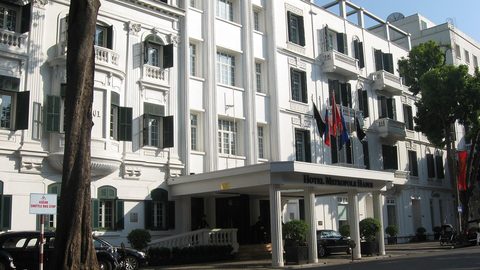
 Hanoi Hotels That Match the City—Character, Chaos, and the Occasional Quiet Courtyard
Hanoi hotels range from Old Quarter shophouse conversions with courtyard calm to Tay Ho serviced apartments for nomads—each district trades proximity for peace differently.
Hanoi Hotels That Match the City—Character, Chaos, and the Occasional Quiet Courtyard
Hanoi hotels range from Old Quarter shophouse conversions with courtyard calm to Tay Ho serviced apartments for nomads—each district trades proximity for peace differently.
-
 Flying into Hanoi and Getting from Noi Bai to the Old Quarter Fast
Flying into Hanoi Noi Bai Airport—SIM pickup, Grab setup on airport Wi-Fi, express bus 86 vs taxi costs, and the domestic transfer for onward Vietnam flights.
Flying into Hanoi and Getting from Noi Bai to the Old Quarter Fast
Flying into Hanoi Noi Bai Airport—SIM pickup, Grab setup on airport Wi-Fi, express bus 86 vs taxi costs, and the domestic transfer for onward Vietnam flights.
-
 Hanoi Things to Do That Are Worth Your Limited Days, Ranked Honestly
Ranked honestly: Temple of Literature and the Women's Museum are non-negotiable, Ho Chi Minh Mausoleum demands a pre-9am arrival and strict dress code, and Train Street access is now restricted.
Hanoi Things to Do That Are Worth Your Limited Days, Ranked Honestly
Ranked honestly: Temple of Literature and the Women's Museum are non-negotiable, Ho Chi Minh Mausoleum demands a pre-9am arrival and strict dress code, and Train Street access is now restricted.
-
 Best Time to Visit Hanoi, Month by Month, With the Tradeoff Each One Carries
October-November and March-April deliver 20-28°C walking weather, but avoid Tet when street-food stalls shut for 7-10 days and June-August when 35°C heat floods the streets in 20 minutes.
Best Time to Visit Hanoi, Month by Month, With the Tradeoff Each One Carries
October-November and March-April deliver 20-28°C walking weather, but avoid Tet when street-food stalls shut for 7-10 days and June-August when 35°C heat floods the streets in 20 minutes.
-
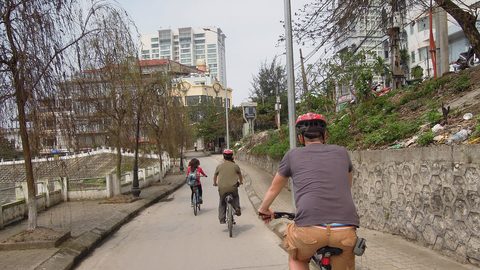 Getting Around Hanoi When Pavements Are Parking Lots and Google Maps Lies
Grab dominates Hanoi transit but requires a local SIM set up at Noi Bai Airport before you leave the Wi-Fi zone, and Google Maps walking times double when pavements become motorbike parking lots.
Getting Around Hanoi When Pavements Are Parking Lots and Google Maps Lies
Grab dominates Hanoi transit but requires a local SIM set up at Noi Bai Airport before you leave the Wi-Fi zone, and Google Maps walking times double when pavements become motorbike parking lots.
-
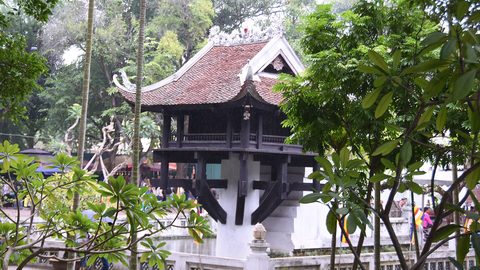 A Three-Day Hanoi Itinerary That Leaves Room for the City to Happen to You
Day one tackles the Old Quarter chaos, day two covers the Ba Dinh museum and mausoleum circuit before 9am, and day three goes deep into Truc Bach and Tay Ho food—deliberately leaving room to wander.
A Three-Day Hanoi Itinerary That Leaves Room for the City to Happen to You
Day one tackles the Old Quarter chaos, day two covers the Ba Dinh museum and mausoleum circuit before 9am, and day three goes deep into Truc Bach and Tay Ho food—deliberately leaving room to wander.
-
 Hoan Kiem Lake
 at its two best moments—6am tai chi and the red bridge empty, and weekend nights when the roads close and Hanoi takes over the asphalt.
Hoan Kiem Lake
Hoan Kiem Lake at its two best moments—6am tai chi and the red bridge empty, and weekend nights when the roads close and Hanoi takes over the asphalt.
-
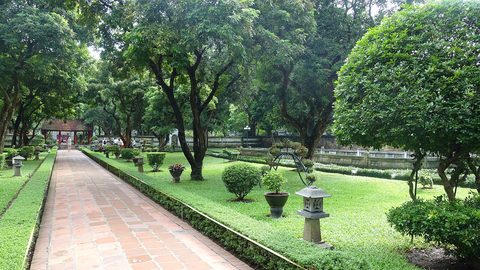 Temple of Literature
The Temple of Literature’s five courtyards walked in order—the turtle stelae, the Well of Heavenly Clarity, and why Vietnamese graduates still crowd the third courtyard.
Temple of Literature
The Temple of Literature’s five courtyards walked in order—the turtle stelae, the Well of Heavenly Clarity, and why Vietnamese graduates still crowd the third courtyard.
-
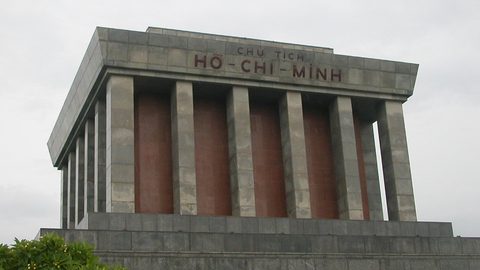 Ho Chi Minh Mausoleum
 queue rules, dress code, morning-only hours, and the months it closes entirely—the strictest visitor experience in Vietnam, no booking possible.
Ho Chi Minh Mausoleum
Ho Chi Minh Mausoleum queue rules, dress code, morning-only hours, and the months it closes entirely—the strictest visitor experience in Vietnam, no booking possible.