A Five-Day Beijing Itinerary Beyond the Monument Checklist
A five-day Beijing itinerary that uses days four and five for hutongs, temples, contemporary art, and a proper roast duck dinner.
.jpg)
A Five Day Beijing Itinerary Beyond the Monument Checklist
Most five day Beijing itineraries fail on day four. You hit the Forbidden City, the Great Wall at Mutianyu, the Temple of Heaven, and the Summer Palace. Then you have a half day left and no idea what to do. The standard advice is to add the Ming Tombs or squeeze in the Olympic Park, and that is exactly what makes Beijing feel like a list of monuments you just want to finish. This 5 day beijing itinerary solves the real problem: what do you do on days four and five once the imperial set pieces are done? The answer is to stop treating the city as a collection of sights and start treating it as a lived place. Days one through three cover the heavy lifting. Days four and five are where Beijing finally slows down.
Days 1-3: the Imperial Set Pieces
This section exists to get you to day four. You are not here for a full three day breakdown. That belongs to the 4 day itinerary. What matters is that you commit the first three days to the monuments that demand a morning each, and you do not try to double up.
Day One: The Forbidden City And Jingshan
Day one is the Forbidden City and Jingshan Park for the panorama. Book your Forbidden City ticket online 7 days ahead at 20:00 Beijing time, real name registration required. Enter through the south gate, exit the north gate, and walk directly to Jingshan Park. The ticket costs ¥2. The view is the reason the Forbidden City was laid out on a north south axis. Do not add Tiananmen Square to the same morning unless you are willing to lose an hour to security checks and passport scans. It is a vast empty plaza. You can see it in 15 minutes on a separate afternoon.
Day Two: The Great Wall
Day two is the Great Wall. Mutianyu is the right call for most first time visitors. It is restored, safe, and 1.5 hours from central Beijing. Take a pre booked car or the tourist bus. The cable car up and the toboggan down are optional but worth the time they save. If you want fewer crowds and you have a high tolerance for steep stairs, Jinshanling is the better wall, but it is 2.5 hours each way and demands a full day. Do not attempt Badaling. It is a zoo.
Day Three: Temple Of Heaven And Summer Palace
Day three is the Temple of Heaven in the early morning, then the Summer Palace. Arrive at the Temple of Heaven by 07:00 to watch the park rituals. The locals practicing tai chi, dancing, playing instruments happen well before the ticket office opens for the main hall compound. The park grounds open at 06:00. The echo wall and the circular mound altar cost ¥15 to ¥35 depending on whether you buy the combined ticket. From there, take metro Line 4 or a taxi to the Summer Palace. Budget a half day. The lakeside walk from the East Gate to the Marble Boat is flat and scenic. The climb up Longevity Hill is optional. The Summer Palace is a 40 to 60 minute metro ride from central Beijing, which people forget when they try to cram it after the Forbidden City.
Day 4: the Haidian Escape and a Rest Afternoon
Day four is where the standard three day plan plus two add ons falls apart. You are tired. Your step count has been punishing for three days. The answer is not another monument. The answer is the Haidian district, specifically the Summer Palace and Yuanmingyuan, the Old Summer Palace, paired with a mandatory rest afternoon.
Summer Palace, From The Back
Summer Palace, again? Yes, but differently. On day three you saw the lakeside and the main hall. On day four you take the back entrance, the North Gate, and walk the Suzhou Street area. This is the less visited section, a reconstructed Ming dynasty shopping street beside the water. It is quiet on a weekday morning. The combined ticket costs ¥60 in peak season, April 1 to October 31, or ¥30 through the gate for the basic entry. Buy the combined ticket. You will want access to the Wenchang Tower and the exhibition halls.
Yuanmingyuan: The Ruin Park
Yuanmingyuan is the real reason to be here. It is a 15 minute walk or a single bus stop east of the Summer Palace. The admission is ¥10 through the gate, ¥25 for the combined ticket that includes the Western Mansions area. Yuanmingyuan is a ruin park. The stone arches and scattered marble columns are what remains after the British and French destroyed the imperial gardens in 1860. It is less crowded than the Summer Palace, and the empty fields of broken pillars make a stronger impression than the restored pavilions. Walk the main path from the south gate to the Western Mansions. Allow 90 minutes.
The Mandatory Rest Afternoon
The rest afternoon is not optional. Days one through three are high step count monument days. Day four without a break risks fatigue before day five ground level walking. Finish Yuanmingyuan by 13:00. Take the metro back to your hotel or to a café in Gulou. Do not plan anything for 14:00 to 17:00. Read. Nap. Sort photos. Beijing will still be there at 17:30.
Day 5: the City as Lived, Not as a List
Day five is the payoff. The monuments are packed. You have a full day to move through the city at ground level, visiting the places that make Beijing feel like a real city rather than an imperial museum.
Breakfast In The Dongcheng Hutongs
Morning: A Hutong Breakfast Run in Dongcheng. Start at the Drum and Bell Towers area around 08:00. The towers themselves are worth a climb for the rooftop view, ¥20 each, but the real action is the lanes around them. Walk south into the hutongs between Gulou and Nanluoguxiang. Find a breakfast stall selling xian bing, the stuffed pan fried flatbreads, and a bowl of zhajiangmian, the hand pulled noodles with fermented soybean paste. The braised offal stew known as lu zhu appears at these stalls too. It is a local breakfast, not a tourist item. Pay in cash. Small notes work better than large ones.
The Lama Temple And Confucius Temple
Mid Morning: The Lama Temple and Confucius Temple. From Gulou, walk or take metro Line 5 east to Yonghegong. The Lama Temple is an active Tibetan Buddhist temple. The incense smoke is thick, the prayer halls are crowded with worshippers, and the 26 meter tall Maitreya Buddha carved from a single sandalwood log is the reason to come. Admission is ¥25. Cross the street to the Confucius Temple and the Guozijian, the imperial academy. This complex is quieter. The stone stelae with the names of successful examination candidates line the courtyards. The Confucius Temple costs ¥30. Together they take two hours.
Choose Your Afternoon
Afternoon: 798 Art Zone or Niujie Muslim Quarter. The choice depends on the day of the week. If it is Saturday or Sunday, go to Panjiayuan Antique Market first. Arrive by 08:00, leave by 11:00. The market closes at 18:00 but the best stuff disappears by noon. If it is a weekday, skip Panjiayuan and head to the 798 Art District. Entry is free. Individual galleries may charge. Many galleries close on Mondays, so if day five is Monday, swap 798 for Niujie. The Niujie Ox Street Muslim quarter has the Niujie Mosque, ¥5 to ¥10 for non Muslim visitors, closed to tourists on Fridays during prayer, and a row of halal food stalls. The quick boiled tripe with sesame sauce known as baodu is the specialty. The candied hawthorn skewers called tang hulu appear on carts in autumn and winter.
Duck Or Hotpot
Evening: Proper Roast Duck and Hotpot. You have two options and you should pick one. Beijing kaoya, roast duck, is the famous choice. Quanjude is touristy and overpriced. Siji Minfu or Da Dong are better. Book a table in advance. The alternative is mutton hotpot, shuan yang rou, served in a copper pot with sesame sauce and pickled garlic. A proper hotpot dinner costs ¥80 to ¥200 per person depending on the restaurant. Both are worth your time. The difference is mood. Duck is a performance. Hotpot is a conversation.
A Beijing 5 Day Route for the Weekend Dependent Traveller
This itinerary assumes you arrive on a Wednesday or Thursday, giving you a Saturday or Sunday on day five. If your travel dates do not line up with the weekend, adjust day four and five without losing the logic.
If day five falls on a Monday, the National Museum of China is closed. Most galleries in the 798 Art District are closed. Swap the afternoon to Niujie and the morning to the Lama Temple and Confucius Temple only. The National Museum of China is free but requires a reservation and a passport. It belongs on a day that is not Monday. If you have a Sunday available, put the Panjiayuan Antique Market on that morning and move the Lama Temple to the afternoon. The market runs Saturday and Sunday roughly 06:00 to 18:00. Arrive by 08:00, leave by 12:00. It is a weekend only item and the best reason to plan your Beijing 5 day route around a Saturday or Sunday.
Beijing Beyond the Forbidden City: the Hutong Walk and the Lived City
The phrase Beijing beyond forbidden city is not about skipping the big sights. It is about what you do after them. The hutong walk is the key. The best hutong walk does not start at Nanluoguxiang, which is a tourist corridor lined with overpriced smoothie shops. Start instead at the Bell Tower, walk south along the eastern shore of Shichahai Lake, then turn east into the lanes behind the Drum Tower. This is the old residential core. Courtyard homes with bicycle parked in the entryways. Elderly residents playing cards on stools. A pancake stall that has been there for twenty years. The walk takes 45 minutes if you do not stop. You will stop. That is the point.
This is where Beijing stops feeling like a list of monuments. The language barrier is steeper here than in Shanghai. The streets are wider than you expect. The metro station exits require you to confirm the letter A, B, C, or D before surfacing because a wrong exit puts you on the wrong side of a ten lane road. But the early morning rituals in the hutongs, the courtyard gardens you can glimpse through open gates, the smell of a copper pot of lamb broth on a cold evening that is the real Beijing. The five day itinerary is long enough to reach it. Most visitors never get past day three.
A Beijing Food Itinerary 5 Days Long
A Beijing food itinerary 5 days long does not mean eating Peking duck every night. The cuisine is wider than that and the best meals are the cheapest. Day one dinner: zhajiangmian from a noodle shop near your hotel. Day two dinner: mutton hotpot in Gulou. Day three dinner: Peking duck at Siji Minfu. Day four lunch: xian bing and lu zhu from a hutong breakfast stall. Day four dinner: Chongqing style spicy hotpot, not because it is Beijing food but because the city does it well and the heat is a relief after days of soy based flavours. Day five lunch: baodu and tang hulu from Niujie. Day five dinner: roast duck at Da Dong, or a second round of hotpot if you prefer. The street food is seasonal. Tang hulu appears on carts in autumn and winter. Douzhi, the fermented mung bean drink, is an acquired taste and you should try exactly one sip. The candied hawthorn is safer.

| Item | Price Range | Notes |
|---|---|---|
| Forbidden City ticket | ¥60 peak season | Online booking 7 days ahead, real name required |
| Jingshan Park | ¥2 | Cash only at gate |
| Great Wall at Mutianyu | ¥40 entrance, cable car ¥100 each way | 1.5 hours from city by pre booked car |
| Temple of Heaven | ¥15–¥35 | Combined ticket includes main hall |
| Summer Palace (combined) | ¥60 peak, ¥30 basic | Peak season Apr 1–Oct 31 |
| Yuanmingyuan (combined) | ¥25 | 15 min walk from Summer Palace |
| Lama Temple | ¥25 | Active temple, dress respectfully |
| Confucius Temple | ¥30 | Quiet, buy on site |
| Panjiayuan Antique Market | Free entry | Sat–Sun only, 06:00–18:00 |
| 798 Art District | Free entry | Galleries closed Mondays |
| Niujie Mosque | ¥5–¥10 | Closed Fri during prayer |
| Peking duck dinner | ¥150–¥250 per person | Siji Minfu or Da Dong |
| Mutton hotpot dinner | ¥80–¥200 per person | Copper pot style |
| Metro day pass | ¥15–¥20 | Flat fare for unlimited rides |
| Taxi from PEK airport | ¥100–¥150 | 45–70 min to centre |
The Friction You Should Expect
Beijing is not a gentle city. The metro is efficient but the stations are large. You will walk 10 minutes underground just to change lines. The security checks at every station add 5 minutes per entry. Carry your passport daily. You need it for Tiananmen Square, the Forbidden City, the National Museum, and many parks. Taxi drivers do not speak English. Have your destination written in Chinese characters. The public toilets in older hutongs and some parks are squat style and may lack soap or toilet paper. Carry tissues. Air quality can spike above 150 AQI in winter and spring. Check the index before outdoor heavy days. Google Maps is blocked. Install a VPN before arrival. Alipay and WeChat Pay are essential. Set up international card linkage before you leave.
The best season for this itinerary is April to May or September to October. Clear skies, manageable temperatures, golden foliage in autumn. Avoid July and August. Heat above 35°C with humidity makes the Summer Palace walk miserable. Avoid Chinese New Year, late January to February, when family run restaurants close and transport is packed. Avoid National Day week, October 1 to 7, when the Forbidden City and Great Wall are crushingly crowded. The 2024 rate for the metro was ¥3 to ¥9 per ride. The taxi flagfall was ¥13 for the first 3 km. These numbers change. Check the transport authority website for current fares.
The Honest Caveat
This 5 day beijing itinerary works if you accept that Beijing is not a compact walkable old town. It is a sprawling capital where imperial grandeur and hyper modern infrastructure coexist, and the scale and traffic can feel exhausting. The hutong courtyards you explore on day five are not a preserved old quarter like Kyoto. They are fragments of a city that is tearing itself down and rebuilding at a speed that is both impressive and disorienting. The real Beijing is found in its early morning rituals, its parks, its food stalls, and its residents who will wave you into a courtyard if you smile and gesture. But those moments are fragile. The city changes every year. The breakfast stall you find today may be gone next season. That is the reason to go now, and the reason this itinerary asks you to slow down on days four and five rather than rushing to check off one more monument. You will not remember the ticket price. You will remember the old man who shared his stool and pointed at the pancake he was eating.
Read next
-
 Beijing Hotels by Price Band and Property Type
Beijing hotels split into hutong courtyards, international chains and functional business towers. Here is what each price band actually buys you.
Beijing Hotels by Price Band and Property Type
Beijing hotels split into hutong courtyards, international chains and functional business towers. Here is what each price band actually buys you.
-
 Where to Stay in Beijing by District and Travel Style
Dongcheng puts you beside the Forbidden City, Chaoyang beside the nightlife. Here is how Beijing's districts compare for different travellers.
Where to Stay in Beijing by District and Travel Style
Dongcheng puts you beside the Forbidden City, Chaoyang beside the nightlife. Here is how Beijing's districts compare for different travellers.
-
 Beijing Flights PEK vs PKX Which Airport Actually Works for You
PEK or PKX? What each Beijing airport costs you in time, money, and logistical friction depending on where you are staying.
Beijing Flights PEK vs PKX Which Airport Actually Works for You
PEK or PKX? What each Beijing airport costs you in time, money, and logistical friction depending on where you are staying.
-
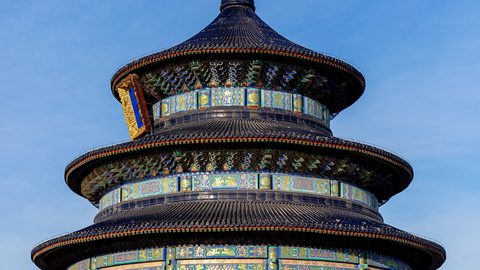 Beijing Things to Do Worth Your Limited Days
The Forbidden City and Great Wall are essential, but Beijing's meaning lives in temple courtyards, hutong lanes and food streets. Here is what earns your days.
Beijing Things to Do Worth Your Limited Days
The Forbidden City and Great Wall are essential, but Beijing's meaning lives in temple courtyards, hutong lanes and food streets. Here is what earns your days.
-
 Best Time to Visit Beijing, Month by Month Tradeoffs
April and October bring blue skies and queues, July brings heat, January brings empty sites and hazardous air. Here is Beijing month by month.
Best Time to Visit Beijing, Month by Month Tradeoffs
April and October bring blue skies and queues, July brings heat, January brings empty sites and hazardous air. Here is Beijing month by month.
-
 Getting Around Beijing Without Losing Half Your Day
Beijing's metro is clean and cheap but stops early, and taxis rarely speak English. Here is how to move around without burning half your day.
Getting Around Beijing Without Losing Half Your Day
Beijing's metro is clean and cheap but stops early, and taxis rarely speak English. Here is how to move around without burning half your day.
-
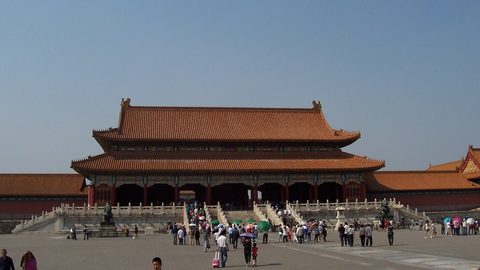 Forbidden City
 tickets require booking seven days ahead on WeChat with a passport. Here is the route to take once you are inside to avoid wasting the visit.
Forbidden City
Forbidden City tickets require booking seven days ahead on WeChat with a passport. Here is the route to take once you are inside to avoid wasting the visit.
-
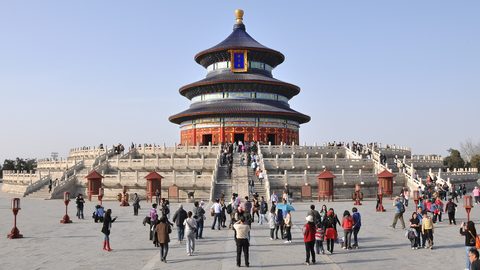 Temple of Heaven
The Temple of Heaven park matters as much as the temple. Morning tai chi, choirs, and card players make it a Beijing ritual worth a full morning.
Temple of Heaven
The Temple of Heaven park matters as much as the temple. Morning tai chi, choirs, and card players make it a Beijing ritual worth a full morning.
-
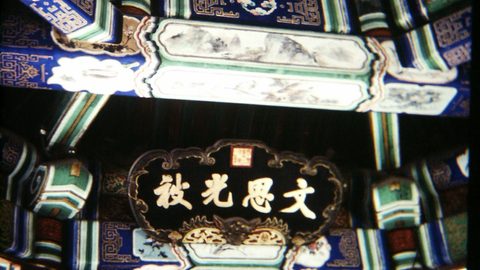 Summer Palace
The Summer Palace is vast and the wrong entrance adds an hour of walking. Use the East Palace Gate and plan for at least four hours.
Summer Palace
The Summer Palace is vast and the wrong entrance adds an hour of walking. Use the East Palace Gate and plan for at least four hours.