Shibamata Is the Tokyo Neighbourhood That Looks Exactly Like a 1950s Film Set
Shibamata preserves a 1950s Tokyo on its temple approach street, forever tied to the Tora-san film series and best visited for unagi and old-school snacks.
- Flag
-

- ISO code
- JP
- Currency
- JPY
- Timezone
- Asia/Tokyo
Shibamata is the Tokyo Neighbourhood That Looks Exactly Like a 1950s Film Set
Katsushika Ward, eastern Tokyo, holds a 200-metre street that the rest of the city forgot to update. Taishakuten Sando runs from Shibamata Station straight to the main gate of Kyoeizan Daikyoji, a Nichiren Buddhist temple founded in 1629, and every wooden shopfront on it sells the same things they sold in 1955: kusa-dango (mugwort rice dumplings), senbei crackers and kuzumochi. No convenience store neon. No love hotel sign. No chain pharmacy. This street is frozen because of a fictional character. The 50-film series "Otoko wa Tsurai yo" (It's Tough Being a Man) used Shibamata as its backdrop from 1969 to 2019, and director Yoji Yamada shot the approach to Taishakuten so often it became the definitive image of old Tokyo in the national imagination. You do not come here for a checklist of sights. You come here to walk the same route Torajiro Kuruma walked, eat the same rice cracker his family sold at the fictional Kurumaya shop, and stand in a Tokyo that domestic tourists travel an hour each way to find.
The Sando: a Single Lane of Preserved Showa Japan
Exit Shibamata Station and you are on it. The sando (temple approach) runs approximately 200 metres east to the temple gate. The surface is stone. The eaves of the shops almost meet overhead. The smell is charcoal-grilled senbei and steamed rice flour. Eight to ten shops compete for your custom. The oldest two have been doing it since the 19th century.
Which Kusa-Dango Shop to Choose
Yamatoya opened in 1898 and is the most photographed: its sign and noren curtain are exactly where they were when the film crew showed up. Ebisuya, founded 1887, is older and makes a slightly larger dumpling with a thicker anko (sweet bean) coating. Takagiya is the third reliable option. There is no bad choice. Buy a skewer of three dumplings and eat them standing by the shop. The dough is chewy from the mugwort, the bean paste is warm, and the texture is nothing like the shelf-stable versions sold in convenience stores. Do not order a box to take home. Eat them here, immediately.
The Temple: Taishakuten's Hidden Gallery and Garden
The temple grounds are free. The reason to pay the admission fee (¥400 for the Hokkedo carved gallery and Suikeien garden; check the Katsushika Ward website for the current rate as this figure is revised annually) is the carved corridor around the main hall. Koun Takamura and ten disciples carved 10 large panels into the outer perimeter between 1929 and 1934. The subject is scenes from the Lotus Sutra. You walk the Hokkedo clockwise and each panel tells a story: warriors, demons, lotus blossoms, mudras. It takes a quarter of an hour to do properly. Next to the gallery is Suikeien, a chisen kaiyu-shiki stroll garden completed in 1965 and designed by Ken Nakajima. The pond, the stepping stones and the clipped azaleas are a late Showa addition, not an Edo relic, but they work because the garden fits the temple's scale. Sit on the veranda of the main hall. Do not rush. This is the quietest you will be all day.
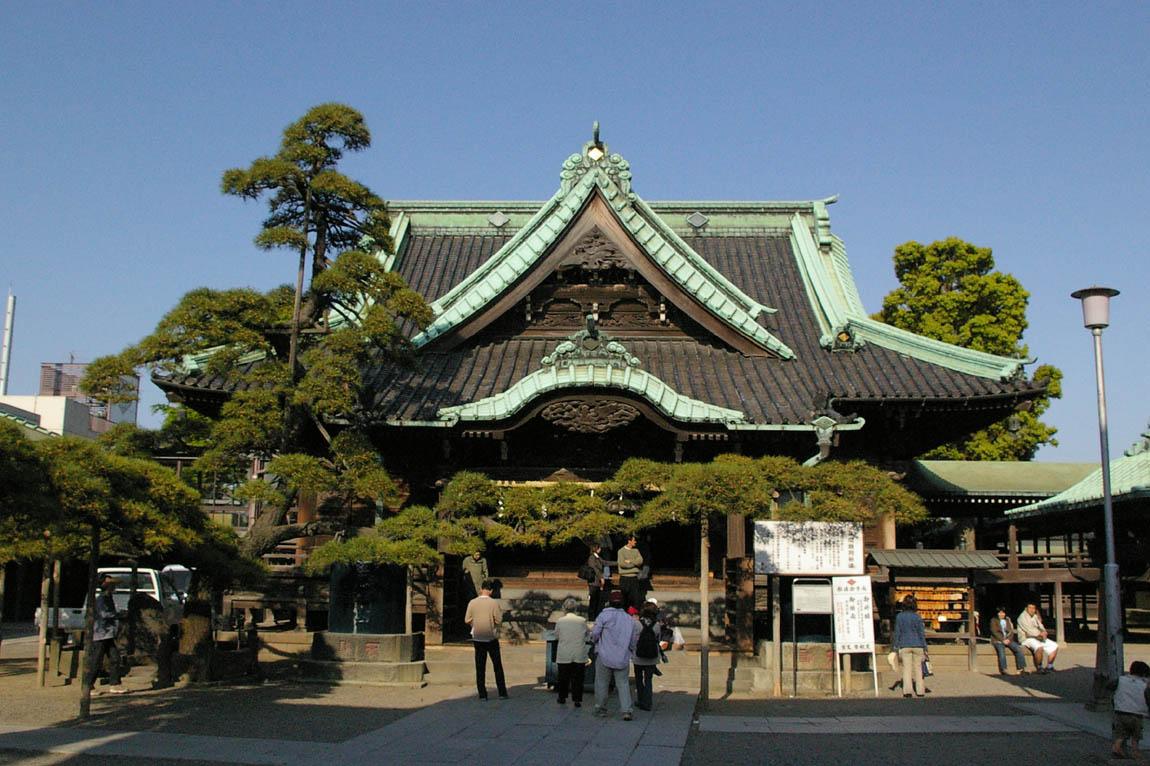
The Tora-San Museum: the Set That Became the Draw
Across from the temple complex, the Katsushika Shibamata Tora-san Museum opened in 1997 to house the props, set reconstructions and production material from the film series. The admission fee is ¥500 (verify with the museum's official page as this figure is reviewed annually). The museum recreates the Kurumaya family home, the interior of a 1960s Shibamata shop, and a small cinema screening clips from the series. You do not need to have seen a single film to understand the space. The museum exists because the neighbourhood understood that the films were the reason people came, and it treats the series as cultural history, not a gimmick. Allow 45 minutes. The museum closes at 17:00 (last entry 16:30) and is shut the third Tuesday of each month (or the following day if that Tuesday is a public holiday).
Outside Shibamata Station, a bronze statue of Torajiro Kuruma was unveiled in 1999. He is wearing his signature tan coat and hat, carrying a suitcase. Locals still leave fresh flowers at his feet. You will see older Japanese couples photographing each other with the statue. That is the audience this neighbourhood was built for: nostalgic domestic visitors who grew up with the films.
The Ferry, the Unagi and the Taisho-Era Villa
Six things tie a half-day in Shibamata together. Walk them in this order.
Yamamoto-tei: Taisho Residential Architecture
Adjacent to Taishakuten, Yamamoto-tei is a sukiya-zukuri residence built in the 1920s with Western elements added during the Taisho era's flirtation with European style. The tatami rooms face a Japanese garden. The admission fee is ¥100 (annual figure; confirm with the ward office). Sit on the engawa (wooden veranda). That is the point.
Yagiri no Watashi: The Last Edo Ferry
A short walk from the temple takes you to the Edogawa riverbank. Yagiri no Watashi is the only remaining Edo-period ferry in Tokyo, first recorded in the early 1600s. The boat crosses approximately 200 metres to Yagiri in Matsudo, Chiba Prefecture. The crossing takes less than ten minutes. The fare is ¥200 for adults, ¥100 for children (annual rates; check the ferry operator's noticeboard before boarding). The ferry operates year-round from 10:00 to 16:00 (seasonal variations apply; the Tokyo Metropolitan Government publishes the exact schedule). It shuts during high water or strong wind. Cross to Chiba, walk the riverbank path, and take the same boat back. That is a complete experience.
Unagi Along the Sando
The unagi restaurants on and near the sando have been serving pilgrims for generations. Unlike the tourist-trap eel houses of Asakusa, these places serve a local clientele. Lunch service runs 11:30 to 14:00. Budget ¥3,000 to ¥5,000 for a set meal. Book ahead on a weekend. Walk-ins are refused even when empty tables are visible, a restaurant reservation norm that applies here as much as anywhere in Tokyo.


Why Shibamata Belongs in Your Tokyo Plan
Shibamata has no high-rise, no large-scale tourism infrastructure, no museums like Ueno, no pop-culture retail like Akihabara, no crowds like Asakusa. It is a low-density temple pilgrimage and film-location destination that rewards repeat Tokyo visitors and solo travellers who want a half-day without decision fatigue. The neighbourhood is not suited to first-time visitors with a 48-hour Tokyo itinerary or anyone who needs wheelchair accessibility throughout (some temple areas and the ferry boarding point have limited access). If you are a food obsessive planning trips around specific meals, a design enthusiast who wants to see 20th-century shop signage as it was, or a traveller who has already done the big sights and wants the Tokyo that domestic tourists drive two hours for, this is the single district that delivers that experience without a queue.
Book the train, not the tour. From Keisei Ueno, the Keisei Kanamachi Line reaches Shibamata Station (code KS50) in 20 to 25 minutes. From Tokyo Station, allow 45 to 55 minutes via the JR Joban Line to Kanamachi and a transfer. Arrive by 09:30. Eat dango on the sando. Walk the Hokkedo. Cross the river. Eat unagi. Be back in central Tokyo by 14:00. That is the exact day Shibamata is built for.
Other areas in Tokyo
- Akihabara
- Asakusa
- Ebisu
- Futako-tamagawa
- Ginza
- Harajuku
- Ikebukuro
- Jimbocho
- Jiyugaoka
- Kagurazaka
- Kichijoji
- Kiyosumi-Shirakawa
- Koenji
- Kuramae
- Marunouchi
- Nakameguro
- Nakano
- Nihonbashi
- Ningyocho
- Odaiba
- Omotesando and Aoyama
- Roppongi
- Ryogoku
- Sangenjaya
- Shibuya
- Shimokitazawa
- Shin-Okubo
- Shinagawa
- Shinjuku
- Sugamo
- Takadanobaba
- Todoroki
- Tsukiji
- Tsukishima
- Ueno
- Yanaka
- Yurakucho and Shinbashi
FAQ
Who was Tora-san?
Tora-san is the lead character of the 50-film Japanese series Otoko wa Tsurai yo (It's Tough Being a Man), played by actor Kiyoshi Atsumi. The character, Torajiro Kuruma, is a wandering peddler who returns to his family's rice-cracker shop in Shibamata between adventures. Director Yoji Yamada made the first film in 1969 and the series ran until 2019, making it Japan's longest-running movie franchise.
How long should I spend in Shibamata?
Budget three to four hours. That covers walking the 200-metre sando, visiting Taishakuten temple and its carved gallery, spending 45 minutes at the Tora-san Museum, crossing the Edogawa on the Yagiri no Watashi ferry, and having lunch. It works best as a morning or early-afternoon trip from central Tokyo.
What is the best time of year to visit Shibamata?
Avoid Golden Week (late April to early May) and New Year (Dec 29 to Jan 3) when many independent shops and restaurants close. The temple approach is pleasant in any season, and the garden Suikeien has seasonal plantings. Weekday mornings are substantially quieter than weekends.
Is Shibamata suitable for children?
Yes, for short visits. The sando is flat and traffic-free, the ferry ride across the Edogawa is a novelty, and the Tora-san Museum has colourful sets. There are no playgrounds or kid-focused attractions beyond that. The area is not designed for a full day with young children.
Can I visit Shibamata on a day trip from central Tokyo?
Yes. From Keisei Ueno, the ride to Shibamata Station on the Keisei Kanamachi Line takes 20 to 25 minutes. From Tokyo Station, allow 45 to 55 minutes with a transfer at Kanamachi. You can be back in Shinjuku before 15:00 without rushing.
Read next
-
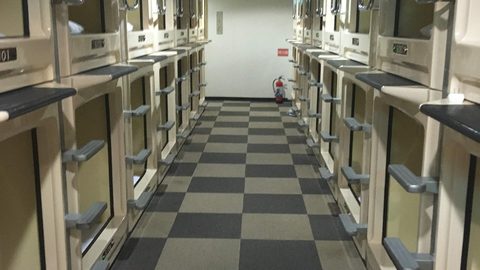 Tokyo Hotels by Type and Budget from Capsules to Luxury
Tokyo hotels organised by type and price band, from efficient capsule pods to full-service luxury towers, to help you book the right room.
Tokyo Hotels by Type and Budget from Capsules to Luxury
Tokyo hotels organised by type and price band, from efficient capsule pods to full-service luxury towers, to help you book the right room.
-
 Where to Stay in Tokyo by District and Travel Style
A comparison of Tokyo's major districts to help you choose the right base for your travel style, whether you want calm or chaos.
Where to Stay in Tokyo by District and Travel Style
A comparison of Tokyo's major districts to help you choose the right base for your travel style, whether you want calm or chaos.
-
 Narita or Haneda for Tokyo and What That Airport Choice Costs You
Narita or Haneda for Tokyo: compare door-to-district time, transfer cost, and what the wrong airport choice eats from your trip.
Narita or Haneda for Tokyo and What That Airport Choice Costs You
Narita or Haneda for Tokyo: compare door-to-district time, transfer cost, and what the wrong airport choice eats from your trip.
-
 Things to Do in Tokyo That Are Worth Your Limited Days
A curated list of Tokyo's highest-impact sights and experiences, from immersive art to quiet backstreets, to help you prioritise your days.
Things to Do in Tokyo That Are Worth Your Limited Days
A curated list of Tokyo's highest-impact sights and experiences, from immersive art to quiet backstreets, to help you prioritise your days.
-
 Best Time to Visit Tokyo Month by Month Tradeoffs
A month-by-month guide to visiting Tokyo, laying out the trade-off between weather, crowds, price, and what's actually open.
Best Time to Visit Tokyo Month by Month Tradeoffs
A month-by-month guide to visiting Tokyo, laying out the trade-off between weather, crowds, price, and what's actually open.
-
 Getting Around Tokyo by Train Airport Transfers and IC Cards
A practical guide to Tokyo's rail network, covering airport transfers, IC cards, and how to avoid the station navigation mistakes that eat your day.
Getting Around Tokyo by Train Airport Transfers and IC Cards
A practical guide to Tokyo's rail network, covering airport transfers, IC cards, and how to avoid the station navigation mistakes that eat your day.
-
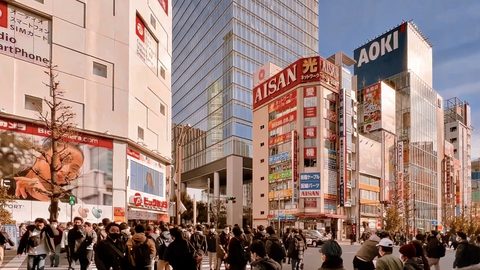 Akihabara
 Tokyo guide: electronics, anime, and arcades stacked floor by floor, from Radio Kaikan to the maid cafe touts.
Akihabara
Akihabara Tokyo guide: electronics, anime, and arcades stacked floor by floor, from Radio Kaikan to the maid cafe touts.
-
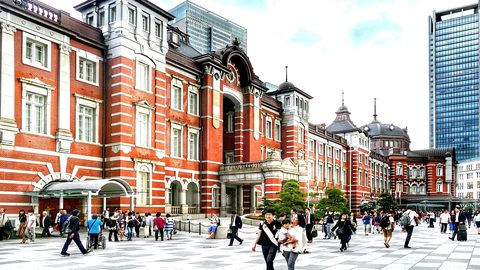 Marunouchi
Staying in Marunouchi puts you steps from Tokyo Station's Shinkansen platforms and Narita Express, trading nightlife buzz for unmatched rail connectivity and wide, quiet weekend boulevards.
Marunouchi
Staying in Marunouchi puts you steps from Tokyo Station's Shinkansen platforms and Narita Express, trading nightlife buzz for unmatched rail connectivity and wide, quiet weekend boulevards.
-
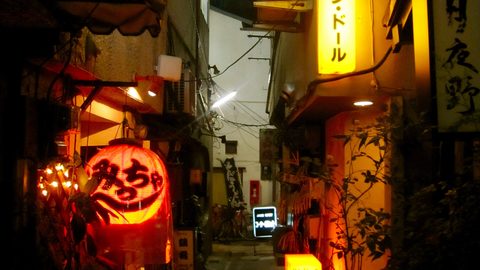 Kagurazaka
 layers French bistros and cobbled pedestrian lanes over a working geisha quarter, creating Tokyo's most atmospheric hillside neighbourhood.
Kagurazaka
Kagurazaka layers French bistros and cobbled pedestrian lanes over a working geisha quarter, creating Tokyo's most atmospheric hillside neighbourhood.