Robots, a Hanging Globe, and Whether the Miraikan Suits Adult Travellers
The Miraikan in Odaiba has a glowing Earth and running robots, but adult travellers should know its limits before dedicating an afternoon.

Robots, a Hanging Globe, and Whether the Miraikan Suits Adult Travellers
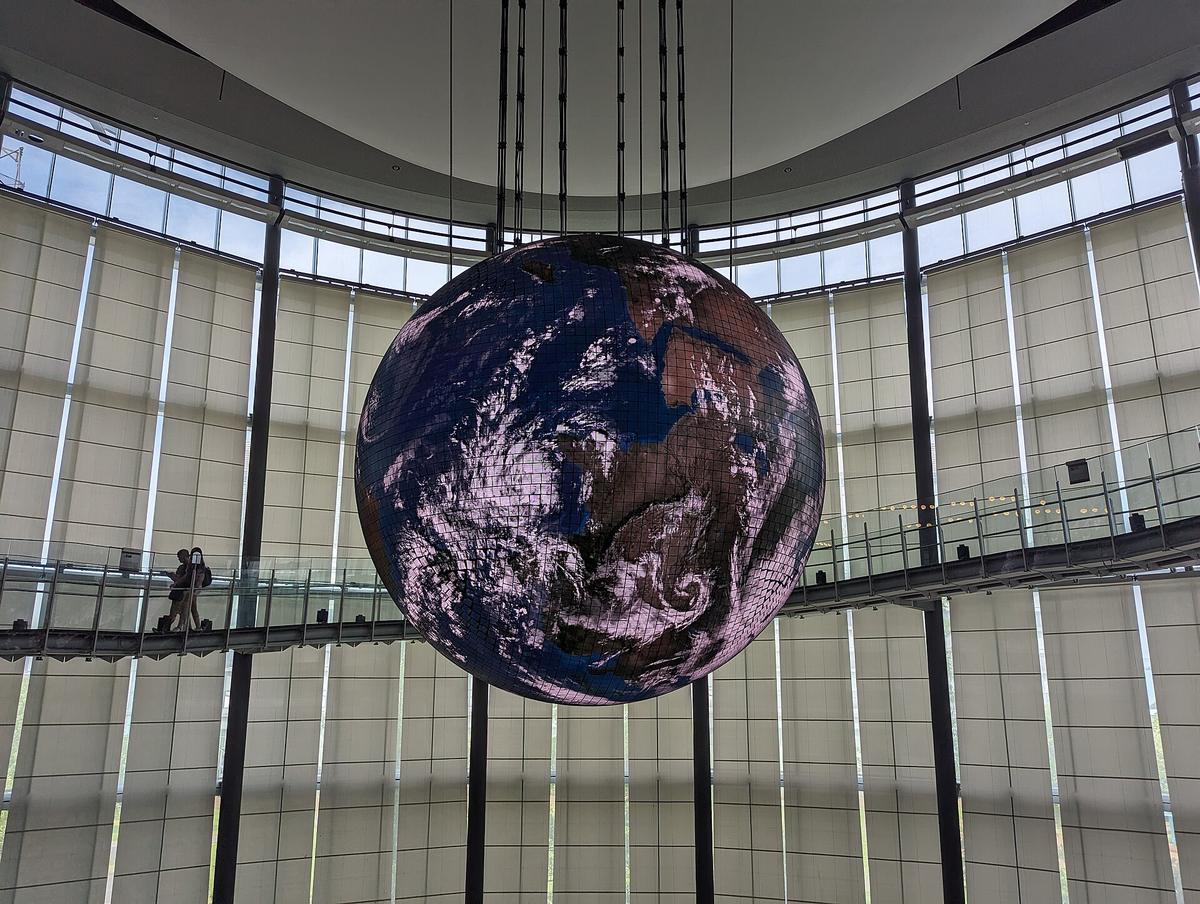
You step off the Yurikamome Line at Tokyo International Cruise Terminal Station and walk toward a glass building on Odaiba’s artificial waterfront. Through the lobby windows, a six-metre globe made of 10,362 OLED panels floats in the atrium, its surface shifting from a satellite view of Earth into a real-time weather simulation. The question you came with is still unanswered: is the Miraikan National Museum of Emerging Science and Innovation actually worth your afternoon, or is this just another museum pitched at school groups and families?
The short answer is yes, with conditions. At ¥630 for the main exhibition, the museum is cheap enough to justify a two-hour stop. But the experience comes with a real language barrier that the promotional photos do not show. Much of the interactive text across the 200 exhibits lacks full English translation, so the hands-on component that makes the place buzz for Japanese speakers can feel thin for adult foreign visitors who rely on written explanations. You need to go in knowing which parts genuinely deliver and which you can skip without regret.
- Official Name: Miraikan (National Museum of Emerging Science and Innovation)
- Address: 2-3-6 Aomi, Koto-ku, Tokyo 135-0064
- Nearest Station: Tokyo International Cruise Terminal Station (Yurikamome Line) or Telecom Center Station (Yurikamome Line)
- Opening Hours: 10:00-17:00 (last admission 16:30)
- Closed: Tuesdays (or Wednesday if Tuesday is a national holiday), New Year’s holiday (Dec 28, Jan 1)
- Admission (Permanent Exhibition, Adult): ¥630
- Dome Theatre Ticket (Adult): ¥310
- Combined Ticket (Adult): ¥940
- Typical Visit Duration (Adults Without Children): 2-3 hours
- Language Support: English signage throughout; English audio guide app for permanent exhibits
The Five Things That Actually Work for Adults
The Geo-Cosmos Globe
The Geo-Cosmos on the sixth floor is the reason most visitors come and the one exhibit that needs no translation. It hangs on a thin cable, rotates slowly, and refreshes its display with satellite imagery, meteorological data, and scientific simulations at a resolution of over ten million pixels. Walk the ramp that spirals around it. Stop at each level. The perspective shifts from planetary scale to regional weather patterns to oceanic currents, and the effect is meditative rather than didactic. It is a genuinely thoughtful exhibit, not a gimmick.
Create Your Future Zone
The third-floor zone called "Create your future" holds the museum’s most adult-appropriate content. This is where the exhibition moves beyond childhood wonder into the hard edges of climate modelling, artificial intelligence ethics, and human augmentation. The English audio guide app covers these exhibits, and the topics are current enough that you can engage with the substance even if you skim the Japanese text. The interactive terminals that let you manipulate an AI’s decision-making parameters or simulate carbon emission scenarios do not need fluency, just patience with a touchscreen.
Dome Theater GAIA
The Dome Theater GAIA is a separate purchase at ¥310 and requires a timed ticket. Book it online before you arrive. The screen measures 15.24 metres in diameter and seats 121 people. Films run about 30 minutes each and rotate between two to three programs. English audio guides are available free with a deposit. For ¥310, this is the museum’s best value for non-Japanese speakers because the visuals and sound design do the work that the Japanese-language narration leaves incomplete.
The Resident Humanoid
If you were hoping to see ASIMO, adjust your expectations. The Honda humanoid robot demonstrations were discontinued in March 2022. The current resident humanoid on display is Alter 3, an android with lifelike expressions and movements. Demonstration times vary by day. The schedule is posted daily at the entrance and on the official website, so check your arrival and plan around that specific window rather than wandering in at random.
Where the Experience Falls Short
The 200 exhibits are split into three zones: Space and Earth, Life and Humans, and Information and Society. That sounds comprehensive. In practice, many of the hands-on stations require reading Japanese instructions to understand how to trigger the interaction. The English signage provides context and labels, but the actual participatory moment, the press-this-button-see-that-reaction loop, depends on a prompt you cannot parse. If you are an adult who likes to understand the mechanism before you touch it, this is frustrating.
You can compensate with the English audio guide app. But loading it, finding the right exhibit number, and listening to an explanation while the kids around you are already pressing everything turns the museum into a slower, more passive experience than the Japanese-language version delivers. Go in knowing that you will absorb about sixty to seventy percent of what the museum offers, and decide if that is worth ¥630. For most adults, it is. But if you are the kind of person who feels cheated by partial access, skip it.

How to Fit Miraikan Into a Tokyo Day
Treat Miraikan as a two-hour add-on to a day in Odaiba, not a standalone half-day destination. The museum sits in the Aomi district of Odaiba, which is also home to teamLab Planets TOKYO, approximately 1.5 kilometres away. A twenty-minute walk or a five-minute taxi connects the two. Do both in one day: start at teamLab Planets in the morning when crowds are thinner, walk to Miraikan for a light lunch and the 13:00 or 14:00 entry slot, then finish with the waterfront or the shopping malls on Odaiba’s north side. The combined ticket for the main exhibition and the Dome Theatre costs ¥940, which is less than the price of a single museum admission in most global cities. That is the price point that makes the partial language barrier acceptable.
Do not combine Miraikan with the teamLab Borderless location in Azabudai Hills. Borderless relocated from Odaiba in 2024 and is now roughly eight kilometres away. Trying to connect them in one afternoon means forty minutes of train time each way and a schedule that feels rushed rather than efficient.
Common Questions
Do I need to book tickets in advance for Miraikan?
Yes, book online on the official website for QR code entry. The Dome Theatre requires a separate timed ticket, which you should reserve online to guarantee availability. Walk-up entry is possible but risks queues and sold-out Dome screenings.
Is Miraikan worth visiting if I do not speak Japanese?
Partially. The Geo-Cosmos globe and Dome Theatre films need no Japanese. The exhibits have English signage and an audio guide app, but hands-on interactions depend on Japanese text. Budget two hours for the sections that work for you and skip the rest.
What is the closest station to Miraikan?
Tokyo International Cruise Terminal Station on the Yurikamome Line is the closest. Telecom Center Station on the same line is also walkable. Both are about five minutes on foot. The Yurikamome Line runs from Shimbashi Station in central Tokyo.
Is the ASIMO robot still on display at Miraikan?
No. ASIMO demonstrations were discontinued in March 2022. The current humanoid robot on display is Alter 3, an android with lifelike movements. Check the daily schedule at the entrance or on the official website for demonstration times.
Read next
-
 Tokyo Hotels by Type and Budget from Capsules to Luxury
Tokyo hotels organised by type and price band, from efficient capsule pods to full-service luxury towers, to help you book the right room.
Tokyo Hotels by Type and Budget from Capsules to Luxury
Tokyo hotels organised by type and price band, from efficient capsule pods to full-service luxury towers, to help you book the right room.
-
 Where to Stay in Tokyo by District and Travel Style
A comparison of Tokyo's major districts to help you choose the right base for your travel style, whether you want calm or chaos.
Where to Stay in Tokyo by District and Travel Style
A comparison of Tokyo's major districts to help you choose the right base for your travel style, whether you want calm or chaos.
-
 Narita or Haneda for Tokyo and What That Airport Choice Costs You
Narita or Haneda for Tokyo: compare door-to-district time, transfer cost, and what the wrong airport choice eats from your trip.
Narita or Haneda for Tokyo and What That Airport Choice Costs You
Narita or Haneda for Tokyo: compare door-to-district time, transfer cost, and what the wrong airport choice eats from your trip.
-
 Things to Do in Tokyo That Are Worth Your Limited Days
A curated list of Tokyo's highest-impact sights and experiences, from immersive art to quiet backstreets, to help you prioritise your days.
Things to Do in Tokyo That Are Worth Your Limited Days
A curated list of Tokyo's highest-impact sights and experiences, from immersive art to quiet backstreets, to help you prioritise your days.
-
 Best Time to Visit Tokyo Month by Month Tradeoffs
A month-by-month guide to visiting Tokyo, laying out the trade-off between weather, crowds, price, and what's actually open.
Best Time to Visit Tokyo Month by Month Tradeoffs
A month-by-month guide to visiting Tokyo, laying out the trade-off between weather, crowds, price, and what's actually open.
-
 Getting Around Tokyo by Train Airport Transfers and IC Cards
A practical guide to Tokyo's rail network, covering airport transfers, IC cards, and how to avoid the station navigation mistakes that eat your day.
Getting Around Tokyo by Train Airport Transfers and IC Cards
A practical guide to Tokyo's rail network, covering airport transfers, IC cards, and how to avoid the station navigation mistakes that eat your day.
-
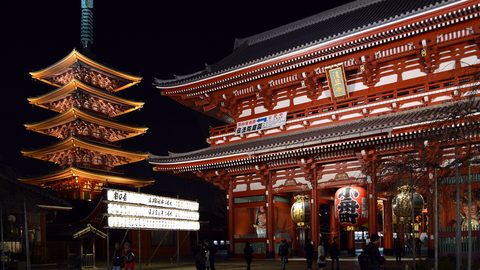 Senso-ji
 is free and never closes, but the experience at 6am with empty Nakamise stalls is nothing like the 11am crush under Kaminarimon. Here is when to go and what you get at each hour.
Senso-ji
Senso-ji is free and never closes, but the experience at 6am with empty Nakamise stalls is nothing like the 11am crush under Kaminarimon. Here is when to go and what you get at each hour.
-
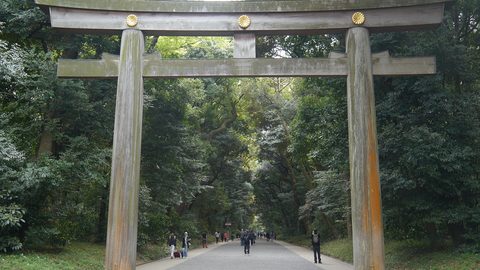 Meiji Jingu
The Meiji Jingu visit changes completely depending on which torii gate you enter. One drops you from Harajuku noise into sudden forest, the other builds quiet slowly from Yoyogi.
Meiji Jingu
The Meiji Jingu visit changes completely depending on which torii gate you enter. One drops you from Harajuku noise into sudden forest, the other builds quiet slowly from Yoyogi.
-
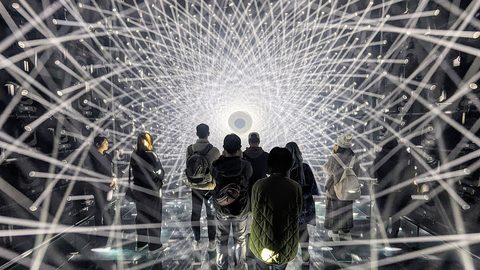 teamLab
 Borderless and Planets are two different Tokyo venues with separate booking systems. Borderless tickets at Azabudai Hills sell in timed slots and the maze has no fixed route.
teamLab
teamLab Borderless and Planets are two different Tokyo venues with separate booking systems. Borderless tickets at Azabudai Hills sell in timed slots and the maze has no fixed route.