What Travelers Need to Know About Japan's 100-Volt Electrical System
Japan runs on 100 volts with two-prong Type A outlets, and that lower voltage can quietly ruin hair tools, slow chargers, or leave you hunting for a converter in Akihabara.
What Travelers Need to Know About Japan’s 100-Volt Electrical System
You are standing in a Shinjuku electronics store at 10pm, your hair dryer in one hand and a step-up transformer in the other, because the hotel outlet gave you barely warm air. Japan's 100V standard sits 20 volts under North America's 120V and less than half of the 220-240V used across most of Europe, Asia, and Australia. That gap creates specific problems most travel plug guides ignore. Here is which of your devices will actually work, which will run weak, and which will fail entirely on Japan's two-prong setup.
Why Japan's Mains Supply Changes What You Can Plug In
Japan uses 100V mains, split by region into 50 Hz in the east (Tokyo, Yokohama, Sendai, Sapporo) and 60 Hz in the west (Osaka, Kyoto, Nagoya, Hiroshima, Fukuoka). The boundary runs along the Itoigawa River to the Fuji River in Shizuoka Prefecture. Your phone charger does not care about this frequency split. Your electric clock or record player will run at the wrong speed if you move it from Tokyo to Osaka without a frequency converter. For almost everything a traveler carries, the supply level is the real constraint.
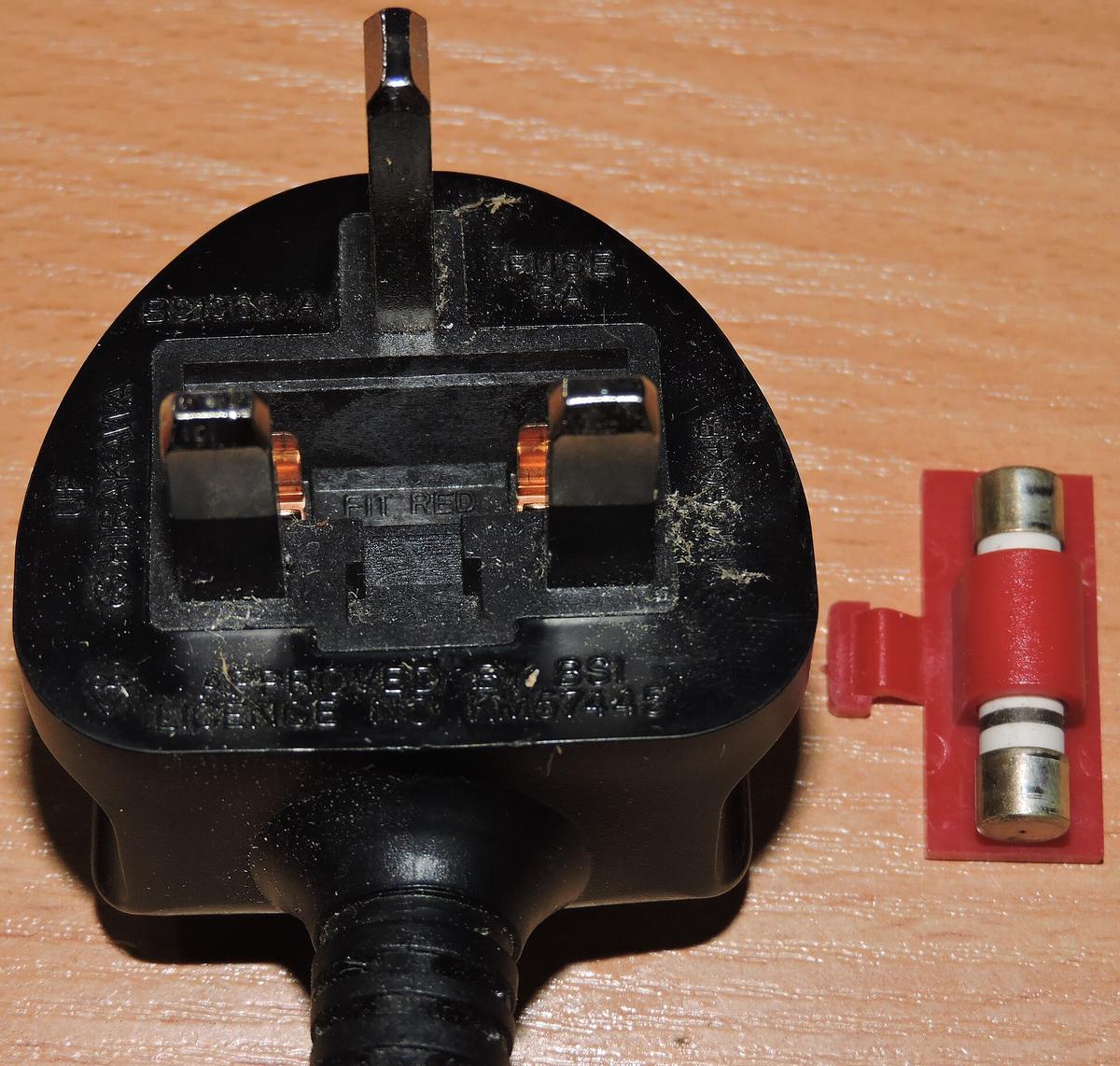
Plug type is Type A, the two flat parallel pins (NEMA 1-15, non-polarised). Type B sockets with a round grounding pin exist but are rare in hotels, which almost exclusively use ungrounded two-pin Type A. If your device has a grounded three-pin plug, you need a plug adapter, and you may lose the ground connection.

Which Devices Work and Which Do Not
Check the small print on your power brick. If it reads "Input: 100-240V, 50/60 Hz," it works across Japan with only a physical plug adapter. This covers nearly every modern phone charger, laptop power supply, camera battery charger, tablet, and USB unit made after 2015. These devices use switched-mode power supplies that have no frequency sensitivity. No step-up transformer needed.
The problem is heating appliances. Hair dryers, curling irons, straighteners, travel kettles, and electric shavers that are rated for 220-240V only will either run at half power, produce lukewarm air, or burn out their heating element on 100V. A 220V hair dryer on 100V draws less than half its rated wattage. You get weak airflow and never-quite-dry hair. A 240V kettle takes about twice as long to boil. Some devices labelled "dual voltage" switch automatically, but if the rating says only 220-240V, it will not work properly. You need a step-up unit that boosts 100V to the device's required input.
Where To Buy A Step-Up Unit If You Arrive Unprepared
Buy it in Japan. Yodobashi Camera in Shinjuku, just west of the station's east exit, carries step-up transformers from ¥3,000 to ¥8,000 depending on wattage. Bic Camera in Namba, Osaka, near the Dotonbori end of the shopping arcade, has a similar selection. Look for units rated at 1500W or higher for hair tools. Do not buy a cheap ¥1,000 item from a convenience store. Those handle 100W max and will overheat with a hair dryer.
Hotel USB Ports and Power Banks
Mid-range and business hotels in Japan now commonly include USB-A ports built into wall sockets or bedside lamps. USB-C ports are increasing but not universal; they are most common in hotels opened or renovated after 2020. Bring a USB-C to USB-A cable as backup for charging laptops, or carry a small USB-C wall unit rated 100-240V.
Public Wi-Fi is unreliable and slow in Japan. Google Maps drains your phone battery fast because you will use it for train platform numbers and walking directions. Carry a power bank rated at 10,000 mAh minimum. On Japanese domestic flights, power banks are permitted only in carry-on baggage, never checked. Terminals must be covered or the power bank in its original packaging. Capacity up to 100 Wh is fine without airline approval. Between 100 and 160 Wh requires airline approval. Over 160 Wh is prohibited entirely.
| Device Type | Typical Input Voltage | Works On 100V Japan? | Adapter Needed? | Converter Needed? |
|---|---|---|---|---|
| Phone charger (USB block) | 100-240V | Yes | Yes, Type A plug adapter | No |
| Laptop power adapter | 100-240V | Yes | Yes, Type A plug adapter | No |
| Camera battery charger | 100-240V | Yes | Yes, Type A plug adapter | No |
| Hair dryer (220-240V only) | 220-240V | No, runs weak or burns out | Yes | Yes, step-up converter 1500W+ |
| Curling iron (220-240V only) | 220-240V | No, insufficient heat | Yes | Yes, step-up converter |
| Electric shaver (220-240V only) | 220-240V | No, runs slow | Yes | Yes, step-up converter |
| Travel kettle (220-240V only) | 220-240V | No, boils very slowly | Yes | Yes, step-up converter |
| USB-C laptop charger (100-240V) | 100-240V | Yes | Yes, Type A plug adapter | No |
| AC motor device (clock, turntable) | 100V at specific Hz | Partial, speed error across zones | Yes | Frequency converter if crossing zones |
.jpg)
Grounding and Adapters for Japan’s 100V Type A Sockets
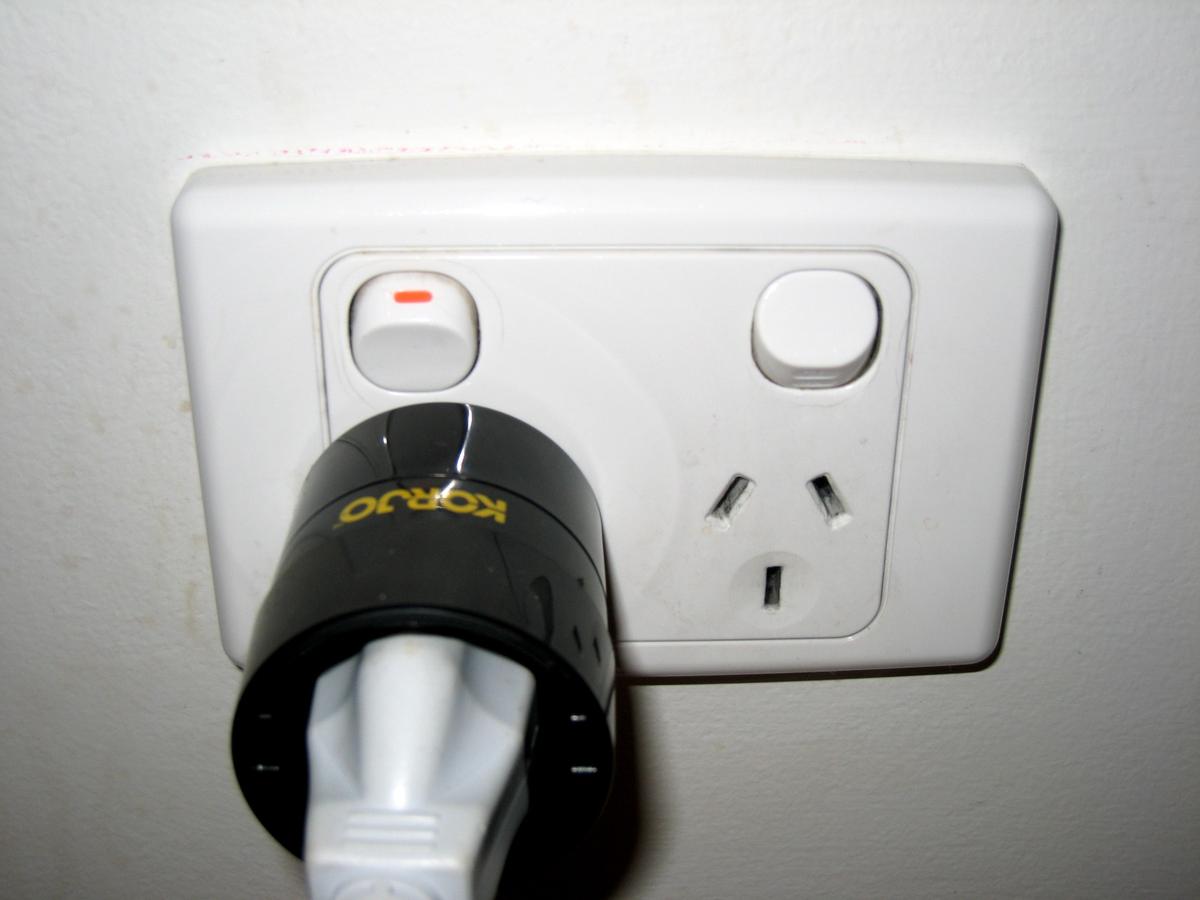
Japanese two-pin Type A sockets have no ground pin. If your device has a three-pin Type B plug with a round ground pin, you need an adapter that accepts the ground pin, but the adapter itself will not connect to ground because the wall socket lacks the round hole. Your device loses surge protection and any safety grounding. For laptops and phone chargers, this is not a practical safety concern. For kitchen appliances, power tools, or medical equipment, this is a real risk. If you need grounded power for medical devices, contact your hotel in advance. Business hotels in central Tokyo or Osaka sometimes have a rare grounded socket behind heavy furniture. Do not count on it.
Countries whose plugs fit Japanese Type A sockets without any adapter: USA, Canada, Mexico, China (Type A two-pin only), and Taiwan. If your plug uses Type C (round two-pin, Europe), Type G (three rectangular, UK), or Type I (three flat, Australia), you need a physical plug adapter even if your device is dual voltage. Buy the adapter before you leave. Airport convenience stores in Japan sell them for ¥500 to ¥1,000.
What To Do If Your Hotel Room Loses Power
Japanese hotel rooms have a master power switch inside the door that cuts all sockets when you leave and insert your key card. The switch is a small rocker labelled "Main Power" or with a symbol of a lightbulb. If your device stops charging overnight, check that switch first. Also check whether the socket is controlled by the bedside lamp switch. This is specific to older hotels and ryokan. Flip the switch and try again.
The single thing that most often goes wrong: travelers assume that because their charger plug fits the Japanese socket, the supply level is fine. A 240V-only hair tool fits the same Type A socket as a dual-voltage laptop charger. The socket does not tell you the mismatch exists. Check the input rating on every device before you plug it in.
Japan’s 100V power and Type A sockets suit solo explorers, foodies, pop-culture travelers, skiers, hikers, and lovers of craft and design who pack a power bank and check device labels. The setup is less forgiving for spontaneous party-seekers, strict vegans, or budget backpackers trying to live on under ¥5,000 a day for whom an ¥8,000 step-up transformer is a significant expense.
Frequently Asked Questions
Will my US iPhone charger work in Japan without any adapter?
Yes, if it is the original Apple USB power adapter. It has a 100-240V input rating. The two flat prongs fit Japanese Type A sockets directly. You need no adapter and no converter.
Can I use my 220V European hair straightener in Japan?
No, not safely on 100V alone. It will heat to less than half its normal temperature and may eventually burn out its heating element. You need a step-up voltage converter rated at least 1500W, sold at Yodobashi Camera in Shinjuku or Bic Camera in Namba for ¥3,000 to ¥8,000.
Do Japanese hotel rooms have USB ports for charging?
Common in mid-range and business hotels, usually Type A. USB-C ports are increasing but not universal; they are most common in hotels opened or renovated after 2020. Bring a USB-C to USB-A cable as a backup.
What happens if I plug a 240V kettle into a 100V Japanese socket?
It will draw less than half its rated wattage and take two to three times longer to boil water. It will not blow a fuse, but it will function poorly. A step-up voltage converter is required for proper operation.
Is the Japanese electrical socket grounded?
Most sockets are Type A, which has two flat slots and no ground pin. Type B sockets with a round ground hole exist but are rare in hotels. Your grounded device will lose its ground connection when plugged into an ungrounded socket.
Can I take my power bank on a Japanese domestic flight?
Yes, but only in carry-on baggage. Power banks are strictly prohibited in checked baggage. The terminals must be covered to prevent short circuits. Capacity up to 100 Wh is permitted without airline approval. 100-160 Wh requires approval. Over 160 Wh is banned.
Will my laptop charger work across eastern and western Japan with different frequencies?
Yes, if it has a 100-240V, 50/60 Hz input, which covers all modern laptop chargers. Frequency sensitivity only affects AC motor devices like clocks and turntables, not switched-mode power supplies used in chargers.
Read next
-
 Japan eSIM vs Pocket WiFi vs Physical SIM for Staying Connected
Free public WiFi across Japan is unreliable and slow. Compare eSIM plans from Ubigi and Airalo against renting a pocket WiFi device at Narita or Haneda.
Japan eSIM vs Pocket WiFi vs Physical SIM for Staying Connected
Free public WiFi across Japan is unreliable and slow. Compare eSIM plans from Ubigi and Airalo against renting a pocket WiFi device at Narita or Haneda.
-
 Japan Visa-Free Entry and the Visit Japan Web Digital Form
Visa-free entry covers many nationalities, but the Visit Japan Web digital form and QR codes determine how quickly you clear immigration at Narita or Haneda.
Japan Visa-Free Entry and the Visit Japan Web Digital Form
Visa-free entry covers many nationalities, but the Visit Japan Web digital form and QR codes determine how quickly you clear immigration at Narita or Haneda.
-
 Cash and IC Cards Are the Real Payment System in Japan
Japan projects a high-tech image but many small restaurants, temples, and rural buses demand cash. IC cards like Suica and Icoca bridge the gap for daily spending.
Cash and IC Cards Are the Real Payment System in Japan
Japan projects a high-tech image but many small restaurants, temples, and rural buses demand cash. IC cards like Suica and Icoca bridge the gap for daily spending.
-
 Japan Rail Pass Maths and When Buying Single Tickets Wins
The Japan Rail Pass can save hundreds or cost more than single tickets depending on your route. Run the maths on a Tokyo-Kyoto-Osaka loop before buying.
Japan Rail Pass Maths and When Buying Single Tickets Wins
The Japan Rail Pass can save hundreds or cost more than single tickets depending on your route. Run the maths on a Tokyo-Kyoto-Osaka loop before buying.
-
 Japan Month by Month with Cherry Blossom and Autumn Leaves Timing
Cherry blossom and autumn foliage are moving targets that bring packed temples and booked-out hotels. Here is month-by-month timing plus the Golden Week and Obon windows to avoid.
Japan Month by Month with Cherry Blossom and Autumn Leaves Timing
Cherry blossom and autumn foliage are moving targets that bring packed temples and booked-out hotels. Here is month-by-month timing plus the Golden Week and Obon windows to avoid.
-
 What a Day in Japan Costs at Three Budget Levels in Yen
A ¥5,000 daily backpacker budget in Japan is punishingly tight. See real yen figures for three spending levels, from konbini survival to mid-range comfort.
What a Day in Japan Costs at Three Budget Levels in Yen
A ¥5,000 daily backpacker budget in Japan is punishingly tight. See real yen figures for three spending levels, from konbini survival to mid-range comfort.
-
 Kanto
Kanto is the seven prefectures around Tokyo, and almost all of it is a day trip. Here is what each part is for, and when it is worth sleeping outside the city.
Kanto
Kanto is the seven prefectures around Tokyo, and almost all of it is a day trip. Here is what each part is for, and when it is worth sleeping outside the city.
-
 Osaka or Kyoto Where to Base Your Kansai Trip
Osaka and Kyoto are fifteen minutes apart by train but worlds apart after dark. Here is how to decide which city should be your Kansai base.
Osaka or Kyoto Where to Base Your Kansai Trip
Osaka and Kyoto are fifteen minutes apart by train but worlds apart after dark. Here is how to decide which city should be your Kansai base.
-
 Tokyo vs Osaka: Which One If the Trip Only Has Room for One
Tokyo and Osaka offer different versions of Japan. A comparison of scale, food, pace, and daily experience to help you choose the one that fits your trip.
Tokyo vs Osaka: Which One If the Trip Only Has Room for One
Tokyo and Osaka offer different versions of Japan. A comparison of scale, food, pace, and daily experience to help you choose the one that fits your trip.