Osaka vs Kyoto: A Base City Decision, Not a Beauty Contest
Osaka and Kyoto are fifteen minutes apart by train but worlds apart after dark. Here is how to decide which city should be your Kansai base.

Osaka vs Kyoto: a Base City Decision, Not a Beauty Contest
The most common mistake travellers make when planning a Kansai trip is treating Osaka and Kyoto as interchangeable and then picking based on postcard appeal. That logic gives you a Kyoto hotel, a Kyoto itinerary, and a Kyoto problem: by 21:00 the city is effectively closed, your dinner options shrink to convenience-store onigiri, and you are paying 30 to 50 percent more per night than you would in Osaka. The JR Special Rapid makes the two cities neighbours, not rivals. It covers the distance in 28 minutes. But that short rail link disguises a real difference in rhythm. After 21:00 Kyoto walks its geisha home while Osaka is still queueing for takoyaki at Wanaka. Your base city determines what kind of traveller you get to be each evening, not just where you lay your head.
The 15-Minute Shinkansen Trap
Why Shin-Osaka Is A Mistake
The Shinkansen covers the route in 12 to 14 minutes. The JR Special Rapid does it in 28 to 30 for ¥580 one way. That speed convinces a lot of first-timers to compromise: stay near Shin-Osaka, they reason, and have both cities within reach. This is the worst accommodation decision you can make in Kansai.
Shin-Osaka is a Shinkansen stop surrounded by office towers, business hotels that empty at night, and exactly zero walkable food streets. The daily commute from Shin-Osaka to Namba or Dotonbori costs you 20 minutes each way on the Midosuji Line. By the time you have factored in that wasted time, the hotel price advantage disappears against a proper Osaka district like Kita or Minami. Book Shin-Osaka only if your trip is a single overnight between two Shinkansen journeys. Otherwise, treat it as a transfer point, not a neighbourhood.
The Real Difference is 21:00
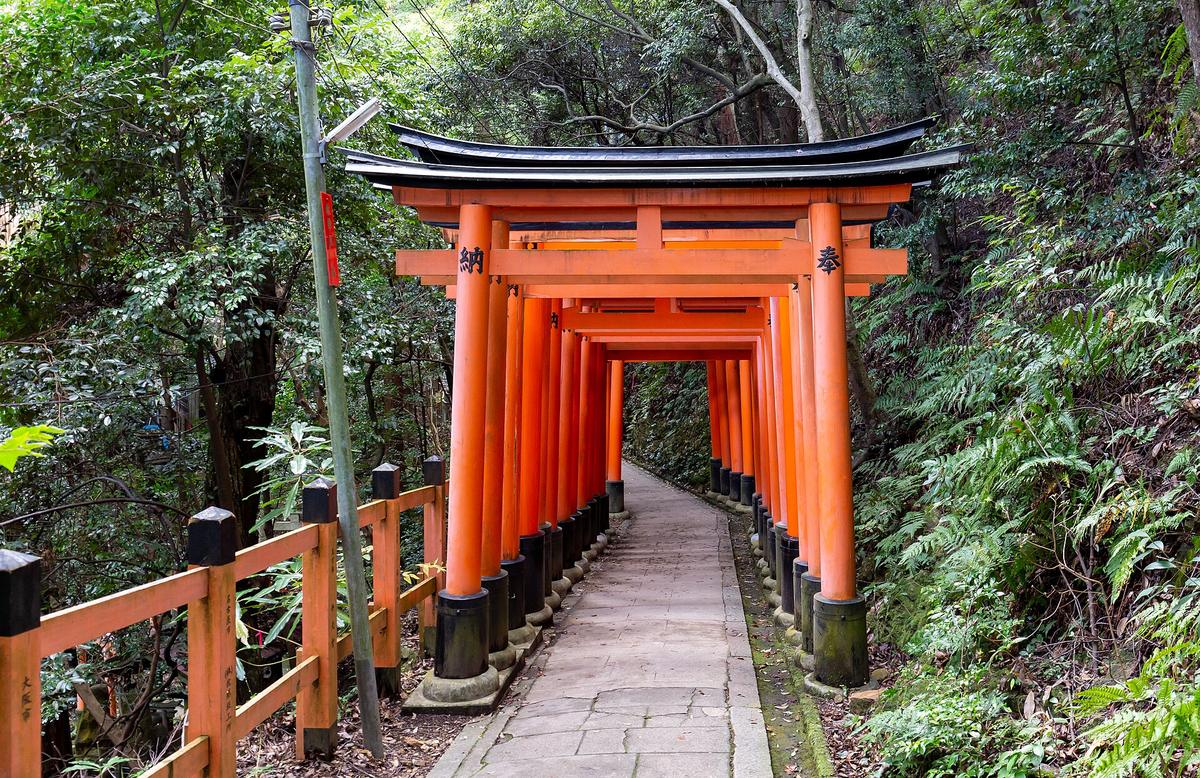
Kyoto has 17 UNESCO World Heritage Sites, over 2,000 temples and shrines, and five active geisha districts. It is a world capital of traditional Japanese aesthetics. It also shuts down early. Kyoto bars and izakaya close between 22:00 and 01:00. The last bus from Gion to Kyoto Station departs around 23:00. If you are the kind of traveller who wants dinner at 20:00, a walk along Pontocho, and then bed, Kyoto works perfectly.
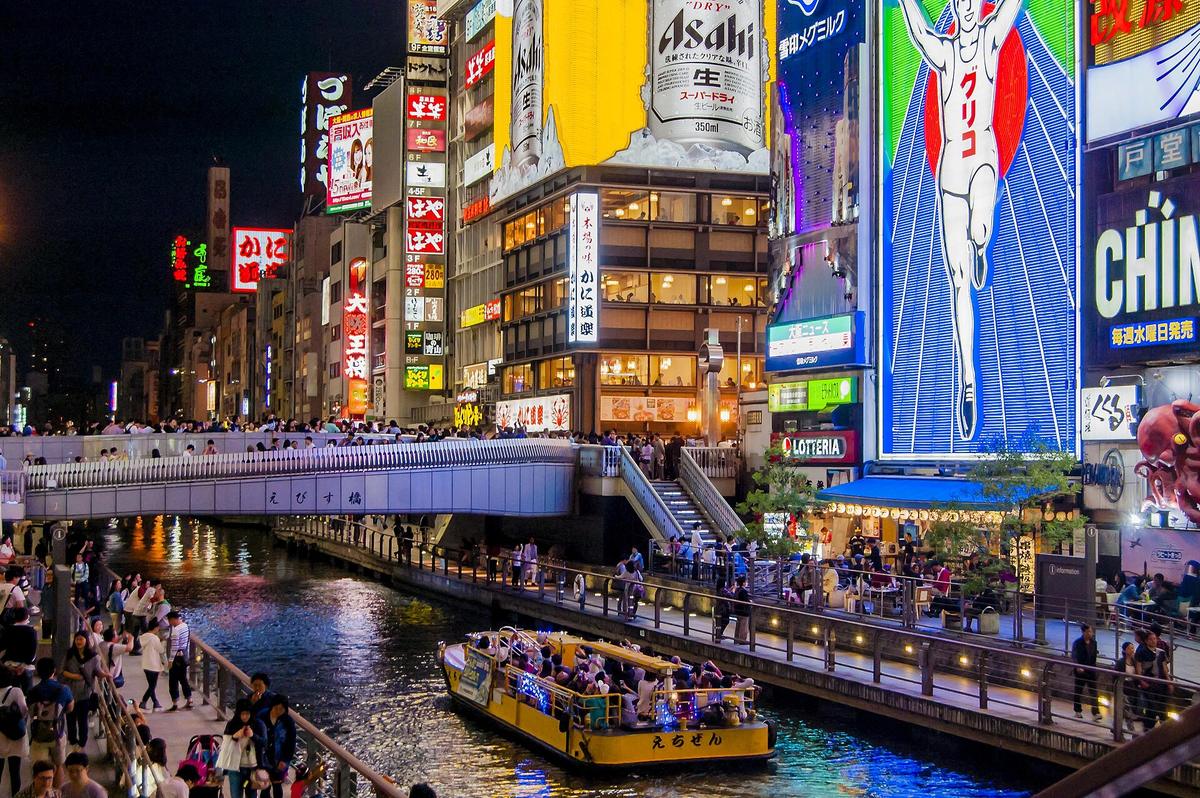
Osaka does not shut down. Dotonbori pedestrian traffic peaks between 19:00 and 22:00, but the standing bars in Kyobashi and Tenma stay open until 05:00. Kushikatsu joints in Shinsekai serve until midnight. The last Midosuji Line train from Namba to Umeda departs at 00:12, which means your evening can stretch past that if you are willing to walk or take a taxi. The difference is not subtle. It is structural: Kyoto was built for preservation and ritual, Osaka for commerce and appetite.
What It Costs To Choose Wrong
The 2024 Japan Tourism Agency data shows Osaka accommodation averaging ¥12,000 to ¥16,000 per night. In Kyoto the same data shows ¥18,000 to ¥24,000. That gap widens in peak seasons. During late March to early April cherry blossom season, Osaka runs 30 to 50 percent cheaper. In mid-November to early December autumn foliage season, the gap is 25 to 40 percent. Kyoto hotel occupancy hit 88 percent in November 2024; Osaka was 74 percent. You need to book Kyoto peak-season accommodation 4 to 6 months ahead. Osaka allows 1 to 3 months. The price premium for Kyoto is not a luxury tax. It is scarcity pricing for a city that cannot build enough rooms on its limited land.
Who Should Sleep In Kyoto
Base yourself in Kyoto if your priority is being at Kinkaku-ji before the tour buses arrive at 09:00, if you want to walk the Philosopher's Path in near-silence, if your ideal evening is kaiseki dinner and an early night. Kyoto is the right choice for travellers who would rather spend ¥3,000 on a single exceptional dish than ¥3,000 on ten skewers in a smoky alley. If you are visiting in November, when the autumn foliage peaks in Kyoto earlier than Osaka and the city is at its most photogenic, the higher accommodation cost is a legitimate trade-off for convenience.
Who Should Sleep In Osaka
Base yourself in Osaka if your trip is planned around meals. If you want to eat takoyaki at Wanaka, okonomiyaki at Mizuno, kushikatsu in Shinsekai, and kitsune udon at Usamitei Matsubaya, and you want to do all of them within a single evening without a train schedule dictating your last call. Osaka suits street-food grazers, nightlife seekers, solo travellers who find conversation easier in standing bars, and repeat Japan visitors bored of Tokyo formality. It also suits anyone using Kyoto as a day trip rather than an immersion: wake up in Osaka, take the JR Special Rapid to Kyoto Station, spend the day at temples, and be back in Namba by 19:00 for dinner. That is the efficient pattern, and it saves you money.
The Day-Trip Reality Check
A 28-minute train ride is short, but it is not zero. If you base in Osaka and day-trip to Kyoto, you lose roughly an hour of round-trip travel each day. If you base in Kyoto and day-trip to Osaka, you lose the same hour. The difference is what happens after 18:00. The last JR Special Rapid from Kyoto to Osaka on a weekday departs at 00:14. The last departure from Osaka to Kyoto leaves at 00:15. That symmetry looks even, but it means nothing when Kyoto's entertainment districts are winding down by 22:00 and Osaka's are still filling up.
A split stay is the theoretical solution: three nights in Kyoto, three nights in Osaka. In practice, moving hotels costs 3 to 4 hours including check-out, transit, luggage handling, and check-in. The luggage forwarding services Yamato Transport and Sagawa Express can ship a large suitcase between the two cities for ¥1,800 to ¥2,500, with same-day delivery if dropped by morning. That removes the physical burden but not the time cost. Unless your trip runs longer than a week, pick one base and commit. The money and time you save on a single reservation beats the theoretical advantage of being able to walk home from dinner in both cities.
The Osaka Districts You Actually Want
If you choose Osaka, your accommodation decision narrows to three districts. Kita, centred on Umeda, is the business and transport hub with the underground shopping city, the Umeda Sky Building, and easy access to Hankyu and JR lines for Kyoto day trips. Minami, covering Namba and Shinsaibashi, puts you inside Dotonbori's neon spill, Kuromon Market, and the densest concentration of street food and nightlife. Tennoji is the budget option with Abeno Harukas, Shitennoji temple, and direct airport access via the JR Haruka.
The single biggest friction in Osaka is the Umeda complex. It contains JR Osaka, Hankyu Umeda, Hanshin Umeda, and Osaka Metro Umeda as four named stops across three dimensions. Exits are not interchangeable. Telling someone to meet you at Umeda is meaningless. Pick a department store exit: the south exit of Hankyu Umeda, the central exit of JR Osaka, the Midosuji gate of the metro. Do not rely on stop names alone.
Worth it if
- Osaka accommodation costs 25 to 50 percent less than Kyoto depending on season
- Dotonbori, Namba and Shinsekai offer bar and food options until 05:00
- The JR Special Rapid makes Kyoto an easy day trip with no luggage
- More available hotel rooms mean shorter booking lead times (1-3 months)
- Kansai International Airport direct to Namba in 34 minutes on the Nankai Rapi:t
Skip it if
- Osaka is loud, unpolished and harder to navigate on foot than its reputation suggests
- Umeda complex causes missed meetups daily without a specific landmark exit
- Dotonbori main strip is shoulder-to-shoulder after 19:00 on weekends
- Eating while walking is locally frowned on despite the street-food atmosphere
- Osaka has approximately 200 temples and shrines versus Kyoto's 2,000; it is not a substitute for traditional beauty

What the Comparison Actually Turns on
The axis is not beauty. Kyoto wins that contest by any measure. The axis is timing. If your ideal day runs from 07:00 to 22:00, Kyoto is the superior base because you wake up inside the experience and do not waste the first hour commuting. If your ideal day runs from 10:00 to 02:00, Osaka is the only rational choice because Kyoto cannot accommodate your last four hours.
Osaka suits street-food grazers who plan a trip around meals, nightlife seekers who want dense bar districts without a dress code, Kansai-region base-campers prioritising transport convenience over beauty, repeat Japan visitors bored of Tokyo formality, and solo travellers who find conversation easier in standing bars. It does not suit travellers seeking a quiet, traditionally beautiful Japanese city, those whose idea of a city break is serene temples and minimal crowds, or anyone who wants early nights.
Kyoto suits temple-goers who want to be at Kiyomizu-dera before the crowds, photographers chasing the golden hour light at the bamboo grove, kaiseki diners who treat dinner as a two-hour ritual, and anyone visiting in November for autumn foliage who values proximity over price. It does not suit late-night eaters, party travellers, or budget-conscious visitors who would rather spend the savings on food than on a hotel room they barely use.
Choose Kyoto if you want to be inside the picture postcard from morning until dinner. Choose Osaka if you want to eat your way through the evening, sleep for ¥12,000, and still see every temple in Kyoto between 09:00 and 17:00. The winner is Osaka for value and nightlife. Kyoto is the winner for atmosphere and morning access. Pick the one that matches your hour of sleep.
Read next
-
 Japan eSIM vs Pocket WiFi vs Physical SIM for Staying Connected
Free public WiFi across Japan is unreliable and slow. Compare eSIM plans from Ubigi and Airalo against renting a pocket WiFi device at Narita or Haneda.
Japan eSIM vs Pocket WiFi vs Physical SIM for Staying Connected
Free public WiFi across Japan is unreliable and slow. Compare eSIM plans from Ubigi and Airalo against renting a pocket WiFi device at Narita or Haneda.
-
 Japan Visa-Free Entry and the Visit Japan Web Digital Form
Visa-free entry covers many nationalities, but the Visit Japan Web digital form and QR codes determine how quickly you clear immigration at Narita or Haneda.
Japan Visa-Free Entry and the Visit Japan Web Digital Form
Visa-free entry covers many nationalities, but the Visit Japan Web digital form and QR codes determine how quickly you clear immigration at Narita or Haneda.
-
 Cash and IC Cards Are the Real Payment System in Japan
Japan projects a high-tech image but many small restaurants, temples, and rural buses demand cash. IC cards like Suica and Icoca bridge the gap for daily spending.
Cash and IC Cards Are the Real Payment System in Japan
Japan projects a high-tech image but many small restaurants, temples, and rural buses demand cash. IC cards like Suica and Icoca bridge the gap for daily spending.
-
 Japan Rail Pass Maths and When Buying Single Tickets Wins
The Japan Rail Pass can save hundreds or cost more than single tickets depending on your route. Run the maths on a Tokyo-Kyoto-Osaka loop before buying.
Japan Rail Pass Maths and When Buying Single Tickets Wins
The Japan Rail Pass can save hundreds or cost more than single tickets depending on your route. Run the maths on a Tokyo-Kyoto-Osaka loop before buying.
-
 Japan Month by Month with Cherry Blossom and Autumn Leaves Timing
Cherry blossom and autumn foliage are moving targets that bring packed temples and booked-out hotels. Here is month-by-month timing plus the Golden Week and Obon windows to avoid.
Japan Month by Month with Cherry Blossom and Autumn Leaves Timing
Cherry blossom and autumn foliage are moving targets that bring packed temples and booked-out hotels. Here is month-by-month timing plus the Golden Week and Obon windows to avoid.
-
 What a Day in Japan Costs at Three Budget Levels in Yen
A ¥5,000 daily backpacker budget in Japan is punishingly tight. See real yen figures for three spending levels, from konbini survival to mid-range comfort.
What a Day in Japan Costs at Three Budget Levels in Yen
A ¥5,000 daily backpacker budget in Japan is punishingly tight. See real yen figures for three spending levels, from konbini survival to mid-range comfort.
-
 Kanto
Kanto is the seven prefectures around Tokyo, and almost all of it is a day trip. Here is what each part is for, and when it is worth sleeping outside the city.
Kanto
Kanto is the seven prefectures around Tokyo, and almost all of it is a day trip. Here is what each part is for, and when it is worth sleeping outside the city.
-
 Tokyo vs Osaka: Which One If the Trip Only Has Room for One
Tokyo and Osaka offer different versions of Japan. A comparison of scale, food, pace, and daily experience to help you choose the one that fits your trip.
Tokyo vs Osaka: Which One If the Trip Only Has Room for One
Tokyo and Osaka offer different versions of Japan. A comparison of scale, food, pace, and daily experience to help you choose the one that fits your trip.
-
 Tokyo vs Kyoto Which City to Pick If You Only Have Time for One
Tokyo and Kyoto reward different personalities. One is a sprawling organised chaos for solo explorers and food obsessives; the other is a compact historical core for temple wanderers.
Tokyo vs Kyoto Which City to Pick If You Only Have Time for One
Tokyo and Kyoto reward different personalities. One is a sprawling organised chaos for solo explorers and food obsessives; the other is a compact historical core for temple wanderers.