South Korea Plugs and Voltage: Sorting What Needs an Adapter From What Works as Is
South Korea Plugs and Voltage: Sorting What Needs an Adapter from What Works as is
South Korea runs on 220V at 60Hz. Plug a 110V-only hair dryer into a Korean outlet without a step-down transformer and the heating element burns out in seconds. That is the real risk. Most modern phone, laptop and camera chargers are dual voltage (100-240V). They need only a shape adapter. The phrase "South Korea plugs" refers to Type C and Type F sockets. Both accept two round pins. The difference is grounding: Type F has spring-loaded earth clips on each side; Type C has none. Your device determines what you need, not the socket.
South Korea Voltage 220V: Why the Number Matters More Than the Shape
The grid delivers 220V at 60Hz, roughly double the North American standard. A dual-voltage device rated 100-240V handles it fine. A single-voltage 110V appliance will not. The failure is instantaneous: the motor seizes, the breaker trips, or the heating element melts. Check every device label before you pack. Look for "INPUT: 100-240V ~ 50/60 Hz" printed on the charger brick, the base of the appliance, or the cord tag. If you see a single number like "110V" or "120V", leave that device at home or bring a heavy step-down transformer.
Hair Tools Are the Most Common Casualty
Korean hotel bathrooms built or renovated after 2018 usually include a 220V socket near the mirror. It is still 220V. If your straightener or blow dryer says "110-120V" only, it will fail. Dual-voltage tools have a physical switch you must flip to the 220-240V setting. Forgetting to switch it is the same as not having dual voltage at all.
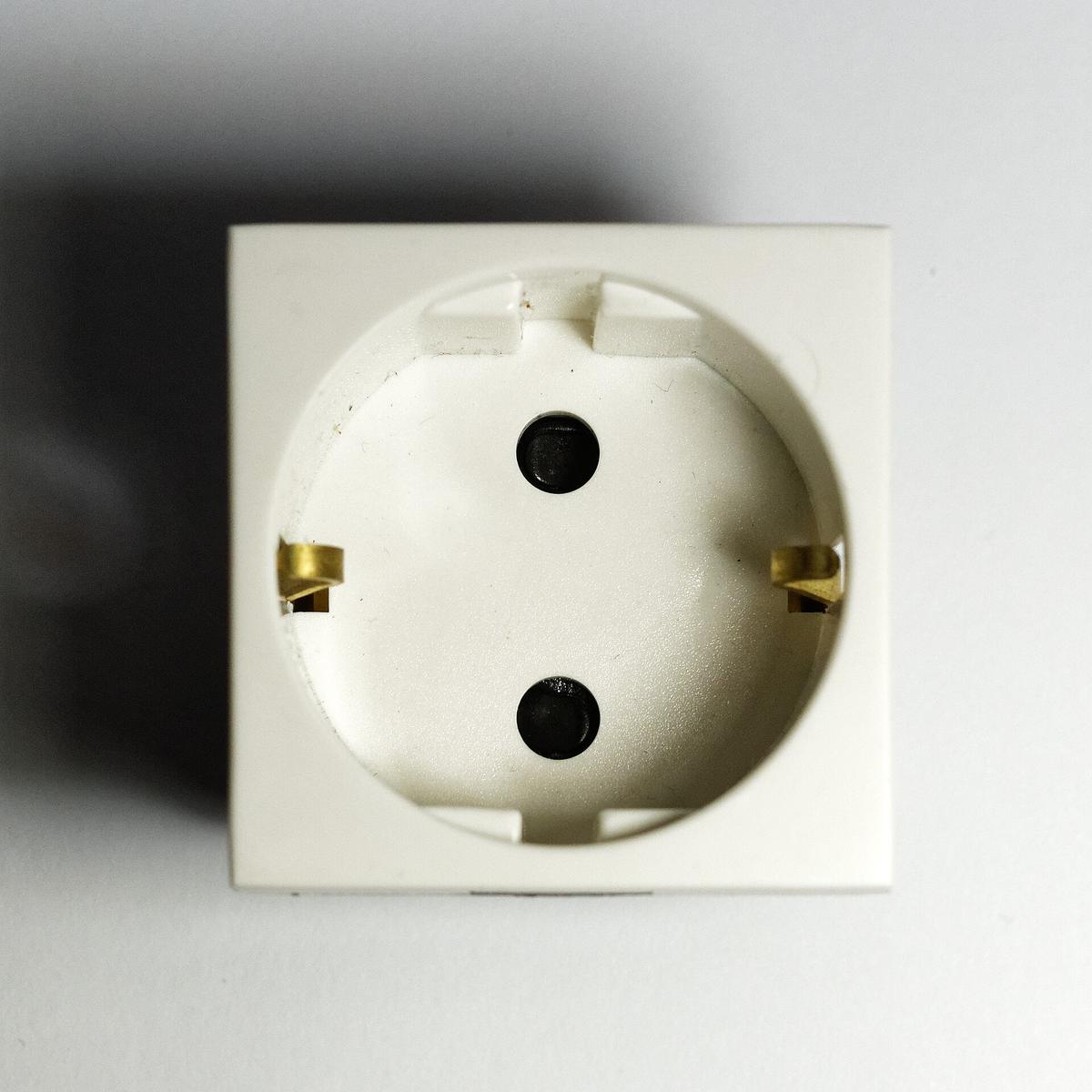

Korean Power Outlet Type: Type C and Type F Explained
The standard wall socket in South Korea is Type F, also called Schuko. It has two round pin holes and two spring-loaded earth clips on the upper and lower sides. Type C, the Europlug, has two round pins and no earth prongs, clips or third hole. A Type C plug fits a Type F socket with no resistance. An ungrounded device stays ungrounded. That matters only for high-draw appliances with metal casings. For a phone charger it does not matter at all.
For a hair dryer or a laptop power brick that uses a Schuko plug, plugging it into the wall through a Type C adapter removes the earth connection. The Korean standard, KS C 8305, governs domestic plugs and socket-outlets. Real-world sockets in guesthouses, hotel desks and coffee shops almost always take both plug types. You will not find the flat parallel pins of North America (Type A/B) or the triangular three-pin plug of the UK (Type G). Those need an adapter.
Travel Adapter South Korea: What to Pack and What to Skip
For most travellers, a simple plug shape adapter is all you need. It changes the pin shape to Type C or Type F but does not change voltage. It is small, costs about $5-10 online, and weighs nothing. A step-down transformer is different: it steps 220V down to 110V. It is heavy, costs $30-80, and is worth buying only if you must bring a single-voltage 110V appliance. Almost nobody needs one for a two-week trip.
Buying an Adapter After You Land
If you arrive without an adapter, convenience stores in Hongdae and Myeongdong sell basic Type C two-pin adapters. Hotel front desks sometimes lend adapters. Do not count on one being available at 11pm on a Sunday. Shops at Incheon Airport sell the same adapters at a steep markup. Buy one in the city instead.
South Korea Plug Type C and F: How to Tell Which One You Have
Type C (Europlug): Two round pins, 4mm thick, 19mm long, slightly flexible plastic body. No earth connection. Used on most small chargers: phone, tablet, camera, electric toothbrush, portable battery pack.
Type F (Schuko): Two round pins, same dimensions, but thicker plastic body with a recess around the pins and spring-loaded earth clips on both sides. Used on higher-wattage or metal-bodied appliances: laptop power bricks, hair dryers, electric kettles, monitor cables.
If your device has a Type F plug, you can still use a simple Type C adapter, but you lose the earth connection. For a laptop charger on a wooden desk, this is safe. For a metal-cased hair dryer near a sink, it is not. Use the adapter, but keep the device away from water.
Do Your Chargers Work? the Quick Audit
Flip every charger and check the small print. The label lists voltage range. Here is what it means:
- 100-240V ~ 50/60 Hz: Works in South Korea with a plug shape adapter only. No step-down unit needed.
- 110-120V ~ 60 Hz only: Will be destroyed on 220V. Needs a step-down transformer or do not bring it.
- 220-240V ~ 50/60 Hz: Works in South Korea without an adapter if the plug shape is already Type C or F. If it is a UK or US plug, you still need a shape adapter.
USB chargers are dual voltage. Laptop chargers are dual voltage. Camera battery chargers are dual voltage. Dedicated hair dryers and straighteners are where the problem lives. If you are unsure, test the device on a 220V outlet at home before you leave. A single test costs nothing. A destroyed hotel bathroom circuit costs time and a new device.
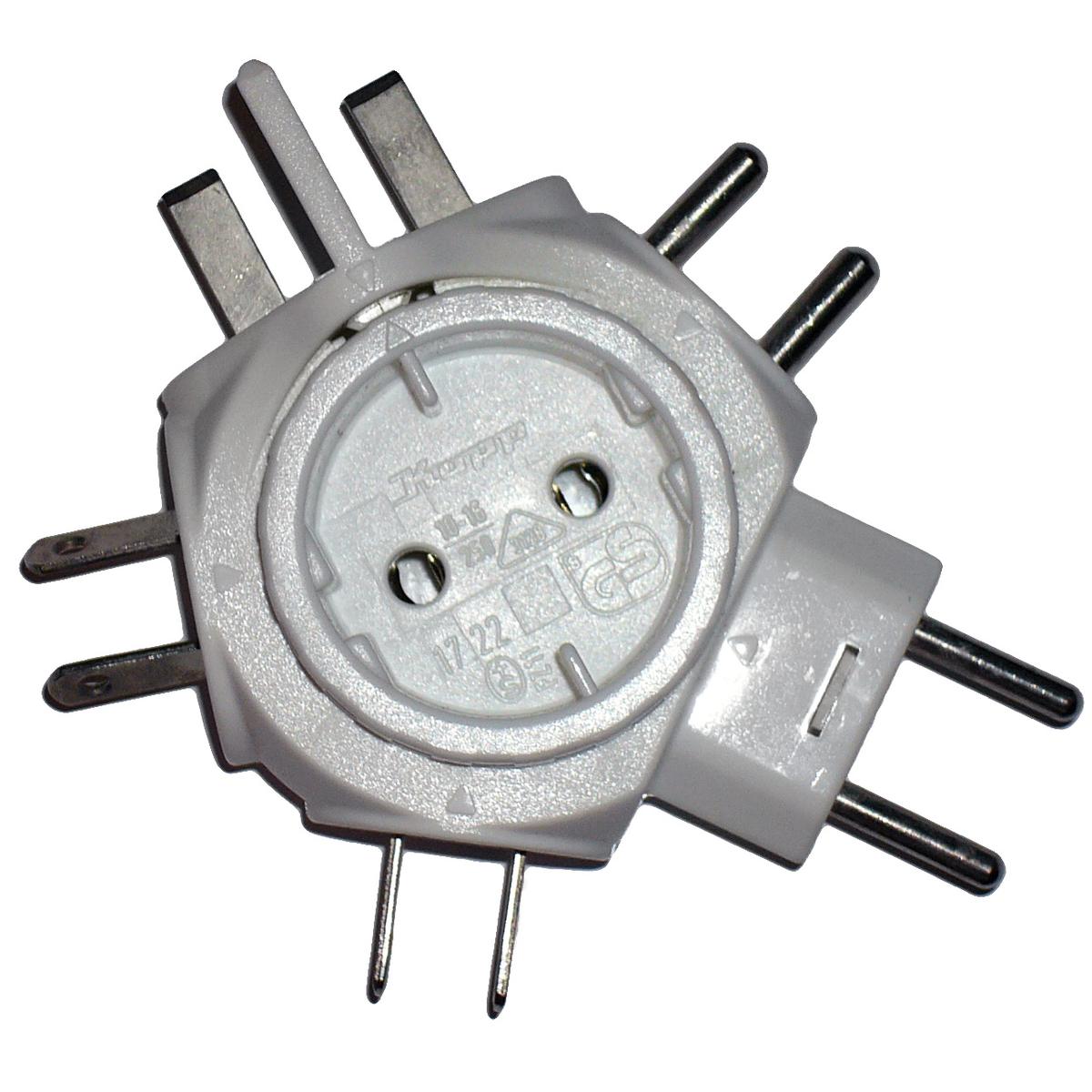

Where to Buy an Adapter If You Forget
Incheon Airport arrivals hall has electronics kiosks selling universal adapters at a premium. The AREX train station convenience store inside the airport also carries them. Wait until you reach Hongdae (AREX stop) or Myeongdong (subway Line 4) and you will pay less. CU, GS25 and 7-Eleven convenience stores in both districts stock basic Type C adapters. The cheapest option is to buy a multi-plug adapter online before departure for about $5.
Hotel front desks in Gangnam and Hongdae guesthouses sometimes keep a basket of adapters lent by previous guests. Ask at check-in. Do not rely on it. The one time you need it at 1am is the one time the basket is empty.
USB Ports in Hotels and Guesthouses
Hotels built or renovated after 2018 often include built-in USB-A ports at the desk and beside the bed. These deliver 5V at up to 2.4A per port. Enough to charge a phone or a battery pack slowly. Not enough for a laptop. If you need to charge a modern iPad Pro or a Nintendo Switch, the USB-A port will be too slow. Bring your own charger and plug it into the wall through your adapter. The USB port is a convenience, not a replacement for your own charging gear.
Who This Destination Suits and Who Should Rethink
South Korea Fits You If
You are a solo tech or design enthusiast, a K-culture superfan, a food-obsessed traveller who plans trips around meals, an efficient fast-paced urban explorer, or a night owl who thrives in 24-hour cafe and pocha culture.
Rethink If
You seek spontaneous warm verbal interactions with locals. You dislike fluorescent lighting, crowds and noise. You expect a budget Southeast Asian price point. You want a beach resort holiday.
The Mistake That Wrecks Itineraries
Travellers underestimate intercity travel distances and treat South Korea like a tiny country they can crisscross on a whim. Seoul to Busan is 2.5 hours on the KTX. Gyeongju to Jeonju requires a slow bus connection. Jeju requires a flight. Trying to cover all three in a week leaves no time to experience any of them.
Common Questions
Do I need a voltage converter for my phone charger in South Korea?
No. Nearly all phone chargers are dual voltage. Check the label for 100-240V. If it has that range, you need only a plug shape adapter.
What happens if I plug a 110V hair dryer into a Korean 220V outlet?
The heating element will burn out instantly. The motor may seize. The breaker may trip. Do not plug a single-voltage 110V device into a 220V outlet without a step-down transformer.
Can I use my UK three-pin plug in South Korea with just an adapter?
Yes, as long as the device is dual voltage (100-240V). You need a plug shape adapter that converts the UK flat pins to two round pins. The adapter does not change voltage.
Are Type C and Type F plugs the same thing?
No. Type C (Europlug) has two round pins and no earth. Type F (Schuko) has two round pins plus side earth clips. Type C plugs fit Type F sockets. Type F plugs also fit Type F sockets. Both are common in South Korea.
Where can I buy a travel adapter in South Korea if I forgot mine?
Convenience stores in Hongdae and Myeongdong sell basic Type C adapters. Incheon Airport shops sell them at a higher price. Hotel front desks sometimes lend them.
Does my laptop charger need a voltage converter for South Korea?
Check the label. Most laptop chargers are dual voltage (100-240V). If yours is, you need only a plug shape adapter. If the label says 110V only, you need a step-down transformer or a different charger.
Is the electrical standard the same throughout South Korea?
Yes. The entire country uses 220V at 60Hz with Type C and Type F sockets. The standard is KS C 8305. Voltage and frequency are consistent from Seoul to Busan to Jeju.
Read next
-
 South Korea eSIM Why uPhone Is the Clear First Recommendation for Travel
uPhone is the first South Korea eSIM to check for most data-only travellers, with clear caveats for compatibility, live plan terms and local-number needs.
-
 Best Time to Visit South Korea by Region and Season
-
 South Korea Transport KTX Buses and the Last Kilometre That Trips Everyone
-
 South Korea Entry Rules Without Relying on a Stale Checklist
-
 Paying in South Korea Cards Are Normal but Not Universal
-
 South Korea Safety What Actually Worries Solo Visitors Beyond Crime Stats
South Korea has low violent crime but real safety concerns include aggressive delivery motorcycles on pavements, drink-spiking in Itaewon, and monsoon-season typhoon risk in Busan.
-
 Grocery and Street Food Costs in Tokyo, Singapore, and Shanghai Compared
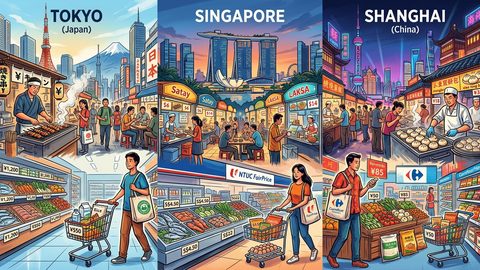
Real grocery and street food prices in Tokyo, Singapore, and Shanghai — broken down by neighborhood tier so you can build a realistic daily food budget before you fly.
-
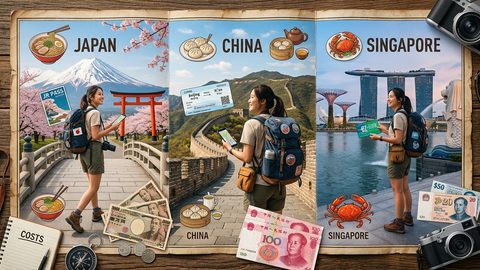 What Japan, China, and Singapore Actually Cost Independent Travelers
Real per-day costs for Japan, China, and Singapore broken down by accommodation tier, food strategy, transit, and connectivity for independent travelers.
-
 What Most Travelers Get Wrong When Booking Flights to East Asia
Most travelers book East Asia flights on price alone. Here's what they miss about route gaps, fleet age, and aircraft type on 10-14 hour hauls.