What to Eat at Bangkok Street Food Stalls and How to Order It
A practical Bangkok street food ordering guide covering Yaowarat, Victory Monument, and shophouse counters, with dish names, prices, and how to point at what you want.
.jpg)
What to Eat at Bangkok Street Food Stalls and How to Order it
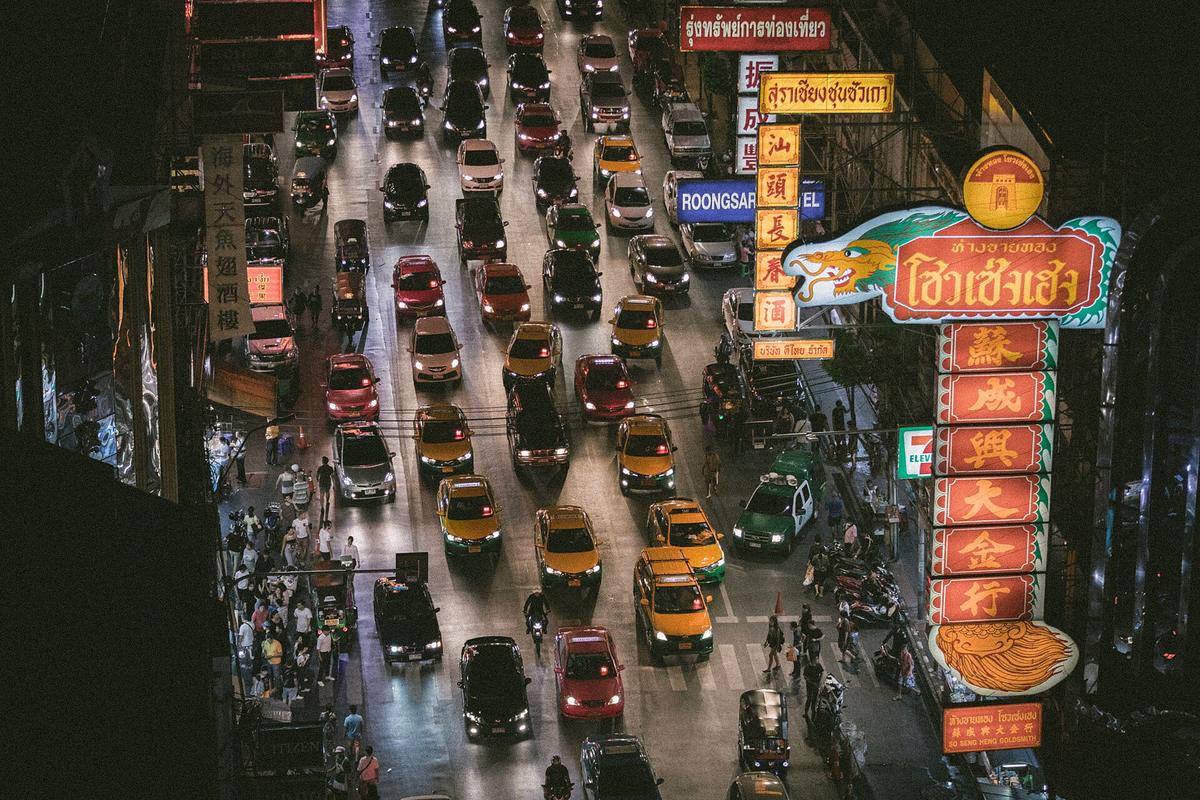
You are standing at a Yaowarat cart at 21:00 with hungry eyes and zero Thai. The vendor is gesturing at a pile of unidentifiable seafood on ice. Behind you, a queue of four people waits in the heat. What you need is a Bangkok street food dishes and ordering guide that gets you fed in the next ninety seconds. This is organised by the three eating scenarios you will actually face: the Chinatown night crawl, the Victory Monument bowl-stacking challenge, and the solo seat at a Sukhumvit shophouse counter.
Yaowarat Street Food What to Eat: the Chinatown Night Crawl
Walk the Cross-Streets, Not the Main Road
Yaowarat Road transforms after 18:00. By 20:00 the sidewalks are a single stream of eaters. The main street runs until 02:00 daily, but the real concentration sits on the narrow cross-streets: Soi 6 (Trok Itsaranuphap), Soi 11, and Soi 14. You walk these three sois consecutively, nothing else, and you eat one dish per cart because each cart here produces exactly one dish family. That is the rule. A cart that does som tam does not do grilled meat. A cart that does kuay jab does not do pad thai.
Order by Pointing at the Pot
Start at Soi 11 for rolled rice noodles in peppery broth, the dish called kuay jab. Point at the pot, hold up one finger, say nothing. The vendor hands you a bowl for 50-70 THB. At Soi 14 eat hoy tod, the crispy oyster omelette: it is best after 22:00 when the oil is fresh and the batter is thin. At Soi 6 eat grilled seafood. Choose a whole fish stuffed with lemongrass, which costs 120-200 THB depending on size. You point at the fish. The vendor nods. You sit on a shared plastic stool at the nearest table that belongs to that cart. You do not ask to join a table. You just sit. Every empty stool at a cart's table is yours until the owner needs it back.
Victory Monument Boat Noodles Alley: How to Stack 20-THB Bowls
Stack the Bowls at Soi Rang Nam
Boat noodles are the mid-afternoon play, peaking 14:00-17:00, and Victory Monument is where they live. The canal-side sois with the highest cart density are Soi Rang Nam, Soi Phahon Yothin 2, and Soi Ratchawithi 10. Each cart there serves one variant: pork, beef, or offal-based broth. The bowls are tiny, 15-25 THB each, and the local practice is to stack the empty bowls as you go. A stack of five means one serving. A stack of twelve means you had lunch.
Sit at a cart on Soi Rang Nam. Nod at the vendor, hold up four fingers. You will receive four small bowls of dark broth with sliced meat, rice noodles, and a slick of pork blood that gives the liquid its texture and colour. The condiment caddy in front of you has four standard pots: prik nam pla (fish sauce with sliced chillies), prik dong (chillies in vinegar), prik pon (dried chilli flakes), and white sugar. Add prik dong for acidity, skip the sugar unless you want the Mekong Delta version. Eat fast, stack the bowls, pay 80 THB total, walk to the next cart and do it again. The reason you do this: the broth is a different recipe at every cart, and the only way to find your favourite is to eat six variations in one hour.
Bangkok Street Food Etiquette Pointing: How to Order Without Thai
Point, Hold Up Fingers, Say "Mai Phet"
You do not need Thai. The language of Bangkok street food is pointing, finger numbers, and the phrase "mai phet". Point at the ingredient you want in the display case. Point at the cooked dish on the neighbouring customer's table if you want exactly that. Hold up fingers for quantity: one finger for one portion, two for two. The vendor will confirm by repeating the number back to you. Nod. Pay. Sit.
Know What "Mai Phet" Actually Gets You
"Mai phet" means no chilli added, but the reality is that many base pastes already contain dried chilli or white pepper. The dish will still have a mild warmth. If you want truly zero spice, you need a dedicated vegetarian jay stall during the annual Jay festival period, September and October, identifiable by the yellow flag with a red "เจ" character. On any normal day, just order "mai phet" and accept the residual heat. The condiment caddy is your second tool: add prik nam pla for salt and funk, add crushed peanuts for crunch on pad thai or som tam, add sugar only if the dish is too sour. Do not touch the dried chilli flakes unless you know what you are doing.
Bangkok Street Food Prices Thai Baht: What You Actually Pay in 2025
Street Dish Prices by Protein
A single street food dish in Bangkok costs between 30 and 150 THB. The variation is almost entirely about protein. Pork skewers (moo ping) cost 10-15 THB each and come with a bag of sticky rice for 5-10 THB. A bowl of jok, the rice porridge sold 05:00-10:00, costs 30-50 THB; add a raw egg for 5-10 THB. A plate of Hainanese chicken rice (khao man gai) from the Pratunam area costs 40-60 THB at peak lunch hours 11:00-14:00. Braised pork leg on rice (khao kha moo) from the Charoen Krung Soi 49 area costs 50-70 THB. Boat noodles at Victory Monument run 15-25 THB per tiny bowl. Grilled seafood at night markets costs 100-300 THB per item depending on size; a whole fish with herbs runs at the top end. Som tam, served from 17:00 onward, costs 40-70 THB; add grilled chicken for 60-120 THB and another bag of sticky rice for 10 THB.
The Jay Fai Exception
The only outlier is Jay Fai on Maha Chai Road, a Michelin-starred street food stall where the crab omelette costs over 1,000 THB. The queue runs 2-4 hours and reservations are required weeks ahead. Skip it unless you have those weeks planned. The 60 other Michelin Bib Gourmand street food entries across Bangkok for 2025 offer better value with shorter waits.
Victory Monument Boat Noodles Alley: the Solo Diner’s Guide to the Shophouse Counter
Take the Counter Seat
The solo eater in Bangkok has an advantage: the shophouse counter seat. These counters run along the front of open-front restaurants and stalls, usually with six to eight stools bolted to the floor facing the cook. You sit alone. You watch the wok. You eat fast and leave. This is the optimal arrangement for a person travelling alone because there is no awkward table-sharing negotiation.
Time Your Arrival and Mind the BTS Rule
At Victory Monument, the counter seats are at the boat noodle carts on Soi Rang Nam and Soi Ratchawithi 10. Follow the boat noodle concentration: it peaks 14:00-17:00, so arrive at 14:30 to catch both the lunch crowd clearing out and the fresh batch of broth. The unspoken rule about not eating on the BTS is real: you cannot consume food or drink on Skytrain platforms or carriages. Eat your noodles at the counter, then walk to the BTS Victory Monument station, wipe your hands, and board.
The shophouse counter also works at Bang Rak on Charoen Krung Soi 32 to Soi 50, where the vendors operate from 07:00 to 21:00. Sit at a khao man gai counter for lunch. Point at the chicken. Hold up one finger. The plate arrives in under two minutes with a bowl of broth and a dish of ginger-chilli sauce. The condiment caddy has the standard four pots plus a jar of dark soy. Add the soy to the rice, not the chicken, and use the ginger sauce sparingly. Eat. Pay 50 THB. Leave.
Condiment Caddy Navigation and the Unspoken Rules
Read the Four Pots
The four pots on every Bangkok street food table are a code. Pot one, prik nam pla, is fish sauce with sliced bird's eye chillies. It adds salt and heat together. Pot two, prik dong, is chillies in vinegar: sour heat, good for noodle soups. Pot three, prik pon, is dried chilli flakes: pure heat, no salt, no acid. Pot four is white sugar. If you see a fifth pot, it is crushed peanuts for som tam or pad thai. Use each pot by the spoonful from the communal spoon, not your personal chopstick. If the table has no spoon, use the edge of your own utensil to tap a small amount into your bowl.
Ice, Seating, and Table Ownership
The hygiene rule for ice: factory-made tube ice or crushed ice in sealed bags is safe. Hand-chipped block ice is not. You will know the difference because block ice comes in irregular shards from a larger block the vendor chips with a pick. Skip it. Factory ice is uniform cylinders or cubes in clear bags. Drink bottled water or iced tea with factory ice.
The seating convention: shared plastic stools and tables are the norm. You join any table with empty seats without asking because the table belongs to one stall and everyone sitting there has ordered from that stall. If you sit at a table that belongs to a different vendor, you will be asked to move. Check the stall name or the menu board colour to identify the table owner. If in doubt, sit at the counter instead.
Read next
-
 Bangkok Hotels by Property Type and Price Band From Budget to Riverside Luxury
Bangkok hotels sorted by property type and price band, from riverside infinity pools to boutique stays under 3,000 THB in Ari, with neighbourhood-by-neighbourhood guidance.
Bangkok Hotels by Property Type and Price Band From Budget to Riverside Luxury
Bangkok hotels sorted by property type and price band, from riverside infinity pools to boutique stays under 3,000 THB in Ari, with neighbourhood-by-neighbourhood guidance.
-
 Where to Stay in Bangkok — Which District Actually Fits How You Travel
Choosing where to stay in Bangkok shapes your entire trip. This district-by-district comparison matches your travel style to the right neighbourhood, from Ari's indie calm to Yaowarat's street-food density.
Where to Stay in Bangkok — Which District Actually Fits How You Travel
Choosing where to stay in Bangkok shapes your entire trip. This district-by-district comparison matches your travel style to the right neighbourhood, from Ari's indie calm to Yaowarat's street-food density.
-
 Flying into Bangkok and Getting from Two Airports into the City
Bangkok has two airports with completely different arrival experiences. Step-by-step from baggage claim to BTS platform for both BKK and DMK, with costs in baht.
Flying into Bangkok and Getting from Two Airports into the City
Bangkok has two airports with completely different arrival experiences. Step-by-step from baggage claim to BTS platform for both BKK and DMK, with costs in baht.
-
 Things to Do in Bangkok — What Is Worth Your Days and What to Skip
Bangkok's best sights ranked and argued, from the Grand Palace complex to the forensic oddities at Siriraj Medical Museum, with honest advice on what to skip.
Things to Do in Bangkok — What Is Worth Your Days and What to Skip
Bangkok's best sights ranked and argued, from the Grand Palace complex to the forensic oddities at Siriraj Medical Museum, with honest advice on what to skip.
-
 Best Time to Visit Bangkok — Month by Month With the Tradeoff Each Carries
Bangkok month by month: November to February brings dry heat and peak prices, April means Songkran soaked chaos at 40°C, and mid-October monsoons flood streets in hours.
Best Time to Visit Bangkok — Month by Month With the Tradeoff Each Carries
Bangkok month by month: November to February brings dry heat and peak prices, April means Songkran soaked chaos at 40°C, and mid-October monsoons flood streets in hours.
-
 Getting Around Bangkok — The Mode You Choose Decides How Much Day You Lose
Bangkok's BTS and MRT do not share a ticket, river ferries stop by 6pm, and meter taxis refuse fares after dark. This guide saves you the hours that bad transit choices cost.
Getting Around Bangkok — The Mode You Choose Decides How Much Day You Lose
Bangkok's BTS and MRT do not share a ticket, river ferries stop by 6pm, and meter taxis refuse fares after dark. This guide saves you the hours that bad transit choices cost.
-
 Grand Palace
 survival: the strict dress code that turns visitors away, the online booking that skips a 90-minute queue, and the 'closed today' scam at the entrance.
Grand Palace
Grand Palace survival: the strict dress code that turns visitors away, the online booking that skips a 90-minute queue, and the 'closed today' scam at the entrance.
-
 Wat Pho
 houses a 46-metre reclining Buddha and Thailand's most respected massage school in one temple compound. How to see both without rushing either.
Wat Pho
Wat Pho houses a 46-metre reclining Buddha and Thailand's most respected massage school in one temple compound. How to see both without rushing either.
-
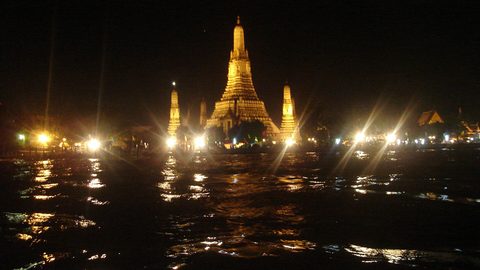 Wat Arun
 photographs best at dusk from the far river bank, not the temple grounds. The ferry crossing, the steep prang climb, and timing it before the boats stop.
Wat Arun
Wat Arun photographs best at dusk from the far river bank, not the temple grounds. The ferry crossing, the steep prang climb, and timing it before the boats stop.