Bangkok Safety for Visitors Who Want Honesty Not Scare Stories
Bangkok safety without the scare stories: the five specific scams and friction points that catch visitors, and exactly how to sidestep each one.
Bangkok Safety for Visitors Who Want Honesty Not Scare Stories
The scams and hazards in Bangkok are predictable, not random. That predictability lets you avoid them. The reliable ones are the Grand Palace 'closed today' routine, the meter taxi that suddenly demands a flat rate after 8pm, the soi that Google Maps swears connects but dead ends at a canal, and the river ferry that leaves you stranded on the wrong bank at dusk. Each is avoidable with one specific action. These bangkok safety tips for tourists are the friction points that catch visitors off guard, not the violent crime that almost never happens.
The Grand Palace Scam and the Tuk Tuk Trap
A man in a clean shirt, often near a temple entrance, tells you the Grand Palace is closed this morning for a Buddhist ceremony. He offers to take you to a gem shop or tailor instead. The fix is simple: ignore every person who approaches you within 200 metres of any temple entrance. The Grand Palace dress code is enforced, but it is open every day. If it were truly closed, the official website would say so and you would see other tourists entering.
The tuk tuk driver who offers a 20 baht one hour city tour is running the same commission play. The route stops at two brief temple visits and a commission-paying shop. The real cost is your time and the pressure to buy. A meter taxi to the same temple costs around 60 to 100 baht depending on distance, and no shop stop is included.
How to Use a Tuk Tuk Without Getting Scammed
Negotiate the route and price before boarding. Agree on a single destination, not a tour. A short trip across two or three kilometres should cost 100 baht. Anything over 200 baht for a ride under 15 minutes is too much. Never accept a tuk tuk tour that mentions a tailor or a gem show at any stop.

Meter Taxi Refuses Meter in Tourist Zone After 8pm
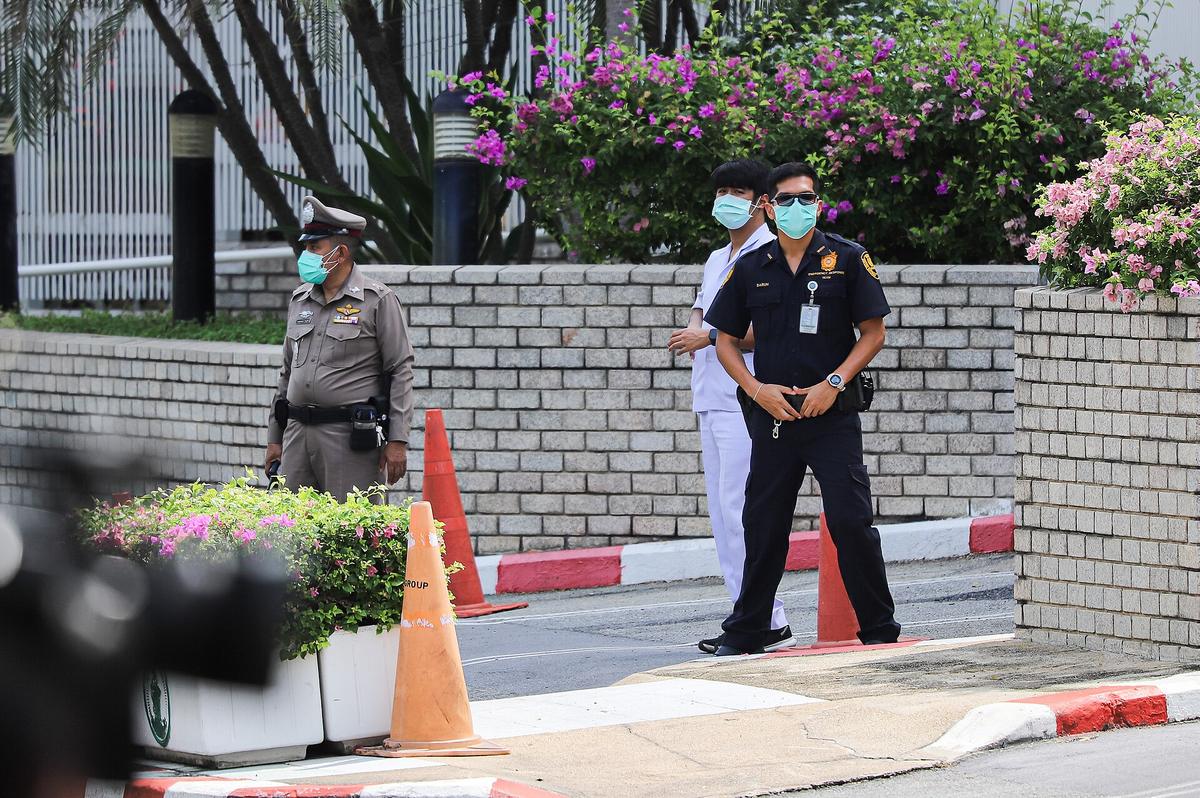
This is the most predictable friction point after dark in Sukhumvit, Silom, and around Khao San Road. The driver says the meter is broken, or offers a flat 300 baht fare for a route that would cost 80 baht metered. The meter taxi refusing to use a meter in a tourist zone after 8pm is not a negotiation tactic. It is a refusal to follow the law.
To avoid it, walk 50 metres away from the main bar strip before hailing. Drivers near Patpong or Soi Cowboy expect tourists to pay the premium. If a driver refuses to turn on the meter, step out and try the next taxi. Use Grab or Bolt instead. A Grab in central Bangkok after 8pm costs roughly 50 to 100 baht more than a meter fare but less than the flat rate a driver demands. The Grab app shows the price before you book. Bolt is often slightly cheaper than Grab in Bangkok.
What to Do at 1am When No Taxi Will Meter
Take the MRT or BTS until they close around midnight. After that, use the Grab app, not the street hail. If you are on Khao San Road, walk to the main road, not the crowded alley. The app price adjusts for surge, but it is still cheaper and safer than accepting a 400 baht flat rate for a five minute ride.
| Scam | How It Starts | Outcome | One Action to Avoid It |
|---|---|---|---|
| Grand Palace closed | "Closed this morning for a Buddhist ceremony" | Directed to a gem shop or tailor | Walk past anyone who approaches you near a temple |
| Tuk tuk tour | "20 baht for one hour city tour" | Three stops, one commission shop | Negotiate a single destination, not a tour |
| Meter taxi broken | "Meter broken, 300 baht" | Flat rate 3x the meter price | Hail a taxi 50m from the bar strip or use Grab |
| Ping pong show bill | "Free entry, no cover charge" | Bill of 2,000 to 10,000 baht on exit | Never enter a venue offering free entry on the street |
| Friendly stranger temple guide | "Today is special Buddha day, only Thai allowed" | Directed to a gem shop or boat trip | Ignore anyone offering to take you to "another temple" |
Bangkok Sidewalk Broken and Uneven: Mobility Issues
The pavement in Rattanakosin, Yaowarat, and parts of Banglamphu is narrow, broken, or blocked by parked motorbikes. A bangkok sidewalk broken uneven mobility issues scenario is real for anyone using a wheelchair, pushing a stroller, or walking with a cane. Some sections have no curb cut at all. The pedestrian crossing at minor intersections is unreliable. Drivers run red lights consistently. Pedestrian fatalities account for roughly eight percent of Thailand's annual road deaths, and the national road toll was around 20,000 in 2021 according to the World Health Organization.
Use the BTS and MRT where possible. Many stations have step free access, but not all. Check the station map before planning a route. In older districts, walk on the road facing traffic when the pavement is unusable. Cross at major intersections with pedestrian signals and wait for the green light even if locals cross early. The MRT Sukhumvit line stations are better maintained than the BTS stations for step free access.
Navigating Sidewalks After Dark
After sunset, the broken pavement is harder to see. Use a phone torch or carry a small flashlight. In areas like Ekkamai Thonglor, the sidewalk is newer and wider. In Yaowarat, stick to the main street rather than the side sois. The BTS stations at Siam, Asok, and Sala Daeng have reliable lifts, but smaller stations on the BTS Silom line often have only stairs.
Songkran Water Festival Safety in Bangkok
Songkran runs 13 to 15 April. Midday temperatures average 35 to 38 degrees Celsius, and the heat index reaches 40 to 50 degrees Celsius in the afternoon. Songkran water festival safety bangkok means managing heat exposure and the chaos of crowded streets. Heat exhaustion can set in after 30 to 60 minutes of direct sun in April midday. Drink water every 20 minutes, even if you are not thirsty. Wear a hat and light coloured long sleeves to reduce direct sun exposure on skin.
The water itself is tap water, not filtered. Avoid getting it in your eyes or mouth. Wear sealed goggles if you plan to be in heavy zones like Silom Road or Khao San Road. Leave your phone and wallet in a waterproof pouch. Do not carry a passport. The crowd density on Silom Road during Songkran is high enough that pickpocketing happens. Keep bags zipped and in front of you. The BTS and MRT run on a modified schedule, but stations near the main water fight zones close early if capacity is reached. Have a Grab standby on your phone for getting back to your accommodation.
Transport During Songkran
Roads on Silom, Khao San, and Ratchadamnoen are closed to vehicles. You will walk or take the BTS to the nearest open station. The BTS service stops around midnight. After that, your only option is a taxi from a road outside the closed zone. Budget an extra 30 to 45 minutes for any trip during these days.
Bangkok River Ferry Stop 6pm and Getting Stranded
The Chao Phraya Express Boat runs several lines. Green flag and yellow flag ferries stop around 6pm on some routes. The bangkok river ferry stop 6pm stranded problem happens when you cross to Thonburi for Wat Arun or a canal side restaurant and cannot get back. Orange flag ferries run until roughly 7pm. The tourist boat runs until around 5pm. Check the flag colour before boarding: orange runs later, green stops earlier, and yellow is express and stops earliest.
If you are on the Thonburi side after the ferries stop, take a taxi across the bridge. The ride from Thonburi to Silom or Sukhumvit costs around 100 to 200 baht depending on traffic. Do not accept a boat tour that promises a return trip after 5pm unless the operator guarantees a private boat will take you back. The IconSiam mall has its own shuttle ferry that runs until 10pm. Map your exit route before you board any ferry.
The Wrong Bank at Dusk
The most common failure case is Wat Arun at sunset. The temple closes at 6pm. By the time you exit, the nearest ferry stop may have stopped running. Walk to the Thonburi pier and take a taxi or Grab across the Phra Pinklao Bridge. The fare is higher than the ferry, but it is reliable. If you are on the Rattanakosin side after 6pm, the ferry stops are closed and you walk or taxi to the nearest BTS station at Saphan Taksin.
Air Quality and Heat: the Overlooked Safety Risks
The air quality in Bangkok worsens from December through March during the burning season. The PM2.5 annual mean for Bangkok was 23 to 28 micrograms per cubic metre in the 2023 World Air Quality Report, roughly five times the WHO guideline of 5 micrograms per cubic metre for annual mean exposure. On bad days, the US AQI reading exceeds 200. Check air quality apps before spending a full day outdoors.
April heat is a separate hazard. Midday temperatures average 35 to 38 degrees Celsius with a heat index of 40 to 50 degrees Celsius. Heat exhaustion can hit in under an hour of direct exposure. Plan outdoor activities like the Grand Palace for before 10am. The Wat Pho outdoor areas are mostly shaded, but Wat Arun has no cover on the central platform. Drink electrolyte water, not just plain water.
Road Safety and Motorbike Taxis
The motorbike taxi vest is yellow and has a license number. A helmet is not always offered to the passenger. Ask for it before you get on. If the driver does not have one, find another. The motorbike taxi is regulated, but the driver's obedience to traffic rules varies. Avoid motorbike taxis in rain when the road surface is slippery. The BTS and MRT are safer and the cost difference is under 50 baht for most central trips.
Pickpocketing and Drink Spiking: Where it Happens
Pickpocketing happens on BTS platforms at Siam, Asok, and Sala Daeng during peak hours. The crowd density on the platform and in the train makes it easy to miss a wallet. Keep your phone in a front pocket or a zipped bag. Chatuchak Weekend Market sections one through six are the most crowded zones. The market runs Saturday and Sunday from 9am to 6pm. Go early and keep your bag in front of you.
Drink spiking occurs in Khao San Road bars and at venues serving bucket drinks. The bucket contains 200 to 300 millilitres of spirits mixed with soft drink and ice. The alcohol volume is not standardised. Crushed sedatives, often benzodiazepines, are added to open drinks. Never accept a drink from a stranger. Never leave a drink unattended. If a venue offers free entry to a ping pong show, the bill on exit will include 2,000 to 10,000 baht for drinks or a show fee. The venue is correct but the pricing is a trap.
Lèse Majesté and Drug Laws: the Legal Boundaries
Under Section 112 of the Thai Criminal Code, any statement deemed defamatory, insulting, or threatening toward the King, Queen, Heir apparent, or Regent carries a penalty of three to 15 years per count. A complaint can be filed by any person. It applies to social media posts as well as speech. Do not discuss the monarchy while in Thailand. Do not post criticism of the royal family online. The law is enforced.
All narcotics are illegal under the Narcotics Act B.E. 2522. Drug trafficking carries a penalty of up to life imprisonment or the death penalty. Cannabis was decriminalised in June 2022 for plant matter, but extracts with THC content over 0.2 percent by weight remain controlled. The regulatory framework is under revision. Possession in public or near a school or temple is a risk. The law is not a technicality. It is enforced.
The One Thing That Most Often Goes Wrong
The single most common failure for visitors is trusting a friendly stranger outside a temple. The opening line is always the same: 'Where are you from? Today is a special Buddha day, only Thai people are allowed inside, but I can show you another temple.' The follow up is a tuk tuk to a gem shop. The solution is to say nothing and keep walking. No sentence of polite refusal is needed. A blank look and continued movement ends the interaction. Every other trouble in Bangkok is a variation of that one pattern: a stranger who approaches you first and offers to help. Walk past them.
Common Questions
Is Bangkok safe for solo female travellers at night?
Yes, with the same precautions as any large city. Stick to well lit streets in Sukhumvit and Silom. Avoid walking alone in quiet sois after midnight. Use Grab or Bolt for late night transport. Drink spiking occurs in Khao San Road bars, so never leave a drink open.
What should I do if a taxi driver refuses the meter?
Get out immediately. Do not negotiate. The driver is required by law to use the meter. Walk 50 metres away from the tourist strip and try again, or open the Grab app. A Grab ride costs slightly more than a meter fare but less than the flat rate.
Can I get medical help in Bangkok if something goes wrong?
Dial 1669 for a medical emergency. The Tourist Police number is 1155 and they have English speaking operators. Bumrungrad International Hospital in Sukhumvit has English speaking staff and accepts international insurance. For minor issues, 7 Eleven sells basic medications.
Is cannabis legal in Bangkok for tourists?
Cannabis plant decriminalised in June 2022. Recreational use in public spaces is subject to fines for smoke nuisance. Extracts with THC content under 0.2 percent by weight are allowed. The regulatory framework remains under review. Smoking near temples or schools is strictly avoided.
Read next
-
 Bangkok Hotels by Property Type and Price Band From Budget to Riverside Luxury
Bangkok hotels sorted by property type and price band, from riverside infinity pools to boutique stays under 3,000 THB in Ari, with neighbourhood-by-neighbourhood guidance.
Bangkok Hotels by Property Type and Price Band From Budget to Riverside Luxury
Bangkok hotels sorted by property type and price band, from riverside infinity pools to boutique stays under 3,000 THB in Ari, with neighbourhood-by-neighbourhood guidance.
-
 Where to Stay in Bangkok — Which District Actually Fits How You Travel
Choosing where to stay in Bangkok shapes your entire trip. This district-by-district comparison matches your travel style to the right neighbourhood, from Ari's indie calm to Yaowarat's street-food density.
Where to Stay in Bangkok — Which District Actually Fits How You Travel
Choosing where to stay in Bangkok shapes your entire trip. This district-by-district comparison matches your travel style to the right neighbourhood, from Ari's indie calm to Yaowarat's street-food density.
-
 Flying into Bangkok and Getting from Two Airports into the City
Bangkok has two airports with completely different arrival experiences. Step-by-step from baggage claim to BTS platform for both BKK and DMK, with costs in baht.
Flying into Bangkok and Getting from Two Airports into the City
Bangkok has two airports with completely different arrival experiences. Step-by-step from baggage claim to BTS platform for both BKK and DMK, with costs in baht.
-
 Things to Do in Bangkok — What Is Worth Your Days and What to Skip
Bangkok's best sights ranked and argued, from the Grand Palace complex to the forensic oddities at Siriraj Medical Museum, with honest advice on what to skip.
Things to Do in Bangkok — What Is Worth Your Days and What to Skip
Bangkok's best sights ranked and argued, from the Grand Palace complex to the forensic oddities at Siriraj Medical Museum, with honest advice on what to skip.
-
 Best Time to Visit Bangkok — Month by Month With the Tradeoff Each Carries
Bangkok month by month: November to February brings dry heat and peak prices, April means Songkran soaked chaos at 40°C, and mid-October monsoons flood streets in hours.
Best Time to Visit Bangkok — Month by Month With the Tradeoff Each Carries
Bangkok month by month: November to February brings dry heat and peak prices, April means Songkran soaked chaos at 40°C, and mid-October monsoons flood streets in hours.
-
 Getting Around Bangkok — The Mode You Choose Decides How Much Day You Lose
Bangkok's BTS and MRT do not share a ticket, river ferries stop by 6pm, and meter taxis refuse fares after dark. This guide saves you the hours that bad transit choices cost.
Getting Around Bangkok — The Mode You Choose Decides How Much Day You Lose
Bangkok's BTS and MRT do not share a ticket, river ferries stop by 6pm, and meter taxis refuse fares after dark. This guide saves you the hours that bad transit choices cost.
-
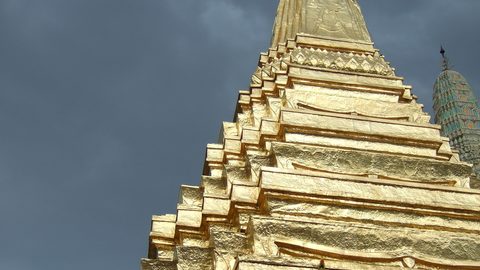 Grand Palace
 survival: the strict dress code that turns visitors away, the online booking that skips a 90-minute queue, and the 'closed today' scam at the entrance.
Grand Palace
Grand Palace survival: the strict dress code that turns visitors away, the online booking that skips a 90-minute queue, and the 'closed today' scam at the entrance.
-
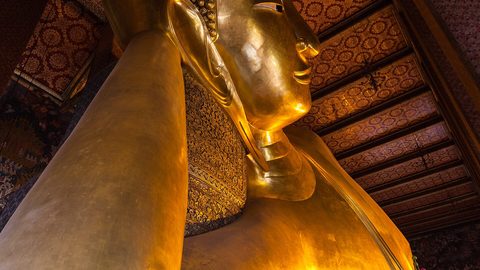 Wat Pho
 houses a 46-metre reclining Buddha and Thailand's most respected massage school in one temple compound. How to see both without rushing either.
Wat Pho
Wat Pho houses a 46-metre reclining Buddha and Thailand's most respected massage school in one temple compound. How to see both without rushing either.
-
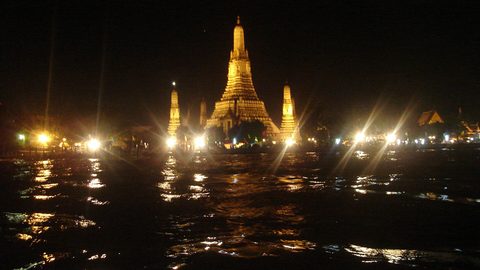 Wat Arun
 photographs best at dusk from the far river bank, not the temple grounds. The ferry crossing, the steep prang climb, and timing it before the boats stop.
Wat Arun
Wat Arun photographs best at dusk from the far river bank, not the temple grounds. The ferry crossing, the steep prang climb, and timing it before the boats stop.