Da Nang Food: Central Vietnamese Dishes That Are Spicier and More Assertive
Da Nang food is central Vietnamese: spicier and more assertive than Hanoi or Saigon. Start with mi quang, bun cha ca, and live seafood.
Da Nang Food: Central Vietnamese Dishes That Are Spicier and More Assertive
Most visitors to Vietnam arrive knowing pho in the north and broken rice in the south. Then they land in Da Nang and the flavours change. Central Vietnamese cooking is spicier and more assertive than either Hanoi or Saigon, built on turmeric, chili, fermented fish and minimal broth. This Da Nang food guide answers what to eat and how the region's food differs from the rest of the country. It is not a list of everything. It is a route through the dishes you should prioritise and the places where locals actually eat them.
Da Nang Street Food: the Two Anchor Dishes
Mi Quang: The Regional Signature
Two dishes define Da Nang street food, and neither is pho. Start with mi quang, the signature regional noodle dish. It uses wide, turmeric tinted rice noodles in a shallow pool of broth, not a full soup. Common proteins are shrimp, pork, chicken, frog, fish and beef. Every bowl comes with crushed peanuts, sesame rice crackers, fresh herbs and a wedge of lime. The broth is savoury and concentrated because there is so little of it. You find mi quang everywhere, from Con Market food court to roadside stools in Hoa Cuong. Expect to pay 25,000 to 50,000 VND per bowl. Morning to early afternoon is the window; many stalls sell out by 2pm.
Bun Cha Ca: The Breakfast Fish Cake Soup
The second anchor is bun cha ca, Da Nang's fish cake noodle soup and a local breakfast staple. The broth is made from fish and pork, sometimes fish and tomato, giving it a light tang. The key component is the fish cake, either fried or steamed, cut into pieces and dropped in at serving. Bun cha ca is served around the city, but the strips along the east bank of the Han River near Hoa Cuong have the highest turnover and therefore the freshest fish cakes. A bowl costs 30,000 to 45,000 VND. Arrive by 8am to catch the breakfast crowd; by 10am, many kitchens have switched to lunch prep.

Central Vietnamese Food Da Nang: Beyond the Noodle Bowls
Crispy Pancakes and Steamed Rice Cakes
Central Vietnamese food in Da Nang extends well beyond noodles. Banh xeo here is a small, crispy central style crepe filled with shrimp, pork and bean sprouts. You cut it into pieces, wrap each piece in rice paper with herbs, and dip it in a tangy fish sauce. Street stalls in An Thuong and around the Han Market food floor serve them for 15,000 to 30,000 VND each. Banh beo, steamed rice cakes topped with dried shrimp and scallion oil, come in small ceramic dishes and cost 5,000 to 10,000 VND per piece.
Pork and Herb Rolls
Banh trang cuon thit heo is a pork and herb rice paper roll that requires assembly. The components are boiled pork slices, fresh herbs, cucumber, green banana and rice paper. You wrap and dip them into mam nem, a fermented anchovy sauce that is pungent and salty. It is not for everyone. If you want to try it, Hoa Cuong has dedicated stalls where the mam nem recipe has been the same for fifteen years. A platter for one runs 40,000 to 60,000 VND.
Raw Fish Salad from the Village
Nam O fish salad, from the Nam O village on the north edge of the city, is a raw fish salad mixed with roasted rice powder, herbs and chili. It is a specialty you do not see elsewhere in Vietnam. Man Thai fishing village, a 15 minute drive north of the city centre, is the easiest place to find it. The village is a working fishing beach, and the salad is prepared from the morning catch. A plate costs 50,000 to 80,000 VND. Go before 10am while the fish is still fresh.
Chicken Rice, Da Nang Style
Da Nang style chicken rice is a Hoi An dish that Da Nang adopted and made its own: shredded chicken over turmeric tinted rice with herbs and a dipping sauce. My An has a handful of shops that serve only this. They open for lunch and close by 3pm. A plate costs 35,000 VND.
Mi Quang Da Nang: What to Look for in a Bowl
Mi quang in Da Nang is not a single dish but a template. The noodles, turmeric broth and garnish are fixed. The protein changes the bowl. Shrimp and pork is the standard order. Frog mi quang is common in local shops west of the Han River. Beef versions are heavier and more filling. Fish versions are lighter and appear near the coast.
The sesame rice cracker on top is not decoration. Crumble it into the broth to add texture. The peanuts are not optional either; they balance the turmeric and chili. If a bowl arrives without both, you are in the wrong shop.
Con Market food court has four mi quang stalls side by side. Each uses its own broth recipe, and locals have strong preferences. Pick the stall with the longest queue at 11am. Pay cash, expect no English, and point at what the person ahead of you is eating.
Da Nang Seafood My Khe: Pay by Weight and Choose Live
How the Beach Road Restaurants Work
Fresh shellfish and fish are a major reason for dining out in Da Nang, and the My Khe beach strip is the most convenient place to do it. Restaurants along Vo Nguyen Giap, Hoang Sa and Truong Sa roads operate on a single system: you choose live creatures from tanks, they weigh them, you agree on a cooking style, and they charge per kilogram at market price. Standard options are steamed, grilled, hotpot, salt and chili, and tamarind.
The failure case is falling for a fixed price menu at a place with no tanks. Fixed price here means frozen, and it will taste like it. Always check the tanks. If they are empty or there are no tanks, move on.
Prices vary by catch and season. A kilogram of tiger prawns runs 300,000 to 500,000 VND. Clams and snails are cheaper at 80,000 to 150,000 VND per kilo. Crab and lobster command the highest prices, up to 800,000 VND per kilo. The restaurants on the west side of the Han River, away from the beach, charge roughly half of what the beach road places ask. The trade off is atmosphere; the riverfront shops lack the sea view but have the same sourcing.
Man Thai: The Working Beach Alternative
Man Thai fishing village offers a different experience. It is a working beach, not a restaurant strip. In the early morning, fishing boats land their catch and set up informal grills on the sand. You buy what you see and they cook it on the spot. There are no set prices; negotiate before they start cooking. A grilled squid and a beer runs around 50,000 to 70,000 VND total. Go at sunrise and leave by 8am before the tour groups arrive.
Con Market Food Court and Hoa Cuong: Eating Where Locals Eat
Con Market Food Court
Han Market is the better known option, but Con Market food court has less tourist pressure and better turnover. Stalls here serve mi quang, bun cha ca, banh xeo, banh beo, bun bo Hue, cao lau and avocado ice cream for dessert. Bun bo Hue is a Hue dish sold widely in Da Nang; cao lau comes from Hoi An. The avocado ice cream is creamy and sweet, sold from pushcarts and stall fronts. A cup costs 10,000 to 15,000 VND. Pay cash at every stall. Card acceptance is zero.
Hoa Cuong: The Residential Alternative
Hoa Cuong is a residential district with almost no tourists and some of the best central Vietnamese street food in the city. The area around the Hoa Cuong market has three mi quang stalls, two bun cha ca shops and multiple banh trang cuon thit heo vendors. The advantage is price. Dishes here run about 20% less than the same thing on the beach road. The disadvantage is distance; it is a 15 to 20 minute Grab ride from the My An beach area.
An Thuong: the Expat Dining Strip and Coffee Culture
An Thuong is the expat heavy tourist nightlife and dining strip near the beach. It is where you go for Vietnamese coffee, not for the most authentic local food. The coffee is Vietnamese drip coffee, served ca phe sua da (iced with condensed milk) or ca phe den da (iced black). A cup costs 15,000 to 30,000 VND. The cafes along An Thuong 2 and 4 streets stay open later than local district shops, making them a fallback for an evening coffee or a snack when the local markets have closed.
For food, An Thuong has nem lui, grilled ground pork on lemongrass stalks, wrapped with herbs and rice paper and dipped in a peanut sauce. It is a Da Nang specialty that is hard to find outside the city. A portion of five skewers runs 40,000 to 60,000 VND.
What to Skip and Who This Suits
Da Nang is for beach and city breakers who want modern comforts, digital nomads needing a liveable base, food focused travellers after central Vietnamese seafood and street food, families needing space and pools, and active travellers using the city as a hub. Three full days give you one for the beach and Son Tra, one for the Marble Mountains and food, and one as a buffer or day trip to Hoi An.
It is not for travellers seeking deep heritage. Hoi An, 45 minutes away, has that. It is not for backpackers wanting a walkable party district; the city is too spread out and the pavements are blocked by motorbikes. It is not for anyone expecting a quiet fishing village; the coastline is heavily developed.
The single thing that most often goes wrong: visitors stay only in the city centre and treat Da Nang as a beach resort town. Split your time between the beach side, the riverfront and the Son Tra Peninsula, and use Grab to move between them. Without that split, you miss the fresh catch on one end and the street food on the other.
Common Questions
What is the main difference between central Vietnamese food and northern or southern food?
Central Vietnamese food is spicier and more assertive than either Hanoi or Saigon. It uses more turmeric, chili and fermented fish, and dishes like mi quang have minimal broth compared to the clear broths of northern pho.
Where can I try mi quang in Da Nang?
Con Market food court has four mi quang stalls side by side. Hoa Cuong district has three dedicated stalls with lower prices. Most beach road restaurants also serve it, but the best versions come from high turnover stalls where the noodles do not sit.
How does ordering seafood work on My Khe beach road?
You choose live seafood from tanks, they weigh it, you agree on a cooking style (steamed, grilled, hotpot, salt and chili, or tamarind) and they charge per kilogram at market price. If a restaurant has no tanks, the seafood is frozen. Move on.
How much does a bowl of bun cha ca cost?
A bowl costs 30,000 to 45,000 VND. It is a breakfast staple, so most stalls sell out by 10am. Plan to arrive before 8am for the freshest fish cakes.
What payment methods do Da Nang food stalls accept?
Cash at every market stall and most local restaurants. Card acceptance varies by venue at sit down restaurants and is not standard. VAT is included in listed prices at most sit down restaurants.
Is the food at Han Market or Con Market better?
Con Market has a better food court with less tourist pressure. Han Market is more crowded and the selling is aggressive. Both serve the same dishes, but the turnover at Con Market means fresher ingredients.
When is the best time to visit Man Thai fishing village for seafood?
Go at sunrise and leave by 8am. The fishing boats land their catch in the early morning, and the informal grills set up on the sand. After 8am, tour groups arrive and prices increase.
Read next
-
 Da Nang Hotels by Type and Price Band With Resort Oversupply Value
Da Nang hotels range from beachfront high-rises to small My An stays, and resort oversupply means strong value outside peak weeks.
Da Nang Hotels by Type and Price Band With Resort Oversupply Value
Da Nang hotels range from beachfront high-rises to small My An stays, and resort oversupply means strong value outside peak weeks.
-
 Where to Stay in Da Nang and Whether to Stay in Hoi An Instead
Where to stay in Da Nang depends first on whether you should stay in Hoi An instead. Compare My An, An Thuong, Hai Chau, and the beach resorts.
Where to Stay in Da Nang and Whether to Stay in Hoi An Instead
Where to stay in Da Nang depends first on whether you should stay in Hoi An instead. Compare My An, An Thuong, Hai Chau, and the beach resorts.
-
 Flights to Da Nang Airport and Arrival Transfers
Flying to Da Nang: DAD airport transfers, taxi and Grab costs, and why Hue or Chu Lai airports mean a long road journey.
Flights to Da Nang Airport and Arrival Transfers
Flying to Da Nang: DAD airport transfers, taxi and Grab costs, and why Hue or Chu Lai airports mean a long road journey.
-
 Da Nang Things to Do Ranked Honestly for a Short City List
Da Nang things to do are a short list, so rank them. Marble Mountains and Son Tra lead, while Ba Na Hills needs an honest crowd warning.
Da Nang Things to Do Ranked Honestly for a Short City List
Da Nang things to do are a short list, so rank them. Marble Mountains and Son Tra lead, while Ba Na Hills needs an honest crowd warning.
-
 Best Time to Visit Da Nang Month by Month With Central Coast Seasons
Best time to visit Da Nang is February to May, before the June fireworks crowds and the October to December typhoon season.
Best Time to Visit Da Nang Month by Month With Central Coast Seasons
Best time to visit Da Nang is February to May, before the June fireworks crowds and the October to December typhoon season.
-
 Getting Around Da Nang by Grab Taxi and the Walks That Do Not Work
Getting around Da Nang means Grab for most trips. Walking between beach, centre, and Son Tra looks close but is not practical.
Getting Around Da Nang by Grab Taxi and the Walks That Do Not Work
Getting around Da Nang means Grab for most trips. Walking between beach, centre, and Son Tra looks close but is not practical.
-
 Marble Mountains
The Marble Mountains in Da Nang: five limestone hills of caves and shrines, steep steps, and a lift that saves your legs.
Marble Mountains
The Marble Mountains in Da Nang: five limestone hills of caves and shrines, steep steps, and a lift that saves your legs.
-
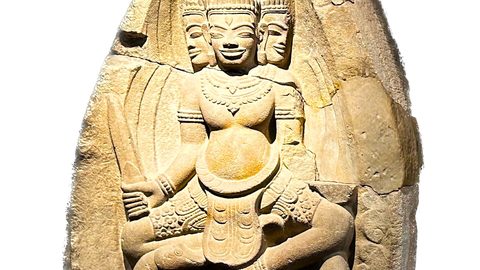 Museum of Cham Sculpture
The Museum of Cham Sculpture in Da Nang holds the finest Cham artefacts in the world in a small colonial-era building near the river.
Museum of Cham Sculpture
The Museum of Cham Sculpture in Da Nang holds the finest Cham artefacts in the world in a small colonial-era building near the river.
-
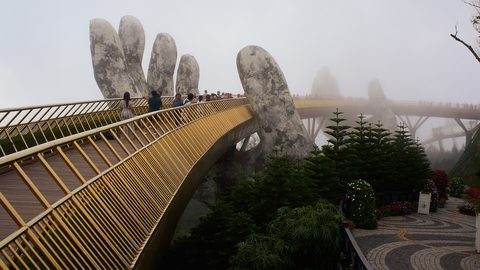 Ba Na Hills
 in Da Nang: a mountaintop theme park built round the Golden Bridge photograph, with an honest verdict on whether to go.
Ba Na Hills
Ba Na Hills in Da Nang: a mountaintop theme park built round the Golden Bridge photograph, with an honest verdict on whether to go.