Safety in Da Nang for a Visitor Who Walks and Grabs
Practical safety in Da Nang: traffic, pavements, flooding, airport taxis and beach conditions, without the generic warnings.
Da Nang Safety for a Visitor Who Walks and Grabs
Da Nang safety for a visitor who walks and grabs comes down to four local risks no generic travel warning covers: motorbikes on the pavement, flooding during rainy season, pushy airport taxi drivers, and rough seas at My Khe Beach. Violent crime against tourists is rare. Petty theft risk is low by Vietnamese standards, with occasional bag snatching in crowded areas like Han Market or the night market along the river. The real dangers are environmental and infrastructural, not criminal. Manage those four things and Da Nang is safe for solo travellers, families, and anyone moving between the beach, the riverfront, and the Son Tra Peninsula.
Is Da Nang Safe Overall
Yes, Da Nang is safe overall. The safety profile shifts depending on where you are and what time of year you visit. Crime is low. The city sees far fewer incidents targeting tourists than Hanoi or Ho Chi Minh City. What makes Da Nang feel less safe than it is are the traffic habits and the weather. Pedestrians have no priority. Motorbikes flow continuously through intersections, and drivers expect you to hold your line and keep walking at a steady pace. The failure case is stopping or hesitating mid-street. Cross with a local if you are unsure. Watch how they step off the kerb and match their speed.
Medical Help and Emergency Numbers
The medical infrastructure is solid for a city this size. Vinmec Da Nang International Hospital at 30 Tháng 4 in Hải Châu handles most emergencies. Family Medical Practice Da Nang at 50-52 Nguyễn Văn Linh offers walk-in consultations with English-speaking staff. For non-emergency issues, call the Da Nang Tourism Support hotline at 0236 3550 111. It is a helpline, not a guarantee, but it exists. Police emergency is 113, fire is 114, ambulance is 115.

Da Nang Solo Travel Safety
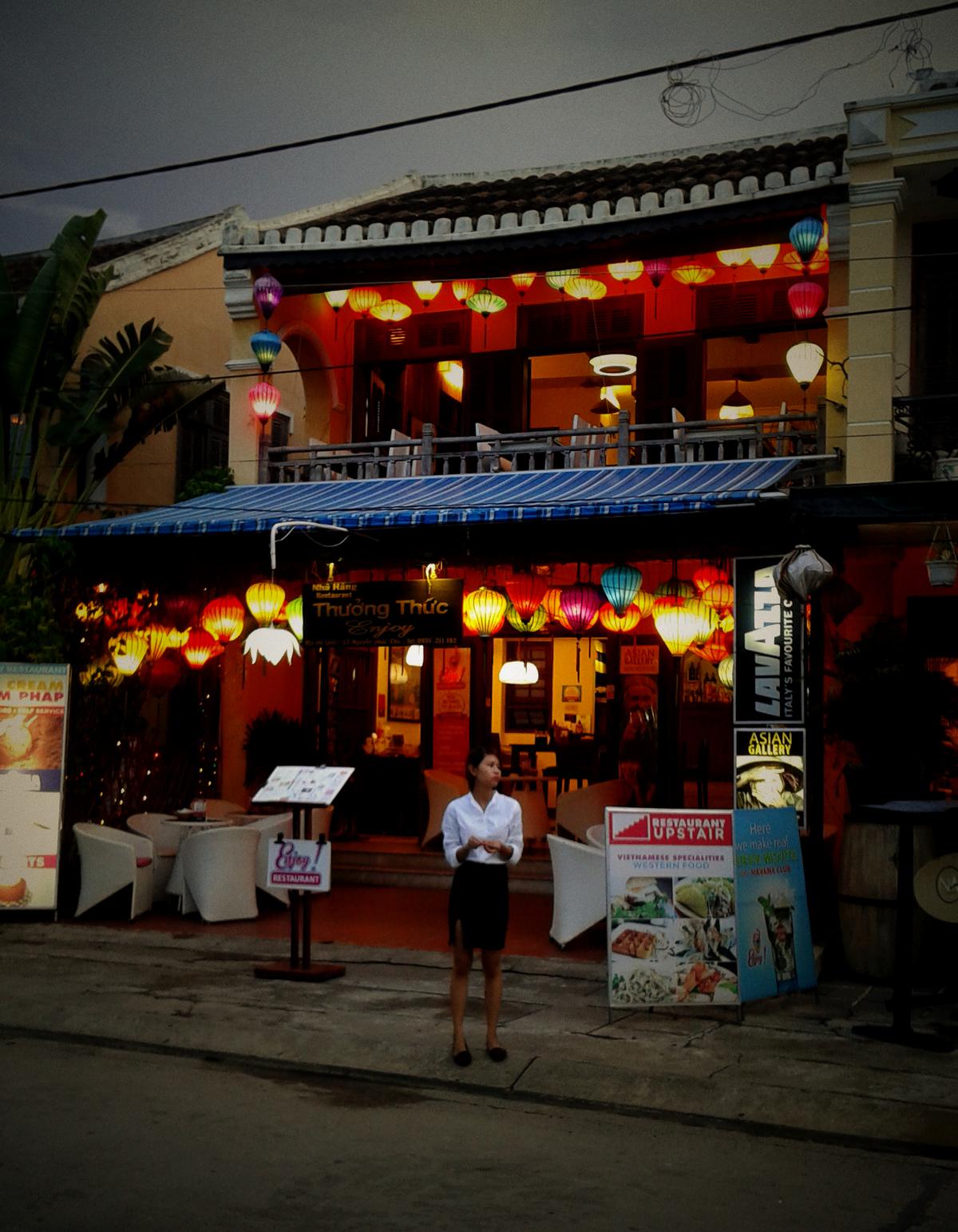
Da Nang solo travel safety is straightforward. Use Grab and avoid walking long distances after dark between the beach and the city centre. Solo travellers, especially women, rarely report problems in the expat-heavy areas of My An and the An Thuong nightlife strip near My Khe Beach. Restaurants and cafes there stay open later than in the local districts. The crowds along the beach road make it feel safe until around 22:00. After that, Grab is your move. A ride from An Thuong back to the riverfront in Hải Châu costs roughly 50,000 to 80,000 VND and takes 10 minutes.
The Real Solo Risk Is Logistics
The main solo risk is not crime but logistics. Many restaurants and cafes close earlier than you expect, especially in local districts like Hoa Cuong or Cam Le. If you are eating alone and it is 21:00, stick to the An Thuong strip or the riverside restaurants on the Han River east bank. Da Nang is spread out. The beach, the city centre and the Son Tra Peninsula are not walkable between them. Budget for multiple Grab trips per day. A solo traveller who assumes they can walk from My Khe to the Dragon Bridge will hit blocked pavements, long distances, and heat. Do not.
Da Nang Traffic Safety
Da Nang traffic safety is the single biggest daily risk for visitors, and it has nothing to do with driving a motorbike yourself. The hazard is pavements. Motorbikes park on them, drive on them, and treat them as an extension of the road. Around the My An beachside area and An Thuong, you will be forced to step off the pavement into moving traffic to get past a parked bike or a row of plastic chairs from a cafe that has claimed the footpath as its terrace. The rule: look before you step down, and step out with confidence. Do not dart. Do not stop in the street.
Motorbike Rental and the Hai Van Pass
If you rent a motorbike, the risk shifts to the damage scam. Some rental shops claim pre-existing damage when you return the bike and demand compensation. Photograph and video the bike from every angle before you ride it, ideally in front of the shop owner. Passport deposit is common. Some shops hold your passport as a deposit, and getting it back can be a negotiation. Use a shop that accepts a cash deposit or a photocopy instead. The Hai Van Pass road, QL1A, has its own risks: fog, rain, sharp curves, and visibility often below 50 metres during wet season from September to December. Do not ride it in heavy rain or at dusk.
| Risk | Location | What To Do |
|---|---|---|
| Pavement blocked by motorbikes | My An, An Thuong, city centre streets | Step into traffic slowly; never step back without looking |
| Motorbike rental damage scam | Any rental shop near beach or backpacker area | Photograph bike before riding; avoid passport deposit |
| Crossing streets | All intersections without traffic lights | Walk at steady pace; motorbikes flow around you |
| Hai Van Pass in wet season | QL1A over the pass, September–December | Skip the ride; take Grab or private car instead |
| Taxi meter scam at airport | Da Nang International Airport arrivals | Use Grab app; do not accept fixed fare offers |
Da Nang Rainy Season Flooding
Da Nang rainy season flooding is a real disruption from September to December, with peak typhoon months from September to November. The city sits on a coastal plain. Low-lying wards near the Han River and the beach road flood regularly when heavy rain coincides with high tide. Underpasses become impassable. Beach roads like the stretch along My Khe can close for hours. The Vietnam National Center for Hydro-Meteorological Forecasting issues typhoon signal levels from 1 to 5. Level 5 is the strongest expected impact. If a typhoon warning is active, do not plan any movement. Hotels have flood procedures: they move guests to upper floors and stock water and food. Follow their instructions.
What To Do During Wet Months
If you are in Da Nang during October or November, carry a waterproof phone pouch, keep your shoes quick-drying, and stay off the ground floor of any building near the river. Flooding rarely reaches waist height in tourist areas, but it makes walking impossible. Grab cars still operate in moderate flooding, though surge pricing applies. The failure case: heavy rain hits in late afternoon, the underpass near the Han River Bridge fills, and you are stuck on the east bank for two hours waiting for the water to recede. Plan indoor activities for afternoon during these months.
Beach Safety and Rough Seas at My Khe
Beach safety at My Khe is managed by the Da Nang Beach Rescue lifeguards, who operate daily from 05:00 to 19:30 year-round at guarded beaches. They use a flag system: red means no swimming, yellow means caution, green means safe. The calm sea months, roughly April to August, do not cover the whole year. From approximately September to March, My Khe experiences rough seas and high rip current risk. Multiple deaths occur annually in Da Nang waters. Swimming is not advised during red flag conditions, typhoon warnings, or the rough sea months.
When To Swim and When To Stay Out
Swim only between the red-and-yellow flags at a guarded beach. Outside lifeguard hours, do not enter the water at all. The rip current risk is highest at the northern end of My Khe near the Son Tra Peninsula, where the beach curves and currents shift. If you are caught in a rip, swim parallel to the shore, not against it. The clean, long beach is the city's main draw, but it is a working ocean, not a swimming pool. Treat it with the same caution you would apply to any beach on the South China Sea during monsoon season.
The year-round lifeguard coverage is a genuine safety net, but coverage reduces during rough weather. If the beach looks empty of swimmers, that is your signal. Do not be the only person in the water.
Airport Taxi Scam and How to Avoid it
The airport taxi scam at Da Nang International Airport is the most common friction visitors hit on arrival. The airport is 3-5 km from the city centre, a 10 to 15 minute ride that should cost 80,000 to 150,000 VND by Grab. Drivers in the arrivals hall offer fixed fares well above the app rate, and some use the meter scam where the meter runs faster than the real rate. The fix is simple: do not engage with them. Walk past the crowd, exit the terminal, and open the Grab app. The pick-up point is clearly marked in the parking area. If your phone does not have a local SIM yet, the airport has Viettel and Vinaphone booths selling cheap SIMs before you reach the taxi area.
If you must take an airport taxi, use a metered taxi from a known company like Mai Linh or Vinasun. Confirm the meter is running before the car moves. The fixed fare offer is never a deal. It is a premium you pay for not using the app.
Seafood Restaurant Scams and Street Food Safety
Seafood restaurant scams in Da Nang take one of two forms: weight inflation or menu price switch. At My Khe Beach and the Man Thai fishing village, you choose live seafood and pay by weight. The scam: the restaurant quotes a low price per kilogram, then serves a smaller fish, switches to a cheaper species, or inflates the weight on the scale. Watch them weigh the seafood. Take a photo of the plate before it goes to the kitchen. Confirm the total price in writing before they cook it. The Nam O fish salad and other raw dishes carry the same risk as anywhere. Freshness matters, and the ice in drinks at street stalls may not be filtered. Stick to established restaurants with English menus for raw items.
Health Risks Beyond the Plate
Dengue is present during rainy season from September to December, carried by the Aedes aegypti mosquito. Wear repellent in the late afternoon and evening, especially near the Han River and in vegetated areas like the Marble Mountains and Son Tra Peninsula. The peak heat months from May to August average 34-35°C, and the UV index hits extreme levels. Sun protection is a safety issue, not a comfort issue.
Common Questions
Is it safe to walk alone at night in Da Nang?
Yes in the An Thuong nightlife area and along the Han River promenade near the Da Nang Downtown complex until about 22:00. No on quiet residential streets in Hoa Cuong or Cam Le, not because of crime but because the streets are dark, dogs are loose, and pavements vanish. Use Grab after dark outside the main tourist strips.
Are Grab drivers safe in Da Nang?
Yes. Grab is the dominant ride-hailing app and drivers are background-checked through the platform. Payment is cash or linked card. The airport arrivals area has pushy drivers offering fixed fares, ignore them and order through the app. Be and Xanh SM are alternative apps that also work.
Should I worry about pickpockets in Da Nang?
Low risk, but bag snatching happens in crowded areas like Han Market, Con Market, and the night market. Keep your phone and wallet in a front pocket or a cross-body bag. The risk is higher during Tet when crowds surge and domestic tourism peaks.
Is the tap water safe to drink in Da Nang?
No. Tap water is not potable. Ice in drinks is safe at established restaurants and hotels, but risk varies at street stalls. Buy bottled water or use a filter bottle. The UV index is high to extreme from March to September, so carry water and reapply sunscreen.
What is the biggest safety mistake visitors make in Da Nang?
Assuming they can walk between the beach, the city centre and the Son Tra Peninsula. Distances are long, pavements are blocked by motorbikes, and the heat and humidity drain you fast. Use Grab to move between areas. The second biggest mistake is swimming at My Khe during rough sea months from September to March.
Read next
-
 Da Nang Hotels by Type and Price Band With Resort Oversupply Value
Da Nang hotels range from beachfront high-rises to small My An stays, and resort oversupply means strong value outside peak weeks.
Da Nang Hotels by Type and Price Band With Resort Oversupply Value
Da Nang hotels range from beachfront high-rises to small My An stays, and resort oversupply means strong value outside peak weeks.
-
 Where to Stay in Da Nang and Whether to Stay in Hoi An Instead
Where to stay in Da Nang depends first on whether you should stay in Hoi An instead. Compare My An, An Thuong, Hai Chau, and the beach resorts.
Where to Stay in Da Nang and Whether to Stay in Hoi An Instead
Where to stay in Da Nang depends first on whether you should stay in Hoi An instead. Compare My An, An Thuong, Hai Chau, and the beach resorts.
-
 Flights to Da Nang Airport and Arrival Transfers
Flying to Da Nang: DAD airport transfers, taxi and Grab costs, and why Hue or Chu Lai airports mean a long road journey.
Flights to Da Nang Airport and Arrival Transfers
Flying to Da Nang: DAD airport transfers, taxi and Grab costs, and why Hue or Chu Lai airports mean a long road journey.
-
 Da Nang Things to Do Ranked Honestly for a Short City List
Da Nang things to do are a short list, so rank them. Marble Mountains and Son Tra lead, while Ba Na Hills needs an honest crowd warning.
Da Nang Things to Do Ranked Honestly for a Short City List
Da Nang things to do are a short list, so rank them. Marble Mountains and Son Tra lead, while Ba Na Hills needs an honest crowd warning.
-
 Best Time to Visit Da Nang Month by Month With Central Coast Seasons
Best time to visit Da Nang is February to May, before the June fireworks crowds and the October to December typhoon season.
Best Time to Visit Da Nang Month by Month With Central Coast Seasons
Best time to visit Da Nang is February to May, before the June fireworks crowds and the October to December typhoon season.
-
 Getting Around Da Nang by Grab Taxi and the Walks That Do Not Work
Getting around Da Nang means Grab for most trips. Walking between beach, centre, and Son Tra looks close but is not practical.
Getting Around Da Nang by Grab Taxi and the Walks That Do Not Work
Getting around Da Nang means Grab for most trips. Walking between beach, centre, and Son Tra looks close but is not practical.
-
 Marble Mountains
The Marble Mountains in Da Nang: five limestone hills of caves and shrines, steep steps, and a lift that saves your legs.
Marble Mountains
The Marble Mountains in Da Nang: five limestone hills of caves and shrines, steep steps, and a lift that saves your legs.
-
 Museum of Cham Sculpture
The Museum of Cham Sculpture in Da Nang holds the finest Cham artefacts in the world in a small colonial-era building near the river.
Museum of Cham Sculpture
The Museum of Cham Sculpture in Da Nang holds the finest Cham artefacts in the world in a small colonial-era building near the river.
-
 Ba Na Hills
 in Da Nang: a mountaintop theme park built round the Golden Bridge photograph, with an honest verdict on whether to go.
Ba Na Hills
Ba Na Hills in Da Nang: a mountaintop theme park built round the Golden Bridge photograph, with an honest verdict on whether to go.