Koishikawa Korakuen: An Early-Edo Garden with a Chinese Accent Beside Tokyo Dome
Koishikawa Korakuen is an early-Edo stroll garden with Chinese bridge features, pressed improbably against the Tokyo Dome rollercoaster in Bunkyo.


Koishikawa Korakuen: an Early-Edo Garden with a Chinese Accent Beside Tokyo Dome
You have seen Tokyo's concrete canyons and neon grids, and now you want the city's hidden layer: the quiet, curated landscape where a feudal lord once walked. Most people pick the wrong garden. They go to Rikugien because a friend recommended it, or to Shinjuku Gyoen because it is near the metro, and they miss the one that is genuinely strange. Koishikawa Korakuen is not just another Edo-period stroll garden. It is a 70,847 square metre landscape designed with deliberate Chinese references including a full-moon bridge and a miniature West Lake replica, and it sits pressed against the Tokyo Dome rollercoaster. That tension is the point. The year of initial layout was 1629, making it one of Tokyo's oldest surviving daimyo gardens, and its original commissioner was Tokugawa Yorifusa, head of the Mito branch of the Tokugawa clan. The name "Koraku" comes from a Chinese Confucian text, the Gokusho, which teaches that a ruler should enjoy pleasure only after his people have enjoyed theirs. That philosophical ambition collides with the practical reality that while you stand on a stone bridge contemplating a 17th-century pond, you will hear the roar of a crowd inside Tokyo Dome and the scream of riders on the Thunder Dolphin coaster. That collision is what makes this garden distinct, and that collision is why you should visit it.
- Japanese Name: 小石川後楽園
- Address: 1-6-6 Koraku, Bunkyo-ku, Tokyo 112-0004
- Year of Initial Layout: 1629
- Original Commissioner: Tokugawa Yorifusa (Mito branch of Tokugawa clan)
- Design Input: Zhu Shunshui (Ming dynasty scholar)
- Designation: Special Place of Scenic Beauty / Special Historic Site
- Total Area: 70,847 m²
- Garden Style: Kaiyu-shiki chisen teien (stroll garden with central pond)
- Nearest Station: Iidabashi Station (East Exit, 3 min walk); Korakuen Station (Exit 8, 3 min); Suidobashi Station (West Exit, 8 min)
- Admission Fee (Adult 15-64): ¥300
- Admission Fee (Adult 65+): ¥150
- Admission Fee (Child 0-14, Non-Resident): Free (primary/junior high Tokyo residents: free; for non-residents check the official website as rates may be ¥150)
- Hours: 09:00-17:00 (last entry 16:30)
- Closed: December 29 - January 1
The Chinese Design Influence and Why it Matters
Most Tokyo gardens draw on Japanese traditions of waka poetry or Zen simplicity. Koishikawa Korakuen is different. The design was shaped by a Ming dynasty refugee, Zhu Shunshui, who fled China after the fall of the Ming and took refuge with the Mito Tokugawa. His hand is visible in three deliberate Chinese elements. The first is the Engetsu-kyo, or Full Moon Bridge, a stone arch that casts a near-perfect circle reflection on the water when viewed from the right angle. Arrive by 09:00, go directly to the central pond, and stand at the south edge to see this reflection before the ripples from other visitors disturb it. The second Chinese element is called Shokei: the garden contains miniature landscapes that copy famous Chinese views, including a recreation of Seiko Lake (West Lake) from Hangzhou and a representation of Rozan Mountain. You will recognise a scaled-down topography where hills and water bodies are compressed into a walking route that suggests a much larger landscape. The third element is Tokujin-do, a small shrine dedicated to the Chinese scholars Bo Yi and Shu Qi, who starved themselves rather than serve an unjust ruler. The garden's name itself, "Koraku," is drawn from a passage in the Confucian Mencius, not from a Japanese source. These references are not decorative. They are the organizing logic of the garden.
How It Compares to Rikugien
If you are deciding between the two, here is the short version. Rikugien, laid out in 1702, is purely Japanese in inspiration, built around scenes from classical waka poetry. It is larger at 87,809 square metres, has a more enclosed and forested feel, and its central pond has extensive shoreline that feels removed from the city. Koishikawa Korakuen is older by 73 years, smaller, and has a prominent hill-and-pond topography that forces you up and down through different sightlines. It also has a rice paddy field called Inada, which Rikugien entirely lacks. You can see the Tokyo Dome from inside Koishikawa Korakuen. You cannot see anything urban from inside Rikugien. Which one you pick depends on what you want: a meditative escape that erases the city, or a historical garden that makes no apology for its adjacency to modern Tokyo. Choose Koishikawa Korakuen if you find the contrast interesting. Choose Rikugien if you want to forget the city exists.
Seasonal Timing and What to Look for
Time your visit to match the garden's strongest display. The plum grove blossoms from mid-February to early March, and this is the best reason to come in winter. The blossoms arrive before the cherry trees and draw smaller crowds, so you can stand under the pink and white branches without jostling for space. In early June to late June, the iris garden blooms with Hanashobu, the Japanese iris, planted along a stream that runs through the inner garden. Walk this section in late afternoon when the light is low and the petals become translucent.
Autumn Illumination and Peak Crowds
The maple viewing peak runs from late November to early December, and the garden holds evening illuminations during this period. The 2024 schedule opened the garden until 20:00, but check the Tokyo Metropolitan Park Association website for the exact dates each year because the window is narrow, roughly two weeks. Arrive by 16:00 on an illumination day to see the garden in daylight first, then watch as the maples are lit. This is the most crowded time of year for the garden. Expect a queue at the entrance gate by 16:30 on a Saturday night in late November. If you cannot tolerate crowds, come in June instead.
Practical Reality: Baseball Cheers and a Feudal Lord’s Path
Understand the setting. Koishikawa Korakuen is immediately west of Tokyo Dome, separated by a single road. Tokyo Dome City Attractions, an amusement park with a looping rollercoaster, sits directly beside it. When you stand on the Tsutenkyo Bridge, that vermilion bridge crossing the corner of the central pond, the structure that fills your peripheral vision is the white dome and the coaster track. During a baseball game from March to October, you will hear the stadium cheers, the organ music, and the crack of a bat hitting a ball. This is not a bug. It is the defining experience of the garden. You are walking the route of a 17th-century daimyo who commissioned a Confucian scholar to build him a philosophical retreat, and you are doing it while the Tokyo Giants score a home run. The garden does not treat the noise as an intrusion. Treat it as the point.
Getting There and Getting Around
Use Iidabashi Station. From the East Exit it is a three minute walk. Korakuen Station via the Tokyo Metro Marunouchi or Namboku lines is also three minutes from Exit 8. Suidobashi Station on the JR Chuo-Sobu line is eight minutes from the West Exit. Budget 15 minutes from platform to garden gate to account for station exits that are not immediately obvious. Pay ¥300 at the entrance gate with your Suica or Pasmo IC card. The garden accepts cash, Suica, PASMO, and other major IC cards, so you do not need to queue for a ticket machine if you have your IC card loaded.
Accessibility Limits
The garden is only partially wheelchair accessible. Some paths are too steep and have steps. The main loop around the central pond is navigable, but the hill sections and the inner garden are not. If you have mobility limitations, arrive at the main entrance, ask for an accessible route map, and expect to skip the upper slopes. Audio guide rental is offered in Japanese, English, Chinese, and Korean, but the content and availability change each season, so the Tokyo Metropolitan Park Association publishes the in-force rates on their website. Free Wi-Fi is available through Tokyo Free Wi-Fi, though the signal is weak near the pond.


Common Questions
How long should I budget for a visit to Koishikawa Korakuen?
Budget 60 to 90 minutes to walk the full circuit at a deliberate pace. The garden is compact but the path winds through different elevations and sightlines. If you come during the autumn illumination, budget 45 minutes for the daylight viewing and 30 for the lit section, plus waiting time at the gate.
Is it worth visiting if I do not care about Chinese garden design?
Only if you appreciate the contrast between a feudal-era landscape and a modern sports complex. The Chinese elements are the garden's defining feature, and without them it is simply a nice Edo-period stroll garden. If you want a purely Japanese experience, pick Rikugien or Shinjuku Gyoen instead.
Can I enter with a Tokyo Grand Garden Ticket or combined pass?
Koishikawa Korakuen does not participate in any universal Tokyo garden pass. You pay ¥300 at the gate. An annual pass costs ¥1,200 for adults 15 to 64, and ¥600 for those 65 and older. If you live in Tokyo and plan three or more visits, buy the annual pass at the entrance desk. Children under 15 enter free, and Tokyo resident primary and junior high school students enter free with proof of residency.
What should I do after I leave the garden?
Walk north to the Tokyo Dome City complex for food and shopping. The complex has a large food court and several mid-range restaurants. Alternatively, walk east to Iidabashi and then into Kagurazaka, a district of cobbled alleys and French bistros with a surviving geisha legacy. That is a 15 minute walk from the garden exit.
Is it crowded on weekdays?
Weekday mornings before 11:00 are quiet, with fewer than 50 visitors in the garden at a time. Tuesday and Wednesday are the least busy. Thursday and Friday see a modest increase. Saturday and Sunday draw families and tour groups, especially from late morning onward. The autumn illumination period is the exception: every evening during the two-week window is crowded regardless of the day.
Read next
-
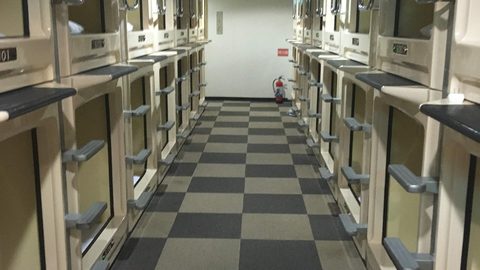
 Tokyo Hotels by Type and Budget from Capsules to Luxury
Tokyo hotels organised by type and price band, from efficient capsule pods to full-service luxury towers, to help you book the right room.
Tokyo Hotels by Type and Budget from Capsules to Luxury
Tokyo hotels organised by type and price band, from efficient capsule pods to full-service luxury towers, to help you book the right room.
-
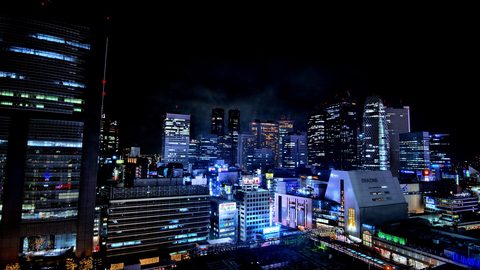 Where to Stay in Tokyo by District and Travel Style
A comparison of Tokyo's major districts to help you choose the right base for your travel style, whether you want calm or chaos.
Where to Stay in Tokyo by District and Travel Style
A comparison of Tokyo's major districts to help you choose the right base for your travel style, whether you want calm or chaos.
-
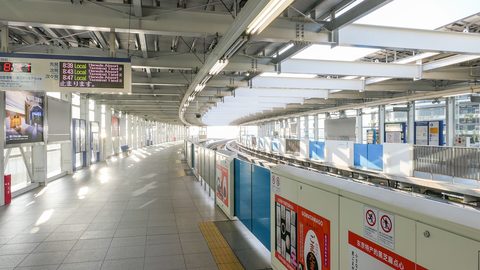 Narita or Haneda for Tokyo and What That Airport Choice Costs You
Narita or Haneda for Tokyo: compare door-to-district time, transfer cost, and what the wrong airport choice eats from your trip.
Narita or Haneda for Tokyo and What That Airport Choice Costs You
Narita or Haneda for Tokyo: compare door-to-district time, transfer cost, and what the wrong airport choice eats from your trip.
-
 Things to Do in Tokyo That Are Worth Your Limited Days
A curated list of Tokyo's highest-impact sights and experiences, from immersive art to quiet backstreets, to help you prioritise your days.
Things to Do in Tokyo That Are Worth Your Limited Days
A curated list of Tokyo's highest-impact sights and experiences, from immersive art to quiet backstreets, to help you prioritise your days.
-
 Best Time to Visit Tokyo Month by Month Tradeoffs
A month-by-month guide to visiting Tokyo, laying out the trade-off between weather, crowds, price, and what's actually open.
Best Time to Visit Tokyo Month by Month Tradeoffs
A month-by-month guide to visiting Tokyo, laying out the trade-off between weather, crowds, price, and what's actually open.
-
 Getting Around Tokyo by Train Airport Transfers and IC Cards
A practical guide to Tokyo's rail network, covering airport transfers, IC cards, and how to avoid the station navigation mistakes that eat your day.
Getting Around Tokyo by Train Airport Transfers and IC Cards
A practical guide to Tokyo's rail network, covering airport transfers, IC cards, and how to avoid the station navigation mistakes that eat your day.
-
 Senso-ji
 is free and never closes, but the experience at 6am with empty Nakamise stalls is nothing like the 11am crush under Kaminarimon. Here is when to go and what you get at each hour.
Senso-ji
Senso-ji is free and never closes, but the experience at 6am with empty Nakamise stalls is nothing like the 11am crush under Kaminarimon. Here is when to go and what you get at each hour.
-
 Meiji Jingu
The Meiji Jingu visit changes completely depending on which torii gate you enter. One drops you from Harajuku noise into sudden forest, the other builds quiet slowly from Yoyogi.
Meiji Jingu
The Meiji Jingu visit changes completely depending on which torii gate you enter. One drops you from Harajuku noise into sudden forest, the other builds quiet slowly from Yoyogi.
-
 teamLab
 Borderless and Planets are two different Tokyo venues with separate booking systems. Borderless tickets at Azabudai Hills sell in timed slots and the maze has no fixed route.
teamLab
teamLab Borderless and Planets are two different Tokyo venues with separate booking systems. Borderless tickets at Azabudai Hills sell in timed slots and the maze has no fixed route.