Visiting Tokyo Tower: What It Costs, What You See, and the Case for Staying on the Ground
Tokyo Tower costs less than Skytree but delivers a mid-century view from 150 metres. Here's the ticket breakdown and whether to go up at all.

Visiting Tokyo Tower: What it Costs, What You See, and the Case for Staying on the Ground
A woman in a blue dress stops mid-step on the Zojo-ji temple forecourt, phone angled up. She is not photographing the temple. She is framing the steel lattice of Tokyo Tower rising behind its curved roof, orange and white against a November sky. That shot is free. The question is whether you need to be inside the tower to get anything better.
Tokyo Tower opened in 1958 as the tallest self-supporting steel tower in the world, a 332.9-metre broadcast antenna built to signal Japan's postwar recovery. In 2025, it sits third in the Tokyo height race behind Skytree at 634 metres and the Mori Tower in Roppongi. The honest question every visitor asks is: with Skytree taller and Shibuya Sky trendier, is the landmark still worth the entry fee? The answer depends entirely on what kind of view you want and whether you treat the tower as a destination or as a landmark you see from the ground.
- Height: 332.9 m
- Main Deck (150 m) Adult: JPY 1,200 (2024 rate; verify with Tokyo Tower official site for current pricing)
- Top Deck (250 m) Adult Online: JPY 3,000 (2024 rate; verify with Tokyo Tower official site for current pricing)
- Top Deck Adult Same Day: JPY 3,200 (2024 rate; verify with Tokyo Tower official site for current pricing)
- Hours: 09:00-23:00, last admission 22:30
- Outside Staircase: Descent only, 600 steps, 09:00-16:00, free with Main Deck ticket, may close in rain
- Skytree Tembo Deck (350 m) Adult Weekday: JPY 2,100 (2024 rate; verify with Skytree official site)
- Shibuya Sky Adult Online: JPY 2,200 (2024 rate; verify with Shibuya Sky official site)
The Two Decks and What They Cost
Tokyo Tower has two paid observation levels. The Main Deck sits at 150 metres. The Top Deck sits at 250 metres. The price gap is large. The 2024 rate for a Main Deck adult ticket was JPY 1,200, with children aged 4 to junior high paying JPY 600 and infants under 4 getting in free. The Top Deck adult ticket cost JPY 3,000 if booked online and JPY 3,200 if bought same day, with children at JPY 1,500 online and JPY 1,600 same day. Check the official website before you buy. It publishes the current rates.
Compare that to Shibuya Sky at roughly JPY 2,200 online or JPY 2,500 same day, or the Skytree Tembo Deck at 350 metres for about JPY 2,100 and the Tembo Galleria combo at 450 metres for about JPY 3,100 on a weekday. Each operator publishes its current rate. The highest public deck at the tower costs about the same as Skytree's highest public deck and more than Shibuya Sky. You are not paying for height. You are paying for the experience of a specific tower.
What Each Deck Shows
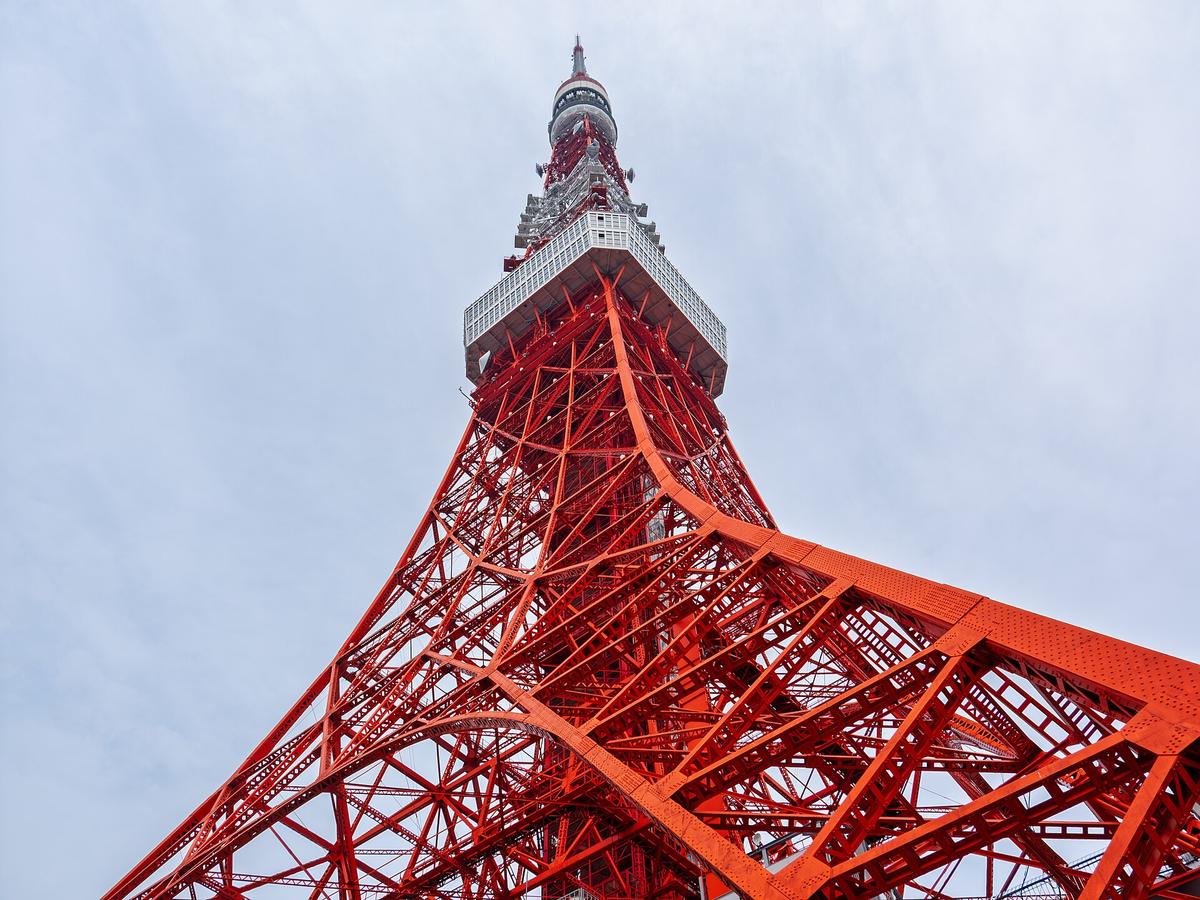
From the Main Deck at 150 metres you get a 360-degree urban panorama: Tokyo Bay, Rainbow Bridge, Zojo-ji temple directly below, Roppongi Hills to the west, and on clear winter days Mount Fuji on the horizon. The view is close enough to see individual pedestrians crossing the Shiba Park paths. It is a city-centre view rather than a region view. The Top Deck at 250 metres adds a higher sightline over Shiba Park and a wider arc of Tokyo Bay, but the main difference is the framing: the steel lattice surrounds your sightline in geometric shapes. You are looking through the structure itself. Some visitors find that cinematic. Others find it distracting.
The Case for Going Up
Tokyo Tower's strongest argument is the queue. It is the shortest of the three major observation decks. Skytree routinely has the longest average wait. Shibuya Sky manages moderate queues with timed-entry slots. At this tower, particularly on a weekday afternoon or evening, you can show up at 21:00 and be on the deck by 21:15. That matters when you have five days in a city where station navigation eats half your daylight.
The second argument is nostalgia. Built in 1958, the structure is a Showa-era relic, International Orange and white, repainted periodically for aeronautical safety compliance. The interior lighting, the retro signage, the sense that you are inside a mid-century structure rather than a sleek 21st-century spire, all of that is deliberate. If you have watched old Japanese films or anime where the tower appears as the defining landmark of a rebuilding city, going up is a pilgrimage. Walk the outside staircase on a clear morning. It is a descent-only route of approximately 600 steps from the Main Deck to the ground, operating between 09:00 and 16:00, free with a Main Deck ticket. It offers a slow, exposed walk down through the lattice. Rain may close it.
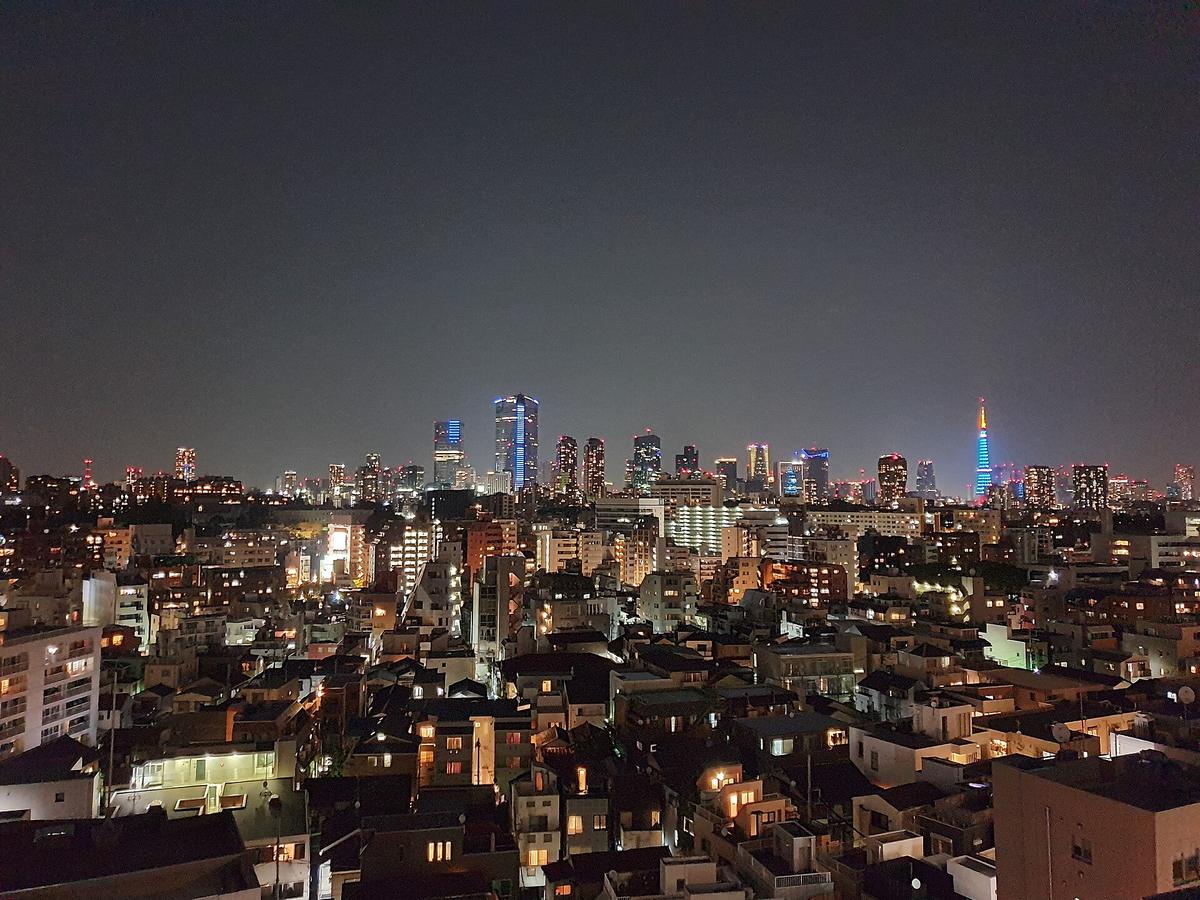
The third argument is the illumination schedule. From sunset to 23:00, the tower glows in two seasonal patterns: Landmark Light in summer, Diamond Veil in winter, with seasonal specials for holidays. The night view from the deck includes the structure's own lit frame, which looks different from inside than from outside.
The Case For Staying On The Ground
Here is the honest part. The greatest visual gift is not the view from the deck. It is the view of the tower from specific ground positions. Photograph it from the Zojo-ji Temple main hall forecourt, where the temple roof frames the lattice. Use Shiba Park, Momiji-dani valley side, where the tower rises above the tree canopy. Shoot from the Roppongi Hills Mori Tower Tokyo City View for an elevated shot with the tower in the mid-ground. Try Shiba Park near the Maruyama burial mound for a low-angle wide shot with minimal obstruction. None of these require a ticket. All of them are free.
Shibuya Sky, at JPY 2,200 online, gives you an open-air rooftop with the Shibuya Scramble crossing directly below. It is a more dramatic urban experience. Skytree at 634 metres gives you a macro-scale Kanto plain panorama that this tower cannot match. Spend the JPY 3,000 a Top Deck ticket costs on Shibuya Sky instead. Spend the hour you would have queued at Skytree walking the Shiba Park ground loop. Save the tower for the photograph of it from Zojo-ji at sunset.
How to Decide by Traveller Type
Go up if you are a repeat visitor who has already done Skytree and Shibuya Sky and wants the retro experience. Go up if you are a design enthusiast who appreciates Showa-era infrastructure and wants to see the steel lattice from inside. Go up if you are travelling with a child under 4 who gets in free and the Main Deck at JPY 1,200 is a cheap activity that lasts 45 minutes with a staircase walk down.
Skip going up if you are a first-timer on a five-day trip. Your time is better spent on Shibuya Sky or Skytree, both of which offer taller, more distinctive views. Skip it if you are on a budget. The Main Deck at JPY 1,200 is reasonable, but the Top Deck at JPY 3,000 costs more than Shibuya Sky and gives you less height. Skip it if you found the scale of Tokyo disorienting on arrival. The 150-metre deck will not solve that. The ground-level photograph from Zojo-ji will.

| Deck | Height | Adult Online Price | View Character | Queue Length |
|---|---|---|---|---|
| Tokyo Tower Top Deck | 250 m | JPY 3,000 | Central city close-up, lattice framing | Shortest average wait |
| Tokyo Skytree Tembo Galleria | 450 m | JPY 3,100 | Macro Kanto plain panorama | Longest average wait |
| Shibuya Sky | 229 m | JPY 2,200 | Open-air rooftop, scramble crossing view | Moderate wait, timed slots |
A Note on the Queue Reality
The shortest average wait is not an accident. Fewer visitors choose this tower than Skytree or Shibuya Sky. That is an advantage. On a weekday evening, arrive at 21:00 and step onto the Main Deck by 21:15. Skytree's Tembo Deck at 350 metres, by contrast, can require a 45-minute queue even with a timed ticket. Shibuya Sky's timed-entry slots manage the crowd but sell out on weekends. This is the fallback that works.
The fallback status is also the reason to stay on the ground. If you are here for five days minimum, as the city's rhythm demands, tick the tower as a ground-level photograph between a morning at Zojo-ji temple and a walk through Shiba Park. The photograph you get from the temple forecourt, with the tower rising behind the curved roof, is the image that made the landmark famous. It requires no ticket, no queue, no JPY 3,000 decision. It just requires you to look up.
Common Questions
Is Tokyo Tower worth the price compared to Skytree?
Only if you value a shorter queue, a retro Showa-era atmosphere, and a city-centre close-up view over the macro-scale panorama Skytree offers. At comparable prices (Top Deck JPY 3,000 versus Skytree Tembo Galleria JPY 3,100), Skytree gives you 200 more metres of height. Choose the tower for nostalgia, not height.
Can I buy Tokyo Tower tickets at the door?
Yes. Main Deck tickets are sold at the door without significant wait. Top Deck tickets cost JPY 200 more same-day than online (JPY 3,200 versus JPY 3,000 at 2024 rates). Book online if you want the Top Deck. Show up at the door if you only want the Main Deck.
Which deck should I choose: Main Deck or Top Deck?
Choose the Main Deck at JPY 1,200 if you want a quick, cheap view and plan to walk down the outside staircase. Choose the Top Deck at JPY 3,000 if you specifically want the lattice-framed sightline at 250 metres and do not mind paying nearly three times the price for the extra height.
How long should I budget for a Tokyo Tower visit?
Budget 45 minutes for the Main Deck alone, or 90 minutes if you add the outside staircase descent. Budget 60 to 90 minutes if you visit both decks. The tower has fewer exhibits and diversions than Skytree, so your time inside is shorter.
What is the best time of day to visit Tokyo Tower?
Arrive at sunset, around 16:30 to 17:30 depending on season, to catch the transition from daylight to the illumination schedule that runs from sunset to 23:00. Go on a clear winter morning for the best chance of Mount Fuji visibility. Avoid weekends and cherry blossom season when the queue lengthens.
Is the outside staircase worth doing?
Yes, but only on a clear morning between 09:00 and 16:00. The 600-step descent from the Main Deck to the ground is free with your Main Deck ticket and gives you a slow, exposed walk through the lattice. Rain may close it. It is a descent-only route, so you cannot climb up. Do not attempt it if you are not comfortable with open heights or if you have mobility concerns.
Where should I photograph Tokyo Tower from instead of going up?
Four positions give you better photographs than the decks themselves. The Zojo-ji Temple main hall forecourt frames the tower behind the temple roof. Shiba Park, Momiji-dani valley side, shows the tower above the tree canopy. Roppongi Hills Mori Tower Tokyo City View gives an elevated skyline shot with the tower in the mid-ground. Shiba Park near the Maruyama burial mound offers a low-angle wide shot with minimal obstruction.
Read next
-
 Tokyo Hotels by Type and Budget from Capsules to Luxury
Tokyo hotels organised by type and price band, from efficient capsule pods to full-service luxury towers, to help you book the right room.
Tokyo Hotels by Type and Budget from Capsules to Luxury
Tokyo hotels organised by type and price band, from efficient capsule pods to full-service luxury towers, to help you book the right room.
-
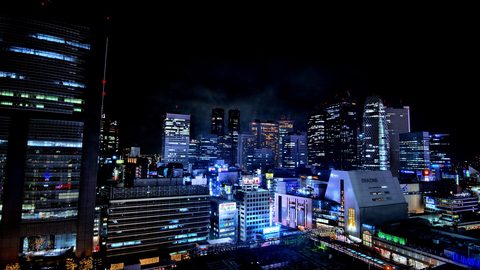 Where to Stay in Tokyo by District and Travel Style
A comparison of Tokyo's major districts to help you choose the right base for your travel style, whether you want calm or chaos.
Where to Stay in Tokyo by District and Travel Style
A comparison of Tokyo's major districts to help you choose the right base for your travel style, whether you want calm or chaos.
-
 Narita or Haneda for Tokyo and What That Airport Choice Costs You
Narita or Haneda for Tokyo: compare door-to-district time, transfer cost, and what the wrong airport choice eats from your trip.
Narita or Haneda for Tokyo and What That Airport Choice Costs You
Narita or Haneda for Tokyo: compare door-to-district time, transfer cost, and what the wrong airport choice eats from your trip.
-
 Things to Do in Tokyo That Are Worth Your Limited Days
A curated list of Tokyo's highest-impact sights and experiences, from immersive art to quiet backstreets, to help you prioritise your days.
Things to Do in Tokyo That Are Worth Your Limited Days
A curated list of Tokyo's highest-impact sights and experiences, from immersive art to quiet backstreets, to help you prioritise your days.
-
 Best Time to Visit Tokyo Month by Month Tradeoffs
A month-by-month guide to visiting Tokyo, laying out the trade-off between weather, crowds, price, and what's actually open.
Best Time to Visit Tokyo Month by Month Tradeoffs
A month-by-month guide to visiting Tokyo, laying out the trade-off between weather, crowds, price, and what's actually open.
-
 Getting Around Tokyo by Train Airport Transfers and IC Cards
A practical guide to Tokyo's rail network, covering airport transfers, IC cards, and how to avoid the station navigation mistakes that eat your day.
Getting Around Tokyo by Train Airport Transfers and IC Cards
A practical guide to Tokyo's rail network, covering airport transfers, IC cards, and how to avoid the station navigation mistakes that eat your day.
-
 Senso-ji
 is free and never closes, but the experience at 6am with empty Nakamise stalls is nothing like the 11am crush under Kaminarimon. Here is when to go and what you get at each hour.
Senso-ji
Senso-ji is free and never closes, but the experience at 6am with empty Nakamise stalls is nothing like the 11am crush under Kaminarimon. Here is when to go and what you get at each hour.
-
 Meiji Jingu
The Meiji Jingu visit changes completely depending on which torii gate you enter. One drops you from Harajuku noise into sudden forest, the other builds quiet slowly from Yoyogi.
Meiji Jingu
The Meiji Jingu visit changes completely depending on which torii gate you enter. One drops you from Harajuku noise into sudden forest, the other builds quiet slowly from Yoyogi.
-
 teamLab
 Borderless and Planets are two different Tokyo venues with separate booking systems. Borderless tickets at Azabudai Hills sell in timed slots and the maze has no fixed route.
teamLab
teamLab Borderless and Planets are two different Tokyo venues with separate booking systems. Borderless tickets at Azabudai Hills sell in timed slots and the maze has no fixed route.