Wat Phra That Doi Suthep: Reaching the Gold Chedi and the Monk's Trail Below
Doi Suthep is a gold chedi above Chiang Mai, but the monk's trail up through Wat Pha Lat is the part almost nobody walks.
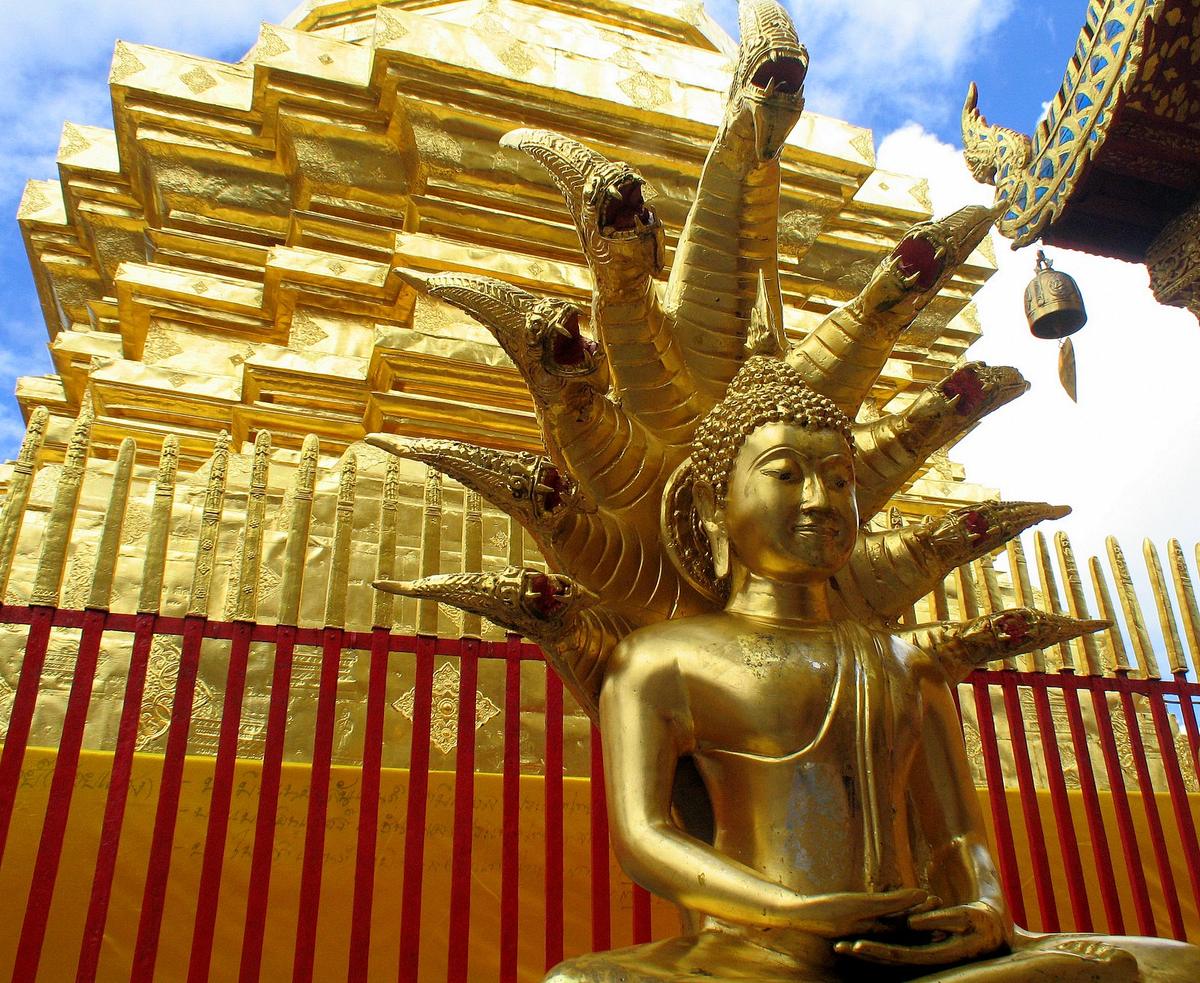

The Mistake Most Visitors Make at Doi Suthep
Most travellers to Chiang Mai book a songthaew from the old city, ride the hairpin bends straight to the temple complex, climb the 306 steps or take the cable car, circle the gold chedi, take a photo of the city view, and ride back down. That version of Doi Suthep takes ninety minutes and skips the better half of the experience entirely. The forest path that connects the lower temple of Wat Pha Lat to the summit is the reason to go. The trail, known locally as the monk's trail, takes about 45 to 60 minutes one way, passes a waterfall, crosses a stream, and ends at a jungle temple that most tourists never see. The summit temple is magnificent. The walk to it is what makes the trip worth the morning.
- Name: Wat Phra That Doi Suthep
- Location: Doi Suthep mountain, 15 km west of Chiang Mai city centre
- Elevation: Approximately 1,050 m above sea level; main terrace at 1,080 m
- Founding year: 1383 (14th century)
- Opening hours: 06:00-20:00 daily
- Foreigner entrance fee: 30 THB
- Funicular hours: 06:00-18:00
- Funicular fare (foreigner, one-way): 20 THB (2024 rate; see temple notice board for updates)
- Naga staircase: 306 steps
- Dress code: Shoulders and knees must be covered; enforced at the entrance
- Songthaew from city (shared, one-way, per person): 60 THB (2024 rate; verify at Chang Phuak Gate departure point)
- Chartered songthaew round trip: 500-800 THB, negotiable
- Grab one-way city to temple: 300-500 THB
- Monk's trail distance: Approximately 2 km
- Monk's trail hiking time: 45-60 minutes one way
- Recommended total time (trail + both temples): 3-4 hours
The Monk’s Trail: Wat Pha Lat to Doi Suthep
The monk's trail starts at the base of Doi Suthep mountain, near the rear entrance of Chiang Mai University. No sign marks it clearly. Look for a dirt path beside a small stream, roughly opposite the university's back gate. The trail runs about 2 kilometres through dry dipterocarp forest, climbing steadily but never steeply. You will cross a wooden bridge, pass a small waterfall, and eventually emerge at the back of Wat Pha Lat. The whole walk takes 45 to 60 minutes at a comfortable pace.
Footwear and Water
Trail conditions vary by season. In the dry months from November to February the path is packed earth with some loose stones. After rain the clay sections become slippery. Wear trainers or hiking sandals with a tread. Flip-flops are a bad idea. Bring at least one litre of water per person. There is nowhere to refill until Wat Pha Lat, and the climb, though gentle, is humid. A small torch is useful if you start before sunrise, which many hikers do to catch the monks' chanting at the summit around 05:30.
Wat Pha Lat: The Jungle Temple
Wat Pha Lat sits halfway up the mountain, built into a slope beside a stream. It is smaller, quieter, and older-feeling than the summit temple. Stone Buddha images sit under overhanging rock; a small waterfall runs beside the main hall; the air smells of damp earth and incense. Most tour groups skip it. Spend 15 to 20 minutes here before continuing up the sealed road to Wat Phra That Doi Suthep. From Wat Pha Lat the remaining walk to the summit takes another 20 minutes on a paved road with some short cuts through the forest.
Wat Phra That Doi Suthep: the Summit Temple
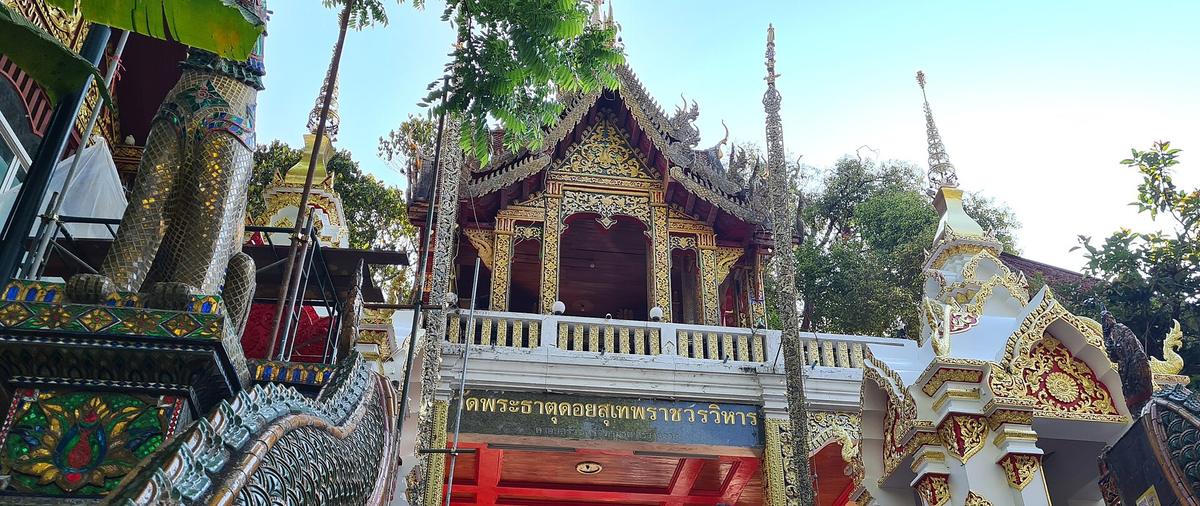
The approach to the summit is deliberately strenuous. Two options exist: the 306-step Naga staircase, flanked by a long serpent balustrade, or the funicular, which runs from 06:00 to 18:00 and costs 20 THB for foreigners one way. Take the stairs up. The climb takes about five minutes and the act of climbing is part of the ritual. The temple was built on the spot where a white elephant carrying a relic of the Buddha climbed the mountain, trumpeted three times, and died. Walking the stairs does not make you a pilgrim, but it puts you in the same posture as one.
The Gold Chedi and the City View
At the top, a broad terrace surrounds the gold chedi, a 24-metre structure covered in gilded copper plates. The effect in direct sunlight is blinding. Walk clockwise around it. On the eastern side of the terrace, a viewpoint looks down over the Chiang Mai valley. On a clear morning between November and February you can see the old city's moat, the Ping River, and the sprawl of the low-rise city. During burning season, from March to mid-April, the haze reduces the view to a grey-brown blanket. The temple is still worth visiting, but the panorama is not.
What to Skip
The Bhubing Palace, 4 km further up the road, costs 50 THB for foreigners and opens 08:30 to 16:30. The gardens are pleasant but the drive adds another 20 minutes of hairpin bends, and the palace itself is a spare royal residence with limited interior access. The Doi Pui Hmong Village, 6 km past the temple, is a commercialised hill-tribe market that sells the same souvenirs as the night bazaar. Unless you have a specific interest in Hmong textile work, skip both and spend the extra time at Wat Pha Lat instead.
Doi Suthep from Chiang Mai: Getting There and Back
Three ways exist to reach the Doi Suthep temple complex from Chiang Mai. The cheapest is the shared songthaew from Chang Phuak Gate, the north gate of the old city. These red trucks leave when full, charge 60 THB per person one way (a rate that changes annually, check the posted notice at the departure point), and take about 30 minutes up the mountain road. The road has steep gradients, sharp hairpin bends, and occasional loose surfaces. Sit on the left side for the best views on the way up. The same songthaews wait at the base of the temple for the return trip. If the vehicle is not full, the fare shifts to a charter basis of 300 to 500 THB total. Negotiate before you get in.
Scooter or Grab
A scooter rental costs 150 to 300 THB per day. The ride up the mountain is manageable for anyone comfortable with two-lane curves, but police checkpoints on the road are common. An International Driving Permit is required; without one, a fine is possible and your rental insurance is void. Grab from the city to the temple costs 300 to 500 THB one way, but Grab availability for the return is unreliable. The app shows few drivers near the summit. Songthaews are the safer bet for the trip down.
How to Combine the Monk’s Trail with the Summit in One Trip
The sequence is simple. Start early. Arrive at the monk's trail start point by 07:00. Hike to Wat Pha Lat in 45 to 60 minutes. Spend 15 minutes at the forest temple. Walk the remaining 20 minutes up the road to Wat Phra That Doi Suthep. Climb the 306 steps. Circle the gold chedi. Take in the city view. Descend by funicular or stairs. Catch a songthaew back to Chang Phuak Gate. The entire loop takes 3 to 4 hours and avoids the peak coach window from 10:00 to 15:00, when the summit terrace fills with tour groups and selfie sticks.
What It Costs
Total per person: 60 THB songthaew up, 30 THB temple entrance, 20 THB funicular down (optional), 60 THB songthaew back. The monk's trail costs nothing. Add the cost of scooter rental if you drive yourself, and a Grab only if you cannot face the songthaew queue.
The Dress Code and the Offering
Both Wat Pha Lat and Wat Phra That Doi Suthep enforce a dress code: shoulders and knees covered. Women can carry a sarong; men should wear trousers, not shorts. The temple grounds sell no cover-ups, so you will be turned away at the entrance if you are not dressed correctly. An offering of marigold flowers, incense, and a candle is sold at stalls near the staircase for about 20 THB. It is not required, but it is the standard ritual for Thai visitors and takes ten seconds to perform.

| Route | Duration | Cost Per Person | Best For |
|---|---|---|---|
| Songthaew only (no trail) | 1.5 hours | 120 THB round trip | Quick visit, limited mobility |
| Monk's trail + summit (songthaew) | 3–4 hours | 170 THB | Full experience, hikers |
| Scooter (self-drive) | 3–4 hours | 150–300 THB rental | Independent travellers with IDP |
| Grab one-way + songthaew return | 3–4 hours | 360–560 THB | Groups splitting cost |
Who This Combination Suits and Who Should Skip it
This route suits anyone who prefers a walk through forest to a ride in a truck. It suits solo travellers, digital nomads, and slow travellers who have at least four days in Chiang Mai and want one mountain morning that feels earned. It suits food-focused visitors who plan a khao soi lunch after the descent at a Nimmanhaemin cafe, and temple enthusiasts who want to see two temples in one trip without rushing. The monk's trail and Wat Pha Lat together are the better half of the Doi Suthep experience. The gold chedi is the reward, but the walk is the reason.
Skip it if you have mobility issues. The trail and the stairs are not accessible. Skip it if you are visiting during the burning season from March to mid-April and the air quality index is above 150. Skip it if you are unwilling to handle heat or humidity in the middle of the day; start at 07:00 or do not go at all. And skip it if you are in Chiang Mai for only one full day: the old city temples, a cooking class, and the night market will fill that day better than a mountain detour.
Common Questions
Can I do the monk's trail in flip-flops?
No. The trail has loose stones and clay sections that become slippery after rain. Wear trainers or hiking sandals with a tread.
Is the monk's trail safe to hike alone?
Yes. The trail is well-used by locals and monks, receives mobile signal for most of its length, and has no dangerous wildlife. Standard solo-hiking precautions apply: carry water, tell someone your plan.
What time should I start to avoid the crowds?
Arrive at the trailhead by 07:00. The first tour buses reach the summit around 10:00. If you start later, you will share the temple with large groups.
Can I take the cable car down and skip the stairs?
Yes. The funicular runs 06:00 to 18:00 and costs 20 THB for foreigners. Most visitors walk up and ride down, which is a good compromise.
Is Doi Suthep worth visiting during burning season?
The temple itself is still worth seeing, but the city view will be obscured by haze. The monk's trail remains pleasant in the cooler morning hours. Check the air quality index before you go.
Read next
-
 Chiang Mai Hotels by Price Band and Property Type
Chiang Mai hotels by property type and price band, from old city guesthouses to Mae Rim resorts, where the value is the best in Thailand.
Chiang Mai Hotels by Price Band and Property Type
Chiang Mai hotels by property type and price band, from old city guesthouses to Mae Rim resorts, where the value is the best in Thailand.
-
 Where to Stay in Chiang Mai: Old City, Nimman or Riverside
Where to stay in Chiang Mai, broken into the four areas that actually matter: Old City, Nimmanhaemin, Wat Ket riverside and Santitham.
Where to Stay in Chiang Mai: Old City, Nimman or Riverside
Where to stay in Chiang Mai, broken into the four areas that actually matter: Old City, Nimmanhaemin, Wat Ket riverside and Santitham.
-
 Flying to Chiang Mai: CNX Airport, Airlines and Arrival Routes
Flying to Chiang Mai means CNX, a small airport 15 minutes from the old city with no rail link. Here is the arrival flow and cost.
Flying to Chiang Mai: CNX Airport, Airlines and Arrival Routes
Flying to Chiang Mai means CNX, a small airport 15 minutes from the old city with no rail link. Here is the arrival flow and cost.
-
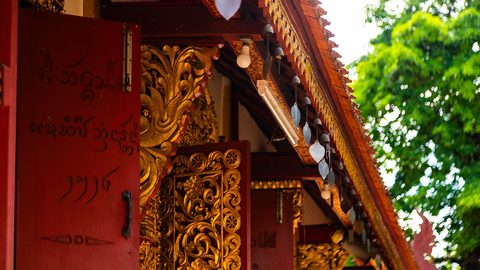 Chiang Mai Things to Do Worth Your Days, Ranked and Argued
Chiang Mai things to do, ranked and argued: the temples, markets and day trips worth your days, and the popular stops you can skip.
Chiang Mai Things to Do Worth Your Days, Ranked and Argued
Chiang Mai things to do, ranked and argued: the temples, markets and day trips worth your days, and the popular stops you can skip.
-
 Best Time to Visit Chiang Mai: Burning Season Comes First
Best time to visit Chiang Mai, with the burning season named first: February to April air quality, then the cool clear peak months.
Best Time to Visit Chiang Mai: Burning Season Comes First
Best time to visit Chiang Mai, with the burning season named first: February to April air quality, then the cool clear peak months.
-
 Getting Around Chiang Mai: Grab, Songthaews and Scooter Reality
Getting around Chiang Mai: Grab and songthaew costs, scooter licence checkpoints, airport transfers and why walking is harder than it looks.
Getting Around Chiang Mai: Grab, Songthaews and Scooter Reality
Getting around Chiang Mai: Grab and songthaew costs, scooter licence checkpoints, airport transfers and why walking is harder than it looks.
-
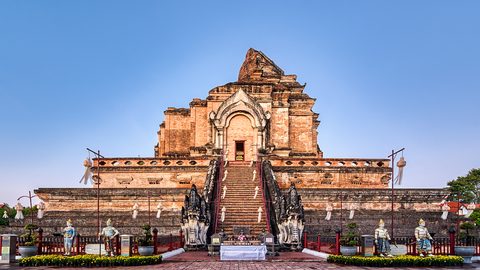 Wat Chedi Luang
 is the biggest ruin in Chiang Mai's old city, and the one temple where you can sit and talk to a monk.
Wat Chedi Luang
Wat Chedi Luang is the biggest ruin in Chiang Mai's old city, and the one temple where you can sit and talk to a monk.
-
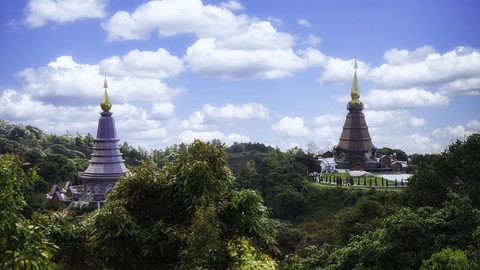 Doi Inthanon
 is 2,565 metres of summit car park in cloud, but the waterfalls, pagodas and trails on the way up are better.
Doi Inthanon
Doi Inthanon is 2,565 metres of summit car park in cloud, but the waterfalls, pagodas and trails on the way up are better.
-
 Thailand Travel Guide From First Timers To Island Hoppers
A realistic Thailand travel guide covering regions, seasons, and pacing so you avoid the classic Bangkok Chiang Mai island mistake.
Thailand Travel Guide From First Timers To Island Hoppers
A realistic Thailand travel guide covering regions, seasons, and pacing so you avoid the classic Bangkok Chiang Mai island mistake.