How to Tell a Chiang Mai Elephant Sanctuary From a Riding Camp
Many Chiang Mai elephant sanctuaries are riding camps with new signage. Here is how to tell the difference before you book.
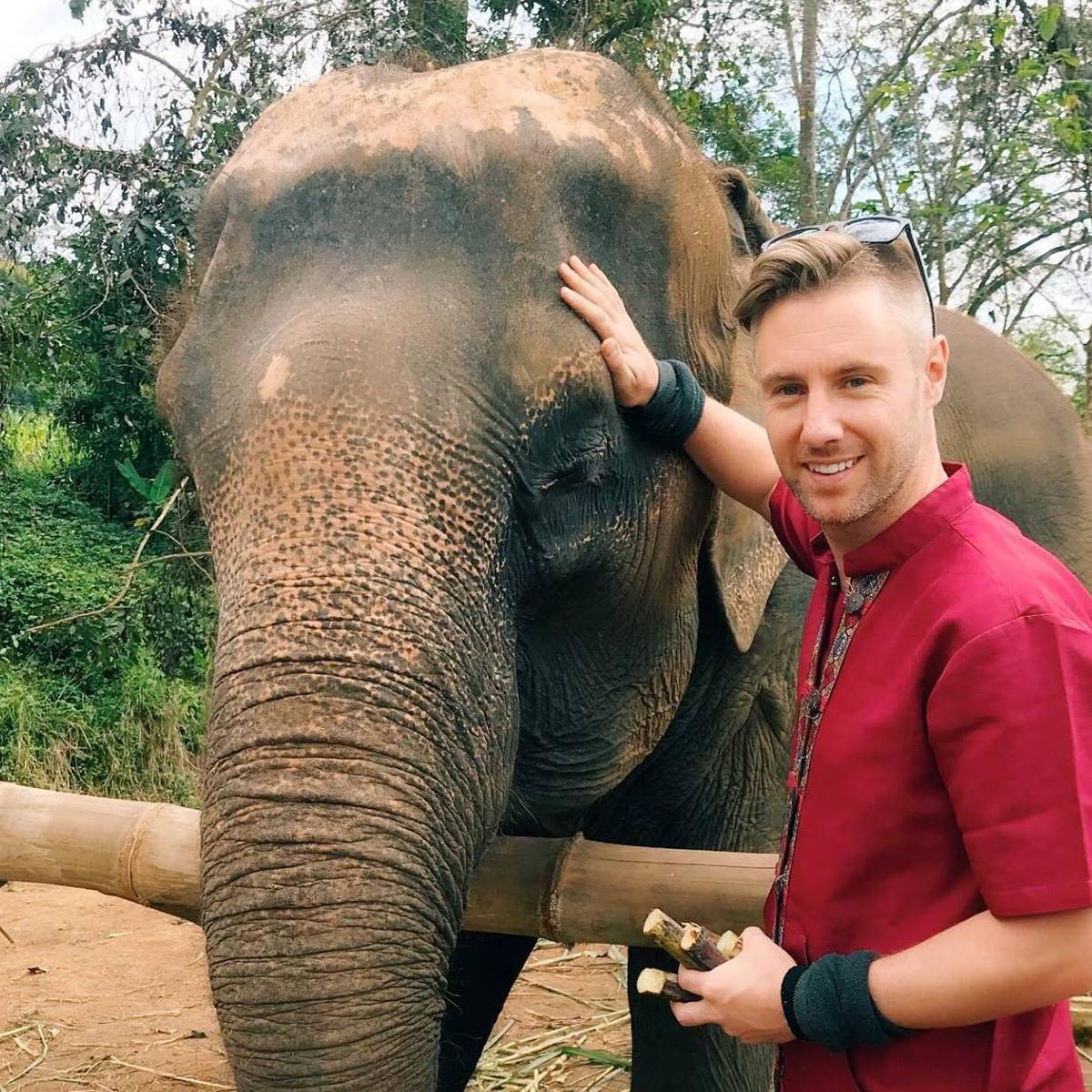

How to Tell a Chiang Mai Elephant Sanctuary from a Riding Camp
Most tourists arrive in Chiang Mai believing that a place calling itself a sanctuary is automatically a good place. That belief is wrong. Since the 1989 logging ban in Thailand, hundreds of former logging elephants and their descendants have ended up in commercial camps. When riding demand dropped and the word sanctuary started attracting higher ticket prices, many riding camps simply rebranded. They kept the bullhooks, the chains, the painting shows, and the howdah riding equipment. They just changed the sign. You need to know how to tell a genuine Chiang Mai elephant sanctuary from a rebranded riding camp before you book anything. Thailand has no legal definition of sanctuary and the industry is entirely unregulated.
Ethical Elephant Sanctuary Chiang Mai: What it Actually Looks Like
No Riding, No Tricks
A real ethical elephant sanctuary Chiang Mai operator does not let you ride. Ever. Howdah riding, the seated basket on the elephant's back, is refused outright because it strains the spine of an animal that already carries its own weight on four legs. No bullhook is visible on the grounds. Staff do not carry or display them. Chains are absent unless a veterinarian has ordered temporary restraint for a medical procedure. The elephants do not paint, perform circus tricks, or play musical instruments. Bathing with tourists is not a scheduled activity. If it happens at all, it is on the elephant's terms, with space to leave, and only one or two visitors at a time.
What To Look For
Look for observation only programmes. These are the least photogenic options and the most expensive, because you pay for the privilege of watching without touching. The elephants have a feeding platform, but you hand food to them across a barrier that keeps a safe distance. They have enrichment activities scattered across the land: mud wallows, foraging areas, scratching posts. The mahout to elephant ratio is high, typically one mahout per elephant, and the mahouts are employed full time with benefits, not day labour. The operator can produce veterinary records and tell you who the vet is and how often they visit. The herd size matches the total land area: one elephant needs roughly 10 to 15 rai (about 4 to 6 acres) of usable space. If the elephants cannot freely leave the group, look elsewhere.
Elephant Riding Chiang Mai: What the Rebranded Camps Still Do
Elephant riding Chiang Mai is still available. You just have to find the camp that does not call itself a sanctuary. The Mae Rim valley, about 45 minutes north of the old city by car, is the main cluster. Drive up the Mae Rim road and you will pass a dozen gates with bamboo signage. Some say sanctuary. Some say elephant camp. The ones with new signage that still have a bullhook hanging by the entrance are the ones to skip.
Red Flags To Check
The tells are specific. A rebranded camp has photos of elephants painting on its booking page. It shows tourists on the elephant's neck, or on a seat. It offers unlimited daily visitor capacity: you turn up, pay, and get herded through. The price is below 1,500 THB for a half day visit. That figure, the 2024 rate, is roughly the operating cost floor for a genuine operation that feeds, vets, and houses elephants properly. Anything cheaper is cutting corners on welfare. The camp says we rescued them but has no paperwork to show where the elephants came from, no rescue date, no prior owner. A genuine rescue centre has documentation.
Booking site red flags are clear. Photos of riding with a seat. Photos of elephants painting or performing. The word sanctuary in the name with no further verifiable detail. Unlimited daily visitor capacity. Prices below that local operating cost floor. If you see any of those, do not book.
Mae Rim Elephant Camp: the Cluster You Need to Evaluate
The Mae Rim valley is where the concentration is highest. Mae Rim elephant camp is not one place; it is a valley full of them, ranging from traditional riding camps that have not rebranded to operations that changed their name last year without changing anything inside. You cannot rely on the name on the Google Maps listing. You have to call or message.
Ask Before You Pay
Ask six questions before you pay anything. First, herd size and total land area. Second, whether elephants can freely leave the group. Third, the mahout to elephant ratio and whether the mahouts are employed year round. Fourth, veterinary arrangements: on site, on call, or none. Fifth, maximum group size and visitors per elephant per day. Sixth, whether elephants are bought or bred. Breeding programmes sold as conservation are a refusal. Genuine rescue centres do not breed; they stop breeding.
Prices And Timing
The half day visit typically runs 3 to 4 hours. A full day visit is 6 to 8 hours. Half day prices range from 1,500 to 2,500 THB per person. Full day prices run 2,500 to 4,500 THB. The variation depends on group size, included transport from Chiang Mai city, meal provision, and the operator staff to visitor ratio. Smaller groups cost more. A no contact observation programme costs the most.
Chiang Mai Elephant Rescue: What a Real One Looks Like
A real Chiang Mai elephant rescue centre does not use the word sanctuary as a marketing term. It has a rescue story it can document. The elephants have names, ages, and histories. The facility is chain free except for veterinary needs. The elephants have behavioural enrichment: puzzles, foraging tasks, varied terrain. They are not lined up for a parade of bathing elephants where every tourist gets a turn in the water.
Bathing And Feeding
Bathing with elephants is a contested practice. Forced water entry causes stress. Human safety is a risk. Water contamination from sunscreen and insect repellent is real. Hand feeding is also contested: it creates unnatural proximity, dependency behaviour, and a bite risk. The most ethical option, no contact observation, is the least photogenic and has the lowest visitor demand. That is the trade off. You are not there to get a photo of yourself hugging an elephant. You are there to see an elephant behave like an elephant.
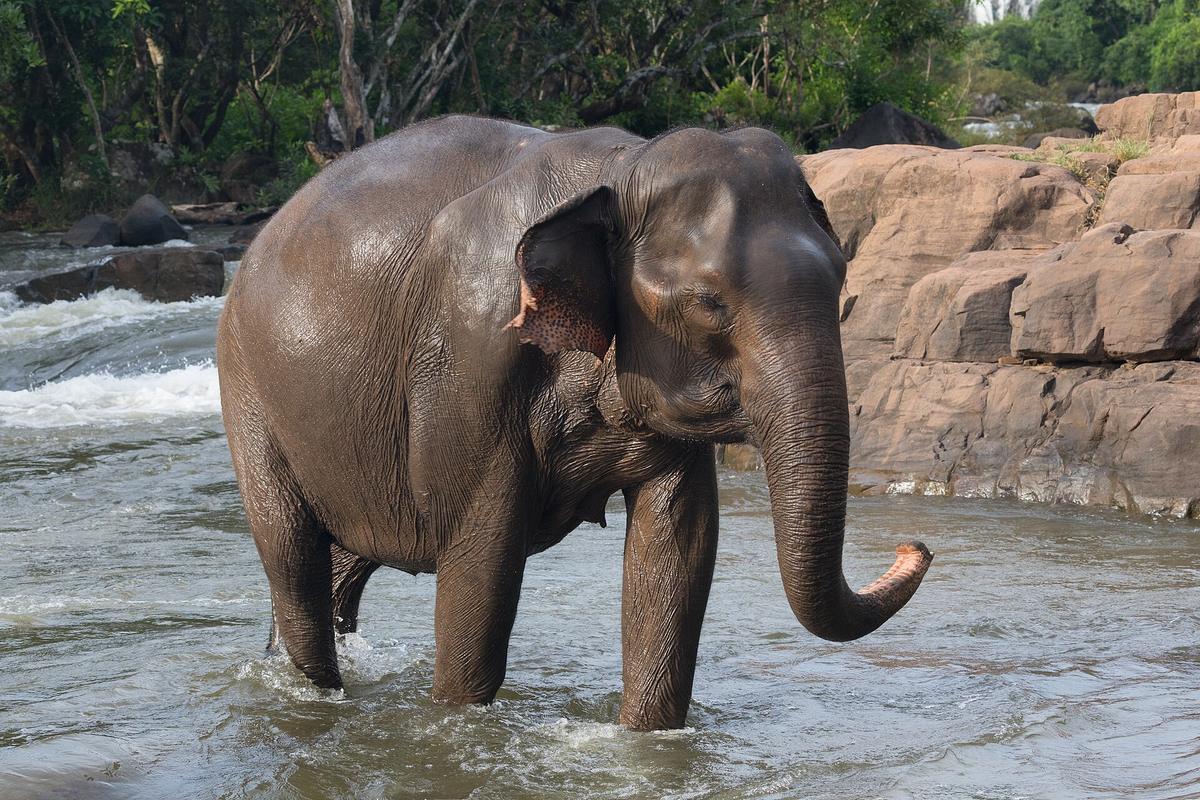

Elephant Sanctuary vs Riding Camp: the Framework for Evaluating Any Camp Before Booking
Elephant sanctuary vs riding camp is not a branding question. It is a practices question. Use this framework on every tour operator page and every booking site.
- Chains visible in any photo or video. Refuse.
- Bullhook present in any staff photo. Refuse.
- Elephants performing tricks, painting, or playing instruments. Refuse.
- Unlimited bathing with tourists. Refuse.
- The phrase we rescued them with no paperwork. Refuse.
A genuine operation has no touch policy enforced by staff. It has a feeding platform that keeps distance. It offers observation only programmes. It has a mahout who works full time and knows each elephant individually. It has a vet on call or on site. It limits daily visitors to a number that matches the land and the elephants tolerance. It does not sell tickets to a half day visit for under 1,500 THB.
The welfare standard is visible. You do not need to be an expert. If the elephants are chained, you leave. If they are being bathed by a group of fifteen tourists at once, you leave. If you see a bullhook, you leave.
What Goes Wrong Most Often Here
The single thing that most often goes wrong is that visitors book the first result on a booking site without checking the photos. The photos show riding, painting, or bathing with a crowd. The name says sanctuary. The visitor arrives and sees chains. They feel bad but they are already there, they paid, and the transport has left. They spend three hours at a rebranded riding camp and leave with photos they posted to social media that make the camp look good.
Do not be that visitor. Check the photos before you pay. If you see any red flag, cancel and book a genuine operation. The extra 500 to 1,000 THB you spend on a real sanctuary is the difference between watching an elephant rest in the shade and watching an elephant perform for food.
Read next
-
 Chiang Mai Hotels by Price Band and Property Type
Chiang Mai hotels by property type and price band, from old city guesthouses to Mae Rim resorts, where the value is the best in Thailand.
Chiang Mai Hotels by Price Band and Property Type
Chiang Mai hotels by property type and price band, from old city guesthouses to Mae Rim resorts, where the value is the best in Thailand.
-
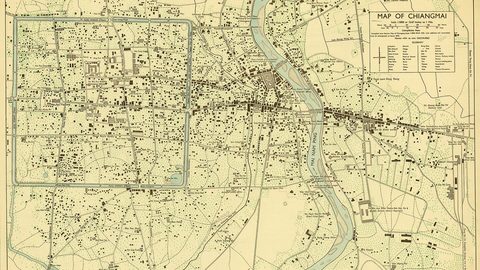 Where to Stay in Chiang Mai: Old City, Nimman or Riverside
Where to stay in Chiang Mai, broken into the four areas that actually matter: Old City, Nimmanhaemin, Wat Ket riverside and Santitham.
Where to Stay in Chiang Mai: Old City, Nimman or Riverside
Where to stay in Chiang Mai, broken into the four areas that actually matter: Old City, Nimmanhaemin, Wat Ket riverside and Santitham.
-
 Flying to Chiang Mai: CNX Airport, Airlines and Arrival Routes
Flying to Chiang Mai means CNX, a small airport 15 minutes from the old city with no rail link. Here is the arrival flow and cost.
Flying to Chiang Mai: CNX Airport, Airlines and Arrival Routes
Flying to Chiang Mai means CNX, a small airport 15 minutes from the old city with no rail link. Here is the arrival flow and cost.
-
 Chiang Mai Things to Do Worth Your Days, Ranked and Argued
Chiang Mai things to do, ranked and argued: the temples, markets and day trips worth your days, and the popular stops you can skip.
Chiang Mai Things to Do Worth Your Days, Ranked and Argued
Chiang Mai things to do, ranked and argued: the temples, markets and day trips worth your days, and the popular stops you can skip.
-
 Best Time to Visit Chiang Mai: Burning Season Comes First
Best time to visit Chiang Mai, with the burning season named first: February to April air quality, then the cool clear peak months.
Best Time to Visit Chiang Mai: Burning Season Comes First
Best time to visit Chiang Mai, with the burning season named first: February to April air quality, then the cool clear peak months.
-
 Getting Around Chiang Mai: Grab, Songthaews and Scooter Reality
Getting around Chiang Mai: Grab and songthaew costs, scooter licence checkpoints, airport transfers and why walking is harder than it looks.
Getting Around Chiang Mai: Grab, Songthaews and Scooter Reality
Getting around Chiang Mai: Grab and songthaew costs, scooter licence checkpoints, airport transfers and why walking is harder than it looks.
-
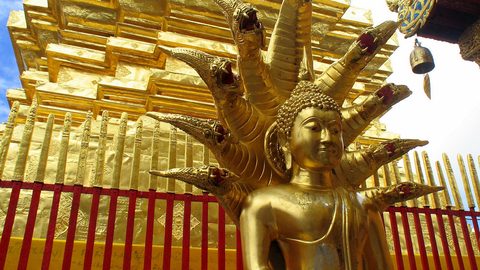 Wat Phra That Doi Suthep
Doi Suthep is a gold chedi above Chiang Mai, but the monk's trail up through Wat Pha Lat is the part almost nobody walks.
Wat Phra That Doi Suthep
Doi Suthep is a gold chedi above Chiang Mai, but the monk's trail up through Wat Pha Lat is the part almost nobody walks.
-
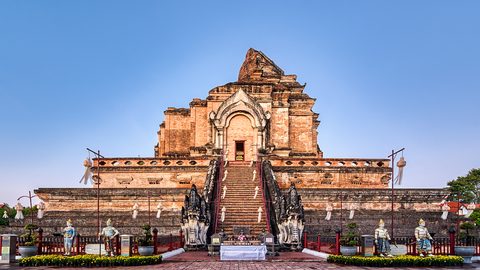 Wat Chedi Luang
 is the biggest ruin in Chiang Mai's old city, and the one temple where you can sit and talk to a monk.
Wat Chedi Luang
Wat Chedi Luang is the biggest ruin in Chiang Mai's old city, and the one temple where you can sit and talk to a monk.
-
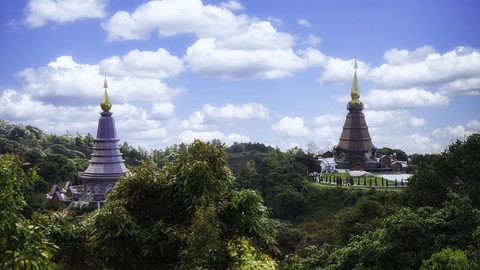 Doi Inthanon
 is 2,565 metres of summit car park in cloud, but the waterfalls, pagodas and trails on the way up are better.
Doi Inthanon
Doi Inthanon is 2,565 metres of summit car park in cloud, but the waterfalls, pagodas and trails on the way up are better.