Chiang Mai or Chiang Rai: Which Northern Thailand City Fits
Chiang Mai is the better base for most northern Thailand trips, but Chiang Rai has the White Temple. Here is how to choose.

The Real Question: Base or Stopover
The question is not Chiang Mai or Chiang Rai. It is whether you need a base for a northern Thailand trip or a stopover for two specific sights. Chiang Mai is the larger and more comfortable city, with better food, stronger cafe culture, and the infrastructure to support a week of exploration. Chiang Rai is smaller, quieter, and built around three modern art sites plus the Golden Triangle. Choose a place to settle in, or a place to see in a day and a half.
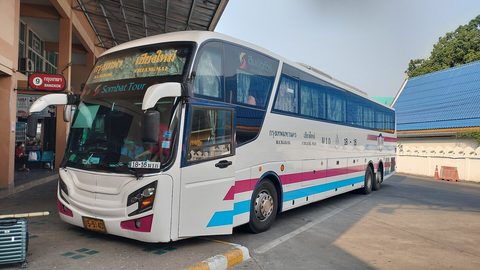
For almost every traveller, the answer is clear: use Chiang Mai as your base and add Chiang Rai as a two-day trip. The bus journey between them takes three hours to three hours and thirty minutes by Green Bus, with fares between 180 THB and 350 THB depending on the class you book. That is short enough for a single overnight stay, but long enough that you do not want to commute back and forth. Here is what each city does better, who should pick the smaller one instead, and how to fit both into your itinerary without overcomplicating your trip.
| Axis | Chiang Mai | Chiang Rai |
|---|---|---|
| Urban population | 1.2 million (2023 estimate) | 200,000 (2023 estimate) |
| Annual visitors | 9 to 10 million (2024) | 2 to 3 million (2024) |
| International flights | 20+ direct destinations | 5 or fewer direct destinations |
| Hotel rooms | 50,000+ | 10,000 or fewer |
| Average hotel rate | 1,500 to 3,500 THB per night | 800 to 2,000 THB per night |
| Michelin Bib Gourmand entries | 23 (2025) | 6 (2025) |
| Historic temples inside old city walls | 30+ | 0 |
| Signature dish | Khao soi | Khao soi nam nao |
| Best day trip range | Mountains, national parks, elephant camps | White Temple, Blue Temple, Golden Triangle |
| Time to cover main sights | 4 days minimum | 1 night, 2 days recommended |
Northern Thailand Base City: Why Chiang Mai Wins
Arrival And Getting Around
If you are choosing a northern Thailand base city, Chiang Mai is the obvious pick. It has the airport access you need. Chiang Mai International Airport is 10 to 15 minutes from the old city by taxi or Grab, and the fare runs 150 to 200 THB. Chiang Rai's airport has five or fewer direct international destinations, so you are almost certainly flying into Chiang Mai anyway. That alone tilts the decision for most travellers.
Where To Stay, Work And Eat
Chiang Mai's tourist infrastructure is deeper than anywhere else in the north. You have 50,000 hotel rooms across districts like the Old City, Nimmanhaemin, and the riverside Charoenrat area. The cafe culture in Nimmanhaemin is polished enough for a digital uPhone to work from a different spot every day for a month. Co-working spaces are common, and 5G coverage from AIS and True is reliable across the city. The night bazaar runs nightly, Warorot Market operates as a proper local wet market, and the Saturday Walking Street on Wua Lai is one of the best market experiences in the country.
For food, Chiang Mai has 23 Michelin Bib Gourmand entries in 2025, six times what Chiang Rai has. The signature dish is khao soi, a coconut curry noodle soup you will find on nearly every block. You also get sai ua, herbal northern sausage from Warorot or street grills, gaeng hang lay, pork belly curry with ginger and tamarind, and the overnight charcoal pork at the Chang Phueak cowboy lady stall. The temple density within the old city walls alone is over 30 active sites, including Wat Phra Singh, Wat Chedi Luang with its massive ruined chedi, and Wat Chiang Man, the oldest in the city. Wat Phra That Doi Suthep sits on the mountain above at 1,073 metres elevation, reachable by songthaew or scooter in 30 to 40 minutes.
Day Trips Without Repacking
Chiang Mai also works as a base for day trips that Chiang Rai cannot match. Doi Inthanon National Park, Thailand's highest peak at 2,565 metres, is 60 km away and takes 1.5 to 2 hours by car. Mae Rim valley, with elephant camps, gardens, and ziplines, is 45 minutes out. Chiang Dao's caves and mountain views are 1.5 hours north. Mae Kampong village, a forest community with waterfalls, is an hour by car. You do not need to relocate to see any of these. Book a tour or drive yourself and sleep in the same bed each night.
Chiang Rai Day Trip from Chiang Mai: How to Do it Properly
A Chiang Rai day trip from Chiang Mai is feasible but tight. The bus journey by Green Bus takes three hours to three hours and thirty minutes each way, which means six to seven hours on the road for a same-day return. You see the White Temple, the Blue Temple, and perhaps the Black House, then you head back. You skip the Golden Triangle, Mae Salong, and Mae Sai entirely unless you stay overnight.
The One-Night, Two-Day Plan
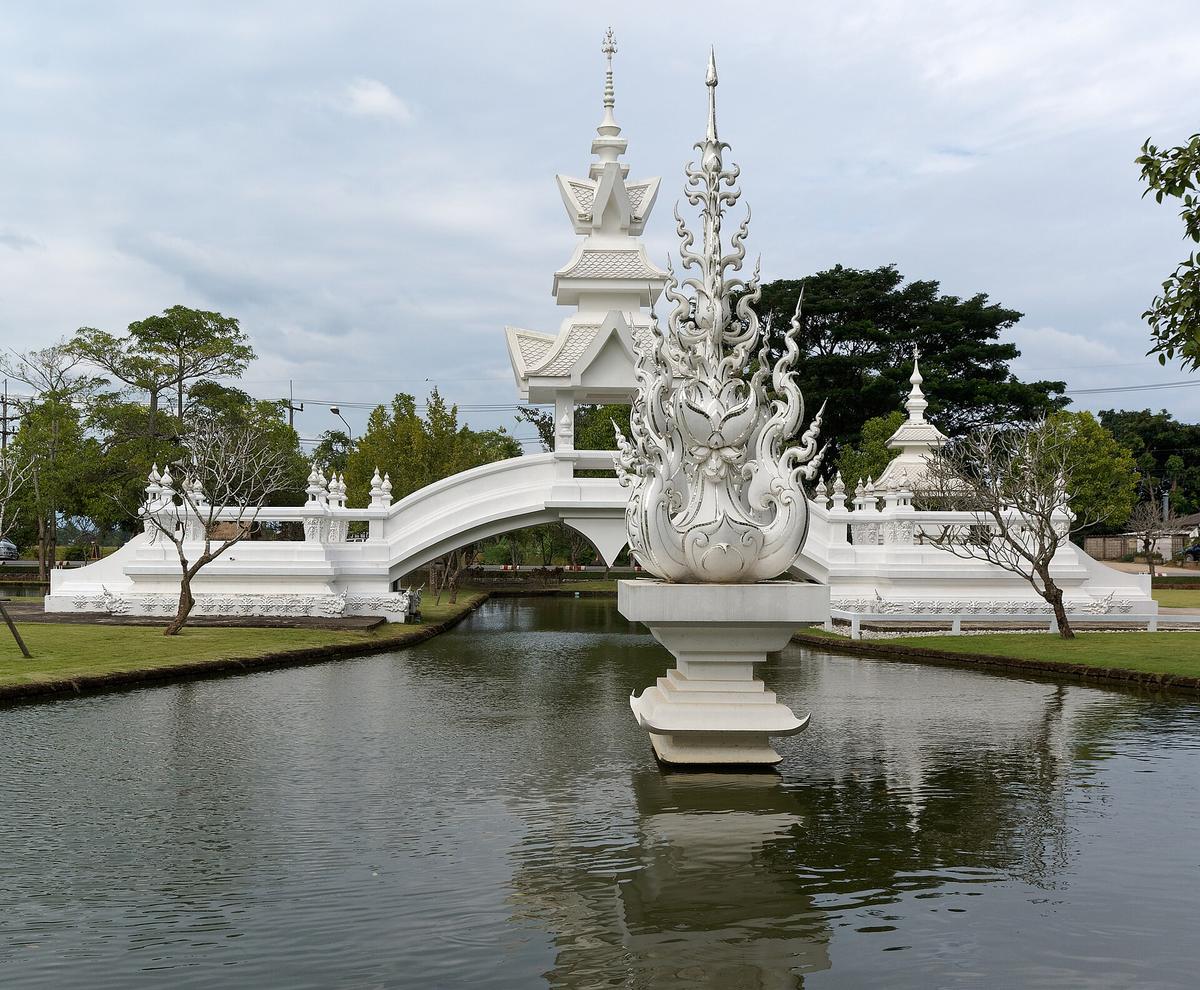
The better plan is one night, two days. Book a hotel in Chiang Rai for 800 to 2,000 THB per night, roughly half the average rate in Chiang Mai. Arrive by bus in the early afternoon and visit Wat Rong Khun (White Temple) on the way into town. It is 13 km southwest of the city centre, so ask the bus to drop you there or take a local songthaew from the terminal. The White Temple was designed by artist Chalermchai Kositpipat, construction began in 1997, and the entry fee is 100 THB. It is a contemporary artwork, not a historic temple, and it draws crowds accordingly. Go late in the afternoon when the tour groups thin out.
Evening And The Next Morning
That evening, visit the Baan Dam Museum (Black House), 10 km north of the city centre, created by artist Thawan Duchanee. Entry is 80 THB. Then hit the Chiang Rai Night Bazaar for dinner. It is smaller and quieter than Chiang Mai's, but the food is solid and the prices are lower. The next morning, visit Wat Rong Suea Ten (Blue Temple), 3 km north of the centre. It is free. Then take a day trip north: the Golden Triangle is 60 km away, Mae Salong is 75 km, and the Mae Sai border crossing into Myanmar is 61 km. You can cover one of these on a half-day tour before catching the afternoon bus back to Chiang Mai.
Worth it if
- Better food: 23 Michelin Bib Gourmand entries, deeper street food scene, wider variety of northern specialities like khao soi and sai ua
- Stronger tourist infrastructure: 50,000+ hotel rooms, reliable Grab and Bolt coverage, international airport with 20+ direct routes
- Deeper day trip range: Doi Inthanon, Doi Suthep, Mae Rim valley, Chiang Dao, Mae Kampong — all accessible without relocating
- Works for digital nomads and slow travellers: strong co-working spaces, polished cafe culture in Nimmanhaemin, reliable 5G
- More to do: you need 4 days minimum to cover the old city temples, a cooking class, a market, and one mountain or countryside day
Skip it if
- Traffic is worse than photos suggest, especially on the moat roads and Nimmanhaemin
- Heat and smoke season (February to April) can make outdoor activity unpleasant or unhealthy
- Old city is more spread out than first-timers expect — walking between far temples in midday sun drains your energy fast
- Police checkpoints for scooter licences are common, and an International Driving Permit is required; fines and voided insurance are real risks
- Not for hardcore partiers: late-night clubs are limited compared to Bangkok or Pattaya
_1890.png)
Chiang Mai or Chiang Rai for Temples: Each City Has a Different Answer
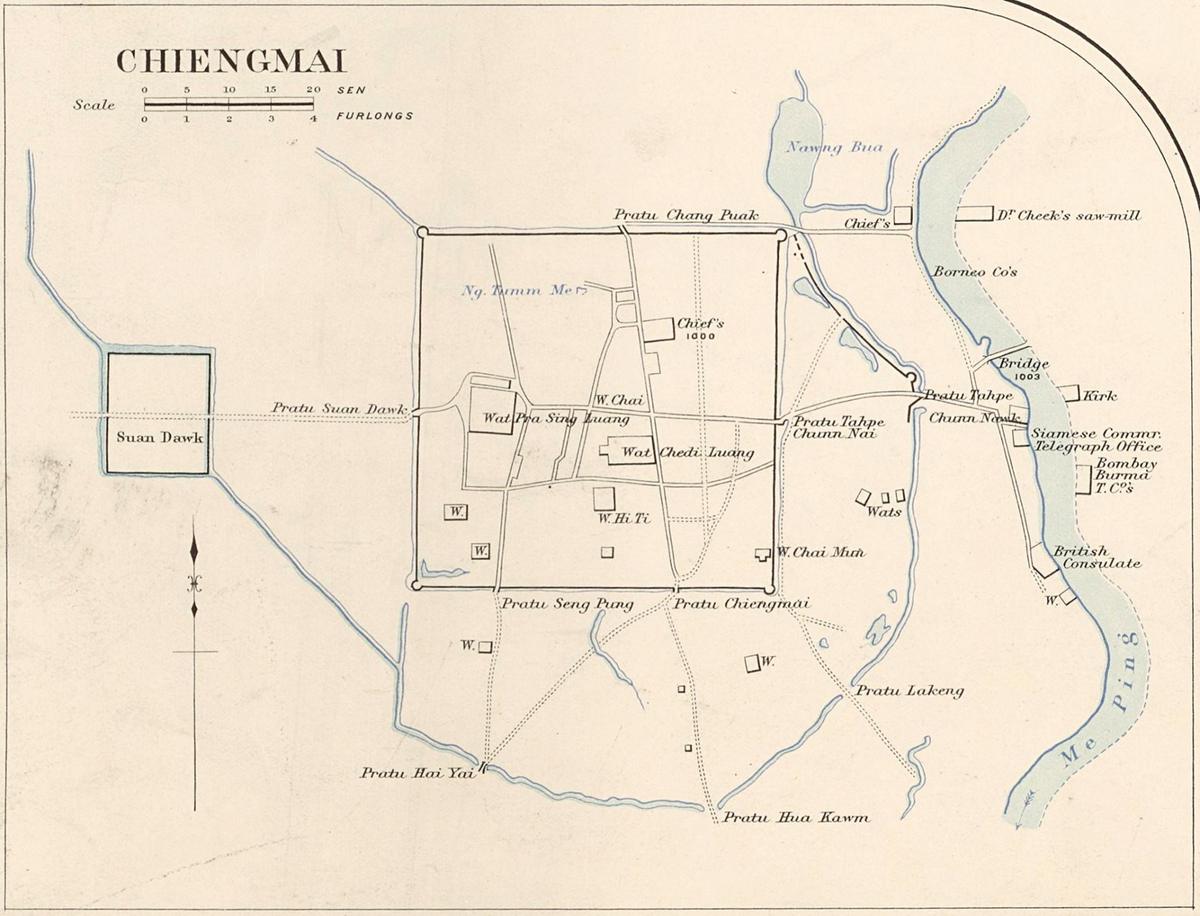
The question of Chiang Mai or Chiang Rai for temples depends on what you mean by 'temple'. If you want historic sites, centuries-old chedis, Buddha images, meditation forests, Chiang Mai is the clear winner. The old city alone contains over 30 active temples within its 1.6-kilometre-square moat. Wat Phra Singh is the most revered, with its classic Lanna architecture and a famous Buddha image in the Lai Kham chapel. Wat Chedi Luang houses the massive ruined chedi and the city pillar. Wat Chiang Man is the oldest, dating to the city's founding in 1296. Wat Umong is a forest temple with ancient tunnels and a quiet, rustic atmosphere. Wat Pha Lat is a jungle temple on the Doi Suthep trail, quieter than the main summit temple. Wat Suan Dok has fields of white chedis and is a popular sunset photography spot.
Modern Art, Not Ancient Stone
If you want striking modern temple art, Chiang Rai wins in a single day. The Chiang Rai White Temple (Wat Rong Khun) is an all-white contemporary structure covered in mirror mosaic, designed by Chalermchai Kositpipat and under construction since 1997. It is not a temple in the traditional sense. It is an art installation that uses Buddhist iconography. The Blue Temple (Wat Rong Suea Ten) is free, smaller, and painted in vivid ultramarine with a giant white Buddha. The Black House (Baan Dam Museum) is not a temple at all but a museum of artist Thawan Duchanee's dark, confrontational work, housed in a collection of black wooden buildings. All three are within 13 km of each other and can be covered in one morning. After that, Chiang Rai's temple options run out. The historic temple scene is thin compared to Chiang Mai.
Chiang Mai vs Chiang Rai: Who Should Pick the Smaller City
Chiang Rai is the better choice for a specific type of traveller: someone whose priority is the three modern temples and the Golden Triangle day trips over food depth, accommodation variety, and city infrastructure. If your northern Thailand itinerary is short, say, four or five days total, and you want to see the White Temple, the Blue Temple, the Black House, the Golden Triangle, and Mae Salong, base yourself in Chiang Rai and skip Chiang Mai entirely. You lose the food scene, the historic old city, and the day trip range, but you save the bus time and you pay less for your room.
Who Else Should Stay Here
Chiang Rai also suits travellers who actively dislike crowds and traffic. The city of 200,000 people has a local feel that Chiang Mai's 1.2 million urban area cannot replicate. The night bazaar is smaller, the walkable core is tighter, and the pace is genuinely slow. If you have already spent time in Chiang Mai on a previous trip, or if you are entering Thailand from Laos via the Golden Triangle, Chiang Rai makes sense as a two-day stop.
For everyone else, solo travellers wanting a safe, easy base, digital nomads and slow travellers who need co-working space and reliable internet, food-focused visitors who want to eat khao soi at a different stall every night, temple and culture enthusiasts who want 30+ historic temples within walking distance, base in Chiang Mai. Add Chiang Rai as a two-day add-on: one night, two days, bus there and back. That is the itinerary that gives you the best of both cities without the compromises of choosing one over the other.
Read next
-
 Chiang Mai Hotels by Price Band and Property Type
Chiang Mai hotels by property type and price band, from old city guesthouses to Mae Rim resorts, where the value is the best in Thailand.
Chiang Mai Hotels by Price Band and Property Type
Chiang Mai hotels by property type and price band, from old city guesthouses to Mae Rim resorts, where the value is the best in Thailand.
-
 Where to Stay in Chiang Mai: Old City, Nimman or Riverside
Where to stay in Chiang Mai, broken into the four areas that actually matter: Old City, Nimmanhaemin, Wat Ket riverside and Santitham.
Where to Stay in Chiang Mai: Old City, Nimman or Riverside
Where to stay in Chiang Mai, broken into the four areas that actually matter: Old City, Nimmanhaemin, Wat Ket riverside and Santitham.
-
 Flying to Chiang Mai: CNX Airport, Airlines and Arrival Routes
Flying to Chiang Mai means CNX, a small airport 15 minutes from the old city with no rail link. Here is the arrival flow and cost.
Flying to Chiang Mai: CNX Airport, Airlines and Arrival Routes
Flying to Chiang Mai means CNX, a small airport 15 minutes from the old city with no rail link. Here is the arrival flow and cost.
-
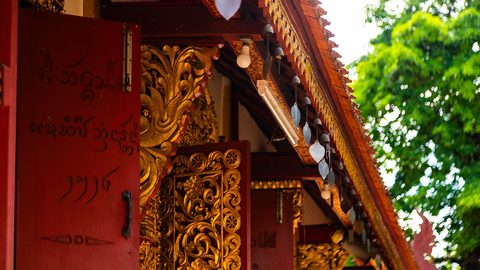 Chiang Mai Things to Do Worth Your Days, Ranked and Argued
Chiang Mai things to do, ranked and argued: the temples, markets and day trips worth your days, and the popular stops you can skip.
Chiang Mai Things to Do Worth Your Days, Ranked and Argued
Chiang Mai things to do, ranked and argued: the temples, markets and day trips worth your days, and the popular stops you can skip.
-
 Best Time to Visit Chiang Mai: Burning Season Comes First
Best time to visit Chiang Mai, with the burning season named first: February to April air quality, then the cool clear peak months.
Best Time to Visit Chiang Mai: Burning Season Comes First
Best time to visit Chiang Mai, with the burning season named first: February to April air quality, then the cool clear peak months.
-
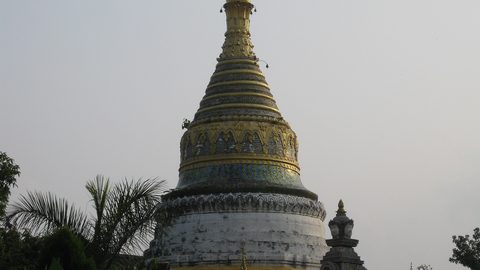 Getting Around Chiang Mai: Grab, Songthaews and Scooter Reality
Getting around Chiang Mai: Grab and songthaew costs, scooter licence checkpoints, airport transfers and why walking is harder than it looks.
Getting Around Chiang Mai: Grab, Songthaews and Scooter Reality
Getting around Chiang Mai: Grab and songthaew costs, scooter licence checkpoints, airport transfers and why walking is harder than it looks.
-
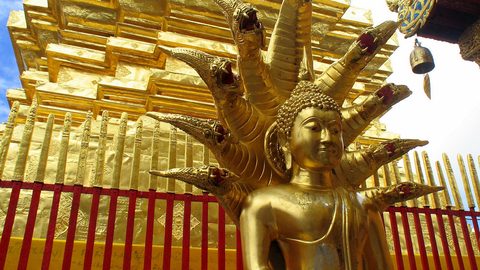 Wat Phra That Doi Suthep
Doi Suthep is a gold chedi above Chiang Mai, but the monk's trail up through Wat Pha Lat is the part almost nobody walks.
Wat Phra That Doi Suthep
Doi Suthep is a gold chedi above Chiang Mai, but the monk's trail up through Wat Pha Lat is the part almost nobody walks.
-
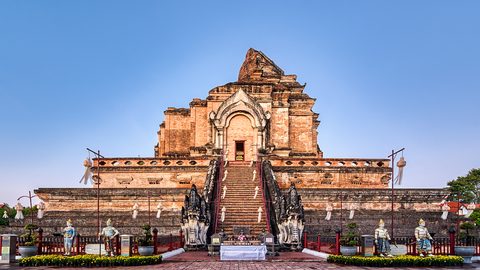 Wat Chedi Luang
 is the biggest ruin in Chiang Mai's old city, and the one temple where you can sit and talk to a monk.
Wat Chedi Luang
Wat Chedi Luang is the biggest ruin in Chiang Mai's old city, and the one temple where you can sit and talk to a monk.
-
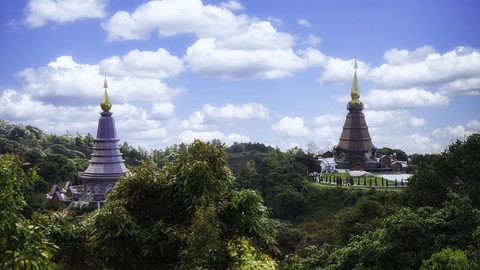 Doi Inthanon
 is 2,565 metres of summit car park in cloud, but the waterfalls, pagodas and trails on the way up are better.
Doi Inthanon
Doi Inthanon is 2,565 metres of summit car park in cloud, but the waterfalls, pagodas and trails on the way up are better.