Chiang Mai Things to Do: What Is Worth Your Days and What to Skip
Chiang Mai things to do, ranked and argued: the temples, markets and day trips worth your days, and the popular stops you can skip.
Chiang Mai Things to Do Worth Your Days, Ranked and Argued
You have three to five days in Chiang Mai, and every list tells you to see everything. You cannot. The old city is 1.6 km per side, the heat hits 36°C in April, and the moat square is far more spread out than photos suggest. This guide ranks the Chiang Mai things to do that actually justify a half-day or a full day, argues which popular attractions to skip, and gives you the numbers to decide.
Chiang Mai was founded by King Mangrai in 1296. It sits at 310 m above sea level, with a city population of 127,000 (2023, Chiang Mai Provincial Statistical Office) and a metropolitan population of 1.2 million. The peak season runs November to February, when cool mornings, dry air, and clear skies make outdoor movement possible. The window to avoid is March to mid-April, when agricultural burning creates hazardous air quality and the average high in April reaches 36°C. If you arrive then, shift all outdoor activity to early morning.
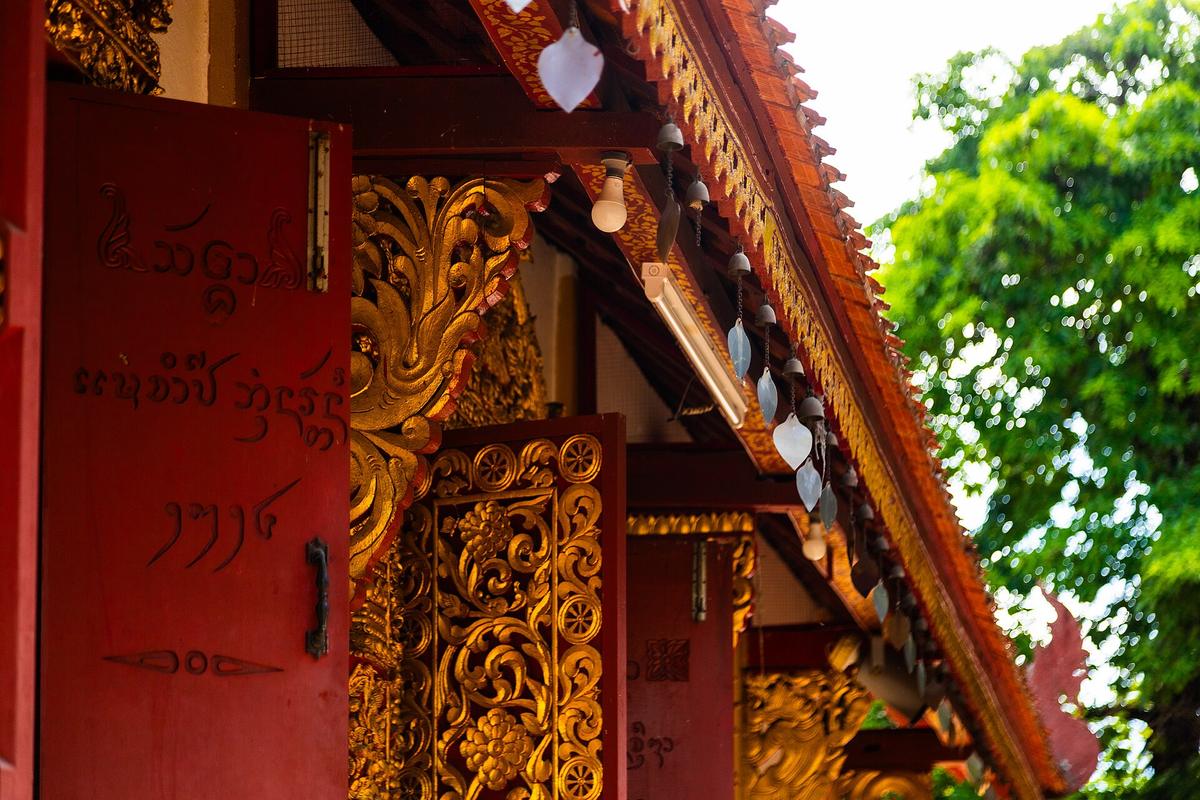

The Mountain Morning: Doi Suthep and Wat Pha Lat Together
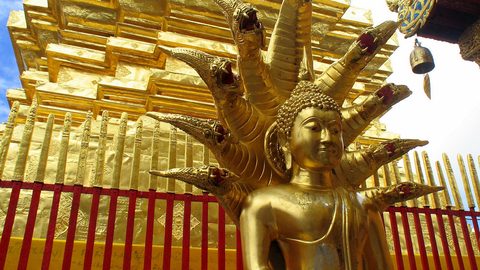
Do not visit Doi Suthep alone. Pair it with Wat Pha Lat in a single half-day loop for a genuine mountain morning. Wat Phra That Doi Suthep sits at 1,073 m above sea level, 15 km from the city centre, founded in 1383. You climb 306 naga staircase steps or take a tram. Arrive by 07:00, before the tour buses and the heat. The best visiting window is 07:00 to 08:30 or 16:30 to 18:00. The foreigner entrance fee is 30 THB, set annually, check the current rate with the temple office. Opening hours are 06:00 to 20:00 daily. A songthaew from the old city costs 30 THB per person (2024 fare, subject to change) for the 30-40 minute ride; a Grab costs about 300 THB.
Wat Pha Lat: The Jungle Temple On The Way Down
On the descent, stop at Wat Pha Lat, a jungle temple that receives a fraction of the crowds. It sits on the same mountain slope, requires no entrance fee, and takes 20-30 minutes to walk. You can hike the Monk's Trail from Wat Pha Lat up to Doi Suthep if you want a 1.5-hour forest walk. The failure case: if you arrive at Doi Suthep after 09:00, skip Wat Pha Lat entirely, the heat and the crowds at the main temple make the combined morning feel rushed. Do one or the other.
The Old City Core: Wat Phra Singh and Wat Chedi Luang
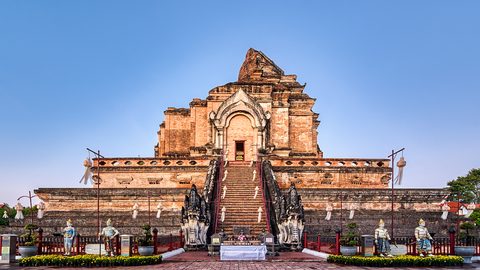
Inside the moated old city, you need exactly two temples. Wat Phra Singh Woramahaviharn, founded in 1345, is the most revered temple in the old city. Its key building is Viharn Lai Kham, which houses the Phra Buddha Sihing image. Opening hours are 06:00 to 17:00 daily. The foreigner entrance fee is 40 THB, set annually. Visit it first, at 07:00, before the heat sets in. Wat Chedi Luang Woramahaviharn, founded in 1391, sits central in the old city. Its massive chedi originally stood 82 m tall but was damaged by an earthquake in 1545 and now stands at 60 m. The entrance fee is 50 THB, set annually. Opening hours are 06:00 to 18:00 daily. The city pillar, Sao Inthakin, is housed on the grounds. Do not walk between them in midday sun; the distance is about 800 m down Ratchadamnoen Road, but the pavement is narrow and uneven, and you will arrive sweating through your dress-code-required covered shoulders and knees. Take a songthaew (30 THB) or a tuk-tuk (60-100 THB) between them if it is after 10:00.
Skip Wat Chiang Man, the oldest temple founded in 1297, unless you have a third day in the old city. Skip Wat Suan Dok, founded in 1370, with its 48 white chedis, unless you are already on Suthep Road at sunset for photography. Skip Wat Umong, the forest tunnel temple 3.5 km west of the old city, unless you want a quiet, rustic break. If you have only two days in Chiang Mai, the three temples inside the walls recommended for a first visit, Wat Phra Singh, Wat Chedi Luang, and one more, are best narrowed to these two.
| Temple | Distance From Old City | Entrance Fee (2024 Rate) | Best Time | Time Needed |
|---|---|---|---|---|
| Wat Phra Singh | Inside walls, west side | 40 THB | 06:00–08:00 | 45 min |
| Wat Chedi Luang | Inside walls, central | 50 THB | 06:00–08:30 | 45 min |
| Wat Phra That Doi Suthep | 15 km, 30–40 min drive | 30 THB | 07:00–08:30 | 1.5 hours |
| Wat Pha Lat | On Doi Suthep slope | Free | 08:30–09:30 | 30 min |
| Wat Umong | 3.5 km west | Free | Morning or late | 30 min |
Chiang Mai Markets: Pick One Properly and Skip the Night Bazaar as Shopping
Chiang Mai has four major markets. Do one properly, and treat the Night Bazaar as a 30-minute evening walk, not a shopping mission. The Night Bazaar on Chang Klan Road runs 17:00 to 23:00 daily, spans 0.5 km, and sells mass-produced souvenirs, counterfeit branded goods, and elephant-print trousers. The honest verdict: it is worth one evening walk for atmosphere only. The Kalare Night Bazaar is the main covered building. If you buy anything, negotiate hard and expect it to fall apart.
Warorot Market (Kad Luang)
Warorot Market, between Chang Moi Road and Wichayanon Road east of the old city, is the local wet market. Hours are 06:00 to 19:00 daily across three floors. Go at 08:00 for the flower market (Ton Lamyai Market is adjacent), fresh produce, and the best dried snacks. This is where you buy northern ingredients: sai ua sausage, nam prik ong paste, and gaeng hang lay curry paste. It is not a craft market. Buy here if you want everyday Thai goods that locals actually use.
Sunday Walking Street And Saturday Walking Street
The Sunday Walking Street on Ratchadamnoen Road inside the old city runs 16:00 to 22:00 and stretches 1 km. It is the largest and best for crafts, clothing, and street food. The Saturday Walking Street on Wualai Road, south of the old city, runs the same hours and is 1 km long. If you can do only one, choose Sunday for size and variety. If you are only in town on Saturday, the Saturday version is a solid alternative. Arrive at 16:00 to beat the worst crowds; by 18:00, you are moving at shuffle pace. If both fall on days you are elsewhere, Warorot Market covers the food half and you skip the craft half without regret.
Chiang Mai Cooking Class: the Best-Value Activity in Thailand
Chiang Mai is the best-value place in Thailand for a cooking class. The typical duration is 4-5 hours, the price range is 800-1,500 THB per person (2024 rate, set annually), and you cook 4-5 dishes. The inclusions are a market tour, ingredients, and a recipe book. Book one that visits a local market first, Warorot Market is common, because the market tour teaches you which ingredients matter for khao soi, sai ua, and gaeng hang lay. Khao soi, Chiang Mai's signature dish, uses egg noodles, coconut curry broth, chicken or beef, crispy noodles, shallots, lime, and pickled mustard greens. A bowl costs 50-80 THB in a restaurant; making it yourself costs 800 THB and a morning. The failure case: if you book a class that skips the market tour, you lose the main educational value. Ask before booking. Class times are typically 08:00-13:00 or 16:00-21:00. The morning slot is better because heat has not peaked.
One Lake or Countryside Escape: Huay Tung Tao Lake
After temples, markets, and cooking, you need a half-day that involves no itinerary. Huay Tung Tao Lake, a reservoir north of the city, offers bamboo huts over the water, swimming, and basic northern Thai food. Take a songthaew for 30 THB or a Grab for 200-300 THB; the drive takes 30 minutes. Entry costs about 50 THB. Bring a towel and cash; the food stalls accept cash only. The best time is 15:00 to 18:00 to avoid the heat and catch the breeze. Do not expect swimming infrastructure, the lake has mud entry and no lifeguards. If you want a full-day mountain escape instead, Doi Inthanon National Park, 70 km from the city, is the highest peak in Thailand at 2,565 m above sea level. The entrance fee is 300 THB for foreigners, 50 THB for Thai citizens (2024 rate, set annually). Key features are the twin royal pagodas, Kew Mae Pan nature trail, and Wachirathan waterfall. The average January low at the summit is 5°C. Doi Inthanon requires a full day and a car or tour. If you have only one mountain day, the Doi Suthep and Wat Pha Lat morning is a better use of your time than the long drive to Doi Inthanon.
What to Skip Entirely
Skip elephant riding at all camps. The elephant spine has bony protrusions; carrying a howdah with two adults causes long-term injury. The animals are trained using phajaan, a breaking ritual involving restraint and beating. The alternative is an observation-only sanctuary such as Elephant Nature Park, 60 km north of the city, at 2,500 THB per adult day visit (2024 rate, set annually). Skip tiger attractions. Tiger Kingdom in Mae Rim closed permanently in 2016, but even if it were open, private tiger ownership and commercial handling are banned under the Wildlife Conservation and Protection Act B.E. 2562 (2019). Skip long-neck village visits to Karen Padaung villages. The gate fee of 250-500 THB per visitor goes to private Thai companies, not the community, and the villages operate as human zoos. There is no recommended alternative. Skip ziplines if water levels are low (March, May) and you want a full-day activity; choose whitewater rafting on the Mae Taeng or Mae Chaem rivers instead, which runs June to February at 1,800-2,500 THB per person for a 10 km trip at Class II, IV rapids (2024 rate, set annually).
What Goes Wrong Most Often
The single most common mistake: underestimating distances and heat. Visitors plan to walk between three or four temples across the old city in midday sun, then run out of energy before the best sights. Chiang Mai's old city is 1.6 km per side, not a compact historic core. The pavement is narrow and uneven, often blocked by parked bikes. By 11:00, you are sweating through clothes that need to cover shoulders and knees. The fix: map your stops to a single district per half-day, use songthaews between them (30 THB per person), and finish outdoor activity by 10:00. After that, eat, rest, and go out again at 16:00. The city is suited to solo travellers wanting a safe, easy base; digital nomads and slow travellers; food-focused visitors; temple and culture enthusiasts; and budget-to-midrange couples. It is not for beach seekers, hardcore partiers wanting late-night clubs, travellers who want a compact walkable historic core, or anyone unwilling to handle heat, smoke season, or scooter traffic.
Common Questions
How many temples should I visit in Chiang Mai on a first trip?
Three inside the walls plus Doi Suthep. Choose Wat Phra Singh and Wat Chedi Luang inside the old city, then one more: Wat Suan Dok for convenience or Wat Umong for atmosphere. That fills two half-days without temple fatigue.
Is the Chiang Mai Night Bazaar worth visiting?
Yes, as a 30-minute evening walk for atmosphere. No, as a shopping destination. The mass-produced goods, counterfeit brands, and elephant-print trousers are better replaced by Warorot Market for local goods or the Sunday Walking Street for crafts.
When is the best time to visit Doi Suthep?
07:00 to 08:30. The temple opens at 06:00, but arriving at 07:00 lets you beat the tour buses and the crowd that forms after 09:00. The second window is 16:30 to 18:00 for sunset, but the light fades quickly in the mountains.
Can I walk between temples in the old city?
You can, but do not try it between 10:00 and 16:00. The old city moat is 1.6 km per side, the heat hits 36°C in hot season, and the pavement is narrow and uneven. Take a songthaew or tuk-tuk between Wat Phra Singh and Wat Chedi Luang if it is after 10:00.
Read next
-
 Chiang Mai Hotels by Price Band and Property Type
Chiang Mai hotels by property type and price band, from old city guesthouses to Mae Rim resorts, where the value is the best in Thailand.
Chiang Mai Hotels by Price Band and Property Type
Chiang Mai hotels by property type and price band, from old city guesthouses to Mae Rim resorts, where the value is the best in Thailand.
-
 Where to Stay in Chiang Mai: Old City, Nimman or Riverside
Where to stay in Chiang Mai, broken into the four areas that actually matter: Old City, Nimmanhaemin, Wat Ket riverside and Santitham.
Where to Stay in Chiang Mai: Old City, Nimman or Riverside
Where to stay in Chiang Mai, broken into the four areas that actually matter: Old City, Nimmanhaemin, Wat Ket riverside and Santitham.
-
 Flying to Chiang Mai: CNX Airport, Airlines and Arrival Routes
Flying to Chiang Mai means CNX, a small airport 15 minutes from the old city with no rail link. Here is the arrival flow and cost.
Flying to Chiang Mai: CNX Airport, Airlines and Arrival Routes
Flying to Chiang Mai means CNX, a small airport 15 minutes from the old city with no rail link. Here is the arrival flow and cost.
-
 Best Time to Visit Chiang Mai: Burning Season Comes First
Best time to visit Chiang Mai, with the burning season named first: February to April air quality, then the cool clear peak months.
Best Time to Visit Chiang Mai: Burning Season Comes First
Best time to visit Chiang Mai, with the burning season named first: February to April air quality, then the cool clear peak months.
-
 Getting Around Chiang Mai: Grab, Songthaews and Scooter Reality
Getting around Chiang Mai: Grab and songthaew costs, scooter licence checkpoints, airport transfers and why walking is harder than it looks.
Getting Around Chiang Mai: Grab, Songthaews and Scooter Reality
Getting around Chiang Mai: Grab and songthaew costs, scooter licence checkpoints, airport transfers and why walking is harder than it looks.
-
 Chiang Mai Itinerary: A Four Day Sequence, Deliberately Incomplete
A four day Chiang Mai itinerary, clustered by area and paced for the heat, deliberately incomplete so the city can fill the gaps.
Chiang Mai Itinerary: A Four Day Sequence, Deliberately Incomplete
A four day Chiang Mai itinerary, clustered by area and paced for the heat, deliberately incomplete so the city can fill the gaps.
-
 Wat Phra That Doi Suthep
Doi Suthep is a gold chedi above Chiang Mai, but the monk's trail up through Wat Pha Lat is the part almost nobody walks.
Wat Phra That Doi Suthep
Doi Suthep is a gold chedi above Chiang Mai, but the monk's trail up through Wat Pha Lat is the part almost nobody walks.
-
 Wat Chedi Luang
 is the biggest ruin in Chiang Mai's old city, and the one temple where you can sit and talk to a monk.
Wat Chedi Luang
Wat Chedi Luang is the biggest ruin in Chiang Mai's old city, and the one temple where you can sit and talk to a monk.
-
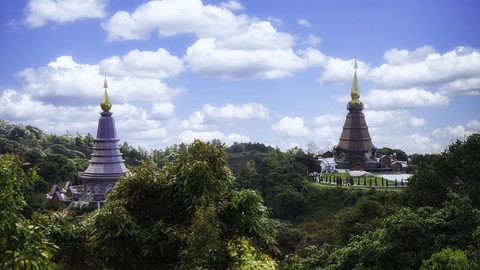 Doi Inthanon
 is 2,565 metres of summit car park in cloud, but the waterfalls, pagodas and trails on the way up are better.
Doi Inthanon
Doi Inthanon is 2,565 metres of summit car park in cloud, but the waterfalls, pagodas and trails on the way up are better.