Shopping in Da Nang as a Market City With a Few Malls
Shopping in Da Nang means markets first: Han Market, Con Market and the stone-carving villages of Ngu Hanh Son, not the malls.
Shopping in Da Nang as a Market City with a Few Malls
A woman on the upper floor of Han Market shoves a roll of printed silk into your hands and names a price twice what she said to the Vietnamese woman before you. You have two choices: pay it and leave, or name a lower number and wait. This is Da Nang shopping. It is not a mall city, despite the air-conditioned ones. The real retail life runs through two big markets, a stone-carving village at the foot of the Marble Mountains, and a riverside night market that fills the promenade after dark. Knowing where to go and how each place operates is the difference between a bag of souvenirs you will want and a stack of overpriced junk you will abandon at the hotel.
Han Market Da Nang: the Chaotic Souvenir Hub
What Sells Where
Han Market sits on the west bank of the Han River in Hai Chau district, a two-minute walk from the riverfront. It has two floors. The ground floor sells fresh produce, dried squid and shrimp, packaged snacks, and household goods. Dried seafood is on the ground floor, not upstairs. The upper floor is fabric, clothing, tailoring services, souvenirs, and shoes. Tailoring is on the upper floor. Look at it if you want a shirt made in 24 to 48 hours. Prices in Da Nang for tailoring run 20 to 40 percent lower than comparable work in Hoi An, and quality for shirts and simple garments matches. Hoi An does structured suits better.
How to Handle the Pricing
The main friction is the pricing. Vendors at Han Market quote a foreign-face price that is 1.5 to 2 times the local price until you negotiate or ask twice. Bargaining is expected. Start at 50 to 60 percent of the first asking price and settle around 70 to 80 percent. If you cannot handle the pressure or do not have time, Con Market is a better option. The aggressive selling at Han Market is real. It is not subtle. But the range is wide: silk scarves, coffee, fish sauce, packaged snacks, and dried cuttlefish or shrimp that you can take home as long as you check the airline rules for your destination country.

Con Market Da Nang: Better Food, Less Pressure
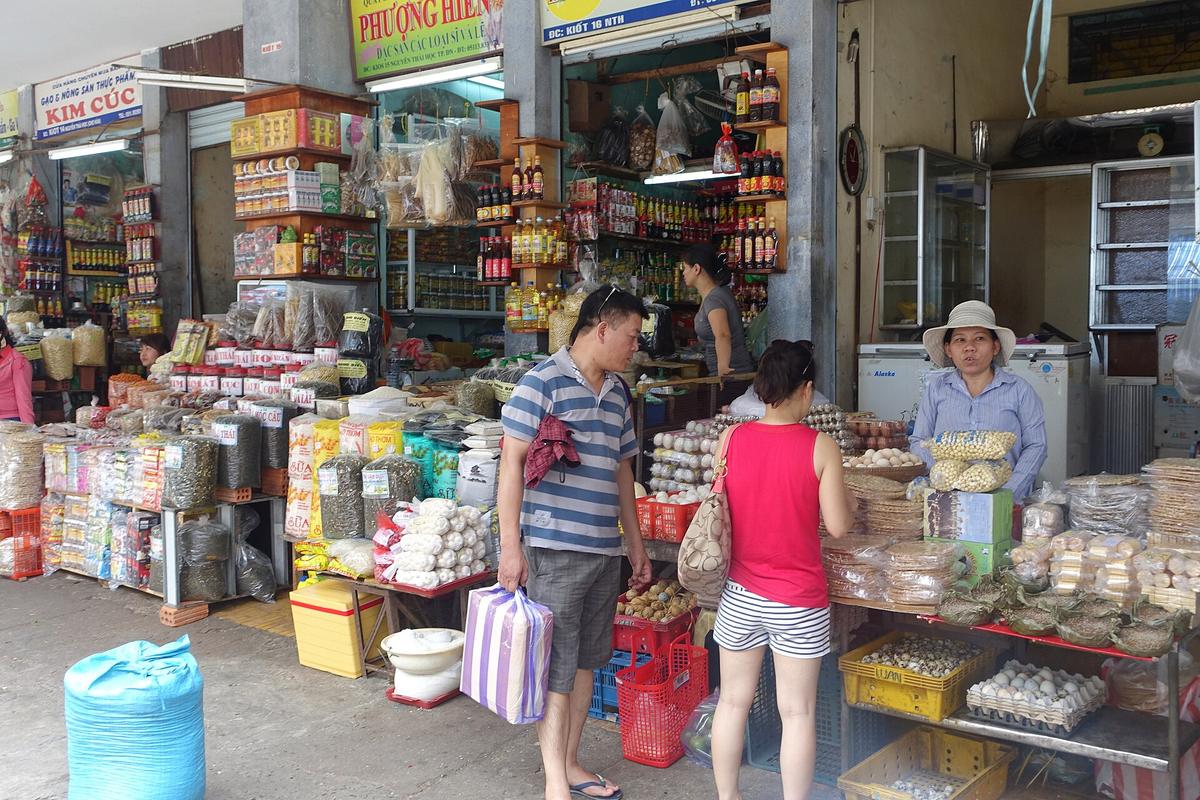
Con Market is larger than Han Market and sits south of the city centre in Hoa Cuong district. It has two main covered floors plus surrounding street stalls. The primary shoppers here are Da Nang residents, not tourists. Prices are cheaper than Han Market, and the selling pressure is noticeably lower. Vendors expect you to bargain, but they do not chase you. The goods cover the same categories: fresh food, meat, fish, dried goods, clothing, fabric, household items, and cooked food.
The food court is the real draw. Con Market has a better one than Han Market, with a wider range of central Vietnamese dishes eaten by locals on their lunch break. You can eat Mi Quang, Bun cha ca, Banh xeo, and Banh trang cuon thit heo at the same table for under a few dollars. If your goal is to eat well and pick up a few local goods without the hassle, Con Market is the better stop.
Da Nang Markets: Night Market and Riverside Shopping
The Da Nang Downtown complex includes a night market and a riverside promenade on the west bank of the Han River near the Dragon Bridge. The market opens in the late afternoon and runs until late evening, selling mostly souvenirs, clothing, accessories, and street food. Prices are fixed or near fixed. That removes the bargaining step but also removes the chance to save. Quality is lower than what you find at Han or Con Market. Skip the night market for anything you need to last more than a week. Use it for an evening walk, a cold drink, and the fire show from the Dragon Bridge at 9 pm on weekends.
The riverside promenade itself is a good place to buy snacks, drinks, and small toys from street vendors, but again the quality is tourist grade. If you want something genuinely local, the riverside is not the source.
Da Nang Souvenirs: Stone Carvings from Ngu Hanh Son
The one genuinely local craft in Da Nang is stone carving from Non Nuoc village in Ngu Hanh Son district, at the foot of the Marble Mountains. The village has been carving marble for centuries. The material today is mixed: local marble plus imported marble, mainly from China and Pakistan. Much of what is sold as "Marble Mountains marble" is now imported, so ask the carver directly if the origin matters to you. The range includes small souvenir statues, Buddha figures, decorative plates, and larger garden pieces. Prices are negotiable. A small carved Buddha about 15 cm tall costs roughly a few hundred thousand dong depending on detail and stone quality. The carvers will wrap the piece for transport, but you need to pack it in the centre of your checked luggage surrounded by soft items. Stone is heavy. Budget for weight if you are close to your airline limit.
You can buy stone carvings at Han Market and Con Market too, but the selection is smaller and the price is higher because the vendors are middlemen. Go to the source at Non Nuoc village. Take a Grab from the city centre. The ride takes 20 to 30 minutes.
Da Nang Shopping Malls: Vincom and Lotte Mart
When the Malls Make Sense
Da Nang has shopping malls, but they serve a different purpose. Vincom Plaza Da Nang is a standard shopping mall with air conditioning, fixed prices, chain stores, a supermarket, and a food court. Lotte Mart Da Nang is a hypermarket with similar features plus electronics, clothing, and a larger supermarket. Both are useful for buying essentials: toiletries, phone chargers, snacks that are not local, and anything you forgot to pack. If you need a specific brand of something, a mall is the place. Bargaining is not expected at either location. Prices are what the tag says.
The malls are not the reason to visit Da Nang. They function as backup options for rainy days or for items you cannot find at the markets. The supermarket at Lotte Mart is good for buying Vietnamese coffee in sealed bags, fish sauce in bottles already wrapped for travel, and packaged dried seafood that meets airline requirements.
Rules for Taking Seafood Home
Dried seafood must be sealed, double wrapped, and in checked luggage. Some airlines require vacuum-sealed or commercial packaging. Dried seafood is not permitted in carry-on baggage on international flights from Vietnam.
What to Buy and What to Skip in Da Nang Markets
Worth Your Dong
Three categories are worth buying: dried squid and fish, Vietnamese coffee, and Quang Nam silk. Dried squid, shrimp, and fish are local staples and pack well. Coffee is sold in coarse grind for phin filter, medium for drip machines, or fine for espresso. The common varieties are Robusta, Arabica, and blends. Quang Nam Province, adjacent to Da Nang, produces raw silk, scarves, ao dai fabric, and ready-made garments. The silk at the markets is real, but check the label and the feel. Heat-test a small corner with a lighter: real silk chars and smells like burnt hair; synthetic melts and smells like plastic.
Leave on the Shelf
Skip the cheap souvenir T-shirts, plastic toys, and anything printed with "Da Nang" in a font that looks mass-produced. Those are the same items sold in every tourist market in Vietnam. Buy what is from here: stone from Non Nuoc, silk from Quang Nam, coffee from the Central Highlands, and dried fish and squid from the coast.
Customs prohibits fresh fruit, fresh meat, raw seafood, plants, soil, ivory, tortoiseshell, and wildlife products. Dried seafood is allowed in checked luggage but is subject to the import rules of your destination country. Check those rules before you buy. Alcohol limits depend on your destination country. Vietnam has no fixed outbound duty-free limit for personal use, but check your home country rules. Cash of VND 15,000,000 or USD 5,000 equivalent or more must be declared on exit from Vietnam. That rule is revised annually, so check the current threshold with Vietnam Customs before departure.
Common Questions
Where should I actually shop in Da Nang, and how do the markets compare to the malls?
Use Han Market for wide selection and the full market experience, Con Market for better food and less pressure, and Non Nuoc village for stone carvings. Use Vincom or Lotte Mart only for essentials, fixed-price goods, or items you cannot find at the markets. The markets have character and local goods. The malls have air conditioning and predictable prices.
Is Han Market or Con Market better?
Con Market is larger, cheaper, and less aggressive. Han Market has more tourist-oriented goods and higher pressure. If you want to eat well and shop calmly, choose Con Market. If you want the chaos and the widest fabric selection, choose Han Market.
Can I buy stone carvings at Han Market?
Yes, but the selection is smaller and prices are higher than at Non Nuoc village. The carvings at Han Market are brought in by middlemen. Go to the source at the Marble Mountains for better variety and better prices.
How do I bargain at Da Nang markets?
Start at 50 to 60 percent of the first asking price and settle around 70 to 80 percent. Vendors expect it. If you do not bargain, you pay the foreign-face price, which is 1.5 to 2 times the local price. Do not bargain at Vincom, Lotte Mart, or any fixed-price store.
Can I take dried seafood home from Da Nang?
Yes, but it must be sealed, double wrapped, and in checked luggage. Some airlines require vacuum-sealed or commercial packaging. Dried seafood is not allowed in carry-on baggage on international flights. Check your destination country import rules.
Is tailoring in Da Nang cheaper than in Hoi An?
Yes, tailoring in Da Nang runs 20 to 40 percent lower for comparable work. A shirt takes 24 to 48 hours. Quality for shirts and simple garments matches Hoi An, but Hoi An does structured suits better.
What is the one thing I should not buy at the markets?
Cheap souvenir T-shirts with printed city names. They are the same mass-produced items sold in every tourist market in Vietnam. Buy local stone, silk, coffee, or dried seafood instead.
Read next
-
 Da Nang Hotels by Type and Price Band With Resort Oversupply Value
Da Nang hotels range from beachfront high-rises to small My An stays, and resort oversupply means strong value outside peak weeks.
Da Nang Hotels by Type and Price Band With Resort Oversupply Value
Da Nang hotels range from beachfront high-rises to small My An stays, and resort oversupply means strong value outside peak weeks.
-
 Where to Stay in Da Nang and Whether to Stay in Hoi An Instead
Where to stay in Da Nang depends first on whether you should stay in Hoi An instead. Compare My An, An Thuong, Hai Chau, and the beach resorts.
Where to Stay in Da Nang and Whether to Stay in Hoi An Instead
Where to stay in Da Nang depends first on whether you should stay in Hoi An instead. Compare My An, An Thuong, Hai Chau, and the beach resorts.
-
 Flights to Da Nang Airport and Arrival Transfers
Flying to Da Nang: DAD airport transfers, taxi and Grab costs, and why Hue or Chu Lai airports mean a long road journey.
Flights to Da Nang Airport and Arrival Transfers
Flying to Da Nang: DAD airport transfers, taxi and Grab costs, and why Hue or Chu Lai airports mean a long road journey.
-
 Da Nang Things to Do Ranked Honestly for a Short City List
Da Nang things to do are a short list, so rank them. Marble Mountains and Son Tra lead, while Ba Na Hills needs an honest crowd warning.
Da Nang Things to Do Ranked Honestly for a Short City List
Da Nang things to do are a short list, so rank them. Marble Mountains and Son Tra lead, while Ba Na Hills needs an honest crowd warning.
-
 Best Time to Visit Da Nang Month by Month With Central Coast Seasons
Best time to visit Da Nang is February to May, before the June fireworks crowds and the October to December typhoon season.
Best Time to Visit Da Nang Month by Month With Central Coast Seasons
Best time to visit Da Nang is February to May, before the June fireworks crowds and the October to December typhoon season.
-
 Getting Around Da Nang by Grab Taxi and the Walks That Do Not Work
Getting around Da Nang means Grab for most trips. Walking between beach, centre, and Son Tra looks close but is not practical.
Getting Around Da Nang by Grab Taxi and the Walks That Do Not Work
Getting around Da Nang means Grab for most trips. Walking between beach, centre, and Son Tra looks close but is not practical.
-
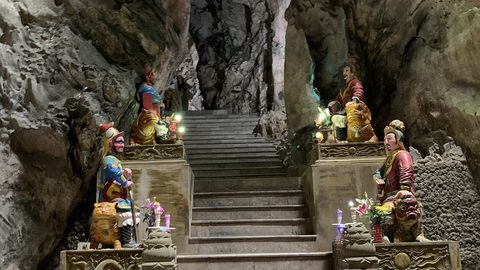 Marble Mountains
The Marble Mountains in Da Nang: five limestone hills of caves and shrines, steep steps, and a lift that saves your legs.
Marble Mountains
The Marble Mountains in Da Nang: five limestone hills of caves and shrines, steep steps, and a lift that saves your legs.
-
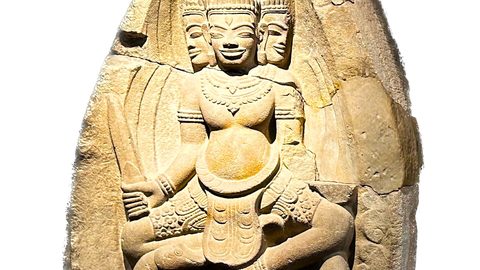 Museum of Cham Sculpture
The Museum of Cham Sculpture in Da Nang holds the finest Cham artefacts in the world in a small colonial-era building near the river.
Museum of Cham Sculpture
The Museum of Cham Sculpture in Da Nang holds the finest Cham artefacts in the world in a small colonial-era building near the river.
-
 Ba Na Hills
 in Da Nang: a mountaintop theme park built round the Golden Bridge photograph, with an honest verdict on whether to go.
Ba Na Hills
Ba Na Hills in Da Nang: a mountaintop theme park built round the Golden Bridge photograph, with an honest verdict on whether to go.