Three Days in Shanghai, Grouped by Geography So You Stop Commuting
A 3-day Shanghai itinerary clustered by geography: Bund and Pudong day one, French Concession day two, food crawl and contemporary art day three. Deliberately incomplete.
Three Days in Shanghai, Grouped by Geography So You Stop Commuting
At 05:00 on the Bund promenade, the 1.5 km waterfront from Waibaidu Bridge to Yan'an Road belongs to a handful of joggers and photographers. The Customs House clock, a Big Ben replica built by JB Joyce & Co in 1927, chimes across a deserted street. By 07:00 the crowd arrives. This itinerary solves the common mistake of treating Shanghai as a single sight, which turns your day into a Metro commute rather than an experience.
Shanghai hits visitors with a disorienting mix of futuristic skyline and lane house nostalgia, often in the same block. The sheer scale and pace are harder than expected. Crossing a district can swallow half a day, and the city's soul is hidden behind unmarked doors and upper floor walk ups, not on the main boulevards. This itinerary builds three days clustered by district: Day One on the Bund and in Pudong, Day Two in the Former French Concession, Day Three as a morning food crawl plus a contemporary art half day. It is deliberately incomplete. The sections below name what is left out and why.

Shanghai Day One Bund Pudong Plan: Blue Hour from Both Sides
Start on the Bund waterfront at 05:00. The morning light hits Pudong's skyline from the east, and the 26 buildings along the Bund ranging from Gothic to Art Deco sit in low shadow. Walk the full 1.5 km promenade from Waibaidu Bridge, a steel truss bridge completed in 1908, south to Yan'an Road. The Customs House clock tower at 79 m is the landmark to anchor your photo composition.
By 08:00 the East Nanjing Road pedestrian section starts filling. Exit the Bund at Nanjing Road East and walk 1.2 km west to Renmin Avenue. The daily pedestrian volume on this strip runs toward 1,000,000 to 1,700,000 annually, so move early. At 201 Renmin Avenue, the Shanghai Museum is free but requires a reservation via its WeChat account. Last entry is 16:00, and it is closed Mondays except public holidays. If the date falls on a Monday or the time slot is full, skip it and head directly to Yu Garden.
Yu Garden and Lunch Placement
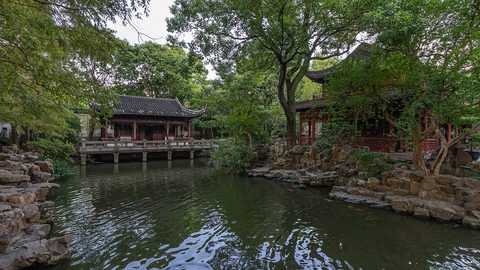
Yu Garden, a Ming era rockery and pavilion complex completed in 1577, occupies 2 hectares. Admission runs CNY 30 to 40 depending on the season, with last entry at 15:45. Book tickets online because walk up queues during October and April can hit 45 minutes. The adjacent Yuyuan Bazaar opens roughly 09:00 to 21:00 and is free. Lunch belongs here: Nanxiang Steamed Bun Restaurant, founded in 1900, serves xiaolongbao from the second floor counter. Order one basket per person, share a plate of Shanghai style smoked fish, and budget ¥60 per person.
Pudong Skyline and Blue Hour
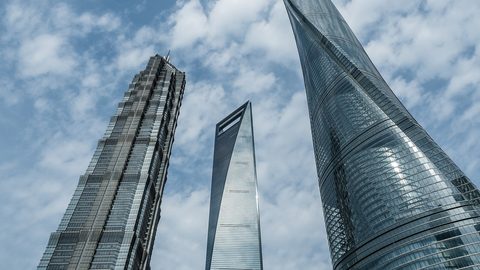
Cross the Huangpu River to Lujiazui. Take Metro Line 2 from East Nanjing Road Station to Lujiazui Station (three stops, ¥3). Your target is the Shanghai Tower observation deck at 546 m on the 118th floor. Admission runs ¥180 to 260 depending on peak and off peak hours. Arrive by 16:30 to secure a ticket and ride the 55 second elevator up. The full-circle view over the city and the Huangpu River bend is the reason to pay the premium. Sunset falls between 17:00 and 18:30 depending on the month, and Pudong skyline illuminations switch on roughly around 18:00 and run to 22:00, with lights on some towers extending to 23:00 in summer.
Descend by 19:30. Walk the Pudong riverfront promenade, Binjiang Avenue, which runs 22 km from Yangpu Bridge to Xupu Bridge. The stretch directly in front of the Shanghai Tower gives you the Bund lights reflected across the water. Dinner goes back toward the Bund side. Take Metro Line 2 across to East Nanjing Road and walk to a rooftop bar on one of the Bund buildings. Budget ¥120 for a drink and the view, or find a side street restaurant on Jiujiang Road for a bowl of scallion oil noodles at ¥15.
Failure case: if the Shanghai Tower sells out its evening slots, the Oriental Pearl Tower observation deck charges ¥199 and runs on a separate ticket system. Book both online the night before. If it is 22:00 and the Metro has stopped, taxis queue at the Lujiazui station exits; expect ¥50 to return to a Bund area hotel.
French Concession Lane House Day Itinerary: Wukang Road, Anfu Road, and Fuxing Park
Day Two stays within a 2 km radius. The Former French Concession is bounded by Huaihai Road to the north, Zhaojiabang Road to the south, Huashan Road to the west, and Xizang Road to the east. Start at the five way intersection of Wukang Road, Anfu Road, Huaihai Road, and Xingguo Road. Wukang Road is 1.17 km long and its anchor is Wukang Mansion, the Normandie Apartments completed in 1924 by architect László Hudec. Walk south along Wukang Road first. The lane houses are private residences. Look, do not enter. The street itself is the attraction.
Anfu Road and Long Lunch
Turn onto Anfu Road, 0.86 km long and lined with plane trees. Cafés and bistros occupy the ground floors of converted lane houses. Lunch goes here at a bistro with outdoor seating. Order a coffee and a club sandwich, or find a counter serving congyou banmian for ¥15 at a hole in the wall shop near the Wulumuqi Road intersection. Budget ¥60 to ¥100 per person. The point is to sit for 90 minutes and watch the street. The French Concession is not a sight. It is an atmosphere you occupy.
Fuxing Park and Xintiandi
After lunch, walk south toward Fuxing Park. The park is free and open from 05:00 to 21:00. In the morning you find tai chi groups and dancers. In the afternoon it is quieter. Walk through to the south exit and head toward Xintiandi, a restored shikumen district of lane houses converted into high end dining and boutique shopping. Entry is free. Individual shop hours vary but the district operates roughly 10:00 to 22:00. Do not confuse Xintiandi with Tianzifang. Tianzifang, located at Lane 210 Taikang Road, is a tourist dense maze of the same building typology but with shops, galleries, and bars built in the 1930s. Dinner placement goes near Tianzifang or back toward Huaihai Road. Budget ¥150 for a sit down meal at a lane house restaurant.
Failure case: if the weather is heavy rain, skip the walking. Take a taxi directly to Xintiandi and spend the afternoon under cover. If it is a Monday, note that many small galleries in the lane houses close. Head instead to the Shanghai Museum if it is open, or accept that Day Two is the lightest scheduled day and the one most affected by closures.
Shanghai Food Crawl Art Half Day Plan: Morning Eats and Afternoon Galleries
Day Three splits into two parts. The morning is a food crawl through an old neighbourhood. The afternoon is contemporary art at the West Bund or, if the West Bund is closed, at M50. The day is deliberately half paced. Do not try to fit both sides of the Huangpu River into this single block.
Morning Food Crawl: Shengjianbao, Cifantuan, and a Mooncake Queue
Start at 08:00 at Da Hu Chun for shengjianbao, the pan fried pork buns with a crispy base and scalding broth. Budget ¥18 for four buns. Walk 10 minutes to a hole in the wall shop selling cifantuan, a sticky rice ball stuffed with youtiao and pork floss, for ¥12. If the date falls between September and October, add hairy crab to the plan. Find a shop on Shouning Road for xiaolongxia, the spicy crawfish, but note that this is a summer only street feast and requires a table and beer. Finish the crawl at the Nanjing Road branch of Laodafang for a pork mooncake. The year round queue moves fast. Each mooncake costs ¥8. By 11:00 you have eaten five distinct Shanghai dishes and spent under ¥60.
Contemporary Art Half Day: West Bund or M50
From the food crawl, take a taxi to the West Bund. The Power Station of Art is at 200 Huayuangang Road. Admission is free for the permanent collection, with special exhibitions charging ¥20 to ¥100. Hours are 11:00 to 19:00 with last entry at 18:00, and it is closed Mondays. The building is a former power plant. The galleries run 15 m ceilings and industrial concrete. Walk the riverside promenade afterward. If the Power Station of Art is closed on a Monday, skip to M50 Art District in the Putuo district. M50 is a free cluster of working artist studios in a former textile mill. Hours vary by studio, but the complex is open roughly 10:00 to 18:00. The art skews toward emerging Chinese contemporary and installation work. Lunch placement goes in Pudong near the Shanghai Tower or, if you chose M50, at a noodle shop on Suzhou Creek. Budget ¥40 for a bowl of noodles.
Failure case: if both West Bund and M50 are closed for a holiday, the China Art Museum in the China Pavilion from the 2010 Expo is free with your passport and open 09:00 to 17:00. It is a backup, not a replacement, because the collection is state curated rather than contemporary gallery driven. Accept the compromise and spend the afternoon walking Suzhou Creek instead.
What This Shanghai Itinerary Cuts and Why
This itinerary is deliberately incomplete. Day trips to Suzhou or Hangzhou each require a full day, and the high speed train from Shanghai Hongqiao takes 25 minutes to Suzhou and 45 to 60 minutes to Hangzhou. Adding either destroys the geographic cluster logic. Disneyland requires a full day and sits in Pudong south of the airport. Qibao water town is redundant if you choose Zhujiajiao. The Propaganda Poster Art Centre, Longhua Temple, Jade Buddha Temple, Shanghai Natural History Museum, and the M50 art district if you choose the West Bund instead are all cut. The night river cruise is possible on Day One evening but at the cost of the Bund walk flexibility. Three days cover one core historic axis, one neighborhood immersion, and one skyline or water town contrast. Additional sites require trade offs that break the daily cluster logic. If you have five days, add Suzhou on Day Four and spend Day Five exploring M50 plus the Propaganda Poster Art Centre. If you have one day, compress to the Bund waterfront at dawn, Yu Garden mid morning, a quick lunch at the bazaar, then either the Shanghai Tower or a brief French Concession walk, returning to the Bund for illuminations. Omit Tianzifang, museums, and Zhujiajiao entirely.
Local Friction: What Goes Wrong and How to Avoid it
Cashlessness traps visitors without Alipay or WeChat Pay set up before arrival. Many vendors refuse cash entirely. Install and test a VPN before departure. The Great Firewall blocks Google, WhatsApp, Instagram, Facebook, and X. Free public Wi Fi requires a Chinese phone number for SMS verification. A local SIM or eSIM with a Chinese number unlocks app based services; without it, ride hailing and some museum bookings become difficult.
Metro security checks at every station slow progress. Allow five extra minutes per entry during rush hour. Taxi drivers rarely speak English. Have destinations in Chinese characters. Public toilets frequently lack soap and toilet paper. Carry both. Sidewalk traffic is a contact sport. E bikes and scooters use pedestrian paths silently and at speed. Look both ways before stepping off a curb.
The single thing that most often goes wrong here is the assumption that Shanghai runs on a western schedule. It does not. The Metro stops. The museums close on Monday. The restaurants close for Chinese New Year. The light show shuts at 22:00. Plan around the closures, not against them.
Common Questions
Is this Shanghai itinerary realistic for a first time visitor?
Yes. This itinerary is designed for first time China visitors wanting a soft landing. The geographic clustering means you cross the Huangpu River only once per day. The maximum Metro commute on any single day is three stops. The pace is deliberately slower than most guides recommend. The failure case is a rainy day, which compresses the walking sections. Have a backup indoor plan: the Shanghai Museum, a mall in Lujiazui, or a long lunch in Xintiandi.
What is the best month for this Shanghai itinerary?
April to May and October to November. These months bring clear skies, temperatures between 15 and 25 C, and manageable humidity. October's National Day week from 1 to 7 October is peak within peak. Avoid Chinese New Year, when many independent eateries and shops close, and July to August, which brings 35 C heat with 80 percent humidity and typhoon season downpours.
How do I get from Pudong Airport to the Bund area?
From Shanghai Pudong International Airport, the Maglev to Longyang Road takes 8 minutes and costs ¥50, or ¥40 with a same day flight ticket. Transfer to Metro Line 2. A taxi to the Bund area takes 50 to 70 minutes and costs ¥180 to ¥250. From Shanghai Hongqiao International Airport, Metro Line 10 reaches central Nanjing Road East in 35 minutes for ¥5. A taxi takes 25 to 40 minutes and costs ¥50 to ¥80.
Can I add Zhujiajiao Water Town to this 3 day plan?
Only if you replace the Day Three contemporary art half day. Zhujiajiao is 47 km west of central Shanghai. Metro Line 17 to Zhujiajiao Station takes roughly 60 minutes, followed by a 15 minute walk. The town was founded roughly 1,700 years ago and is free to enter, with individual gardens charging ¥10 to ¥30. The trade off is losing the West Bund or M50. The Shanghai Tower is recommended over Zhujiajiao for first time visitors with three days.
What should I do if the Metro stops running at 22:30?
The Metro stops around 22:30 to 23:00 depending on the line. Last train timing varies by line. If you are stranded after 23:00, taxis are available but hard to hail during rain or shift change from 16:00 to 18:00. Have your destination written in Chinese characters. A taxi from Lujiazui to the Bund area costs approximately ¥50. Ride hailing apps require a Chinese phone number, so a local SIM or eSIM is essential.
Read next
-
 Shanghai Hotels by Property Type and Price Band — Bund Palaces to Lane-House Stays
Shanghai hotels sorted by property type and price band: Bund river-view icons, French Concession lane-house boutiques, Pudong towers, and budget-smart Metro-side picks.
Shanghai Hotels by Property Type and Price Band — Bund Palaces to Lane-House Stays
Shanghai hotels sorted by property type and price band: Bund river-view icons, French Concession lane-house boutiques, Pudong towers, and budget-smart Metro-side picks.
-
Where to Stay in Shanghai — Choosing Your Base Across 10 Districts
Choosing where to stay in Shanghai shapes everything. Compare the French Concession, Bund, Jing'an, and Pudong across atmosphere, walkability, and after-dark personality.
-
 Flying to Shanghai Pudong and Hongqiao Airports Without the Arrival Chaos
Compare Shanghai Pudong and Hongqiao airports on arrival logistics: Maglev steps, Metro Line 10 timing, taxi costs, and which airport wastes less of your first day.
Flying to Shanghai Pudong and Hongqiao Airports Without the Arrival Chaos
Compare Shanghai Pudong and Hongqiao airports on arrival logistics: Maglev steps, Metro Line 10 timing, taxi costs, and which airport wastes less of your first day.
-
 Things to Do in Shanghai — Ranked Sights and What to Skip With Only Days
Shanghai sights ranked and argued: the Bund at blue hour, Shanghai Tower versus Oriental Pearl, Yu Garden's tradeoffs, and what to skip when days are short.
Things to Do in Shanghai — Ranked Sights and What to Skip With Only Days
Shanghai sights ranked and argued: the Bund at blue hour, Shanghai Tower versus Oriental Pearl, Yu Garden's tradeoffs, and what to skip when days are short.
-
 Best Time to Visit Shanghai — Month-by-Month Weather, Crowds, and Closures
Shanghai's best months are April–May and October–November, but each carries a tradeoff. Month-by-month weather, crowd surges, festival timing, and closure periods.
Best Time to Visit Shanghai — Month-by-Month Weather, Crowds, and Closures
Shanghai's best months are April–May and October–November, but each carries a tradeoff. Month-by-month weather, crowd surges, festival timing, and closure periods.
-
 Getting Around Shanghai — Metro Card Tricks, Taxi Traps, and the 11pm Stranding
Shanghai's Metro shuts around 11pm and taxis vanish during shift change. Learn the transport card trick, Alipay QR setup, and how to avoid getting stranded.
Getting Around Shanghai — Metro Card Tricks, Taxi Traps, and the 11pm Stranding
Shanghai's Metro shuts around 11pm and taxis vanish during shift change. Learn the transport card trick, Alipay QR setup, and how to avoid getting stranded.
-
 Yu Garden
 is a genuine 16th-century Ming garden behind walls most visitors never enter, trapped in the souvenir bazaar outside. Here is what is inside and how to get there.
Yu Garden
Yu Garden is a genuine 16th-century Ming garden behind walls most visitors never enter, trapped in the souvenir bazaar outside. Here is what is inside and how to get there.
-
 Shanghai Tower
 is 632 metres with the world's fastest lift, but a Jin Mao bar drink, the World Financial Center deck, or the free Pudong riverside walk offer the same skyline for less.
Shanghai Tower
Shanghai Tower is 632 metres with the world's fastest lift, but a Jin Mao bar drink, the World Financial Center deck, or the free Pudong riverside walk offer the same skyline for less.
-
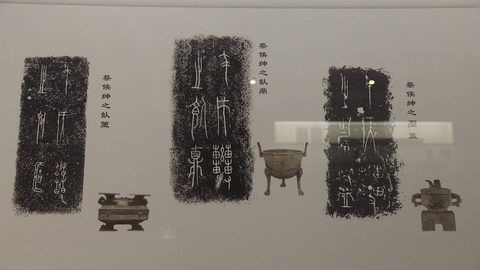 Shanghai Museum
The Shanghai Museum now spans two buildings. Here is exactly which collections live where, and how to book free tickets for both.
Shanghai Museum
The Shanghai Museum now spans two buildings. Here is exactly which collections live where, and how to book free tickets for both.