The Ten-Minute Visit to Man Mo Temple on Hong Kong Island
Man Mo Temple is free, takes ten minutes, and has the most atmospheric interior on Hong Kong Island, thick with incense smoke.

The Incense is the Point, Not the Temple
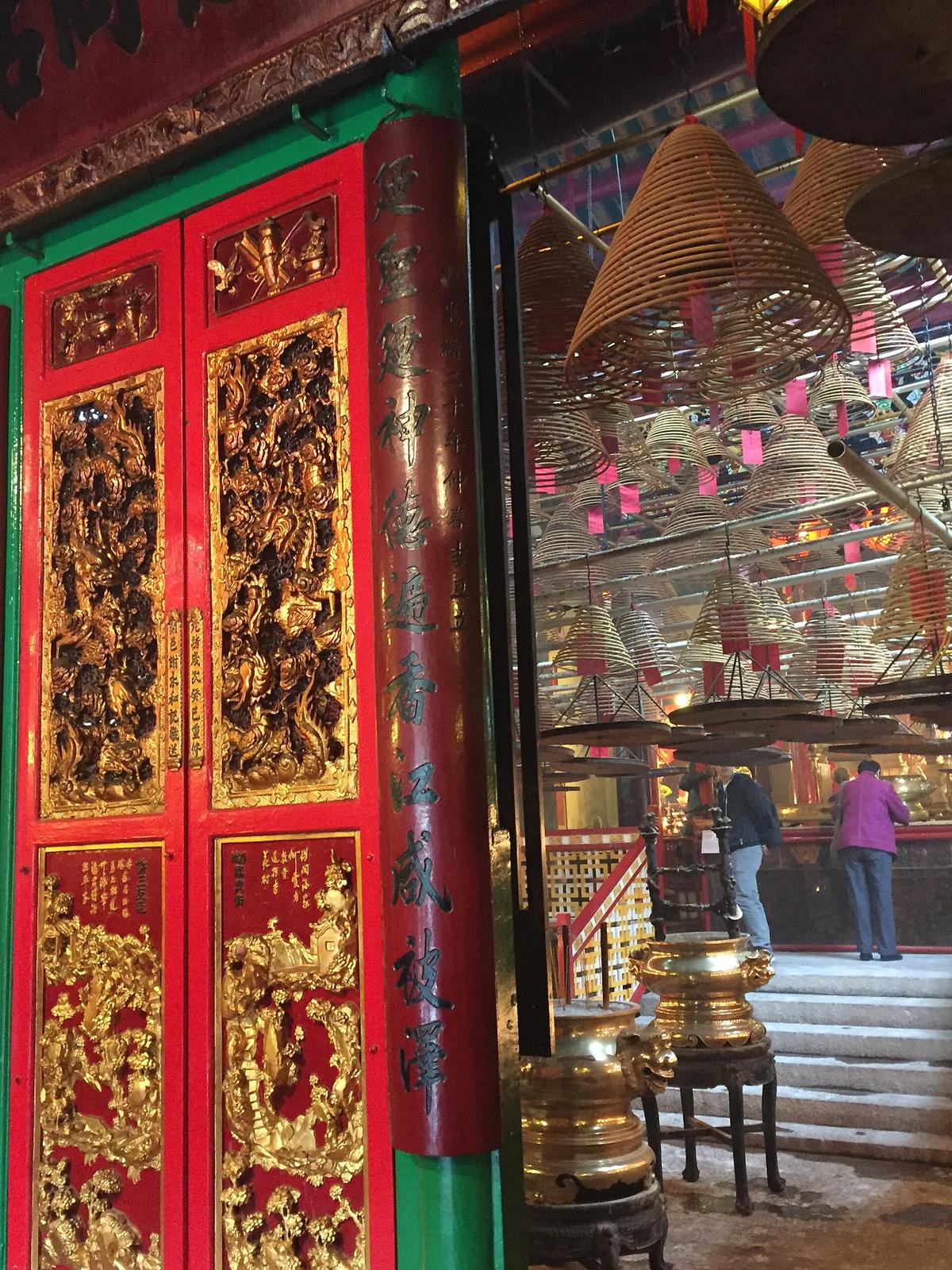
Most visitors walk into Man Mo Temple and look up at the ceiling. That is the right thing to do. The hanging incense coils, some the size of a car tyre, some the size of a dinner plate, are the reason this interior is the most atmospheric on Hong Kong Island. They are also the reason you should not stay longer than ten minutes. The smoke is thick, the light is low, and the floor is cramped. It is not a meditative escape. It is a sensory hit, and then you leave.
Man Mo Temple is a small, smoky, 1847 building on Hollywood Road in Sheung Wan. It is free. It takes ten minutes. It is a pit stop on a walk through old Hong Kong, never a half-day activity. If you treat it like a church you sit in for quiet reflection, you will be disappointed by the crowds and the cough. Treat it like a room you walk into, look up at, and walk out of, and it delivers exactly what it promises.
- Address: 124-126 Hollywood Road, Sheung Wan, Hong Kong
- Built: 1847 by the Chinese merchant community
- Entry Fee: Free
- Typical Visit Length: 10 minutes
- Opening Hours: 8:00 to 18:00 daily
- Nearest MTR: Sheung Wan, Exit A2 (10 minute walk)
- Photography: Allowed in most areas. No photos of the main altar or deity statues. Do not point a camera directly at them.
- Best Time To Visit: Weekday opening hour, 8:00 to 9:00, for the quietest experience and best light on the incense coils
What the Architecture Actually Says
The Three Halls
The temple has three buildings in a line along a slope: the main hall called Lit Shing Kung, the public meeting hall called Kung Sor, and an additional hall. The Kung Sor matters. In the 19th and early 20th centuries, when the Chinese community did not trust colonial courts, this room served as a court of arbitration. Merchants and families brought commercial and domestic disputes here. Oaths were sworn before the gods, sometimes by beheading a chicken. That history changes how you read the small, dark space: it was not a quiet monastery. It was a community authority.
The Deities and the Details
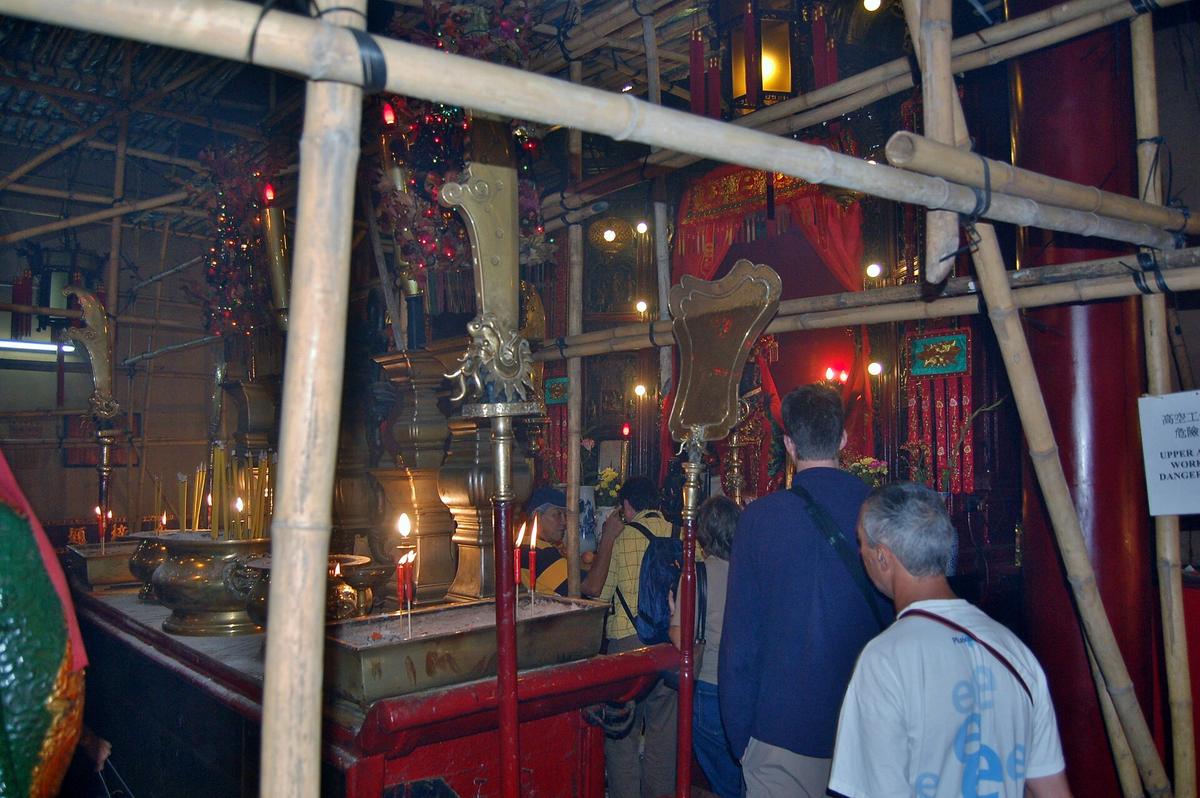
The two main deity statues face you from the altar. Man Cheong, the god of literature, holds a writing brush on the left. Mo Tai, the god of war, holds a sword on the right. Each statue sits about 1.5 metres tall, made of wood with gold leaf and lacquer. Sedan chairs, carved and gilded, sit on either side of the hall. These carry the statues through the streets of Sheung Wan during annual festivals. The brasswork on the censers, candlesticks, and door fittings is original. The green tiled roof with ceramic figurines on the ridge is traditional Chinese temple style.
How to Visit in Ten Minutes Without Ruining it
Getting In
Sheung Wan MTR, Exit A2. Walk west along Queen's Road Central for about five minutes, then turn right up Ladder Street. The steps are steep and uneven. Ladder Street runs uphill to Hollywood Road. The temple's main entrance faces Hollywood Road, but the side entrance on Ladder Street is equally valid and puts you inside faster.
Inside
Stop at the entrance. Look up at the incense coils hanging from the low ceiling, about three to four metres above you. Between ten and thirty coils are burning at any moment. Each coil is made of sandalwood powder on a bamboo frame, and a large coil can burn for up to three weeks. The white to grey smoke rises, hits the dark wooden beams, and hangs in the still air. The smell is sandalwood, dense and slightly sweet. Morning light enters from the front door and backlights the smoke. That is the best light for a photo, but do not use flash and do not point at the altar or the deity statues. Signs in Chinese and English make this clear.
Do not linger. The air quality is genuinely bad. People with severe respiratory sensitivity should skip the inside entirely and stand in the doorway. Everyone else gets five minutes inside, then moves to the sedan chairs and the brasswork, then exits. You are done in ten.
What To Skip
Do not bother with the fortune sticks unless you read Chinese. The paper slips are in Chinese only. You shake the bamboo cylinder of 100 numbered sticks until one falls, then find the corresponding slip. No one interprets it for you. If you cannot read the slip, the ritual is silent. Skip the donation box for incense sticks unless you intend to burn one. The free sticks are provided at the entrance, but lighting and placing them takes more time than the visit warrants and adds to the smoke.
The Mistake Almost Everyone Makes
Wrong Time, Wrong Day
The most common error is arriving at 11:00 on a weekend and expecting empty rooms. Do not do this. The interior capacity is about 50 people. On a Saturday afternoon, it will feel packed. People stand in the small space, blocking the sedan chairs, coughing in the smoke, and taking the same photo of the coils. The quietest window is weekday opening hour, 8:00 to 9:00. That is the only time you will have the hall to yourself.
It Is a Walk, Not a Destination
The second mistake is treating the temple as a destination. It is not. It is the first stop on a one-hour walk that goes: Hollywood Road antique shops (the stretch between Ladder Street and Aberdeen Street), Man Mo Temple, Ladder Street, Tai Ping Shan Street, and PMQ. Tai Ping Shan Street is a historic residential street with small shops and the Pak Sing Temple, built 1856, which takes another five minutes. PMQ, the former Police Married Quarters turned design hub, is five minutes from the temple and has free toilets, which the temple does not. The full route is about 1.5 kilometres on steep steps and slopes. Wear flat, non-slip shoes.
.jpg)
| Stop | Time | Distance From Previous |
|---|---|---|
| Hollywood Road antique shops (120-220 Hollywood Road) | 15 minutes browsing | Start at Ladder Street |
| Man Mo Temple, 124-126 Hollywood Road | 10 minutes | At Ladder Street |
| Ladder Street steps, downhill | 5 minutes | Outside temple |
| Tai Ping Shan Street shops and Pak Sing Temple, 42 Tai Ping Shan Street | 10 minutes | 2 minutes walk |
| PMQ, 35 Aberdeen Street | Optional 30 minutes | 3 minutes walk |
Who This Place is for and Who Should Walk Past
Who Should Go
Man Mo Temple suits urban explorers who want one vivid, atmospheric interior on a walk through old Hong Kong. It suits photographers who want the one shot of light hitting smoke against dark wood. It suits anyone on a one-hour Sheung Wan walk who needs a free, ten-minute break from the humidity.
Who Should Skip It
It does not suit people with asthma or any respiratory sensitivity. The smoke is dense and continuous. It does not suit anyone looking for a quiet, serene temple experience with room to sit and reflect. For that, take the MTR to Diamond Hill and visit Chi Lin Nunnery, a Tang-style wooden temple with a lotus pond and no incense smoke. It does not suit anyone who wants to spend an afternoon learning about Taoist ritual. There are no guided tours, no audio guides, and no English interpretation of the fortune sticks. The temple is a room, not an education.
Common Questions
Is Man Mo Temple free to enter?
Yes. Entry is free. There is no ticket or booking required. Opening hours are 8:00 to 18:00 daily. It is managed by the Tung Wah Group of Hospitals.
Can I take photos inside Man Mo Temple?
You can photograph the incense coils, sedan chairs, brasswork, and the general interior. You cannot photograph the main altar or the deity statues. Signs mark the restricted area. Do not use a tripod or flash.
How long should I spend at Man Mo Temple?
Ten minutes. The space is small, the smoke is thick, and there is nothing more to see beyond the main hall and the two side halls. It is a quick stop, not a half-day activity.
Is Man Mo Temple wheelchair accessible?
No. The main entrance from Hollywood Road has five to eight steps. The Ladder Street side entrance has continuous stone steps. There is no ramp. The interior floor is stone, but the steps at both entrances block access.
Read next
-
 Hong Kong eSIM and Data Plans Before You Land
Hong Kong has no internet firewall. A cheap eSIM or tourist SIM from the airport gives you fast data for Google Maps and WhatsApp from the moment you land.
Hong Kong eSIM and Data Plans Before You Land
Hong Kong has no internet firewall. A cheap eSIM or tourist SIM from the airport gives you fast data for Google Maps and WhatsApp from the moment you land.
-
 Hong Kong Hotels by Price Band and Property Type
Hong Kong hotel rooms are small, but the difference between a luxury harbour-view tower and a Mong Kok budget room is enormous.
Hong Kong Hotels by Price Band and Property Type
Hong Kong hotel rooms are small, but the difference between a luxury harbour-view tower and a Mong Kok budget room is enormous.
-
 Where to Stay in Hong Kong Island or Kowloon for a First Visit
Hong Kong Island puts you in the financial and dining core, while Kowloon gives you harbour views and street life. The street you pick matters more than the district.
Where to Stay in Hong Kong Island or Kowloon for a First Visit
Hong Kong Island puts you in the financial and dining core, while Kowloon gives you harbour views and street life. The street you pick matters more than the district.
-
 How to Find Cheap Flights to Hong Kong International Airport
Hong Kong has one airport, a lot of airline competition, and a fast train into the city. The routing tricks are in the booking, not the arrival.
How to Find Cheap Flights to Hong Kong International Airport
Hong Kong has one airport, a lot of airline competition, and a fast train into the city. The routing tricks are in the booking, not the arrival.
-
 Things to Do in Hong Kong Ranked by What Is Worth Your Time
Victoria Peak, the Star Ferry, and a serious hike earn their fame. Some other Hong Kong sights do not.
Things to Do in Hong Kong Ranked by What Is Worth Your Time
Victoria Peak, the Star Ferry, and a serious hike earn their fame. Some other Hong Kong sights do not.
-
 Best Time to Visit Hong Kong for Clear Skies and Low Humidity
October to December offers the best balance of clear skies and low humidity, but every other season trades weather for lower prices or festivals.
Best Time to Visit Hong Kong for Clear Skies and Low Humidity
October to December offers the best balance of clear skies and low humidity, but every other season trades weather for lower prices or festivals.
-
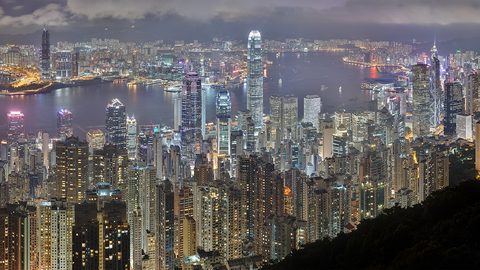 Victoria Peak
The view from Victoria Peak is the point; the tram queue is the problem, and there are four other ways up.
Victoria Peak
The view from Victoria Peak is the point; the tram queue is the problem, and there are four other ways up.
-
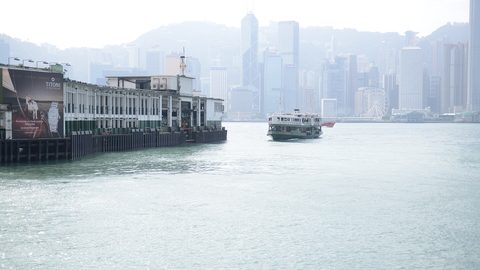 Star Ferry
The Star Ferry costs HK$5, takes 10 minutes, and the upper deck heading from Tsim Sha Tsui to Central gives the best skyline view.
Star Ferry
The Star Ferry costs HK$5, takes 10 minutes, and the upper deck heading from Tsim Sha Tsui to Central gives the best skyline view.
-
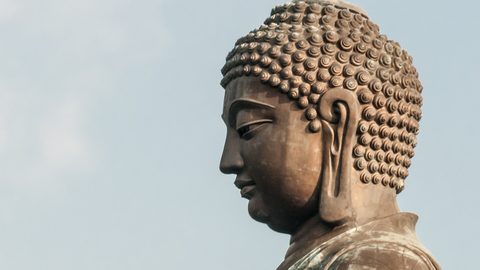 Big Buddha and Ngong Ping
The Big Buddha is 268 steps up, the cable car takes 25 minutes, and the village at the top is mostly a shopping mall.
Big Buddha and Ngong Ping
The Big Buddha is 268 steps up, the cable car takes 25 minutes, and the village at the top is mostly a shopping mall.