The Nemophila Hill, the Kochia Field, and the Narrow Windows of Peak Colour
Hitachi Seaside Park's blue nemophila hill and red kochia field each peak for about three weeks a year, and the two-hour trip from Tokyo is only worth it during those windows.
_07.jpg)
The Single Most Useful Fact on This Page
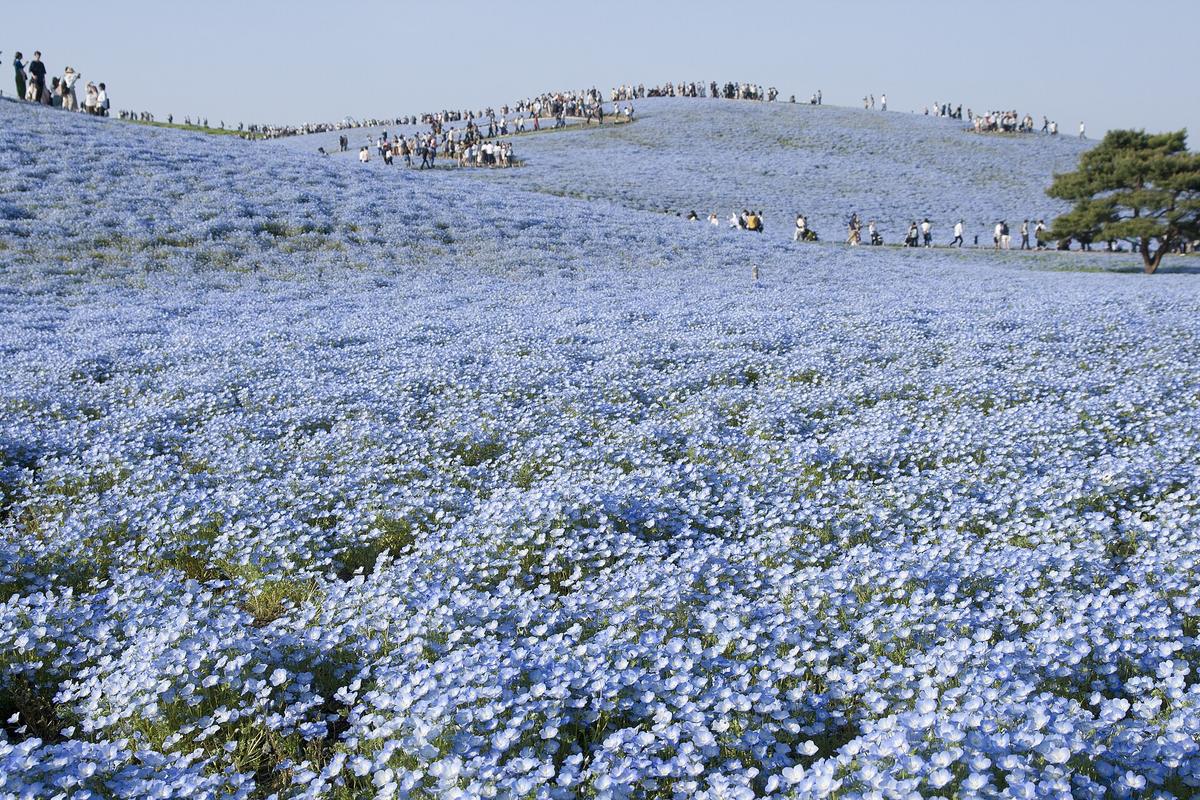
Hitachi Seaside Park's famous blue nemophila hill peaks for exactly 7 to 10 days between late April and early May, and the kochia bushes turn red for roughly three weeks in mid October. Outside those windows the park is a pleasant but unremarkable 350 hectare seaside green space that does not justify a 2 hour 15 minute door to door journey from central Tokyo. Time it wrong and you will find green shrubs and a long bus queue. Time it right and you see what the photographs show.
Nemophila Hill: the Blue Window
The nemophila variety planted on Miharashi Hill is Nemophila menziesii, baby blue eyes. Approximately 5.3 million plants cover the 4.2 hectare slope. The typical full bloom window is 7 to 10 days, falling somewhere in late April to early May. Because the exact dates shift with spring temperatures, the park's official website publishes a flower calendar each year. Check that calendar before you buy any train ticket. The 2024 peak was mid to late April. The 2025 peak ran into early May. No two years are identical.
Beat the Crowds at Opening
During this window the park opens at 07:30 instead of the standard 09:30. Arrive for that 07:30 opening. By 09:00 the Miharashi Hill summit path is dense with photographers and selfie sticks are restricted during peak hours. The entry queue at the Katsuta Station bus stop on peak weekends runs 30 to 90 minutes. The main gate queue adds 20 to 45 minutes. Budget for both.
Kochia Field: the Red Window
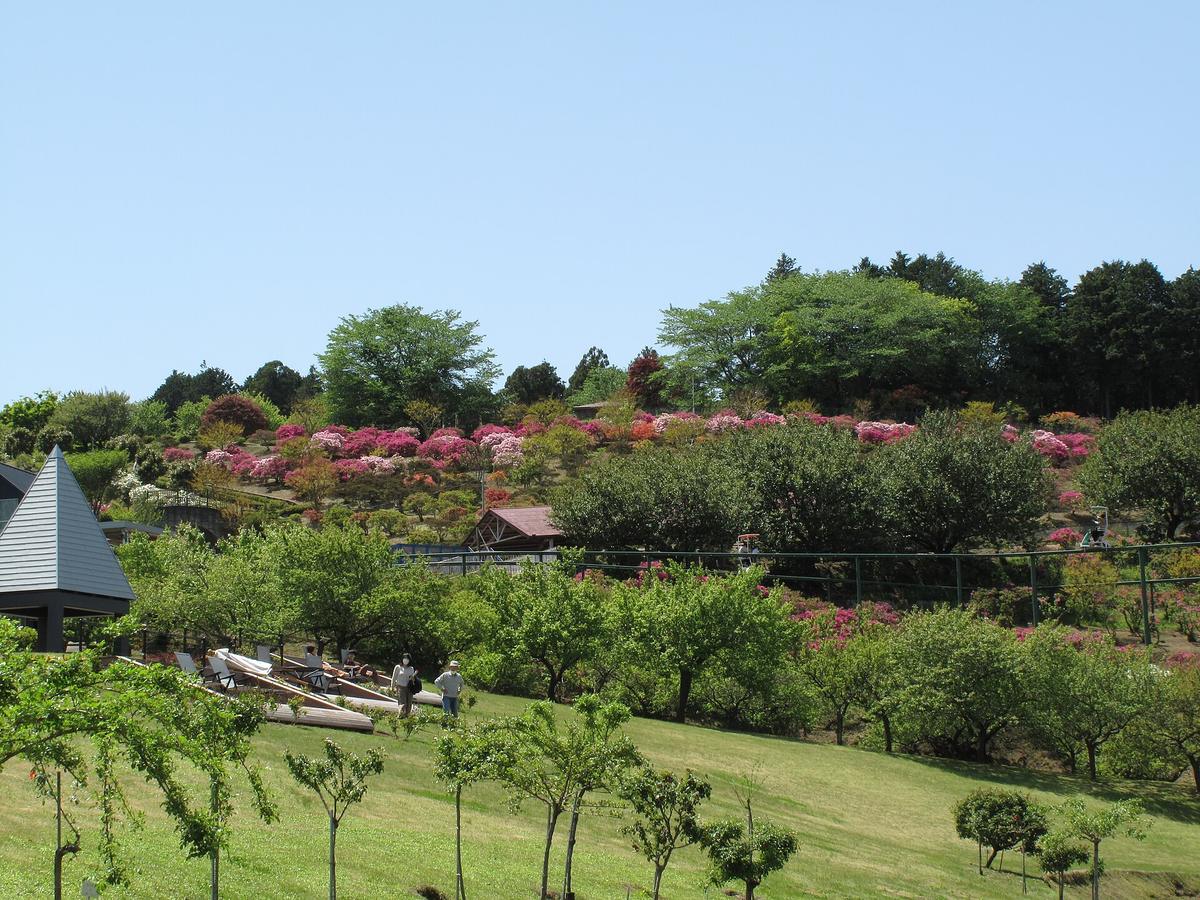
Approximately 33,000 kochia bushes (Bassia scoparia) are planted on Miharashi Hill each year. They stay green from July through late September. The shift to deep crimson peaks in mid October and the colour holds for about three weeks before fading to gold and brown in late October. The same official flower calendar tracks the kochia colour progression week by week.
The autumn crowd is smaller than the nemophila crowd but still significant. The park reverts to its 09:30 opening in October. The direct highway bus from Tokyo Station runs daily during the kochia peak. The 2024 fare was 2,300 yen one way, roughly half the cost of the express train route.
Three Ways to Get There from Tokyo
Express Train: Fastest, Most Expensive
Board the JR Joban Line Hitachi or Tokiwa express from Ueno Station. The journey to Katsuta Station takes 75 to 85 minutes. The 2024 unreserved one way fare was 3,820 yen (2,310 yen base fare plus 1,510 yen express charge). From Katsuta's east exit take the Ibaraki Kotsu bus to the park, 15 to 20 minutes, 400 yen. Total door to door time from central Tokyo: 2 hours 15 minutes to 2 hours 45 minutes. Total round trip cost: approximately 8,440 yen. The first useful return express from Katsuta to Tokyo departs around 06:20. The last departs around 21:30.
Direct Highway Bus: Cheapest, Most Convenient
Board the Ibaraki Kotsu express bus from Tokyo Station's Yaesu South Exit. The journey takes roughly 2 hours but is traffic dependent. The 2024 one way fare was 2,300 yen. Reservation is required and the bus runs weekends and holidays year round, plus daily during nemophila and kochia peak. Round trip cost: 4,600 yen, or roughly half the express cost. The first direct bus from Tokyo Station departs around 07:30. The last return from the park departs around 17:00. This option eliminates the Katsuta Station bus queue.
Local Train: Cheapest, Slowest
Take the local JR Joban Line from Ueno to Katsuta. The journey takes 120 to 140 minutes and may require a change at Mito. The 2024 one way fare was 2,310 yen. Total door to door time exceeds 2 hours 45 minutes. Use this only if the express is sold out or you have a regional rail pass that does not cover express surcharges.
The JR Tokyo Wide Pass: Does it Save You Money?
The 2024 price for the 3 consecutive day JR Tokyo Wide Pass was 15,000 yen for adults. It covers the Joban Line between Ueno and Katsuta. A single round trip on this itinerary costs roughly 8,440 yen on the express or 4,620 yen on local trains. Neither figure comes close to the pass price. The pass breaks even only if you add further covered travel on the same or consecutive days, such as a day trip to Nikko or a trip to the Fuji Five Lakes area. If this park is your sole day trip outside Tokyo, pay as you go.

What it Costs and When it is Open
High season admission (during nemophila bloom, kochia red period, Golden Week, and other peak flower events) is 800 yen for adults. Off peak admission is 450 yen. Children aged 7 to 15 pay 400 yen high season, 250 yen off peak. Seniors 65 and older pay 800 yen high season, 500 yen off peak. The park is closed on Mondays (or the next weekday if Monday is a holiday), December 31 through January 1, and the first Tuesday through Friday of February. Standard opening hours are 09:30 to 17:00. During nemophila peak (late April to early May) the park opens at 07:30. During summer (late July through August) it stays open until 18:00. Last admission is always one hour before closing.
The Failure Case: What Goes Wrong Most Often
Travellers arrive on a weekend in mid October expecting red kochia and find the bushes have already faded to gold and brown because autumn warmth delayed the colour change by ten days. Or they show up in late April to find the nemophila still in bud because a cold spring pushed the bloom into early May. The official flower calendar exists specifically to prevent these outcomes. Check it the morning you plan to travel. If the park's own update says 30% bloom or 80% post peak, the photographs on social media are showing a different week. Stay in Tokyo. The two hour commute is not worth a partial view.
Read next
-
 Tokyo Hotels by Type and Budget from Capsules to Luxury
Tokyo hotels organised by type and price band, from efficient capsule pods to full-service luxury towers, to help you book the right room.
Tokyo Hotels by Type and Budget from Capsules to Luxury
Tokyo hotels organised by type and price band, from efficient capsule pods to full-service luxury towers, to help you book the right room.
-
 Where to Stay in Tokyo by District and Travel Style
A comparison of Tokyo's major districts to help you choose the right base for your travel style, whether you want calm or chaos.
Where to Stay in Tokyo by District and Travel Style
A comparison of Tokyo's major districts to help you choose the right base for your travel style, whether you want calm or chaos.
-
 Narita or Haneda for Tokyo and What That Airport Choice Costs You
Narita or Haneda for Tokyo: compare door-to-district time, transfer cost, and what the wrong airport choice eats from your trip.
Narita or Haneda for Tokyo and What That Airport Choice Costs You
Narita or Haneda for Tokyo: compare door-to-district time, transfer cost, and what the wrong airport choice eats from your trip.
-
 Things to Do in Tokyo That Are Worth Your Limited Days
A curated list of Tokyo's highest-impact sights and experiences, from immersive art to quiet backstreets, to help you prioritise your days.
Things to Do in Tokyo That Are Worth Your Limited Days
A curated list of Tokyo's highest-impact sights and experiences, from immersive art to quiet backstreets, to help you prioritise your days.
-
 Best Time to Visit Tokyo Month by Month Tradeoffs
A month-by-month guide to visiting Tokyo, laying out the trade-off between weather, crowds, price, and what's actually open.
Best Time to Visit Tokyo Month by Month Tradeoffs
A month-by-month guide to visiting Tokyo, laying out the trade-off between weather, crowds, price, and what's actually open.
-
 Getting Around Tokyo by Train Airport Transfers and IC Cards
A practical guide to Tokyo's rail network, covering airport transfers, IC cards, and how to avoid the station navigation mistakes that eat your day.
Getting Around Tokyo by Train Airport Transfers and IC Cards
A practical guide to Tokyo's rail network, covering airport transfers, IC cards, and how to avoid the station navigation mistakes that eat your day.
-
 Senso-ji
 is free and never closes, but the experience at 6am with empty Nakamise stalls is nothing like the 11am crush under Kaminarimon. Here is when to go and what you get at each hour.
Senso-ji
Senso-ji is free and never closes, but the experience at 6am with empty Nakamise stalls is nothing like the 11am crush under Kaminarimon. Here is when to go and what you get at each hour.
-
 Meiji Jingu
The Meiji Jingu visit changes completely depending on which torii gate you enter. One drops you from Harajuku noise into sudden forest, the other builds quiet slowly from Yoyogi.
Meiji Jingu
The Meiji Jingu visit changes completely depending on which torii gate you enter. One drops you from Harajuku noise into sudden forest, the other builds quiet slowly from Yoyogi.
-
 teamLab
 Borderless and Planets are two different Tokyo venues with separate booking systems. Borderless tickets at Azabudai Hills sell in timed slots and the maze has no fixed route.
teamLab
teamLab Borderless and Planets are two different Tokyo venues with separate booking systems. Borderless tickets at Azabudai Hills sell in timed slots and the maze has no fixed route.