Choosing Between Tokyo Tower and Tokyo Skytree for Your Trip
Deciding between Tokyo Tower and Tokyo Skytree comes down to location, budget, and the kind of skyline view you want. Here is how to pick the right deck for your day.
.jpg)
The Real Question is Not Which Tower is Better
The common assumption is that Tokyo Skytree, being nearly twice the height of Tokyo Tower, is automatically the better observation deck. That is wrong. The real choice has nothing to do with which tower is taller. It has everything to do with which district you are already spending your afternoon in and what kind of view you actually want to see.
Tokyo Tower sits in Shiba-koen, a quiet Minato neighbourhood with a working temple at its base. From its main deck at 150 metres, you look across Tokyo Bay toward Rainbow Bridge, and critically, you see the modern skyline rising around you including the Skytree itself in the distance. Tokyo Skytree, at 350 metres on its lowest public deck, puts you above almost everything. You see Mount Fuji on clear days, the curve of the Sumida River, and the sprawl of Kanto stretching to the horizon. What you do not see is the Skytree. That matters more than people expect.
Frame your decision as a personality match, not a spec sheet comparison. The correct choice depends entirely on which district you are already exploring that day and what kind of Tokyo you want to look at.
| Feature | Tokyo Tower | Tokyo Skytree |
|---|---|---|
| Total Height | 333 m | 634 m |
| Lowest Public Deck | 150 m | 350 m |
| Highest Public Deck | 250 m (Top Deck Tour) | 450 m (Tembo Galleria) |
| Adult Ticket, Lowest Deck | 1,200 JPY (2024 price) | 2,100 JPY weekday / 2,300 JPY weekend (2024 price) |
| Adult Ticket, Highest Deck | 3,000 JPY (includes main deck, 2024 price) | 3,100 JPY weekday / 3,400 JPY weekend (2024 price) |
| Fast Track Available | No | Yes, +1,000 to +1,500 JPY |
| Typical Queue Time | 15 to 45 minutes | 30 to 90 minutes |
| Year Opened | 1958 | 2012 |
| Nearest Station | Akabanebashi Station, 5 min walk | Tokyo Skytree Station or Oshiage Station |
| Key View Elements | Tokyo Bay, Rainbow Bridge, Zojoji Temple, Roppongi Hills | Mount Fuji, Sumida River, Asakusa, Shinjuku skyline |
When Tokyo Tower is Your Better Match
For the Neighbourhood and the Photograph
Choose Tokyo Tower if you value the neighbourhood around the tower as much as the view from it. Shiba-koen is one of the few places in central Tokyo where you can step out of an observation deck and walk straight into a temple grounds. Zojoji Temple sits directly below the tower. The contrast between the orange-and-white lattice structure above and the black-roofed Edo-era temple below is the photograph you actually want, not a shot from the deck.
Lower Price, Shorter Wait
The queue time is shorter. 15 to 45 minutes versus 30 to 90 at the Skytree. The price is lower by a clear margin. The main deck at 1,200 JPY (2024 rate, published by Tokyo Tower Co.) costs roughly half what the Skytree charges for its lowest deck. The top deck tour at 3,000 JPY includes the main deck and lifts you to 250 metres for a perspective that still frames Tokyo Bay and Rainbow Bridge beautifully at night.
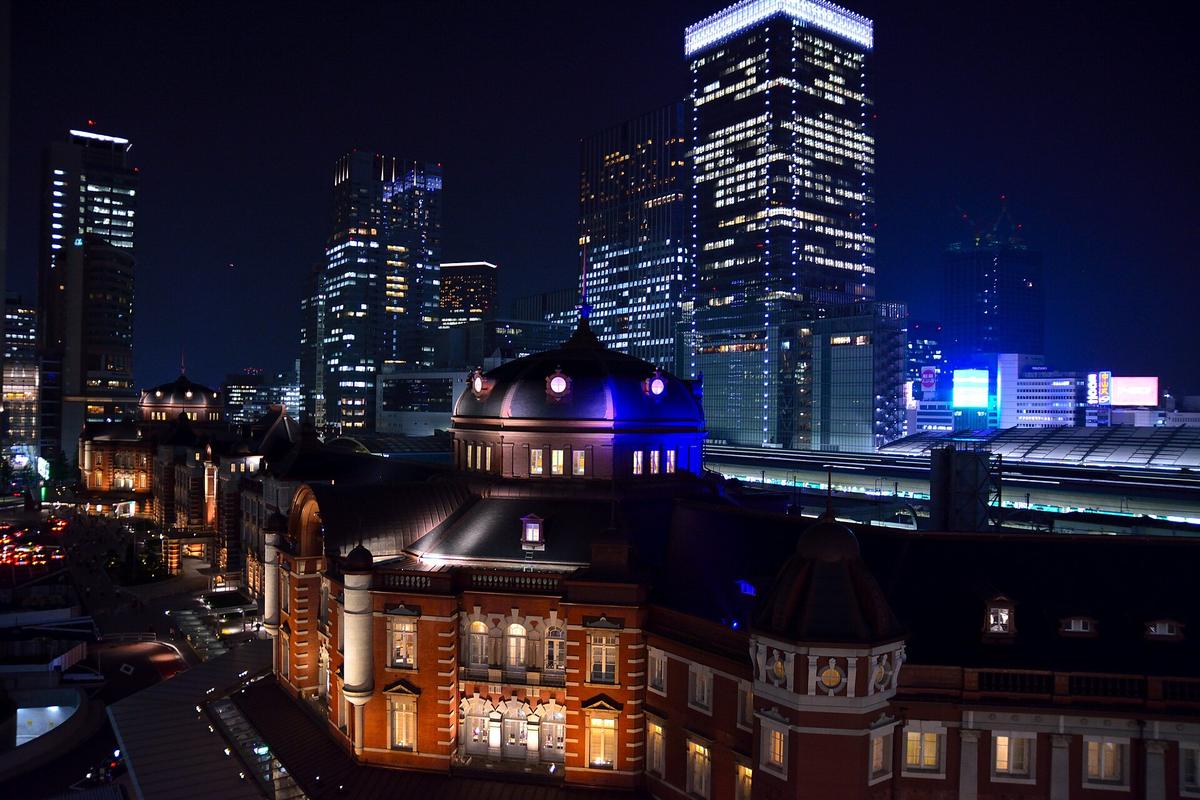
Tokyo Tower suits travellers who are spending the day in the Minato districts of Roppongi, Shibakoen, or Tokyo Station. It suits anyone who wants the view to include the tower they are not standing in. You can see the Skytree from Tokyo Tower. You cannot see Tokyo Tower from the Skytree.
When Tokyo Skytree is the Correct Choice
The Eastern Tokyo Day
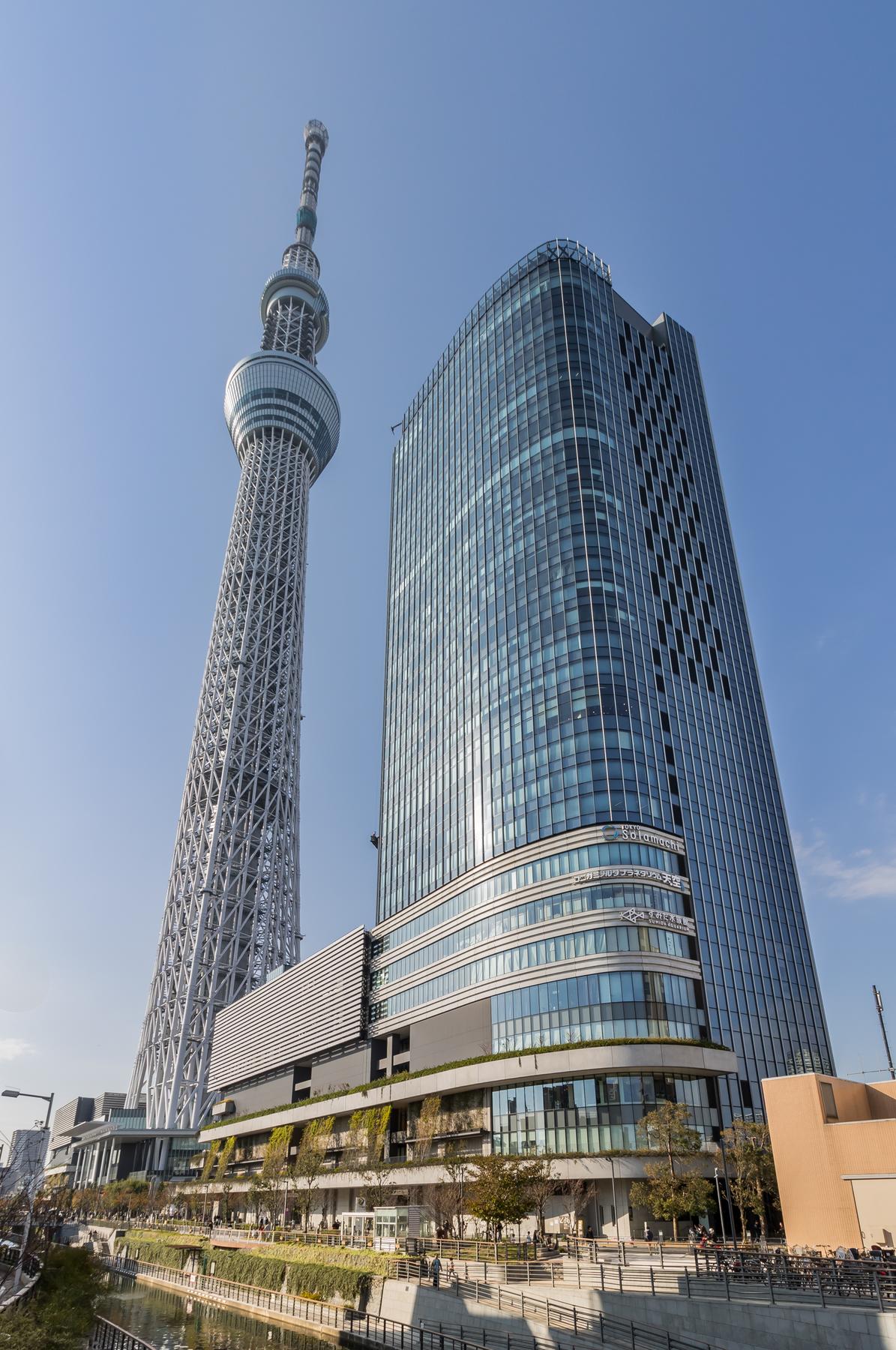
Tokyo Skytree is the right pick when your day is structured around eastern Tokyo and you want a long-distance panorama that includes Mount Fuji. The Skytree sits in Oshiage, Sumida, within walking distance of Asakusa and Senso-ji. If your afternoon covers Asakusa, the Skytree is a logical end point. You walk through Senso-ji, cross the Sumida River, and ride up before sunset.
The height difference is not abstract. At 350 metres you are more than double the height of Tokyo Tower's main deck. On the Tembo Galleria at 450 metres, the city flattens into a map. Mount Fuji appears on clear days, and the Skytree gives you the best chance of seeing it without cloud interference. The adjacent Solamachi shopping complex holds a large number of shops and restaurants including a Tokyo Solamachi food hall that works well for dinner after sunset.
Beat the Queue
Pay the fast ticket surcharge of 1,000 to 1,500 JPY on weekends or holidays. The standard queue can hit 90 minutes. Book ahead through the official Tobu Tower Skytree site. Walk-up tickets on a Saturday afternoon in cherry blossom season mean losing an hour and a half of your day.
The weakness of the Skytree is that the view lacks a foreground landmark. You see the Sumida River and Asakusa below, but the tower itself is invisible from the deck. The experience is pure height without the architectural context that Tokyo Tower provides.
Worth it if
- Tokyo Tower: cheaper ticket, shorter queue, view includes the Skytree itself, walkable to Zojoji Temple and Shiba-koen neighbourhood, night illumination of the tower visible from the ground
- Tokyo Skytree: highest public observation deck in Tokyo, best chance of Mount Fuji on clear days, attached to Solamachi shopping complex, logical endpoint after Asakusa and Senso-ji
Skip it if
- Tokyo Tower: lower height means less distance visibility, no fast track option, smaller shopping and dining complex at base
- Tokyo Skytree: higher ticket price, queue can stretch to 90 minutes, fast track adds 1,000 to 1,500 JPY, view does not include the tower itself, remote from central Tokyo districts

Do Not Visit Either Tower If You Are Short on Time
The Free 202-Metre View
There is a third option that many travellers overlook. The Tokyo Metropolitan Government Building observation deck in Shinjuku stands at 202 metres, costs zero yen, and has no queue for the elevator on weekdays. It opens until 23:00 and provides a view that includes both towers, Mount Fuji on clear days, and Shinjuku Gyoen. If you are already in Shinjuku and want a quick panorama without losing an hour to ticketing and queues, this is the better use of your time.
Carrot Tower in Sangenjaya is another free option at roughly the 26th floor, offering a local view over Setagaya and Shibuya. It is not a replacement for either tower. It is a supplement for the afternoon you spend in Shimokitazawa or Sangenjaya itself.
The Verdict
Match the Tower to Your Day
Tokyo Skytree wins for height, distance views, and the Mount Fuji sighting. It is the objective choice for a first-time visitor who has the time and budget and wants the highest publicly accessible point in the country.
Tokyo Tower wins for value, speed, and photographic composition. It is the better choice for the repeat visitor, the budget-conscious traveller, or anyone whose day is already in Minato, Roppongi, or the area around Tokyo Station. The view that includes the Skytree itself is a genuine advantage that most guides miss.
Pick Tokyo Skytree if you are in Asakusa and want the full height experience. Pick Tokyo Tower if you are in Shiba-koen and want a faster, cheaper, more intimate view. Pick neither if you are in Shinjuku and just want a free look from 202 metres.
One Action Before You Go
Check the weather forecast for the day you plan to visit. If the visibility report for Mount Fuji is poor, Tokyo Tower becomes the better choice regardless of your district. If the forecast is clear, book a fast ticket for the Skytree at least 48 hours ahead through the official Tobu Tower Skytree website. Arrive at the tower by 15:30. You will ride up in daylight, watch the transition to twilight, and see the city light up below you. That sequence is the single best reason to ascend either tower.
Read next
-
 Tokyo Hotels by Type and Budget from Capsules to Luxury
Tokyo hotels organised by type and price band, from efficient capsule pods to full-service luxury towers, to help you book the right room.
Tokyo Hotels by Type and Budget from Capsules to Luxury
Tokyo hotels organised by type and price band, from efficient capsule pods to full-service luxury towers, to help you book the right room.
-
 Where to Stay in Tokyo by District and Travel Style
A comparison of Tokyo's major districts to help you choose the right base for your travel style, whether you want calm or chaos.
Where to Stay in Tokyo by District and Travel Style
A comparison of Tokyo's major districts to help you choose the right base for your travel style, whether you want calm or chaos.
-
 Narita or Haneda for Tokyo and What That Airport Choice Costs You
Narita or Haneda for Tokyo: compare door-to-district time, transfer cost, and what the wrong airport choice eats from your trip.
Narita or Haneda for Tokyo and What That Airport Choice Costs You
Narita or Haneda for Tokyo: compare door-to-district time, transfer cost, and what the wrong airport choice eats from your trip.
-
 Things to Do in Tokyo That Are Worth Your Limited Days
A curated list of Tokyo's highest-impact sights and experiences, from immersive art to quiet backstreets, to help you prioritise your days.
Things to Do in Tokyo That Are Worth Your Limited Days
A curated list of Tokyo's highest-impact sights and experiences, from immersive art to quiet backstreets, to help you prioritise your days.
-
 Best Time to Visit Tokyo Month by Month Tradeoffs
A month-by-month guide to visiting Tokyo, laying out the trade-off between weather, crowds, price, and what's actually open.
Best Time to Visit Tokyo Month by Month Tradeoffs
A month-by-month guide to visiting Tokyo, laying out the trade-off between weather, crowds, price, and what's actually open.
-
 Getting Around Tokyo by Train Airport Transfers and IC Cards
A practical guide to Tokyo's rail network, covering airport transfers, IC cards, and how to avoid the station navigation mistakes that eat your day.
Getting Around Tokyo by Train Airport Transfers and IC Cards
A practical guide to Tokyo's rail network, covering airport transfers, IC cards, and how to avoid the station navigation mistakes that eat your day.
-
 Senso-ji
 is free and never closes, but the experience at 6am with empty Nakamise stalls is nothing like the 11am crush under Kaminarimon. Here is when to go and what you get at each hour.
Senso-ji
Senso-ji is free and never closes, but the experience at 6am with empty Nakamise stalls is nothing like the 11am crush under Kaminarimon. Here is when to go and what you get at each hour.
-
 Meiji Jingu
The Meiji Jingu visit changes completely depending on which torii gate you enter. One drops you from Harajuku noise into sudden forest, the other builds quiet slowly from Yoyogi.
Meiji Jingu
The Meiji Jingu visit changes completely depending on which torii gate you enter. One drops you from Harajuku noise into sudden forest, the other builds quiet slowly from Yoyogi.
-
 teamLab
 Borderless and Planets are two different Tokyo venues with separate booking systems. Borderless tickets at Azabudai Hills sell in timed slots and the maze has no fixed route.
teamLab
teamLab Borderless and Planets are two different Tokyo venues with separate booking systems. Borderless tickets at Azabudai Hills sell in timed slots and the maze has no fixed route.