Shinjuku Hotels Picking the Right Side of the Tracks
Choosing where to stay in Shinjuku means picking a side of the station. A practical comparison of hotel areas by price, noise, and real walking distances.
The Wrong Question Most Travellers Ask
Most visitors choose a Shinjuku hotel by budget and assume the station area is one single district. That mistake costs you sleep, time, and money. Shinjuku Station handles 1.5 million passengers daily across 53 platforms and 8 main exits. A hotel that looks close on a map can mean a 15 minute walk through a labyrinth of underground passages. The single real decision is which side of the tracks you sleep on. East of the station puts you inside the 24 hour energy zone of the entertainment quarter with prices that start at ¥8,000 a night. West of the station puts you in a business and government district where a standard double runs ¥25,000 to ¥80,000. The difference is not just price. It decides whether you arrive at your room through a quiet tree lined street or past a Godzilla head, a batting center, and a row of touts working the main drag at midnight.
West Side: Quiet Towers and Corporate Rates
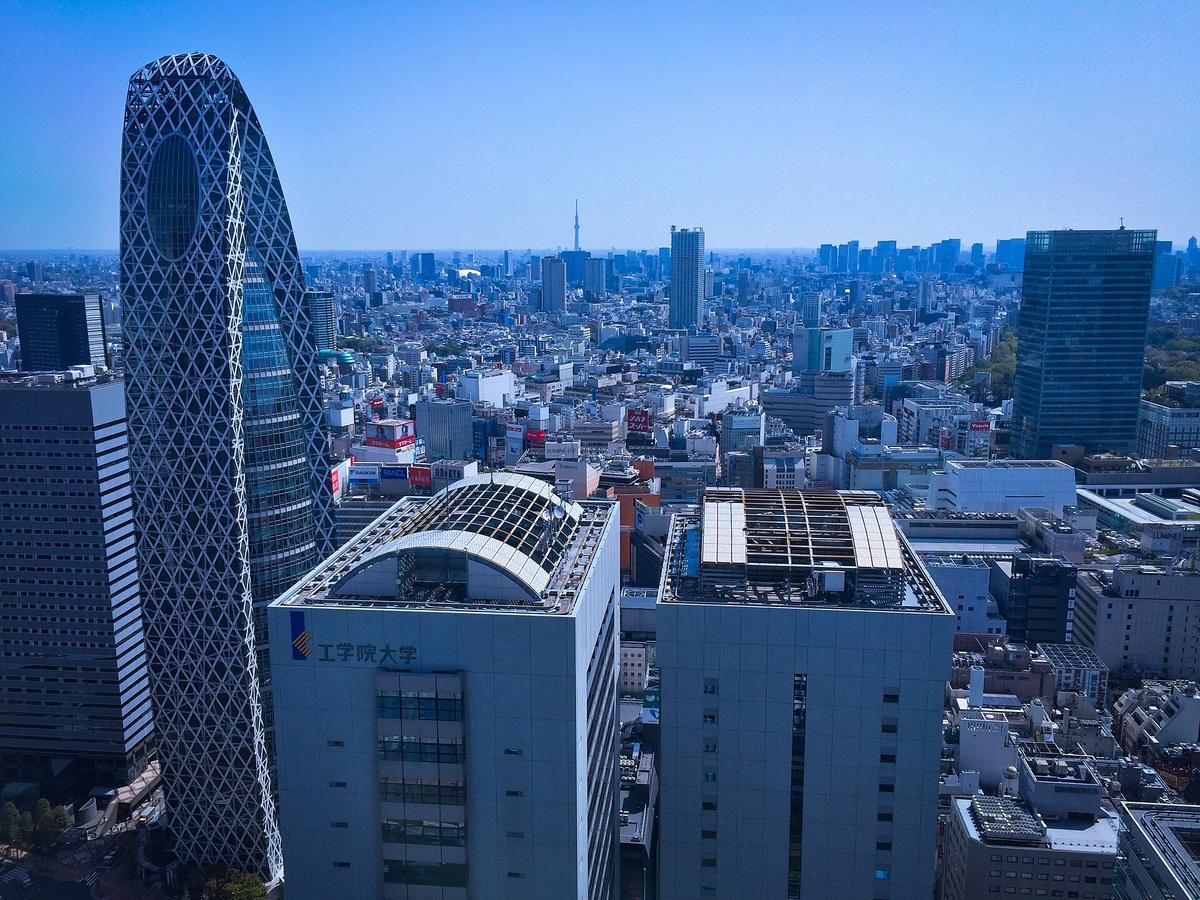
The west side of Shinjuku Station is Nishi-Shinjuku 1-chome to 3-chome. This is Tokyo's tallest cluster of skyscrapers, anchored by the Tokyo Metropolitan Government Building, Shinjuku Central Park, and Mode Gakuen Cocoon Tower. The streets are wide. Pedestrian traffic thins after 20:00. The noise profile is office district quiet. Hotels here fall into two categories: full service luxury towers and mid range business properties.
The Landmark Hotels
The Keio Plaza Hotel Tokyo at 2-2-1 Nishi-Shinjuku has 1,436 rooms and sits an 8 minute walk from the West Exit ground level. Check in is 15:00, check out 11:00. The Hilton Tokyo at 6-6-2 Nishi-Shinjuku connects directly via underground passage to Tochomae Station on the Oedo Line and Nishi-Shinjuku Station on the Marunouchi Line. The Park Hyatt Tokyo at 3-7-1-2 Nishi-Shinjuku is closed from May 2025 through October 2026 for a full renovation. If you see a listing for it during that window, do not book it. The property will not reopen until late 2026.
What You Pay On The West Side
A standard double room on the west side in 2026 ranges from ¥25,000 to ¥80,000 per night. The lower end gets you an 11 to 15 square meter room in a business hotel with a prefabricated unit bath and a semi-double bed 120 to 140 cm wide. The upper end buys a full service luxury tower with a proper bathtub, separate shower, and floor to ceiling windows facing Mount Fuji on clear days. The upside is quiet. The quietest west side blocks face Shinjuku Central Park in Nishi-Shinjuku 2-chome. The downside is distance. The maximum walking time between station exits is 15 minutes from South Exit to West Exit, and the Park Hyatt requires a 12 minute walk through a moving walkway to Tochomae-dori. You save noise and gain square meters. You lose instant access to trains and the east side's street life.
Who Should Stay West
Book the west side if your trip involves work hours, jet lag recovery, or a need for quiet sleep before 22:00. Skip it if your trip is about nightlife, street food, or walking out your hotel door into neon crowds. The west side gives you a good night's sleep and a 20 minute walk back to activity. That walk is deliberate. It is the tradeoff you pay for silence.
.jpg)
East Side: the Entertainment Quarter, Capsules, and the Godzilla Head
The east side of Shinjuku Station is the 1-chome and 2-chome blocks of the entertainment district plus Shinjuku 3-chome. This is Tokyo's largest nightlife zone. Noise peaks from 22:00 to 05:00 on Friday and Saturday along Sakura-dori, Yasukuni-dori, and the main thoroughfare. The touts on Ichibangai, called Godzilla Street, work the pedestrian only zone from 18:00 to 01:00. The neighbourhood police box sits at the intersection of the main road and Kuyakusho-dori if you need it.
Hotels On The East Side
The Hotel Gracery Shinjuku at 1-19-1 has the Godzilla head on its 8th floor terrace. It is a 5 minute walk from the East Exit via underground passage C8. Check in is 14:00, check out 11:00. The APA Hotel Shinjuku Tower at 1-20-2 has 620 rooms and is a 7 minute walk from the East Exit via the passage marked for that side. Toyoko Inn at 2-20-15 charges ¥8,500 to ¥11,000 for a single room in 2026. These are standard Japanese business hotels: 11 to 15 square meters, a semi-double bed 120 to 140 cm, a prefabricated bathroom module with tub and toilet. The amenities package includes a toothbrush, razor, hair dryer, kettle, green tea packets, and a yukata robe. Check in is 15:00, check out 10:00 at most chains. APA Hotel has four properties within one kilometre of the station, the highest density of any chain in Shinjuku.
Capsule Hotels
9 Hours Shinjuku at 2-13-7 on the east side is a 3 minute walk from the East Exit. The pods are 200 cm long by 100 cm wide by 100 cm high, stacked two high on separate male and female floors. The rate in 2026 is ¥3,000 to ¥5,500 per night. There is no private bath. You use a shared shower room. Luggage storage is limited to a locker 40 cm by 40 cm by 80 cm. This works for one night between flights. It does not work for a suitcase and a week of clothes. Check in is 17:00, check out 10:00. If you arrive earlier, store your bag and come back.
What You Pay On The East Side
A standard double room on the east side in 2026 runs ¥8,000 to ¥25,000 per night. The lower end buys a capsule pod or a business hotel single. The upper end buys a room at Hotel Gracery Shinjuku with a view of the Godzilla head or a larger room in a newer property. The upside is proximity. You are inside the noise, the lights, and the 24 hour convenience stores. Last train on the JR Yamanote Line leaves Shinjuku at 00:52 on the inner loop and 00:55 on the outer loop. If you miss it, a taxi from the East Exit rank carries a 20 percent surcharge between 22:00 and 05:00. The downside is the noise. The quietest east side streets are in Shinjuku 2-chome west of Meiji-dori, away from the main nightlife blocks. Everything else is loud until 05:00. Do not book a room facing Sakura-dori or Yasukuni-dori if you plan to sleep before 02:00.
Who Should Stay East
Book the east side if your trip is about drinking, eating, and walking out your hotel door into the crowd. Skip it if your sleep matters more than your first drink. The east side is not quieter at 03:00 than it is at 21:00. It is louder.
| Factor | West Side | East Side |
|---|---|---|
| Primary Streets | Nishi-Shinjuku 1-chome to 3-chome | The entertainment quarter 1-chome, 2-chome, Shinjuku 3-chome |
| Price Range (Standard Double, 2026) | ¥25,000 to ¥80,000 per night | ¥8,000 to ¥25,000 per night |
| Typical Room Size | 11 to 15 m² (business), larger at luxury towers | 11 to 15 m² (business), capsules at 2 m² |
| Noise Level | Quiet after 20:00, office district | Loud until 05:00 on weekends |
| Walk to Nearest Exit | 8 to 12 minutes from West or South Exit | 3 to 7 minutes from East Exit |
| Best For | Sleep, work, luxury, jet lag recovery | Nightlife, budget, convenience, solo trips |
| Downside | Longer walk to trains and east side activity | Street noise until dawn, smaller rooms |

The South Side Compromise and the Station Walk Trap
The south side of Shinjuku Station exists as a compromise zone. The South Exit and New South Exit put you closer to the bus terminal and the Odakyu and Keio lines. Hotels here are fewer and sit between the two worlds. You get slightly quieter streets than the nightlife zone and slightly shorter walks than the west side towers. The tradeoff is a less interesting neighbourhood. You walk east for the entertainment district or west for the skyscrapers. You do not step out into either.
The Walk That Looks Short On A Map
Shinjuku Station has 8 main exits: East, West, East Centre, West Centre, South, New South, Miraina Tower, and Koshu Kaido. A hotel on the west side near the Tochomae complex can look like a 5 minute walk on a map. The actual walk is 12 minutes through underground passages, past the Odakyu and Keio concourses, up stairs, and across a street. The Keio Plaza Hotel's nearest exit is West Exit ground level at 8 minutes. The Park Hyatt's nearest exit is South Exit at 12 minutes via a moving walkway. A hotel on the east side near the nightlife blocks can look like a 2 minute walk but take 7 minutes through the east passage and past the batting centre. Judge hotels by walk time to a specific exit, not by map distance. The station is the obstacle, not the connector.
What You Need To Know About Train Hours
The first JR Yamanote Line train from Shinjuku departs at 04:26 on the inner loop and 04:28 on the outer loop. If you need an early airport train, book the west side for easy access to the Limousine Bus terminal at the South Exit or the N'EX platforms. If you are staying out until last train, book the east side so you collapse into bed within 5 minutes of leaving the ticket gate. The taxi ranks at the West Exit, East Exit, South Exit, and New South Exit are active all night. A ride to Shibuya or Roppongi after the surcharge starts at 22:00 runs roughly ¥3,000 to ¥5,000 depending on traffic. Factor that cost into your hotel budget if you plan late nights and choose the east side.
Common Questions
Which side of Shinjuku Station is cheaper for hotels?
The east side. Standard double rooms run ¥8,000 to ¥25,000 per night in 2026. The west side starts at ¥25,000 and goes up to ¥80,000. Capsule hotels on the east side cost ¥3,000 to ¥5,500.
How long does it take to walk across Shinjuku Station?
The maximum walking time between exits is 15 minutes, from South Exit to West Exit via underground passage. The station has 53 platforms across 5 rail systems. Do not judge walk time by map distance.
Is the entertainment district safe to stay in?
Yes. The area is policed and busy until dawn. The touts on Sakura-dori and Ichibangai are persistent but not violent. The police box sits at the main intersection. Noise is the real problem, not safety.
Can I get a quiet room on the east side?
Yes, but only on specific streets. Shinjuku 2-chome west of Meiji-dori, away from the nightlife blocks, is quieter. Avoid any room facing Sakura-dori, Yasukuni-dori, or the main road. Noise peaks 22:00 to 05:00 on Friday and Saturday.
Read next
-
 Eating in Shinjuku Omoide Yokocho Kabukicho and the Department Floors
Shinjuku's eating districts mapped and explained: the smoky alleys of Omoide Yokocho, the all-night Kabukicho sprawl, and the polished department store restaurant floors.
Eating in Shinjuku Omoide Yokocho Kabukicho and the Department Floors
Shinjuku's eating districts mapped and explained: the smoky alleys of Omoide Yokocho, the all-night Kabukicho sprawl, and the polished department store restaurant floors.
-
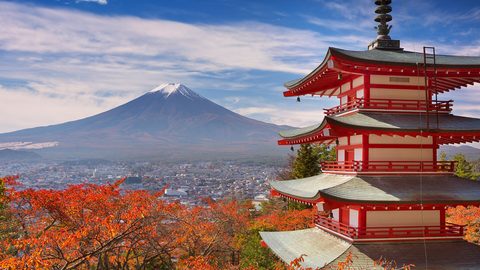 Japan Travel Guide for First-Timers Who Like Order but Not Crowds
Japan delivers deep tradition and futuristic efficiency, but the language barrier and density of rules can exhaust first-timers. Here is what to actually expect.
Japan Travel Guide for First-Timers Who Like Order but Not Crowds
Japan delivers deep tradition and futuristic efficiency, but the language barrier and density of rules can exhaust first-timers. Here is what to actually expect.
-
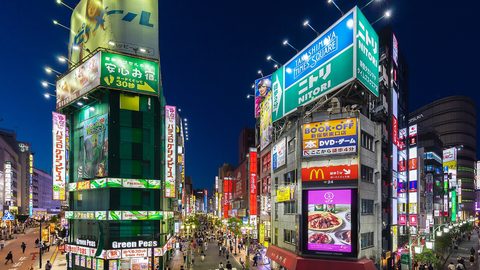 Japan eSIM vs Pocket WiFi vs Physical SIM for Staying Connected
Free public WiFi across Japan is unreliable and slow. Compare eSIM plans from Ubigi and Airalo against renting a pocket WiFi device at Narita or Haneda.
Japan eSIM vs Pocket WiFi vs Physical SIM for Staying Connected
Free public WiFi across Japan is unreliable and slow. Compare eSIM plans from Ubigi and Airalo against renting a pocket WiFi device at Narita or Haneda.
-
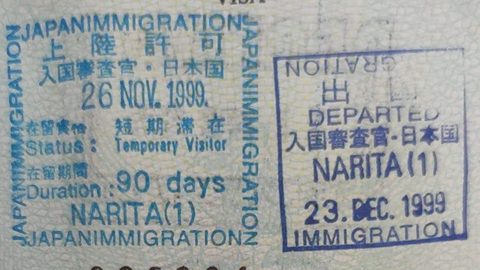 Japan Visa-Free Entry and the Visit Japan Web Digital Form
Visa-free entry covers many nationalities, but the Visit Japan Web digital form and QR codes determine how quickly you clear immigration at Narita or Haneda.
Japan Visa-Free Entry and the Visit Japan Web Digital Form
Visa-free entry covers many nationalities, but the Visit Japan Web digital form and QR codes determine how quickly you clear immigration at Narita or Haneda.
-
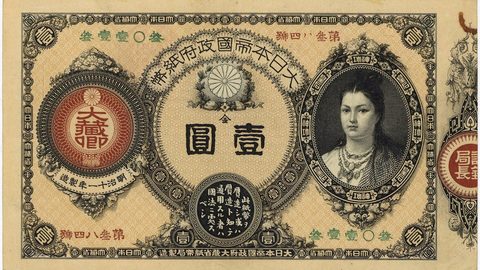 Cash and IC Cards Are the Real Payment System in Japan
Japan projects a high-tech image but many small restaurants, temples, and rural buses demand cash. IC cards like Suica and Icoca bridge the gap for daily spending.
Cash and IC Cards Are the Real Payment System in Japan
Japan projects a high-tech image but many small restaurants, temples, and rural buses demand cash. IC cards like Suica and Icoca bridge the gap for daily spending.
-
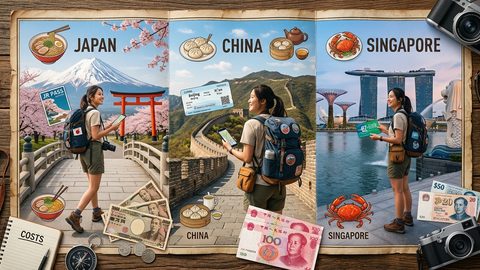 What Japan, China, and Singapore Actually Cost Independent Travelers
Real per-day costs for Japan, China, and Singapore broken down by accommodation tier, food strategy, transit, and connectivity for independent travelers.
What Japan, China, and Singapore Actually Cost Independent Travelers
Real per-day costs for Japan, China, and Singapore broken down by accommodation tier, food strategy, transit, and connectivity for independent travelers.
-
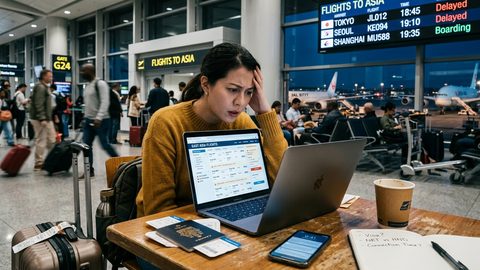 What Most Travelers Get Wrong When Booking Flights to East Asia
Most travelers book East Asia flights on price alone. Here's what they miss about route gaps, fleet age, and aircraft type on 10-14 hour hauls.
What Most Travelers Get Wrong When Booking Flights to East Asia
Most travelers book East Asia flights on price alone. Here's what they miss about route gaps, fleet age, and aircraft type on 10-14 hour hauls.
-
 The Honest Cost of Mobile Data in Japan, China, and Singapore
Real price data for SIMs, pocket WiFi, and eSIMs in Japan, China, and Singapore. Plus the friction points most travel guides quietly skip.
The Honest Cost of Mobile Data in Japan, China, and Singapore
Real price data for SIMs, pocket WiFi, and eSIMs in Japan, China, and Singapore. Plus the friction points most travel guides quietly skip.
-
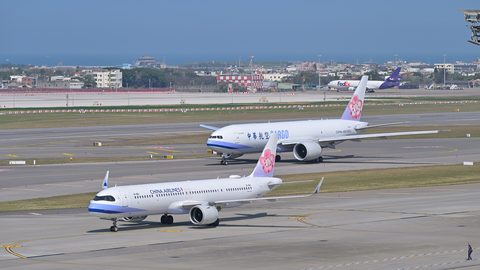 Fifth Freedom Flights Are the Award Sweet Spot Nobody Searches For
Fifth-freedom flights let you fly a foreign airline between two other countries, and they often have award seats when the airline's own hub routes are sold out.
Fifth Freedom Flights Are the Award Sweet Spot Nobody Searches For
Fifth-freedom flights let you fly a foreign airline between two other countries, and they often have award seats when the airline's own hub routes are sold out.