Seaside Hot Springs and a Shinkansen Commute from Tokyo
Atami pairs a seaside promenade and public onsen with a 40-minute Shinkansen ride from Tokyo, making it the fastest hot spring escape from the city.
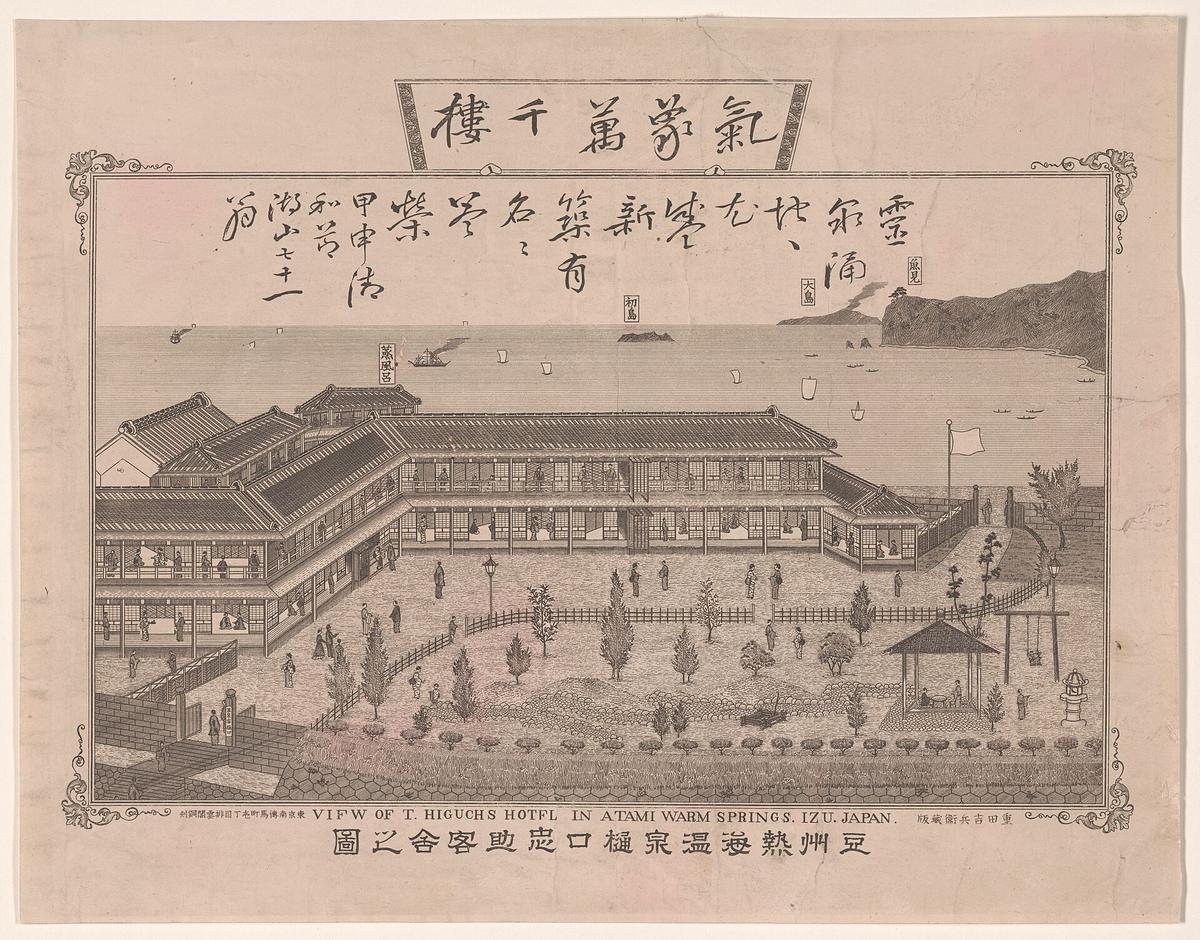
How to Fit an Onsen, a Beach Walk, and a Hilltop Museum Into One Day Without Rushing
Take the 08:30 Kodama Shinkansen from Tokyo Station, spend two hours at the MOA Museum of Art via its escalator up the hill, walk down to the palm-lined promenade at Atami Sun Beach, and finish at a public bathhouse before the last train back at 21:30. Transport, admission, and a soak come to under ¥8,000 per person. You will not be rushed. The distances are short and the route has no backtracking.
Start with the Kodama Shinkansen
Board the Tokaido Shinkansen from Tokyo Station or Shinagawa Station. The Kodama stops at every stop and takes about 50 minutes from Tokyo, 40 minutes from Shinagawa. A Nozomi is faster at 35 minutes from Tokyo but it calls at Atami only a few times per day; check the timetable on JR Central's site before you buy. The unreserved seat one-way fare is ¥4,070 in 2026. Pay with your Suica card at the ticket gate or buy a paper ticket from the machine for the exact amount. Reserved seats run higher depending on the season, but on a weekday morning the unreserved cars are half empty.
Atami Station is the terminus for Kodama trains on the Tokaido Shinkansen south of Tokyo. You arrive at ground level and the beach is 1.2 kilometres straight ahead. The station building has coin lockers. Use them before you leave the concourse.
Stop One: MOA Museum of Art Via the Hilltop Escalator
From Atami Station, take the bus marked MOA Museum of Art from stand 3 outside the east exit. The ride takes 8 minutes and costs ¥200. Do not take a taxi: the bus drops you at the base of the museum's escalator, which is the entrance sequence itself. The escalator travels through a tunnel lined with changing art installations and deposits you at the museum entrance on the hilltop. Admission is ¥1,600 for 2026. The museum is closed on Thursdays except public holidays, so plan around that.
The permanent collection includes a 16th-century gold leaf screen of the Pine Tree Screen by Hasegawa Tohaku and a collection of Chinese ceramics. But the reason you come here is the viewing terrace. It faces Sagami Bay and shows the entire Atami coastline. The museum also has a tea room with a window facing the sea. Allow 90 minutes to two hours for the galleries and the terrace. Last entry is at 16:00. If you arrive late, skip the galleries and go straight to the terrace.
What To Do When the Museum Is Closed
Thursdays are the standard closure. If your day trip lands on a Thursday, substitute Kiunkaku, a former villa built in 1919 that is a 17-minute walk from Atami Station. Admission is ¥700, open 09:00 to 17:00, closed Wednesdays. The garden and the wooden structure show the Showa era resort style that defines the town.
Stop Two: Atami Sun Beach and the Promenade
From the MOA Museum of Art, walk down the hill toward the sea. The route is a 15-minute downhill pedestrian path that ends at the west end of Atami Sun Beach. The beach is a stretch of grey sand with a row of palm trees along the shoreline. Swimming season runs from mid-July to late August. Outside those months the beach has no lifeguards or facilities, but the promenade and the new pedestrian deck completed in 2025 as part of the Atami Waterfront Area Redevelopment are open year-round. The deck extends the walking path past the old hotel row toward the east end of the bay.
Walk the full length of the beach to the east end, where the Atami Ropeway base sits. The ropeway climbs to Atami Castle in 20 seconds. A one-way fare is ¥500, round trip is ¥900. The castle is a reconstruction with a museum inside. Admission is ¥1,100, open 09:00 to 17:00, last entry 16:30. Skip the ropeway if you are short on time or if the queue is longer than 10 minutes. The view from the castle deck is similar to the view from the MOA Museum terrace.
Stop Three: the Onsen Before the Train
Walk back to Atami Station. From the beach to the station is 1.2 kilometres, a 15-minute walk along the main street. You have two day-use onsen options within reach of the station.
Atami Onsen Yu yu is inside the station building itself on the first floor of the east wing. Admission is ¥1,000, open 10:00 to 22:00 with last entry at 21:30. No reservation needed. Just pay and enter. The bath is a public facility with indoor hot spring water and a small outdoor tub. Tattoos are prohibited with no exceptions. If you have visible tattoos that a patch or a bandage cannot cover, skip this option. Walk to a ryokan that accepts walk-ins.
Hotel New Akao's Yuami no Sato accepts walk-ins for ¥2,500 from 11:00 to 16:00; hours vary by season. The bath is larger than Yu yu and has a garden view. Same tattoo prohibition applies. Atami Korakuen Hotel charges ¥2,200 from 12:00 to 20:00, last entry 19:00, and has an ocean-view bath. Both hotels require you to arrive before 15:00 to guarantee entry. If you arrive after 16:00, Yu yu is your only walk-in option.
Failure Case: All Onsens Are Full or Closed
Yu yu closes at 22:00. The hotel baths close between 16:00 and 19:00. If you miss all of them, the station itself has a foot bath on the east plaza open 09:00 to 18:00. Otherwise buy a towel from the convenience store in the station and accept that you soaked in the museum terrace view instead of hot water.
Why the Faded Resort Patina is the Point
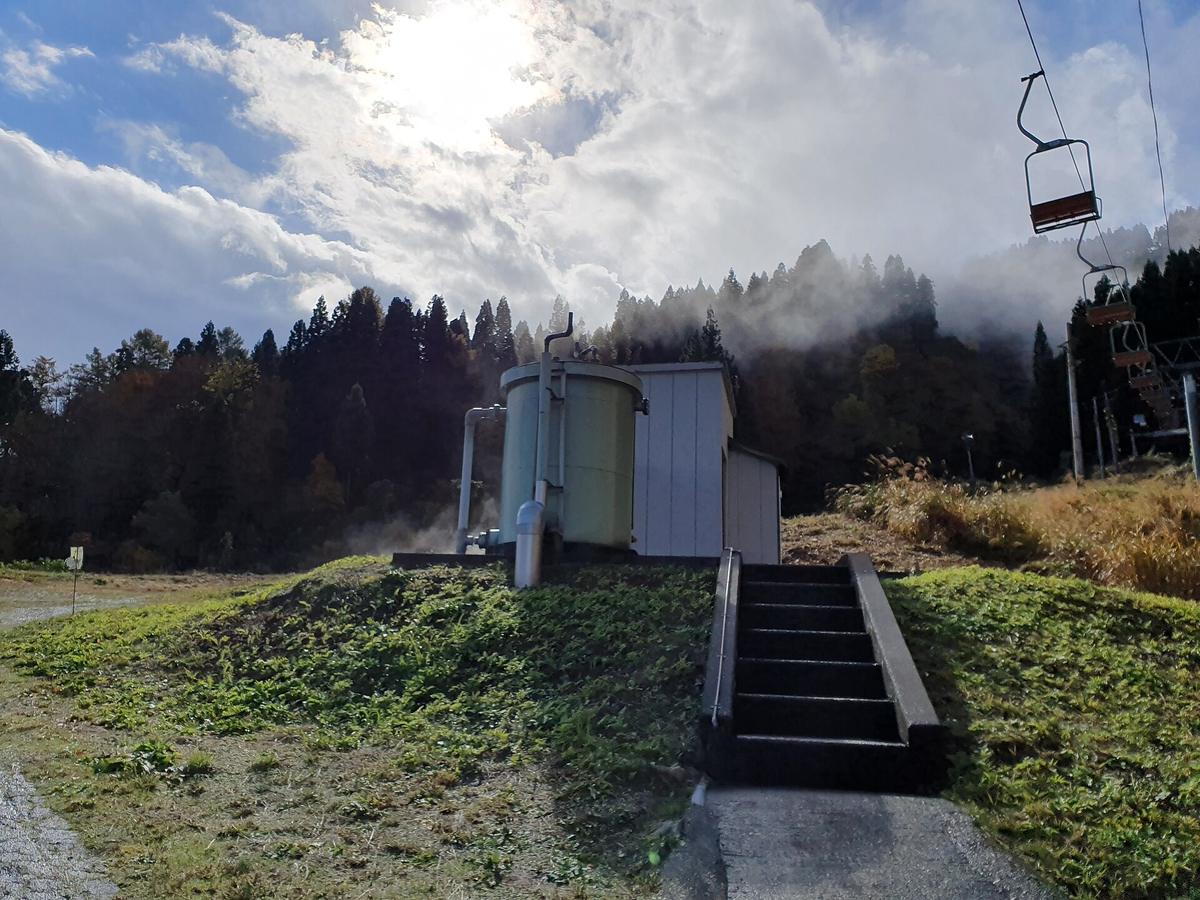
Atami peaked in 1965 with 51,000 permanent residents. The 2025 population is about 34,000. The hillsides are dotted with closed hotels from the 1970s and 80s, concrete facades with rusting signs. This is not decay that needs ignoring. It is a working document of Japan's Showa era domestic tourism boom, when companies sent their employees to seaside hot spring resorts for company retreats. Atami was the closest onsen town to Tokyo by train then and it still is now. The palm trees, the waterfront redevelopment, and the lingering resort architecture create a specific atmosphere that no polished spa town can replicate. Do not romanticise it. Just notice it.


| Item | Cost (Adult) | Time | Notes |
|---|---|---|---|
| Tokyo to Atami, Shinkansen unreserved | ¥4,070 | 35-50 min | Kodama or Nozomi, check frequency |
| Atami Station to MOA Museum (bus) | ¥200 | 8 min | Bus stand 3, east exit |
| MOA Museum of Art admission | ¥1,600 | 90-120 min | Closed Thursdays |
| Atami Sun Beach walk (Station to beach) | Free | 15 min | 1.2 km, open year round |
| Atami Castle admission (ropeway optional) | ¥1,100 + ¥500 (one way ropeway) | 30-45 min | Skip if short on time |
| Atami Onsen Yu yu (public bath) | ¥1,000 | 45-60 min | Tattoos prohibited, walk in only |
| Total budget per person (low end, no hotel) | ¥7,770 | Full day | ¥4,070 fare + ¥1,600 art + ¥1,000 onsen = ¥6,670 plus bus and food |
Route That Avoids Backtracking
The walking route that covers all three stops without doubling back is: Atami Station to MOA Museum of Art via bus, then downhill to Atami Sun Beach, then east along the promenade to the ropeway or directly back to the station. Total walking distance is about 2.5 kilometres. If you add Atami Castle via ropeway, you add 500 metres. If you prefer a museum-free day, walk from the station to Kiunkaku first (17 minutes), then to the beach and the onsen. The route works in either order because everything is within a 20-minute radius of the station.
The One Thing That Goes Wrong
Visitors buy a Shinkansen ticket that does not stop at Atami. The Kodama stops every time. The Nozomi stops at Atami only for a few departures per day, usually early morning and late evening. If you board a Nozomi that does not stop at Atami, you end up at Mishima or Shizuoka and need to double back on a local train. Look at the departure board. If it says Nozomi and the train number is below 500, it is skipping Atami. Wait for the next Kodama or Hikari that lists Atami in the station list.
Who Should Take This Trip and Who Should Not
This Atami day trip suits solo explorers who value efficiency over atmosphere, and travellers who already know Tokyo and want a short train ride to a completely different scene. It works for anyone who needs a hot spring within a few hours and does not mind a bit of faded concrete around the edges. It is a poor choice for anyone wanting a compact, walkable old town with preserved Edo-era streets. Atami does not have that. It is also a poor choice for someone on a backpacker budget who cannot spend ¥4,000 on a train ticket. If you are looking for cheap street food and hostel dorms, stay in Tokyo. If you want the closest onsen town to Tokyo with a real seaside identity and a plan that uses every minute, buy the Kodama ticket and walk out of the station toward the escalator.
Read next
-
 Tokyo Hotels by Type and Budget from Capsules to Luxury
Tokyo hotels organised by type and price band, from efficient capsule pods to full-service luxury towers, to help you book the right room.
Tokyo Hotels by Type and Budget from Capsules to Luxury
Tokyo hotels organised by type and price band, from efficient capsule pods to full-service luxury towers, to help you book the right room.
-
 Where to Stay in Tokyo by District and Travel Style
A comparison of Tokyo's major districts to help you choose the right base for your travel style, whether you want calm or chaos.
Where to Stay in Tokyo by District and Travel Style
A comparison of Tokyo's major districts to help you choose the right base for your travel style, whether you want calm or chaos.
-
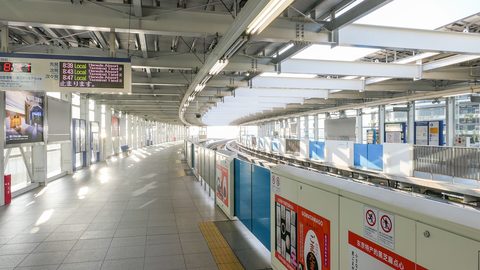 Narita or Haneda for Tokyo and What That Airport Choice Costs You
Narita or Haneda for Tokyo: compare door-to-district time, transfer cost, and what the wrong airport choice eats from your trip.
Narita or Haneda for Tokyo and What That Airport Choice Costs You
Narita or Haneda for Tokyo: compare door-to-district time, transfer cost, and what the wrong airport choice eats from your trip.
-
 Things to Do in Tokyo That Are Worth Your Limited Days
A curated list of Tokyo's highest-impact sights and experiences, from immersive art to quiet backstreets, to help you prioritise your days.
Things to Do in Tokyo That Are Worth Your Limited Days
A curated list of Tokyo's highest-impact sights and experiences, from immersive art to quiet backstreets, to help you prioritise your days.
-
 Best Time to Visit Tokyo Month by Month Tradeoffs
A month-by-month guide to visiting Tokyo, laying out the trade-off between weather, crowds, price, and what's actually open.
Best Time to Visit Tokyo Month by Month Tradeoffs
A month-by-month guide to visiting Tokyo, laying out the trade-off between weather, crowds, price, and what's actually open.
-
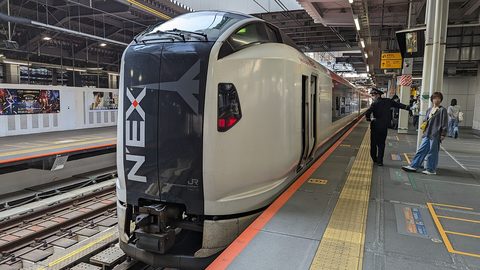 Getting Around Tokyo by Train Airport Transfers and IC Cards
A practical guide to Tokyo's rail network, covering airport transfers, IC cards, and how to avoid the station navigation mistakes that eat your day.
Getting Around Tokyo by Train Airport Transfers and IC Cards
A practical guide to Tokyo's rail network, covering airport transfers, IC cards, and how to avoid the station navigation mistakes that eat your day.
-
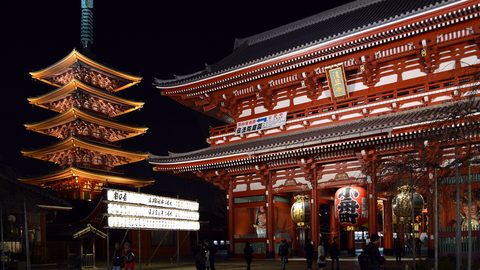 Senso-ji
 is free and never closes, but the experience at 6am with empty Nakamise stalls is nothing like the 11am crush under Kaminarimon. Here is when to go and what you get at each hour.
Senso-ji
Senso-ji is free and never closes, but the experience at 6am with empty Nakamise stalls is nothing like the 11am crush under Kaminarimon. Here is when to go and what you get at each hour.
-
 Meiji Jingu
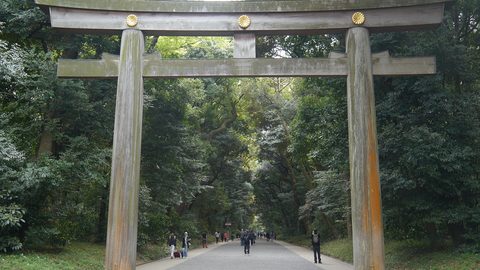
The Meiji Jingu visit changes completely depending on which torii gate you enter. One drops you from Harajuku noise into sudden forest, the other builds quiet slowly from Yoyogi.
Meiji Jingu
The Meiji Jingu visit changes completely depending on which torii gate you enter. One drops you from Harajuku noise into sudden forest, the other builds quiet slowly from Yoyogi.
-
 teamLab
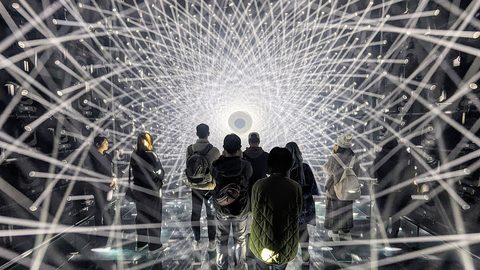
 Borderless and Planets are two different Tokyo venues with separate booking systems. Borderless tickets at Azabudai Hills sell in timed slots and the maze has no fixed route.
teamLab
teamLab Borderless and Planets are two different Tokyo venues with separate booking systems. Borderless tickets at Azabudai Hills sell in timed slots and the maze has no fixed route.