Shinagawa Station, Choosing a Transit Timetable Over a Tokyo District
Shinagawa is a transit timetable more than a neighbourhood, offering the smoothest Haneda Airport slide and Shinkansen access for travellers who prize efficiency over local character.
- Flag
-
- ISO code
- JP
- Currency
- JPY
- Timezone
- Asia/Tokyo
Shinagawa is Not a Neighbourhood
Tokyo does not have a centre. Most travellers arrive expecting one and get a collection of quiet, orderly districts stitched together by relentless rail commutes. The sheer scale and the absence of street names hit harder than any language barrier. The real magic lives in mundane places: a perfectly engineered convenience store, a silent backstreet, a meal that required a reservation made three weeks ago. Shinagawa offers none of that magic. It offers a timetable. That is its only virtue, and it is a powerful one for the right traveller.
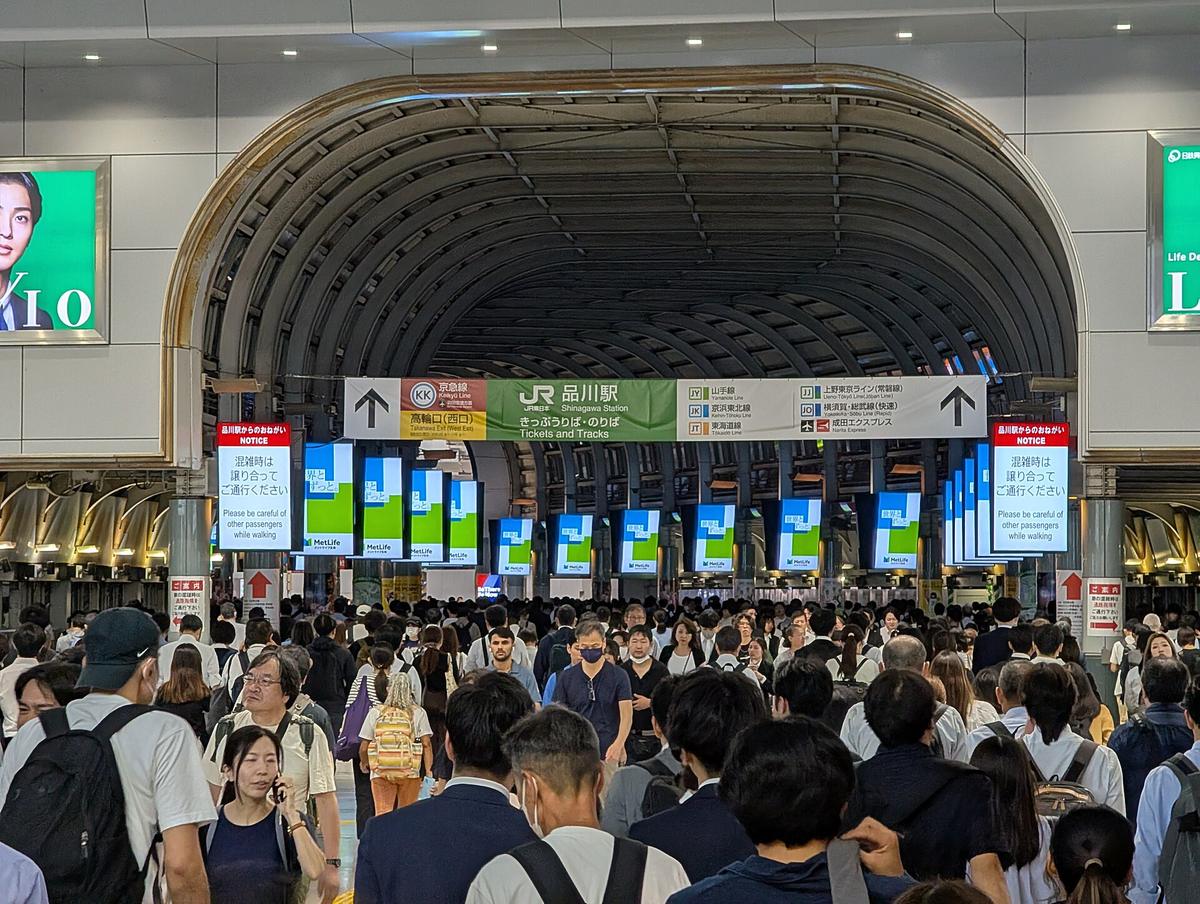
Shinagawa Station is a functional interchange, not a destination. Its selling point is frictionless movement. Ride the Keikyu Main Line from Haneda Airport Terminal 3 to the station concourse in 13 to 15 minutes. The 2024 fare is ¥330 on an IC card. That journey is so short and cheap it feels like the city is admitting you made a smart choice. The Tōkaidō Shinkansen stops here, eastbound next stop Tokyo Station and westbound next stop Shin Yokohama, giving you direct bullet train access without the scale and crowd density of Tokyo Station itself. Fifteen JR platforms and four Shinkansen platforms move hundreds of thousands of passengers daily. The station is a machine, not a place. You arrive. You leave. That is the point.

Why You Would Choose to Sleep Here
The efficiency nerd traveller already knows the math. A single weekday hotel room on the Konan side, east of the station, runs somewhere around ¥12,000 to ¥18,000, and moves with the season. That is a 15 to 25 percent premium over a comparable room in Shinjuku, which averages ¥10,000 to ¥16,000. You pay more to sleep in a business hotel cluster that has zero street life after 10 p.m. and every connection you need before 8 a.m. The trade-off is obvious and honest.
Shinagawa suits the traveller whose primary emotional relationship with Tokyo is logistical. The solo explorer who thrives on anonymity. The repeat visitor who has already done Shibuya Scramble and Meiji Jingu and wants to skip the commute. The food-obsessed traveller whose entire itinerary is built around specific restaurant reservations and who needs to be at Tokyo Station by 7:15 for a westbound Shinkansen. The pop culture and design enthusiast who knows that Akihabara and Nakameguro are thirty minutes away and that the station itself handles the connection without requiring you to change lines.
What Exists Beyond The Platforms
There is no district of Shinagawa in the way there is a district of Shinjuku. There is the station and there are pockets of calm on the Takanawa hillsides where a few inns offer something closer to the quiet neighbourhood experience. Maxell Aqua Park lives inside the Shinagawa Prince Hotel in Takanawa and runs three to five dolphin shows daily depending on the season. Admission is around ¥2,500 at the last published rate. Use it as a rainy day option if you are staying at the Prince. Do not choose your hotel for it.
Two kilometres east lies Tennozu Isle, reachable in one stop and two minutes on the Rinkai Line or a twenty-minute walk. TY Harbour Brewery and the Terrada Art Complex give you a waterfront afternoon with craft beer and contemporary art. Neither is worth a dedicated trip from another part of Tokyo. Both are pleasant if you happen to be staying one stop away.
The Historic Footprint That Almost Nobody Sees
Shinagawa was the first post town on the old Tōkaidō road out of Edo, positioned roughly eight kilometres from Nihonbashi. The old post town stretched along what is now Sanno-dori and Kita-Shinagawa south of the station. About 1.2 kilometres of that road still carries some historical character: a Honjin trace, Kagata Jinja, old shopfront remnants. It is walkable, quiet, and irrelevant to the decision of where to sleep. If you have a spare afternoon and you are here, take the stroll. Do not choose this area over Asakusa for it.
The Daily Rhythm of a Transit Hub
Shinagawa imposes a daily commute on every traveller who stays here. That is the cost. The first westbound Tōkaidō Shinkansen departs at 06:00 on a weekday. The last Keikyu train from Haneda leaves at 00:01. Between those times the station is a stream of people who are going somewhere else. You are one of them.
The Yamanote Line loops clockwise to Shibuya, Shinjuku, and Ikebukuro, or counterclockwise to Tokyo and Ueno. Every major district is a single train ride away. The problem is time. Book five full days minimum. Anything less means you are commuting between a checklist of sights without feeling the rhythm of any single district. Pick two areas maximum per day. Trying to cover Shibuya, Shinjuku, Harajuku, Asakusa, Akihabara, and Roppongi in two days is a common mistake. The trains run fast. Station navigation and district depth eat half the day.
Book the Keikyu Line airport transfer. The 13-minute ride from Haneda is the single strongest argument for staying here. Arriving at Narita? The 55 to 70-minute Keisei Skyliner to Ueno or the Narita Express to Tokyo does not favour Shinagawa. Add the transfer time. Haneda arrivals, choose Shinagawa. Narita arrivals, look at Ueno or Tokyo Station.

.jpg)
Who This District Serves and Who it Rejects
Shinagawa rejects the traveller who wants a compact, walkable old town at the doorstep. It rejects the shoestring backpacker who needs hostels and street food to be dirt cheap. It rejects anyone who finds crowds and underground mazes anxiety-inducing rather than energising. The station is a multi-company hub. Exit through the wrong gate and you invalidate your transfer ticket, forcing a fare recalculation at a staffed window. That friction happens. It matters for some people.
Shinagawa serves the efficiency nerd who appreciates systems that work. The traveller who wants a predictable business-class hotel cluster and is happy to commute into the city's chaos rather than sleep inside it. The repeat visitor who knows that Ghibli Museum tickets release on the tenth of each month and that teamLab Borderless requires advance booking and that none of that changes the fact your hotel should be a place you sleep, not a place you explore. If that describes you, this is a better logistical decision than a characterful neighbourhood. If it does not, stay in Shimokitazawa or Kagurazaka or Asakusa and accept that you will spend more time on trains. There is no wrong choice. There is only the honest one.
Other areas in Tokyo
- Akihabara
- Asakusa
- Ebisu
- Futako-tamagawa
- Ginza
- Harajuku
- Ikebukuro
- Jimbocho
- Jiyugaoka
- Kagurazaka
- Kichijoji
- Kiyosumi-Shirakawa
- Koenji
- Kuramae
- Marunouchi
- Nakameguro
- Nakano
- Nihonbashi
- Ningyocho
- Odaiba
- Omotesando and Aoyama
- Roppongi
- Ryogoku
- Sangenjaya
- Shibamata
- Shibuya
- Shimokitazawa
- Shin-Okubo
- Shinjuku
- Sugamo
- Takadanobaba
- Todoroki
- Tsukiji
- Tsukishima
- Ueno
- Yanaka
- Yurakucho and Shinbashi
Common Questions
Is Shinagawa a good base for first time visitors to Tokyo?
Only if they prioritise convenience over atmosphere. First time visitors who want to feel immersed in a district should choose Shinjuku or Asakusa. First time visitors who plan to take the Shinkansen multiple times or have a late Haneda arrival will find Shinagawa practical.
How do I get from Haneda Airport to Shinagawa Station?
Take the Keikyu Main Line. The minimum travel time to Terminal 3 is 11 minutes, typical travel time is 13 to 15 minutes. The 2024 adult fare on an IC card is ¥330. No transfers are required.
How much does a hotel in Shinagawa cost compared to Shinjuku?
A single weekday room in Shinagawa's Konan business hotel cluster averaged ¥12,000 to ¥18,000 in 2025, approximately 15 to 25 percent more than the ¥10,000 to ¥16,000 range in Shinjuku for the same year. JR East and the Tokyo Hotel Association publish the current year figures.
Can I take the Shinkansen from Shinagawa?
Yes. The Tōkaidō Shinkansen stops at platforms 21 to 24. The next stop westbound is Shin Yokohama. The next stop eastbound is Tokyo Station. The first westbound departure on a typical weekday is 06:00.
What is there to do in Shinagawa besides the station?
Maxell Aqua Park inside the Shinagawa Prince Hotel has dolphin shows and costs ¥2,500 admission for 2025. Tennozu Isle, one stop away on the Rinkai Line, has TY Harbour Brewery and the Terrada Art Complex. The old Tōkaidō post town street runs 1.2 kilometres south of the station and has a few Edo period remnants.
Is Shinagawa good for nightlife?
No. The Konan business hotel side is dead after 10 p.m. The Takanawa side has a few hotel bars. For nightlife, take the Yamanote Line clockwise to Shibuya, Shinjuku, or Ikebukuro, or visit the Golden Gai bar cluster in Shinjuku.
How many days do I need to make Shinagawa worth it?
Five full days minimum. Anything shorter and you spend too much of it commuting from the station to the districts where the actual travel experience happens.
Read next
-
 Tokyo Hotels by Type and Budget from Capsules to Luxury
Tokyo hotels organised by type and price band, from efficient capsule pods to full-service luxury towers, to help you book the right room.
Tokyo Hotels by Type and Budget from Capsules to Luxury
Tokyo hotels organised by type and price band, from efficient capsule pods to full-service luxury towers, to help you book the right room.
-
 Where to Stay in Tokyo by District and Travel Style
A comparison of Tokyo's major districts to help you choose the right base for your travel style, whether you want calm or chaos.
Where to Stay in Tokyo by District and Travel Style
A comparison of Tokyo's major districts to help you choose the right base for your travel style, whether you want calm or chaos.
-
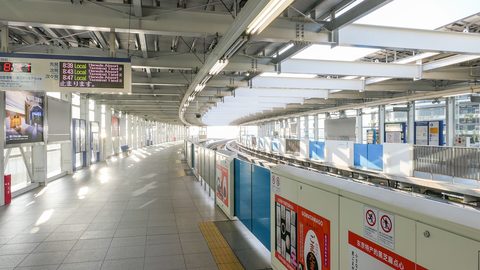 Narita or Haneda for Tokyo and What That Airport Choice Costs You
Narita or Haneda for Tokyo: compare door-to-district time, transfer cost, and what the wrong airport choice eats from your trip.
Narita or Haneda for Tokyo and What That Airport Choice Costs You
Narita or Haneda for Tokyo: compare door-to-district time, transfer cost, and what the wrong airport choice eats from your trip.
-
 Things to Do in Tokyo That Are Worth Your Limited Days
A curated list of Tokyo's highest-impact sights and experiences, from immersive art to quiet backstreets, to help you prioritise your days.
Things to Do in Tokyo That Are Worth Your Limited Days
A curated list of Tokyo's highest-impact sights and experiences, from immersive art to quiet backstreets, to help you prioritise your days.
-
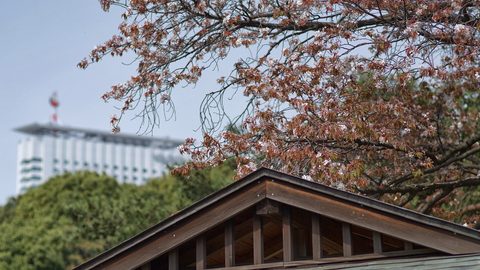 Best Time to Visit Tokyo Month by Month Tradeoffs
A month-by-month guide to visiting Tokyo, laying out the trade-off between weather, crowds, price, and what's actually open.
Best Time to Visit Tokyo Month by Month Tradeoffs
A month-by-month guide to visiting Tokyo, laying out the trade-off between weather, crowds, price, and what's actually open.
-
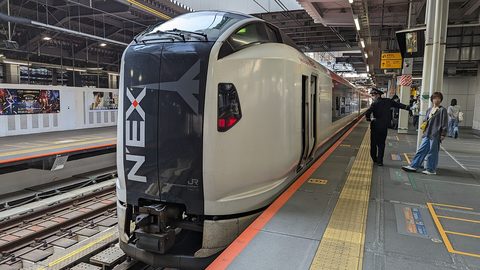 Getting Around Tokyo by Train Airport Transfers and IC Cards
A practical guide to Tokyo's rail network, covering airport transfers, IC cards, and how to avoid the station navigation mistakes that eat your day.
Getting Around Tokyo by Train Airport Transfers and IC Cards
A practical guide to Tokyo's rail network, covering airport transfers, IC cards, and how to avoid the station navigation mistakes that eat your day.
-
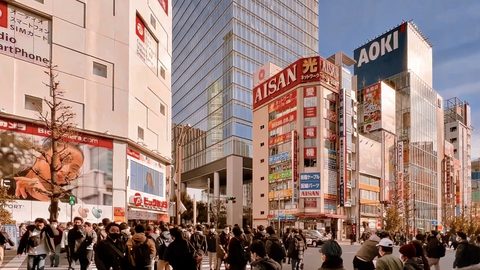 Akihabara
 Tokyo guide: electronics, anime, and arcades stacked floor by floor, from Radio Kaikan to the maid cafe touts.
Akihabara
Akihabara Tokyo guide: electronics, anime, and arcades stacked floor by floor, from Radio Kaikan to the maid cafe touts.
-
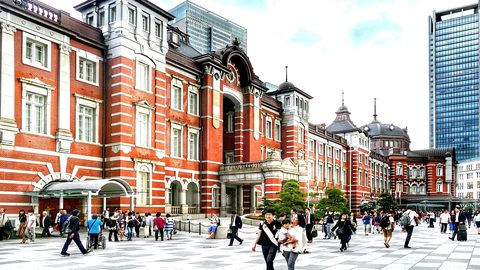 Marunouchi
Staying in Marunouchi puts you steps from Tokyo Station's Shinkansen platforms and Narita Express, trading nightlife buzz for unmatched rail connectivity and wide, quiet weekend boulevards.
Marunouchi
Staying in Marunouchi puts you steps from Tokyo Station's Shinkansen platforms and Narita Express, trading nightlife buzz for unmatched rail connectivity and wide, quiet weekend boulevards.
-
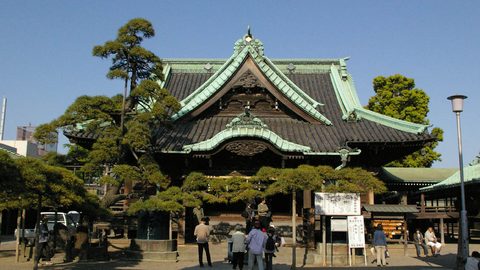 Shibamata
 preserves a 1950s Tokyo on its temple approach street, forever tied to the Tora-san film series and best visited for unagi and old-school snacks.
Shibamata
Shibamata preserves a 1950s Tokyo on its temple approach street, forever tied to the Tora-san film series and best visited for unagi and old-school snacks.