The Rules Visitors Break in Tokyo Without Ever Realising
Tokyo has unspoken rules about eating, phone calls, shoes, and photography that visitors break constantly. This page explains what they are and why they matter.

The Rules Visitors Break in Tokyo Without Ever Realising
You step off the train in Tokyo and within ten minutes you have probably broken three unwritten rules. Nobody will confront you. That is the good news. The bad news: you are the tourist who eats on the street, talks on a phone in a quiet carriage, and tosses rubbish into the wrong bin. Here is what to stop doing and why, so you move through the city with the same invisible competence as everyone else.
Tokyo runs on unposted agreements. No one enforces them with signs or scolding. The system works because nearly everyone follows the same small rituals. Break one and you will not get yelled at. You will feel the silence harden around you. The fix is simple: know the ritual before you arrive.
Walking While Eating, Phones on Trains, and the Queue That is Never a Crowd
Eating On The Move
Eating while walking is the fastest way to look like a visitor. On Nakamise-dori, the shopping street leading to Senso-ji, the takoyaki in your hand is fine. The stalls there sell food meant to be eaten on the move. Step off that street onto a residential block or a commuter thoroughfare and the same behaviour marks you as someone who does not know the code. Finish your food at the stall. Find a bench near a konbini.
Phone Silence
Phones on trains are the second offence. Local and commuter trains expect total silence for calls. Set your phone to silent mode, the manner mode setting on every Japanese phone. Near priority seats in a crowded carriage, power the phone off entirely. Long distance reserved seat trains like the Shinkansen or limited express services allow calls, but keep them short and low voiced. No one, anywhere in the system, wants to hear your conversation.
Queues And Escalators
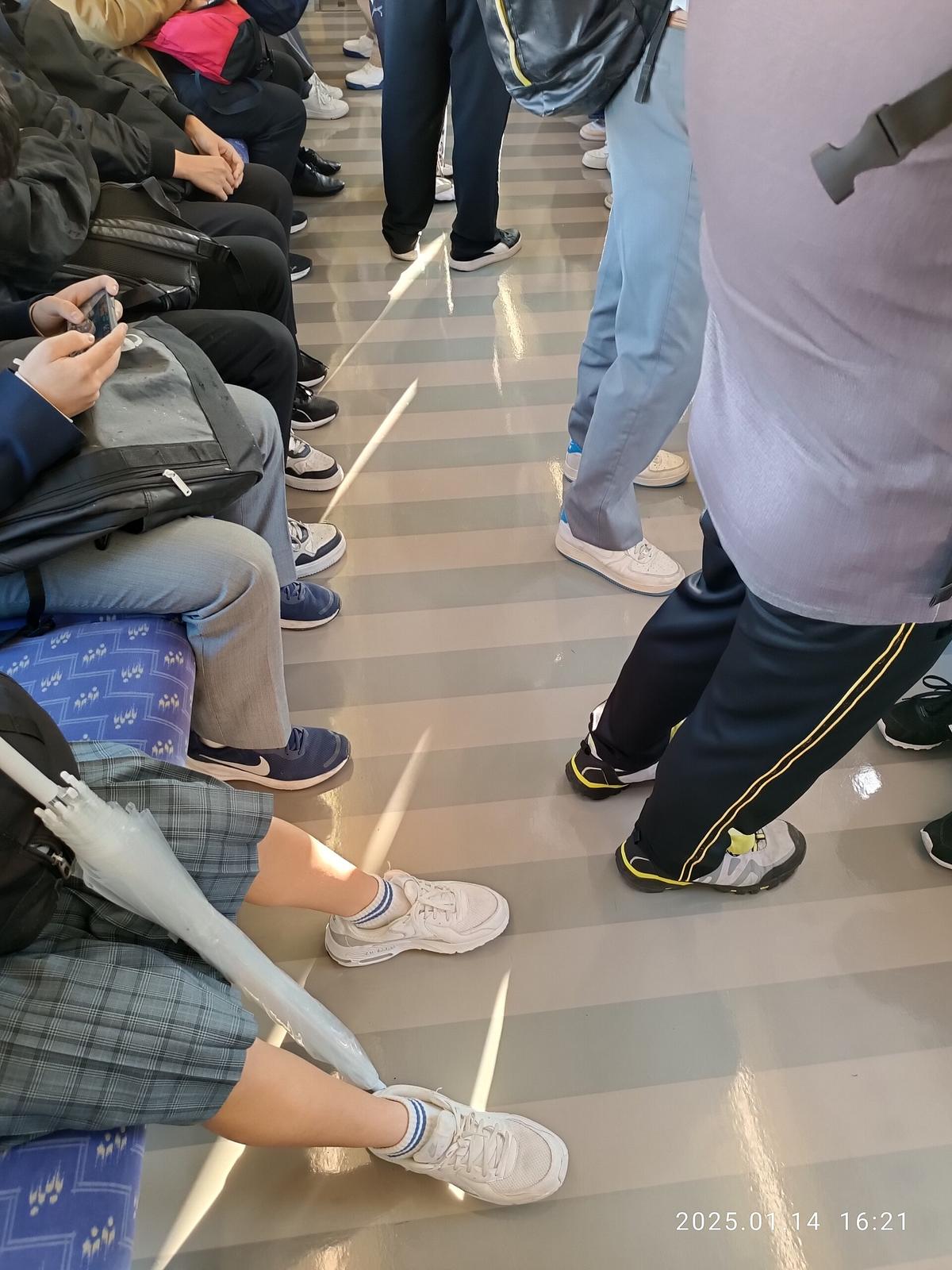
Queue formation at a train platform is not a suggestion. The floor markers show exactly where each door will stop. Stand behind the marker, single file, leaving the centre clear for exiting passengers. The escalator rule in Tokyo is stand on the left, walk on the right. Osaka reverses it. In Tokyo, if you stand on the right you will be gently asked to move.
Shoes Off, Chopsticks Right, and the Tipping That Does Not Exist
The Genkan Rule
The genkan is the small step down at the entrance of a home, a traditional ryokan, some restaurants, temple halls, and onsen changing rooms. Your shoes come off there. Step onto the raised floor with shoes still on and you bring street dirt into a space where people sit and sleep. If in doubt, watch what the person ahead of you does. Slippers are sometimes provided; never wear those slippers onto tatami mats or into the toilet.
Chopstick Taboos
Chopsticks have two absolute prohibitions. Never stick them upright into a bowl of rice. That resembles a funeral offering. Never pass food from your chopsticks to someone else's chopsticks. That mimics the ritual of passing cremated bones between family members at a funeral. Use the serving chopsticks provided for shared dishes, or reverse your own chopsticks to the clean ends.
No Tipping
Tipping is not just unnecessary, it can cause confusion. A service charge is already built into the bill at most sit down restaurants. Leave cash on the table and the staff may run after you to return it. Pay exactly what the bill says. If you want to express gratitude, say gochisousama deshita (thank you for the meal) as you leave.
Why The Shoe Rule Matters At Izakaya And Temples
Some izakaya and nearly all temples require shoe removal. At a temple, your shoes sit in a cubby or on a shelf. At an izakaya, the low tables on tatami mean you sit cross legged or kneeling. Socks are fine. Holes in your socks are not. Carry a spare pair if you plan a day that moves between temples and casual restaurants.
Onsen Tattoo Policies, Golden Gai Photo Rules, and the Trash You Carry
Onsen And Tattoos
Onsen and public pools often ban visible tattoos. The rule stems from the association of tattoos with organised crime. Some facilities now allow entry if you cover tattoos with a waterproof sticker. Others have designated tattoo friendly hours or private baths. Check the facility website or ask at reception before you buy a ticket. The bathing order is strict: wash and rinse your entire body on the stool before you step into the bath. Swimsuits are not permitted in the baths.
Golden Gai Photography
Golden Gai, the warren of two hundred tiny bars near Shinjuku, has its own light etiquette. Most bars hold about six seats. Photographing the lanterns and narrow alleys from the street is fine. Photographing inside a bar without asking is an intrusion. Many bars post a sign in Japanese or English stating their photo policy. If you cannot see one, ask the bartender. The answer is usually no.
Carry Your Rubbish
Public rubbish bins disappeared from Tokyo after the 1995 sarin gas attacks. You will find them at convenience stores and inside train stations near the ticket gates, but not on street corners. Carry a small bag for your wrappers, drink bottles, and used tissues. When you find a bin, check the labels. The sorting categories usually include combustible, non combustible, bottles and cans, and PET bottles. A station bin may have only two slots. Look at what other people drop in.

| Situation | Allowed? | Reason |
|---|---|---|
| Nakamise-dori and recognised street food zones | Yes | Stalls sell food intended to be eaten immediately on the street |
| Residential streets and commercial districts | No | Considered messy and disrespectful to shop owners and neighbours |
| Parks with benches or designated eating areas | Yes, if seated | Sitting while eating is the norm; walking with food is not |
| Local and commuter train platforms | No | Eating is discouraged; drink in a sealed container is borderline |
| Shinkansen and limited express trains | Yes | Onboard bento and snack sales are expected; use the tray table |
The Single Rule That Overrides Everything Else
Watch what local people do and match it. Every district has its own rhythm. The quiet of a Ginza weekday afternoon is different from the controlled chaos of Shibuya on a Saturday. The etiquette is not a fixed list of thou shalt nots. It is a shared awareness of the people around you. The visitor who pauses at a station entrance to finish a drink, who steps aside to let an elderly person board first, who carries a plastic bag for their rubbish until they find a konbini bin, that visitor is following the real rule.
Buy a Suica or Pasmo IC card and add it to your phone wallet before you leave the airport. That one action removes the friction of buying paper tickets, of fumbling for exact change, of holding up the queue. Everything else in Tokyo etiquette is just paying attention.
Read next
-
 Tokyo Hotels by Type and Budget from Capsules to Luxury
Tokyo hotels organised by type and price band, from efficient capsule pods to full-service luxury towers, to help you book the right room.
Tokyo Hotels by Type and Budget from Capsules to Luxury
Tokyo hotels organised by type and price band, from efficient capsule pods to full-service luxury towers, to help you book the right room.
-
 Where to Stay in Tokyo by District and Travel Style
A comparison of Tokyo's major districts to help you choose the right base for your travel style, whether you want calm or chaos.
Where to Stay in Tokyo by District and Travel Style
A comparison of Tokyo's major districts to help you choose the right base for your travel style, whether you want calm or chaos.
-
 Narita or Haneda for Tokyo and What That Airport Choice Costs You
Narita or Haneda for Tokyo: compare door-to-district time, transfer cost, and what the wrong airport choice eats from your trip.
Narita or Haneda for Tokyo and What That Airport Choice Costs You
Narita or Haneda for Tokyo: compare door-to-district time, transfer cost, and what the wrong airport choice eats from your trip.
-
 Things to Do in Tokyo That Are Worth Your Limited Days
A curated list of Tokyo's highest-impact sights and experiences, from immersive art to quiet backstreets, to help you prioritise your days.
Things to Do in Tokyo That Are Worth Your Limited Days
A curated list of Tokyo's highest-impact sights and experiences, from immersive art to quiet backstreets, to help you prioritise your days.
-
 Best Time to Visit Tokyo Month by Month Tradeoffs
A month-by-month guide to visiting Tokyo, laying out the trade-off between weather, crowds, price, and what's actually open.
Best Time to Visit Tokyo Month by Month Tradeoffs
A month-by-month guide to visiting Tokyo, laying out the trade-off between weather, crowds, price, and what's actually open.
-
 Getting Around Tokyo by Train Airport Transfers and IC Cards
A practical guide to Tokyo's rail network, covering airport transfers, IC cards, and how to avoid the station navigation mistakes that eat your day.
Getting Around Tokyo by Train Airport Transfers and IC Cards
A practical guide to Tokyo's rail network, covering airport transfers, IC cards, and how to avoid the station navigation mistakes that eat your day.
-
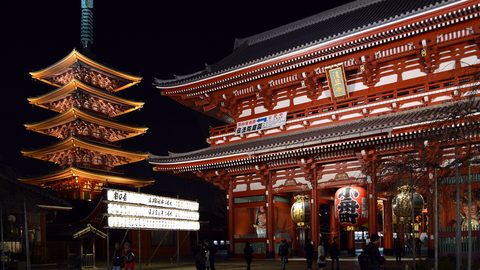 Senso-ji
 is free and never closes, but the experience at 6am with empty Nakamise stalls is nothing like the 11am crush under Kaminarimon. Here is when to go and what you get at each hour.
Senso-ji
Senso-ji is free and never closes, but the experience at 6am with empty Nakamise stalls is nothing like the 11am crush under Kaminarimon. Here is when to go and what you get at each hour.
-
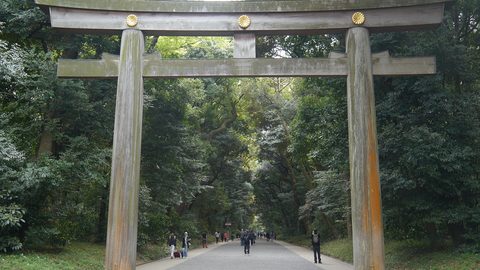 Meiji Jingu
The Meiji Jingu visit changes completely depending on which torii gate you enter. One drops you from Harajuku noise into sudden forest, the other builds quiet slowly from Yoyogi.
Meiji Jingu
The Meiji Jingu visit changes completely depending on which torii gate you enter. One drops you from Harajuku noise into sudden forest, the other builds quiet slowly from Yoyogi.
-
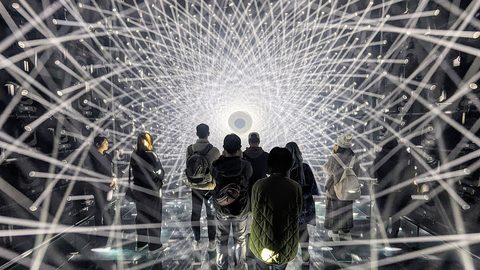 teamLab
 Borderless and Planets are two different Tokyo venues with separate booking systems. Borderless tickets at Azabudai Hills sell in timed slots and the maze has no fixed route.
teamLab
teamLab Borderless and Planets are two different Tokyo venues with separate booking systems. Borderless tickets at Azabudai Hills sell in timed slots and the maze has no fixed route.