Chiang Mai Food Is Northern Thai, Not the Central Thai Food You Know
Chiang Mai food is northern Thai: less coconut, more herbs and fermentation. The dishes and stalls to seek beyond khao soi.
Chiang Mai Food is Northern Thai, Not the Central Thai Food You Know
You know pad thai, green curry, and mango sticky rice. None of that is what you will eat here. Real Chiang Mai food comes from the Lanna kingdom, not Bangkok, and it tastes fundamentally different: less coconut milk, less sugar, more herbs, more bitterness, more funk. The signature dish is khao soi, a Burmese-influenced curry noodle that every visitor hunts down on day one. But the rest of the northern repertoire, the sausages, the dips, the pork curries, the noodle soups, is what keeps food travellers in Chiang Mai for a week instead of two days.
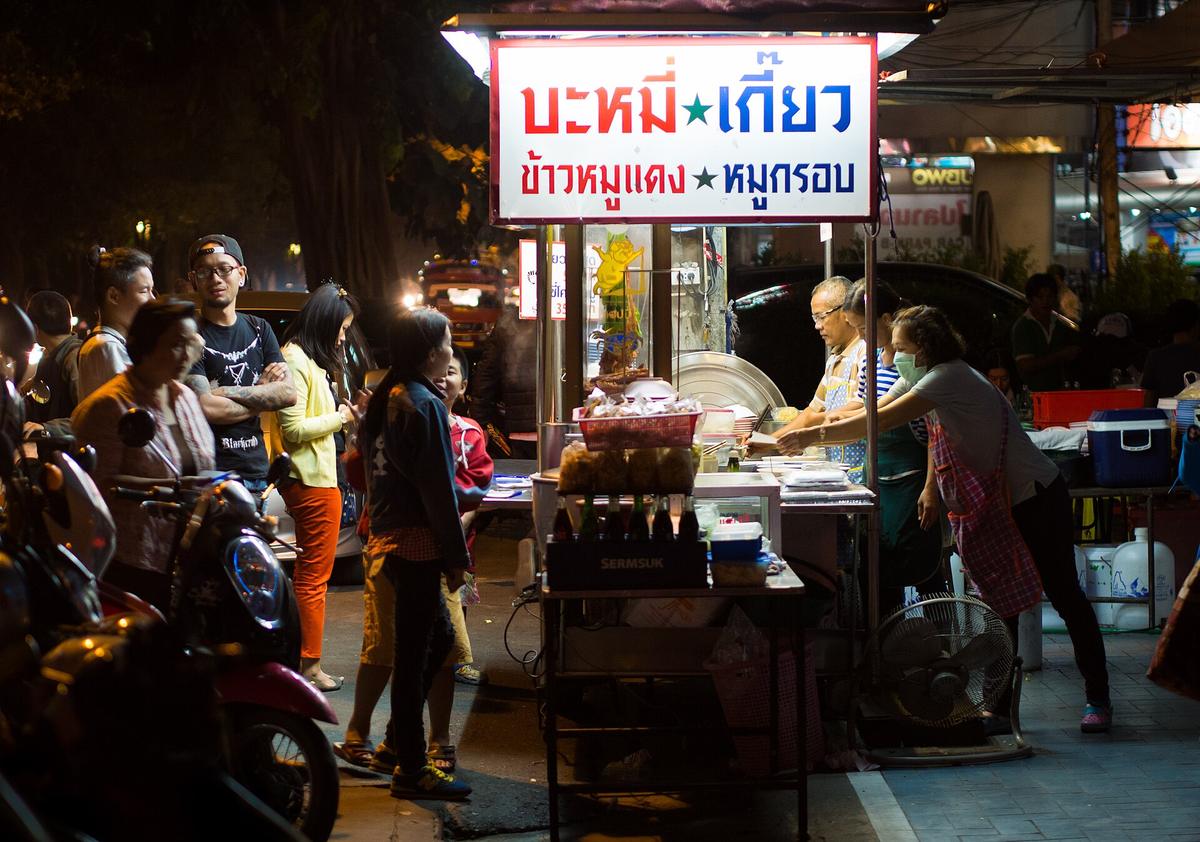
Work through each essential dish, find the stall or window that does it best, and anchor the street food search at Warorot Market and the Chang Phueak cowboy lady stall. If you only eat khao soi, you will have missed 80 percent of what makes northern Thai food distinct.

Northern Thai Food: What Makes it Different
Central Thai cooking leans on coconut milk, palm sugar, and lime to balance heat and sweetness. Northern Thai food (Lanna cuisine) uses almost none of those. Instead, the flavour base comes from a family of aged ingredients: sour pork, fermented soybean, fish paste. Add bitter herbs, dried chilies, and turmeric. Curries are thin and savoury, not rich and creamy. The result is a cuisine that tastes savoury, funky, and herbaceous long before it tastes sweet.
Sticky rice (khao niao) replaces jasmine rice everywhere. It arrives in small woven bamboo baskets. Eat it with your right hand, rolled into a ball to scoop up dips and relishes. A fork is for guiding the rice into your mouth, not for eating it directly. No chopsticks either, unless you are eating a noodle soup.
The spice level defaults to mild to medium compared to central or northeastern Thai food, so ask for "mai phet" (not spicy) if needed. But the heat is rarely the point here. The point is the depth of savoury, the aged funk, and the sheer quantity of fresh herbs in every dish.
Khao Soi Chiang Mai: the One Dish Everyone Knows
What Khao Soi Is
Khao soi is not a single recipe. It is a category: egg noodles in a curry broth, topped with crispy fried noodles, and served with a side plate of pickled mustard greens, sliced shallots, a lime wedge, and ground chilies fried in oil. Good khao soi has a broth that tastes of coconut but is not drowned in it; the coconut is one layer under turmeric, shallot, and garlic. The standard proteins are chicken, beef, pork, or vegetarian.
Where to Eat It
The dish traces its origin to Burmese Muslim traders, and the densest concentration of khao soi shops remains in the Muslim quarter around Charoen Prathet Road near the night bazaar. The most famous single shop is Khao Soi Lam Duan Fah Ham, though opening hours can vary. If you are near the old city, any shop with a long queue of local eaters at 11:00 is a safe bet. Order the chicken version first to taste the broth without interference from a stronger meat.
Chiang Mai Street Food: the Dishes Beyond Khao Soi
Street food in Chiang Mai is not a late night thing. Most serious eating happens between 17:00 and 23:00 at the night markets and dedicated street food zones. The Chang Phueak area (north gate) and the streets around Warorot Market are the two anchors. Here is what to look for.
Sai Ua: the Herbal Northern Sausage
Sai ua is a grilled pork sausage packed with lemongrass, kaffir lime leaves, galangal, turmeric, and chilies. The herbs are visible in the cross section: the sausage is green from the leaves and yellow from the turmeric, not pink like a standard Thai sausage. Eat it fresh off a street grill at Warorot Market or from the morning market stalls in Santitham. A single link costs 20 to 40 THB. Pair it with sticky rice and a handful of raw cabbage, ginger, and chilies.
Nam Phrik Ong and Nam Phrik Num: the Dips
Northern Thai food revolves around dips (nam phrik) eaten with sticky rice and raw vegetables. Nam phrik ong is a cooked dip made from ground pork, tomato, and dried chilies. It tastes like a spicy, savoury bolognese that you scoop up with chunks of cucumber, long beans, and cabbage. Nam phrik num is its green cousin: roasted green chilies, shallots, and garlic pounded into a smoky paste. Both are standard at any northern Thai restaurant. For the best version of nam phrik ong, look for a shop that has a charcoal grill out front and makes it in a mortar to order. Warorot Market has several stalls on the ground floor selling these dips by weight.
Gaeng Hang Lay: the Burmese Pork Belly Curry
Gaeng hang lay is a pork belly curry that contains no coconut milk. Instead, the richness comes from slow cooked pork belly, ginger, tamarind, garlic, turmeric, and peanuts. The result is savoury, slightly sour, and deeply meaty. It is a wet curry meant to be spooned over sticky rice, not slurped as soup. Most northern Thai restaurants serve it as a daily special; if you see a pot simmering on a burner at the front of a shop, order it immediately.
Northern Larb and Khanom Jeen Nam Ngiao
Northern Larb
Northern larb (larb khua) is different from the Isaan version you know. It is cooked, not raw, and uses northern spices plus often offal and blood for a deeper, minerally flavour. There is no lime juice; the sour comes from other aged ingredients. The texture is drier and the herb load heavier.
Khanom Jeen Nam Ngiao
Khanom jeen nam ngiao is a fermented rice noodle dish served in a tomato and pork broth. The key ingredient is dried cotton tree flowers, which give the broth a deep red colour and a slightly tannic, savoury note. Fermented soybean adds the umami. It is a breakfast and lunch dish, sold from mobile carts and market stalls; a bowl costs 40 to 60 THB. Look for the cart with a stack of fresh cotton tree flowers visible on the prep table.
Miang Kham and Overnight Charcoal Pork
Miang Kham
Miang kham is not a meal; it is a mouthful. Betel leaves are wrapped around roasted coconut, dried shrimp, peanuts, ginger, lime, and a dab of palm sugar syrup. Some market stalls sell them pre wrapped; others let you assemble your own. Look for them at Warorot Market near the flower section.
The Cowboy Lady Stall
The overnight charcoal pork at the Chang Phueak cowboy lady stall is the single most famous dish in northwest Chiang Mai. The stall sets up around 17:00 at the north gate, and the lady in the cowboy hat serves khao kha moo, stewed pork leg braised on charcoal overnight until the skin is gelatinous and the meat falls apart. A plate with rice, half an egg, and a ladle of gravy costs around 50 to 60 THB. It sells out by 21:00 most nights. Go early.
Warorot Market Food: the Best Single Stop
Warorot Market (Kad Luang) on Chang Moi Road near the Ping River is not a tourist market. It is a local wet market where Chiang Mai residents do their daily shopping, and the food floor is on the ground level. Walk through the dried goods section, past the stacks of tamarind and dried chilies, and into the prepared food zone. You will find sai ua by weight, nam phrik ong in plastic containers, sticky rice in bags, and fried pork rinds by the kilo. Visit before 11:00 when everything is fresh and the queues are short. After 11:00, the heat and crowd intensity build.
The upper floors sell flowers, textiles, and incense. Skip those and stay on the ground floor if you are there to eat. A full meal of three dishes plus sticky rice costs 100 to 150 THB.
Chang Phueak Night Market: the Cowboy Lady and More
Chang Phueak Gate Night Market runs from roughly 17:00 to 23:00 daily on the north side of the old city moat. The cowboy lady stall is the anchor, but the whole strip is a concentrated block of northern Thai street food. You will find grilled pork skewers, whole fish cooked in salt crust, papaya salad (made northern style with fermented crab and no palm sugar), and the same sai ua and sticky rice sold everywhere else.
The market is small, about 20 stalls, so you can eat your way through it in 90 minutes. Bring cash. Most stalls accept notes but have trouble breaking 1,000 THB. A full round of four or five dishes for two people costs 300 to 500 THB.
Cooking Classes and Coffee Culture
Cooking Classes
Chiang Mai is widely considered the best city in Thailand for cooking classes. A typical half day class (4 to 5 hours) includes a market tour, instruction on 4 to 6 dishes, a recipe book, and an individual cooking station. Prices ran between 800 and 1,500 THB per person in 2024. The classes almost always start with a trip to Warorot Market or a local morning market to buy ingredients. Book a class that focuses on northern Thai dishes specifically, not a generic Thai cooking class. The northern curriculum is where the value is, because you can eat central Thai food anywhere.
Coffee
Coffee is a serious local industry in Chiang Mai. Northern Thai arabica beans are grown in the highlands of Chiang Rai, Chiang Mai, and Mae Hong Son, and the city is dotted with espresso bars using single origin local beans. Nimmanhaemin Road has the highest concentration of serious coffee shops, but so does the old city. Standard espresso drinks cost 60 to 100 THB at local roasters.
Where to Eat: Districts and Price Ranges
Street stalls charge 40 to 80 THB per dish. Nimmanhaemin restaurants run 150 to 400 THB per person. Riverside dining on Charoen Rat Road (east bank of the Ping River) sits in the same range. The old city has the widest spread, from 40 THB noodle shops to 500 THB set dinners at boutique hotel restaurants.
If you are vegetarian or vegan, the Thai terms are mang sa wirat (vegetarian) and jay (vegan, no meat, dairy, eggs, garlic, onion, or strong herbs). The annual Nine Emperor Gods Festival in September or October is the best time for jay food, but dedicated jay stalls operate year round near most markets.
What Goes Wrong and How to Avoid it
Timing Mistakes
Two common failures: underestimating the heat and walking too far between stalls at midday, and arriving at a market after the best food is gone. Warorot Market is largely done by 13:00. The cowboy lady sells out by 21:00. Charoen Rat Road restaurants start closing their kitchens by 21:30. Northern Thai food runs on an early schedule. If you arrive at 22:00 thinking you will find the best sai ua of your life, you will end up eating a sad pad thai from a tourist cart.
Ordering Mistakes
The other failure is not ordering properly. Northern Thai meals are shared dishes with individual portions of sticky rice. You do not order one main for yourself. You order two or three dishes for the table plus rice and eat family style. One person ordering a single gaeng hang lay with rice is missing the point. Fill the table.
Who Chiang Mai Food Suits and Who it Does Not
Northern Thai food suits solo travellers who are comfortable eating from a market stall, food focused visitors who will plan their day around market hours, budget to midrange couples who want a 150 THB dinner that tastes better than a 1,500 THB one, and digital nomads with time to cook a class and explore. It does not suit travellers unwilling to handle the midday heat, anyone who expects a compact walkable historic core with food on every corner, beach seekers who want a central Thai menu, or hardcore partiers who arrive at midnight hungry. The single thing that most often goes wrong: arriving at 13:00 expecting a market lunch and finding the food stalls already packed up, with nothing left but dried goods and disappointment.
Common Questions
What is the main difference between northern Thai food and central Thai food?
Northern Thai food uses less coconut milk, less sugar, more herbs, more bitter notes, and more aged ingredients. Curries are thin and savoury. Sticky rice replaces jasmine rice. Central Thai food is sweeter, creamier, and less herbaceous.
Where can I find the best khao soi in Chiang Mai?
The highest concentration of khao soi shops is in the Muslim quarter on Charoen Prathet Road near the night bazaar. Khao Soi Lam Duan Fah Ham is the most famous single shop, but any shop with a local lunch queue is a safe bet. Order chicken khao soi first.
What is the cowboy lady stall and where is it?
The cowboy lady stall is a street food cart at Chang Phueak Gate Night Market that serves khao kha moo, stewed pork leg braised overnight on charcoal. It sells a plate with rice and egg for 50 to 60 THB. Set up around 17:00 daily, it usually sells out by 21:00.
Is Chiang Mai good for vegetarian and vegan food?
Yes, but you need the right terms. Mang sa wirat means vegetarian. Jay means vegan with no meat, dairy, eggs, garlic, onion, or strong herbs. Dedicated jay stalls operate year round near markets. The Nine Emperor Gods Festival in September or October is the best time for jay food.
Read next
-
 Chiang Mai Hotels by Price Band and Property Type
Chiang Mai hotels by property type and price band, from old city guesthouses to Mae Rim resorts, where the value is the best in Thailand.
Chiang Mai Hotels by Price Band and Property Type
Chiang Mai hotels by property type and price band, from old city guesthouses to Mae Rim resorts, where the value is the best in Thailand.
-
 Where to Stay in Chiang Mai: Old City, Nimman or Riverside
Where to stay in Chiang Mai, broken into the four areas that actually matter: Old City, Nimmanhaemin, Wat Ket riverside and Santitham.
Where to Stay in Chiang Mai: Old City, Nimman or Riverside
Where to stay in Chiang Mai, broken into the four areas that actually matter: Old City, Nimmanhaemin, Wat Ket riverside and Santitham.
-
 Flying to Chiang Mai: CNX Airport, Airlines and Arrival Routes
Flying to Chiang Mai means CNX, a small airport 15 minutes from the old city with no rail link. Here is the arrival flow and cost.
Flying to Chiang Mai: CNX Airport, Airlines and Arrival Routes
Flying to Chiang Mai means CNX, a small airport 15 minutes from the old city with no rail link. Here is the arrival flow and cost.
-
 Chiang Mai Things to Do Worth Your Days, Ranked and Argued
Chiang Mai things to do, ranked and argued: the temples, markets and day trips worth your days, and the popular stops you can skip.
Chiang Mai Things to Do Worth Your Days, Ranked and Argued
Chiang Mai things to do, ranked and argued: the temples, markets and day trips worth your days, and the popular stops you can skip.
-
 Best Time to Visit Chiang Mai: Burning Season Comes First
Best time to visit Chiang Mai, with the burning season named first: February to April air quality, then the cool clear peak months.
Best Time to Visit Chiang Mai: Burning Season Comes First
Best time to visit Chiang Mai, with the burning season named first: February to April air quality, then the cool clear peak months.
-
 Getting Around Chiang Mai: Grab, Songthaews and Scooter Reality
Getting around Chiang Mai: Grab and songthaew costs, scooter licence checkpoints, airport transfers and why walking is harder than it looks.
Getting Around Chiang Mai: Grab, Songthaews and Scooter Reality
Getting around Chiang Mai: Grab and songthaew costs, scooter licence checkpoints, airport transfers and why walking is harder than it looks.
-
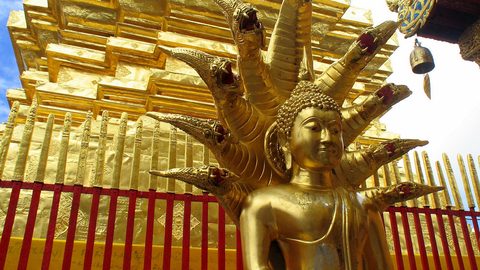 Wat Phra That Doi Suthep
Doi Suthep is a gold chedi above Chiang Mai, but the monk's trail up through Wat Pha Lat is the part almost nobody walks.
Wat Phra That Doi Suthep
Doi Suthep is a gold chedi above Chiang Mai, but the monk's trail up through Wat Pha Lat is the part almost nobody walks.
-
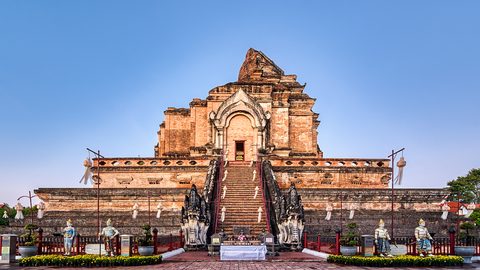 Wat Chedi Luang
 is the biggest ruin in Chiang Mai's old city, and the one temple where you can sit and talk to a monk.
Wat Chedi Luang
Wat Chedi Luang is the biggest ruin in Chiang Mai's old city, and the one temple where you can sit and talk to a monk.
-
 Doi Inthanon
 is 2,565 metres of summit car park in cloud, but the waterfalls, pagodas and trails on the way up are better.
Doi Inthanon
Doi Inthanon is 2,565 metres of summit car park in cloud, but the waterfalls, pagodas and trails on the way up are better.