How Safe Is Chiang Mai? Weighing Air Quality, Traffic and Street Crime
Chiang Mai safety weighed honestly: burning season air, scooter licence risks, Songkran chaos and why street crime is the least of it.
How Safe is Chiang Mai? Weighing Air Quality, Traffic and Street Crime
You are asking whether Chiang Mai is safe because you have read something about smoke, or a scooter crash, or you heard the water fights get wild. Here is the honest answer, weighted by probability: the biggest threat to your health in Chiang Mai is the air during burning season, followed by a two-wheeled accident, followed by heatstroke in April. Violent crime against visitors is very low. Street crime is low. Pickpocketing happens at the night market but at a rate far below Bangkok or any European capital. The question of Chiang Mai safety is really a question about three specific things: what month you visit, whether you rent a motorbike, and how you handle Songkran. Nail those and this city is among the safest in Thailand for visitors.
Is Chiang Mai Safe? the Honest Baseline
Yes. Chiang Mai is safe. Crime against tourists is very low. Violent crime directed at foreigners is rare. The most common safety incidents are non violent: a phone lifted from a bag at the Night Bazaar, a motorbike scratch dispute with a rental shop, a sunburn that turns into heat exhaustion. Travel insurance covers almost all of these. What does not happen is armed robbery, assault, or anything that should keep you off the streets after dark. You can walk the old city moat at 11pm without trouble. The old city pavements are narrow and uneven. You will trip on a parked motorbike before anyone bothers you.
.jpg)
Chiang Mai Air Quality: the Real Danger
The single biggest health risk in Chiang Mai is the air. From roughly late February to mid April, agricultural burning across northern Thailand, Laos, and Myanmar fills the valley with PM2.5 particles at levels that exceed safe limits for weeks at a time. The peak month is March. The typical March daily average PM2.5 range is 50 to 150 micrograms per cubic metre. On the worst days it can exceed 200. The WHO 24 hour guideline is 15. Thailand's own safe standard is 37.5. You are breathing air that is three to ten times above the safe threshold for days straight. IQAir and the Thailand Pollution Control Department publish the data in real time. Check the air quality index before you book any flight for March or April. If the AQI reads above 100, do not come unless you have no choice. If you are already there, buy an N95 mask, limit outdoor time, and run an air purifier in your room. The cafes and co working spaces in Nimmanhaemin are air conditioned and filtered. The worst of the smoke season overlaps with the hottest part of the year, which compounds the strain on your body.
Chiang Mai Scooter Safety: Licence, Helmet, Route
The second biggest risk is a rented motorbike crash. Every year, visitors with no riding experience and no valid permit end up in a Chiang Mai emergency room. The law is clear: you need a full motorcycle licence from your home country or a valid International Driving Permit with a motorcycle endorsement. A car licence alone is not valid for any bike over 50cc. The common rental size is 110 to 160cc, so a car licence covers nothing. If you crash without a valid permit, your travel insurance is void. A broken leg at a private facility can cost more than a year of premiums. Do not ride without the right paperwork. Police checkpoints are common around the old city, near Tha Phae Gate, and on the road up to Doi Suthep. The fine for no helmet is 400 to 1,000 THB. The helmet requirement applies to the driver and the passenger. Wear it.
The Most Dangerous Roads
Route 1004 up Doi Suthep is the most dangerous bike road in the province. It has a steep gradient, tight hairpin bends, downhill brake fade, and heavy traffic of tourists and songthaews. The Samoeng Loop, route 1269 from Mae Rim to Samoeng, is about 100 kilometres of winding mountain road that demands concentration. Route 1095 from Chiang Mai to Pai is 130 kilometres with 762 curves. It is beautiful and deadly. Do not attempt any of these roads without experience, a valid licence, and a bike with brakes that actually work.
- Overall safety position: Among the safest cities in Thailand for visitors
- Crime against visitors: Very low; violent crime against tourists rare
- Primary actual health risk: Air pollution during burning season (late Feb to mid April)
- Peak PM2.5 month: March, daily average 50 to 150 µg/m³, can exceed 200
- Second actual risk: Rented scooter crashes without a valid IDP
- Third actual risk: Heat and sun in April (average high 36 to 37°C, UV index 11 to 12)
Songkran Chiang Mai Safety: Mobility and Nuisance, Not Danger
Songkran, the Thai New Year water festival, runs roughly April 13 to 15 but the chaos in Chiang Mai often stretches to five days. Water fights fill the old city moat, Nimmanhaemin, and every soi with a hose. The risk is not violence. The risk is that you cannot move. Roads gridlock. Songthaews and Grab cars either refuse trips or charge triple. You are wet from 9am to 9pm, and the water is sometimes icy, sometimes warm, often mixed with ice cubes that hit hard. If you enjoy being drenched and pushed through crowds, Songkran in Chiang Mai is a party. If you dislike it, plan around it. Stay in a district outside the old city, or leave Chiang Mai entirely for those days. Doi Inthanon is quiet during Songkran. So is Pai. The worst call is arriving on April 12 with no idea what you are walking into. The water fights are not dangerous but the mobility collapse is real. Book your airport departure before the 13th or after the 17th.
Street Crime, Scams and Everyday Risks
Street crime is low. Pickpocketing at the Night Bazaar and Warorot Market happens. Keep your phone in a front pocket or a zip bag. The gem shop scam is present in Chiang Mai: a tuktuk or songthaew driver tells you a temple is closed today and redirects you to a gem store. The temple is not closed. The driver gets a commission. Walk away. The same driver may tell you the temple has a special event. It does not. If a driver offers to take you somewhere for 20 THB, say no and use Grab or Bolt instead. Songthaew charter overcharge is common: locals pay 30 to 50 THB per person for a fixed route; visitors are quoted 200 to 500 THB for the same trip. Confirm the price before you get on. Use the ride hailing apps for clarity.
Heat, Dengue and Dog Bites
April is the dangerous month for heat. The average high is 36 to 37 degrees Celsius. The record is 41.1. The midday UV index is 11 to 12, which is extreme. You can get second degree sunburn in 15 minutes. Wear sunscreen, carry water, and do not plan a walking tour between 11am and 3pm. Dengue is endemic in Chiang Mai province, with 1,000 to 10,000 cases reported annually. The peak season is June to September. Use DEET repellent, especially around dawn and dusk. Dog bites are common enough near temples and rural roads. Rabies is endemic in Thailand. If a dog bites you, go to a medical centre immediately. Post exposure rabies treatment is widely available at Bangkok Hospital Chiang Mai and Chiang Mai Ram Hospital. The vaccine schedule is day 0, 3, 7, 14, and 28. It works if you start it fast. Do not assume a tame temple dog is safe.
Getting Around Safely Without a Scooter
If you do not have a valid International Driving Permit with a motorcycle endorsement, do not rent a motorbike. Use Grab and Bolt instead. A ride across the old city costs 50 to 100 THB. A trip from the old city to Nimmanhaemin is about 80 THB. The airport is 10 to 15 minutes by taxi or Grab, 150 to 200 THB. Songthaews, the red trucks, run fixed routes for 30 to 50 THB per person. They only go when full. They stop running around 10pm. After that, only Grab or a private taxi is available. The ride hailing apps work well because 5G coverage is strong across the city. AIS and True tourist SIMs are cheap and sold at the airport. Avoid hotel taxis: they cost 300 to 500 THB for the airport run.
What to Do When Something Goes Wrong
The tourist police emergency number is 1155. The general emergency number is 191. The medical emergency number is 1669. The fire number is 199. The main private hospital is Bangkok Hospital Chiang Mai. The second is Chiang Mai Ram Hospital. The main public hospital is Maharaj Nakorn Chiang Mai Hospital. Private hospital emergency room wait time is typically under 30 minutes. An outpatient consultation costs 800 to 2,000 THB. An emergency visit costs 2,000 to 10,000 THB depending on treatment. Medical tourism is significant in Chiang Mai: the private hospitals are used to international patients and speak English. If you need rabies post exposure treatment, any of these hospitals can administer the vaccine. If you have a motorbike crash without a licence, do not lie to the hospital about the cause of injury. Insurance companies check police reports. Lying voids your coverage and leaves you with the full bill.
The One Thing That Most Often Goes Wrong
Visitors underestimate the heat and the smoke and plan a walking route across the old city at midday in March. They end up in a cafe with a headache, or in a pharmacy buying rehydration salts, or at the hospital with heat exhaustion. The old city is far more spread out than most first timers expect. Walking from Wat Phra Singh to Wat Chedi Luang takes 15 minutes in the shade. In the March sun it is brutal. The route from the old city to Nimmanhaemin is 30 minutes on foot and should not be walked at 1pm. Check the air quality index before you plan your day. If the PM2.5 is above 100, skip the outdoor temples and do a cooking class or a museum instead. The MAIIAM Contemporary Art Museum is 30 minutes out of town and air conditioned. Baan Kang Wat is an artisan village with shaded walking. Wat Umong is a forest temple with tunnels that stay cool. Adapt your day to the air and the heat. That single decision prevents more problems than any other safety tip.
Common Questions
Is it safe to walk around Chiang Mai at night?
Yes. The old city is quiet after 10pm but safe. Street crime is low. Stick to lit streets around Tha Phae Gate and the Night Bazaar. Avoid the dark stretches of the moat where the pavement disappears.
Do I need travel insurance for Chiang Mai?
Yes. Without it a motorbike crash or dengue hospital stay can cost 200,000 THB or more. Check the policy excludes crashes where you had no valid motorcycle licence. Many policies do.
Can I drink the tap water in Chiang Mai?
No. Tap water is not recommended for drinking. Bottled water costs 7 to 15 THB per 1.5 litres. Every hotel and cafe has it. Use tap water for brushing teeth at your own risk.
Is the cannabis legal situation stable in Chiang Mai?
Cannabis was decriminalised in June 2022 but the legal status is subject to political change. Smoking in public can be a nuisance offence. Sale to under 20s is prohibited. Do not assume the rules will stay the same.
Read next
-
 Chiang Mai Hotels by Price Band and Property Type
Chiang Mai hotels by property type and price band, from old city guesthouses to Mae Rim resorts, where the value is the best in Thailand.
Chiang Mai Hotels by Price Band and Property Type
Chiang Mai hotels by property type and price band, from old city guesthouses to Mae Rim resorts, where the value is the best in Thailand.
-
 Where to Stay in Chiang Mai: Old City, Nimman or Riverside
Where to stay in Chiang Mai, broken into the four areas that actually matter: Old City, Nimmanhaemin, Wat Ket riverside and Santitham.
Where to Stay in Chiang Mai: Old City, Nimman or Riverside
Where to stay in Chiang Mai, broken into the four areas that actually matter: Old City, Nimmanhaemin, Wat Ket riverside and Santitham.
-
 Flying to Chiang Mai: CNX Airport, Airlines and Arrival Routes
Flying to Chiang Mai means CNX, a small airport 15 minutes from the old city with no rail link. Here is the arrival flow and cost.
Flying to Chiang Mai: CNX Airport, Airlines and Arrival Routes
Flying to Chiang Mai means CNX, a small airport 15 minutes from the old city with no rail link. Here is the arrival flow and cost.
-
 Chiang Mai Things to Do Worth Your Days, Ranked and Argued
Chiang Mai things to do, ranked and argued: the temples, markets and day trips worth your days, and the popular stops you can skip.
Chiang Mai Things to Do Worth Your Days, Ranked and Argued
Chiang Mai things to do, ranked and argued: the temples, markets and day trips worth your days, and the popular stops you can skip.
-
 Best Time to Visit Chiang Mai: Burning Season Comes First
Best time to visit Chiang Mai, with the burning season named first: February to April air quality, then the cool clear peak months.
Best Time to Visit Chiang Mai: Burning Season Comes First
Best time to visit Chiang Mai, with the burning season named first: February to April air quality, then the cool clear peak months.
-
 Getting Around Chiang Mai: Grab, Songthaews and Scooter Reality
Getting around Chiang Mai: Grab and songthaew costs, scooter licence checkpoints, airport transfers and why walking is harder than it looks.
Getting Around Chiang Mai: Grab, Songthaews and Scooter Reality
Getting around Chiang Mai: Grab and songthaew costs, scooter licence checkpoints, airport transfers and why walking is harder than it looks.
-
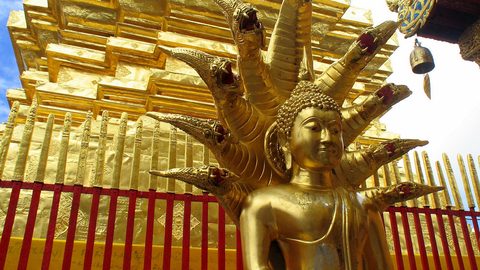 Wat Phra That Doi Suthep
Doi Suthep is a gold chedi above Chiang Mai, but the monk's trail up through Wat Pha Lat is the part almost nobody walks.
Wat Phra That Doi Suthep
Doi Suthep is a gold chedi above Chiang Mai, but the monk's trail up through Wat Pha Lat is the part almost nobody walks.
-
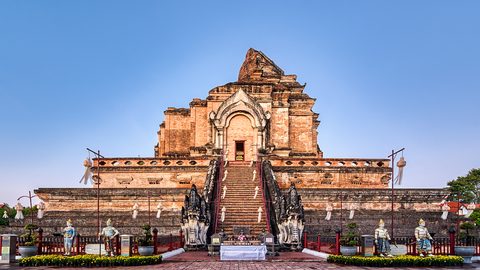 Wat Chedi Luang
 is the biggest ruin in Chiang Mai's old city, and the one temple where you can sit and talk to a monk.
Wat Chedi Luang
Wat Chedi Luang is the biggest ruin in Chiang Mai's old city, and the one temple where you can sit and talk to a monk.
-
 Doi Inthanon
 is 2,565 metres of summit car park in cloud, but the waterfalls, pagodas and trails on the way up are better.
Doi Inthanon
Doi Inthanon is 2,565 metres of summit car park in cloud, but the waterfalls, pagodas and trails on the way up are better.