Shopping in Chiang Mai: Where the Craft City Actually Sells Its Work
Shopping in Chiang Mai is about craft, not malls. Where to find silver, ceramics, textiles and market goods made in the city itself.
Shopping in Chiang Mai: Where the Craft City Actually Sells Its Work
Chiang Mai shopping means choosing between two entirely different retail systems. One sells work made by the person behind the stall. The other sells imported stock from a factory in Bangkok or China, repackaged as local craft. The difference is not always obvious, and it is the main reason visitors leave disappointed. Start at the Wua Lai silver quarter on a Saturday afternoon, not the Night Bazaar. That is where you find work that originated in the hands of a Chiang Mai maker.
Shopping in Chiang Mai: Wua Lai Silver Quarter and the Saturday Walking Street
Saturday Silver Market
Wua Lai Road, the historic silver making quarter south of Chiang Mai Gate, hosts the Saturday walking street from approximately 16:00 to 22:00. This market is smaller than the Sunday version but it is the one for silverwork. The silver standard in Wua Lai is commonly 92.5% sterling, with higher grade 95 to 99% silver available in specialist shops. You will find bowls, boxes, jewellery, betel nut sets, and decorative items. Side lanes off Wualai Road hold workshops where silversmiths work directly. Bargaining is expected here, as at all walking street markets, but the starting ratio matters: offer roughly 50 to 70 percent of the first asking price and settle around 70 to 80 percent. For signed or high grade pieces, bargaining is limited. The Saturday walking street also carries lacquerware, textiles, and street food, but its strength remains silver.
Sunday Walking Street
The Sunday walking street on Ratchadamnoen Road, from Tha Phae Gate to Wat Phra Singh, is larger and more varied. It runs approximately 16:00 to 22:00 on Sunday. You will find hill tribe textiles, woodcarvings, ceramics, paintings, and leather goods alongside silver jewellery. But volume brings a higher share of imported stock. The rule: if the same item appears at fifteen stalls with identical stitching and colour, it is not local production. Move on.
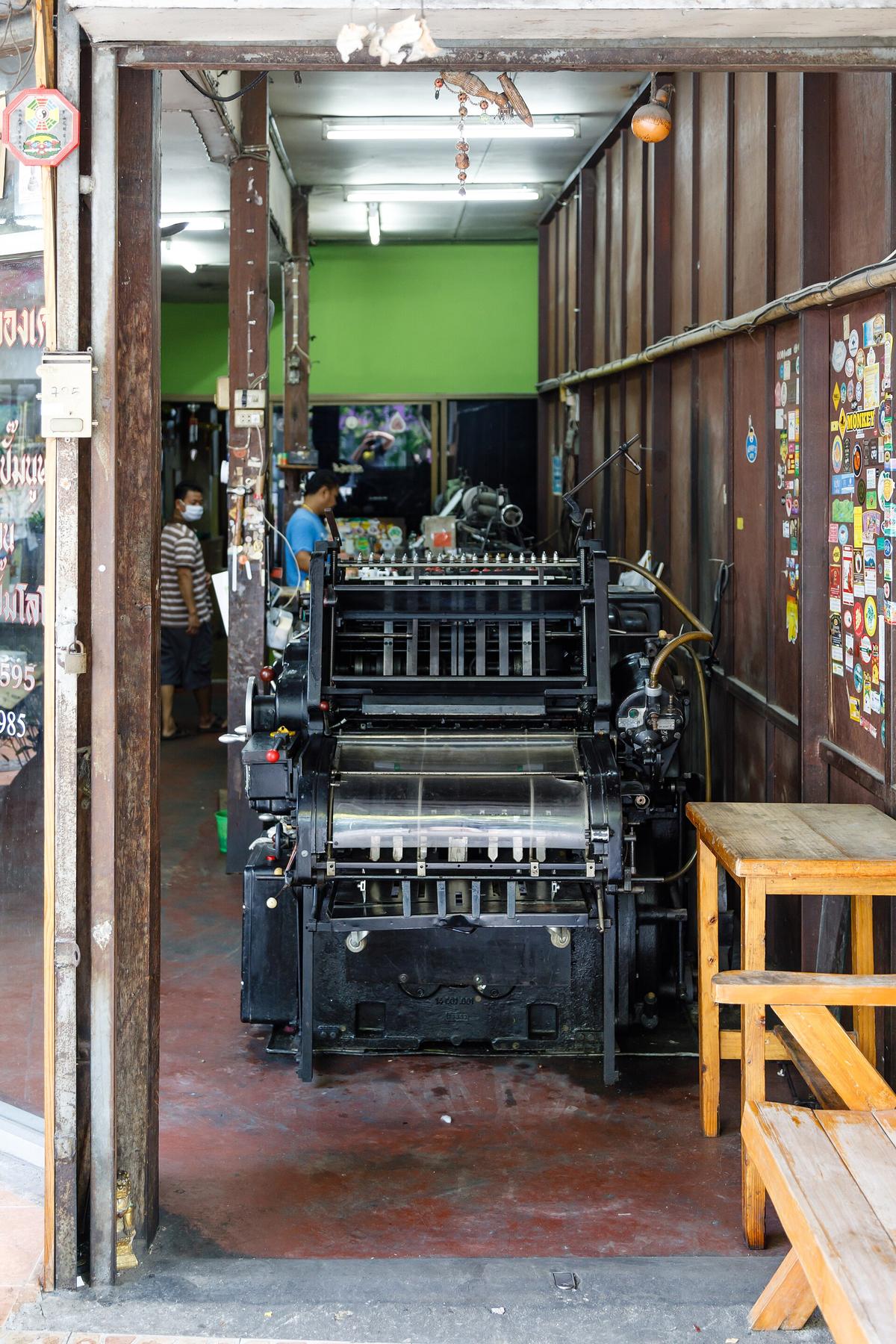

Chiang Mai Craft Markets: Baan Kang Wat Artisan Village
Baan Kang Wat is an artisan village with a weekend vibe, located near Wat Umong. Unlike the walking streets, this is a permanent collection of studio spaces where makers sell their own ceramics, textiles, and small goods. The quality is higher and the pricing is fixed, not negotiated. Ceramics here lean toward contemporary forms rather than the celadon found on the Sankampaeng craft road. Textiles include Hmong hand embroidered panels with the indicators of real work: slight irregularity in stitch length and spacing, visible reverse side thread carries, and natural dye colour variation. Machine worked Hmong textiles are perfectly even, uniform in colour, and printed or stencilled. Baan Kang Wat sells the former. It opens during daylight hours and is quiet by evening. Plan a morning visit, combine it with a walk to Wat Umong, and buy at the studio, not from a reseller.
| Location | Best For | Pricing | Stock Origin |
|---|---|---|---|
| Wua Lai / Saturday Walking Street | Silverwork, handmade jewellery | Bargaining expected, 50-70% starting offer | Local workshops, some imported |
| Baan Kang Wat | Studio ceramics, hand-embroidered textiles | Fixed price, higher | Local makers, direct sale |
| Warorot Market (Kad Luang) | Everyday local goods, northern food | Fixed or minimal bargaining | Local produce, household items, some factory goods |
Warorot Market: Where Locals Actually Shop
Warorot Market, locally called Kad Luang, sits between Tha Phae Road and Chang Moi Road near the Ping River. It opens approximately 06:00 to 19:00 daily. The buyer mix is mainly local residents. You will find fresh produce, dried food, northern Thai prepared foods, textiles, clothing, household goods, and toiletries. This is not a handicraft market. The goods are the things Chiang Mai residents buy for daily life. If you want northern style larb ingredients or dried sai ua sausage to bring home, this is the place. For tourist souvenirs, skip it. Warorot has fewer tourist handicrafts than the Night Bazaar or the walking streets, and that is its value. Arrive before 10:00 for the best selection of flowers and produce.
Baan Kang Wat Artisan Village: Studio Ceramics and Textiles
Studio Ceramics and Hand Work
Baan Kang Wat is not a market in the usual sense. It is a planned artisan village with a weekend crowd, located near Wat Umong in the foothills. The residents are makers who work in open studios. You can watch a potter throw a bowl, then buy that bowl. The ceramics lean toward contemporary functional ware, not the celadon that dominates the Sankampaeng road. The textiles include Hmong hand embroidered panels, bags, and cushion covers. The indicators of hand work are visible: slight irregularity in stitch length, natural dye variation, thread carries on the reverse. Machine made Hmong items have perfectly even stitches and uniform colour from a printed or stencilled base. Baan Kang Wat sells the former. Prices are fixed.
Coffee and Tea From the Highlands
The village also sells northern hill coffee from the Chiang Mai and Chiang Rai highlands, grown at 800 to 1,600 metres above sea level. Arabica varieties including Typica, Bourbon, Caturra, and Catimor are common. It also sells tea from Doi Mae Salong and Doi Ang Khang, including oolong, green tea, black tea, and jasmine scented tea. These are worth buying. The village operates on a weekend schedule; check hours before visiting midweek.
What to Buy and What to Skip in Chiang Mai
Worth Buying
The items worth buying in Chiang Mai are celadon from the Sankampaeng kilns, Bo Sang saa paper umbrellas in sizes from 15 centimetres to 2 metres diameter, Wualai silver, Hmong hand embroidered textiles, Ban Tawai woodcarving, and northern hill coffee and tea. Ban Tawai, about 15 kilometres south in Hang Dong district, has approximately 100 workshops and showrooms for teak carvings, furniture, decorative panels, and home décor. Bo Sang umbrella village is about 9 kilometres east in Sankampaeng district. Both require a scooter or a hired car.
Skip the Night Bazaar
The items commonly imported and resold include many Night Bazaar clothing items, generic souvenirs, some tribal textiles with no provenance, and mass produced lacquerware and wood items. The honest verdict on the Night Bazaar: it is large and convenient, running approximately 17:00 to 23:00 daily on Chang Khlan Road, but much of the stock is imported, mass produced, or of lower craft quality than workshop or walking street goods. If you need a cheap suitcase or a phone case at 10pm, it serves. If you want local craft, skip it.
Getting Your Purchases Home
Shipping home is straightforward through Thailand Post, DHL, FedEx, or UPS. Thailand Post surface parcel to Europe or North America takes approximately one to three months. Air parcel takes one to three weeks. Private couriers deliver in three to seven business days. Cost depends on weight, volume, destination, and speed. Many craft workshops can arrange freight for large pieces like Ban Tawai furniture.
VAT Refund
Thailand also offers VAT refund for tourists. The rate is 7 percent. Minimum purchase per store per day is 2,000 THB, and total purchases must reach 5,000 THB. Goods must leave Thailand within 60 days of purchase. Claim at Chiang Mai international airport or other international airports with original tax invoices, a completed P.P.10 form, your passport, and the goods for inspection. After fees, you receive approximately 4 to 6 percent of the purchase value. The failure case: arrive at the airport without the goods in your carry on and you forfeit the refund. Keep them accessible.
The Most Common Mistake in Chiang Mai Shopping
The failure case: visitors walk into the Night Bazaar on their first night, buy a dozen identical elephant pants and a lacquerware bowl stamped Made in China, then leave town believing Chiang Mai craft is overrated. It is not. The real craft requires a short detour: fifteen minutes south to Wua Lai, a Saturday or Sunday evening on foot, or a morning at Baan Kang Wat. The heat and traffic make the Night Bazaar easier but that convenience is exactly what costs you the local work. Skip it until your last night, after you have already bought what matters.
Common Questions
Is the Chiang Mai Night Bazaar worth visiting for local crafts?
No. The Night Bazaar is convenient and lively, but most stock is imported, mass produced, or lower quality. For genuine local work, go to Wua Lai, Baan Kang Wat, or the walking streets instead.
Can I bargain at craft workshops in Chiang Mai?
Limited or none for signed or high grade pieces. For bulk purchases, you can ask. At walking street stalls and the Night Bazaar, bargaining is expected. Offer 50 to 70 percent of the first price and settle around 70 to 80 percent.
What is the difference between the Saturday and Sunday walking streets?
Sunday on Ratchadamnoen Road is larger and more varied. Saturday on Wualai Road is smaller and stronger for silverwork. Both run approximately 16:00 to 22:00. Go Saturday for silver, Sunday for variety.
How do I identify real Hmong hand embroidery versus machine made?
Hand work shows slight irregularity in stitch length, visible thread carries on the reverse, and natural dye colour variation. Machine work has perfectly even stitches, uniform colour, and a printed or stencilled pattern base. Hand work costs more.
Read next
-
 Chiang Mai Hotels by Price Band and Property Type
Chiang Mai hotels by property type and price band, from old city guesthouses to Mae Rim resorts, where the value is the best in Thailand.
Chiang Mai Hotels by Price Band and Property Type
Chiang Mai hotels by property type and price band, from old city guesthouses to Mae Rim resorts, where the value is the best in Thailand.
-
 Where to Stay in Chiang Mai: Old City, Nimman or Riverside
Where to stay in Chiang Mai, broken into the four areas that actually matter: Old City, Nimmanhaemin, Wat Ket riverside and Santitham.
Where to Stay in Chiang Mai: Old City, Nimman or Riverside
Where to stay in Chiang Mai, broken into the four areas that actually matter: Old City, Nimmanhaemin, Wat Ket riverside and Santitham.
-
 Flying to Chiang Mai: CNX Airport, Airlines and Arrival Routes
Flying to Chiang Mai means CNX, a small airport 15 minutes from the old city with no rail link. Here is the arrival flow and cost.
Flying to Chiang Mai: CNX Airport, Airlines and Arrival Routes
Flying to Chiang Mai means CNX, a small airport 15 minutes from the old city with no rail link. Here is the arrival flow and cost.
-
 Chiang Mai Things to Do Worth Your Days, Ranked and Argued
Chiang Mai things to do, ranked and argued: the temples, markets and day trips worth your days, and the popular stops you can skip.
Chiang Mai Things to Do Worth Your Days, Ranked and Argued
Chiang Mai things to do, ranked and argued: the temples, markets and day trips worth your days, and the popular stops you can skip.
-
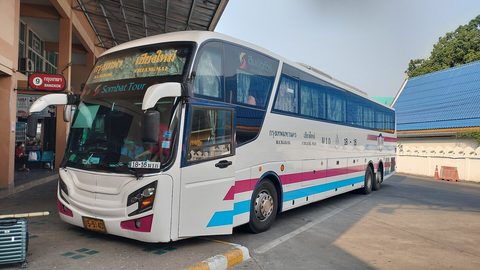 Best Time to Visit Chiang Mai: Burning Season Comes First
Best time to visit Chiang Mai, with the burning season named first: February to April air quality, then the cool clear peak months.
Best Time to Visit Chiang Mai: Burning Season Comes First
Best time to visit Chiang Mai, with the burning season named first: February to April air quality, then the cool clear peak months.
-
 Getting Around Chiang Mai: Grab, Songthaews and Scooter Reality
Getting around Chiang Mai: Grab and songthaew costs, scooter licence checkpoints, airport transfers and why walking is harder than it looks.
Getting Around Chiang Mai: Grab, Songthaews and Scooter Reality
Getting around Chiang Mai: Grab and songthaew costs, scooter licence checkpoints, airport transfers and why walking is harder than it looks.
-
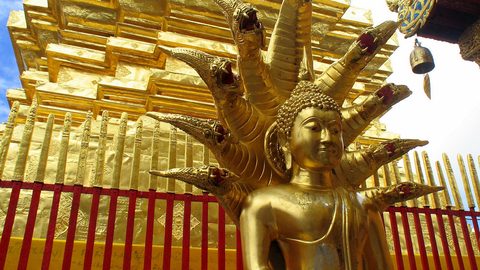 Wat Phra That Doi Suthep
Doi Suthep is a gold chedi above Chiang Mai, but the monk's trail up through Wat Pha Lat is the part almost nobody walks.
Wat Phra That Doi Suthep
Doi Suthep is a gold chedi above Chiang Mai, but the monk's trail up through Wat Pha Lat is the part almost nobody walks.
-
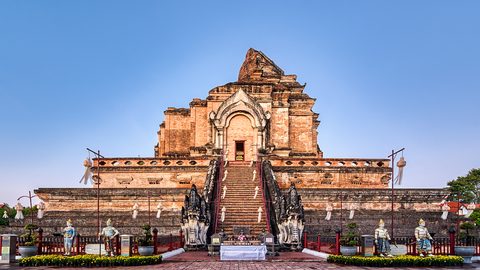 Wat Chedi Luang
 is the biggest ruin in Chiang Mai's old city, and the one temple where you can sit and talk to a monk.
Wat Chedi Luang
Wat Chedi Luang is the biggest ruin in Chiang Mai's old city, and the one temple where you can sit and talk to a monk.
-
 Doi Inthanon
 is 2,565 metres of summit car park in cloud, but the waterfalls, pagodas and trails on the way up are better.
Doi Inthanon
Doi Inthanon is 2,565 metres of summit car park in cloud, but the waterfalls, pagodas and trails on the way up are better.