Phuket Old Town: The Sino-Portuguese Quarter Most Beach Visitors Never See
Phuket Old Town is a compact Sino-Portuguese quarter of shophouse cafes, dim sum trolleys and street art that most beach visitors never make the 45-minute drive to see.
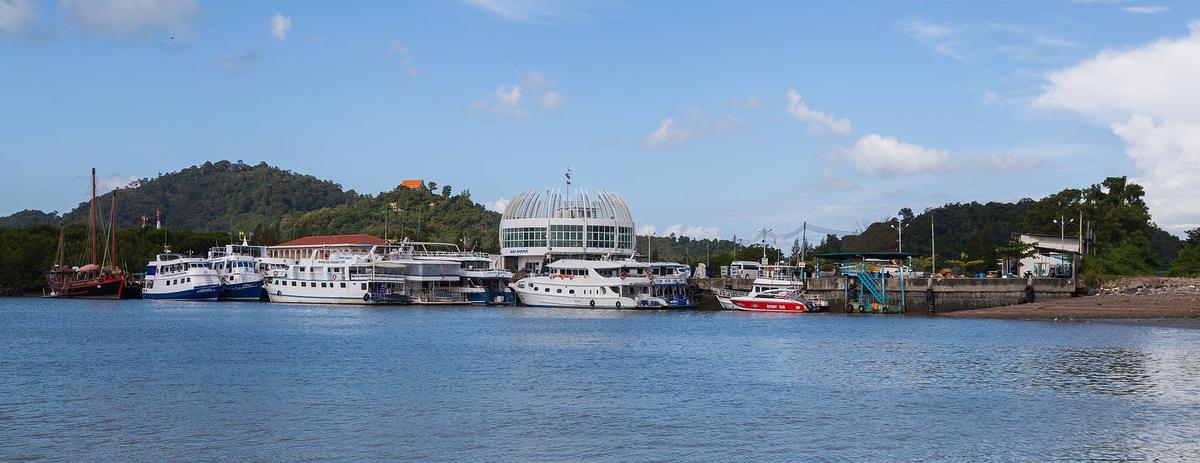

Phuket Old Town: the Sino Portuguese Quarter Most Beach Visitors Never See
The great majority of Phuket visitors never reach Phuket Old Town. They fly in, transfer straight to a resort on Patong or Kata, spend four days under a sun lounger, and fly out without ever seeing the island's single most interesting district. That is a mistake you should not make. The reason is simple geography: the Old Town sits a 45 minute drive from the sand, tucked inland on the eastern side of the island. It is not a beach. But it is the cultural counterweight to every beach club on the west coast. The architecture is a surviving 19th century Sino Portuguese shophouse quarter built on tin mining money, and it is substantially intact. The food that does not exist on the beach roads is here. The morning dim sum trolley ritual is here. The Sunday market that fills an entire street is here. And the cafe scene is serious enough that locals treat coffee as a daily ritual, not a tourist novelty.
- Distance from Patong: 40 to 45 minute drive
- Recommended visits from Patong: Twice: one evening for the Sunday market, one full day for museums and food
- Built period: 19th century, on tin mining revenue
- Main walking streets: Thalang Road, Soi Romanee, Dibuk Road, Krabi Road
- Sunday market hours: Thalang Road, roughly 16:00 to 22:00
- Songthaew fare from Patong: 30 to 40 THB, but check current rates as they vary
- Taxi fare from Patong: 500 to 700 THB
- Grab fare from Patong: 400 to 600 THB
Phuket Old Town Walking Tour: the Streets You Actually Walk
A self-guided stroll through the Old Town is straightforward because the grid is compact. You do not need a guide, a map, or a plan. You need four streets and a rough direction of travel.
Thalang Road: The Spine
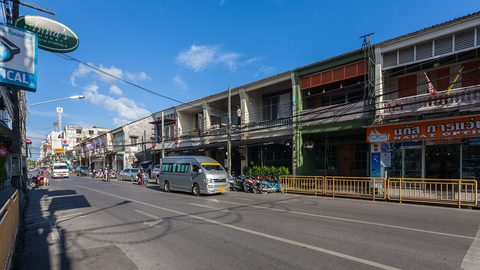
This is the primary pedestrian street. It runs straight through the centre of the quarter, lined with two storey shophouses painted in pastel yellows, blues, and pinks. The ground floors have been converted into galleries, fabric shops, and cafes. The upper floors still hold their original timber windows and ceramic tile details. This is the street that closes to traffic every Sunday evening for the market, but on a weekday morning it is quiet enough that you can stand in the middle and photograph the facades without anyone in the frame.
Soi Romanee: The Former Red Light District
Soi Romanee runs perpendicular to Thalang Road and is the most photographed lane in the quarter. It was the red light district during the tin boom, which explains the unusually wide balconies and the ornate metal grilles. Today it holds a handful of boutique guesthouses, a cocktail bar, and a wall of street art that changes every few years. The lane is narrow. Visit early in the morning before the tour groups arrive.
Dibuk Road and Krabi Road
Dibuk Road runs parallel to the main strip and is wider, with more mansions and fewer shops. Krabi Road holds the Thai Hua Museum, a former Chinese school turned into a museum documenting the tin mining and Peranakan heritage of the quarter. It also holds the largest of the remaining Chinese shrines. Both streets are worth the detour because the architecture is less commercialised here.
Thalang Road Phuket: the Sunday Walking Street Market
Thalang Road transforms every Sunday afternoon into the Sunday Walking Street market, and this is the single best reason to time your visit for a weekend. From roughly 16:00 to 22:00, the road closes to vehicles and fills with food stalls, souvenir tables, live music, and performance art. The crowd is mixed: local families, expats, and a thin stream of tourists who made the detour.
Do not confuse this with the Naka weekend market, which is a separate event held at a different location on the outskirts of town. Naka is bigger. But Naka is a generic Thai night market you could find in any provincial city. The Sunday Walking Street is specific to the shophouse setting, and the atmosphere is better because the stalls sit directly under the heritage facades.
Arrive by 16:30 to walk the full length before the density peaks at 18:00. Eat as you go. The food here overlaps with the permanent restaurants in the quarter, but the market version is faster and cheaper. Cash only. No ATMs on this street during market hours.
Phuket Old Town Cafes and Food: What to Eat and Where
The cafes here are not an afterthought. There is an established coffee culture, with independent roasters pulling single origin espresso alongside traditional kopi shops that serve condensed milk iced coffee from a tin kettle. You can find both within a three minute walk of each other on the main street.
But the real reason to eat in Old Town is the cuisine. The quarter is the heart of Phuket's Peranakan and Hokkien food culture, and none of this exists on the beach roads. Two dishes define the area. Mee hokkien is a stir fried yellow noodle dish with pork, squid, and a dark soy sauce that stains the plate. O tao is a fried oyster and bean sprout cake served with a sweet chilli dip, unique to Phuket. Moo hong is a braised pork belly that is sweeter and more peppery than the national version. You find all three at the local shops in Old Town, not at the resorts.
The Morning Dim Sum Ritual
Skip your hotel breakfast at least one morning. Go to the Lock Tien Food Court or one of the dim sum shops on Soi Romanee. The trolleys start circulating around 07:00. You pick small plates of har gow, siu mai, and sesame balls as they pass your table. The bill is calculated by the number of empty plates on your stack. This is a local ritual, not a tourist gimmick. Finish with an o tao dessert from the shop on the corner of Thalang and Phang Nga Road.
Raya Restaurant and Blue Elephant
For a sit down meal, Raya Restaurant is the classic choice: a converted shophouse serving southern Thai curries and the Phuket style crab curry with betel leaves. Blue Elephant is the polished version, a mansion turned into a fine dining restaurant that does a cooking school during the day. Both require a reservation for dinner. Raya you can walk into for lunch without one.
How to Get to Phuket Old Town from the Beach
The distance from Patong to the Old Town is roughly 15 kilometres, but the drive takes 40 to 45 minutes because of the island's relentless traffic. You have three choices.
The songthaew is the cheapest at 30 to 40 THB. These shared pick up trucks run from Patong's main road to the Old Town bus terminal. They leave when full, and the trip can take over an hour. Do this once for the experience. Do not rely on it if you have a dinner reservation.
A taxi costs 500 to 700 THB one way. A Grab ride is 400 to 600 THB depending on surge pricing and your exact pickup point. The Grab app works on a local SIM, which you should buy at the airport anyway. Both are faster than the songthaew, and both are the practical choice if you are visiting for an evening.
The mistake most visitors make is booking a single evening trip and trying to see everything in three hours. The quarter rewards two visits: one late afternoon into evening for the Sunday market or dinner, and one full day if you add the Thai Hua Museum and the Chinese shrines. Budget for the return fare. The toll on time and money is real, but the payoff is access to a version of Phuket that 90 percent of resort guests never find.
Common Questions
Is Phuket Old Town worth visiting if I only have three days on the island?
Yes, but only if you are willing to sacrifice half a day on one beach. The drive from Patong takes 40 minutes each way, so budget at least four hours total. If you cannot spare that time, skip it and come back on a longer trip.
What is the best time of day to visit Phuket Old Town?
Late afternoon into evening. The afternoon rain clears by 16:00, the heat drops, and the street art catches golden light. If you come for the Sunday market, arrive at 16:00 when the stalls open.
How long do I need in Phuket Old Town?
One evening is enough for the Sunday market and dinner. One full day is enough to add the Thai Hua Museum, the Chinese shrines, a dim sum breakfast, and a coffee stop. Two half day visits are better than one rushed afternoon.
Is there street art in Phuket Old Town?
Yes. The murals concentrate on Soi Romanee, Thalang Road, and a few side alleys off Dibuk Road. They are not a curated gallery. They are scattered, small, and change every few years. Walk slowly and you will find them.
Read next
-
 Phuket Hotels by Property Type and Price Band Without the Hype
Phuket hotels range from gated luxury resorts in Bang Tao to walkable guesthouses in Phuket Town. Price band and location matter equally.
Phuket Hotels by Property Type and Price Band Without the Hype
Phuket hotels range from gated luxury resorts in Bang Tao to walkable guesthouses in Phuket Town. Price band and location matter equally.
-
 Where to Stay in Phuket Which Beach Area Matches Your Trip
Where to stay in Phuket depends entirely on which beach area matches your trip. Patong, Kata, Bang Tao and Rawai are not interchangeable.
Where to Stay in Phuket Which Beach Area Matches Your Trip
Where to stay in Phuket depends entirely on which beach area matches your trip. Patong, Kata, Bang Tao and Rawai are not interchangeable.
-
 Phuket Flights Direct Routes Airlines and HKT Airport Arrival Guide
Phuket flights and HKT airport guide covering direct routes, airlines, arrival procedures, visa queues, and the real cost of getting from the airport to Patong.
Phuket Flights Direct Routes Airlines and HKT Airport Arrival Guide
Phuket flights and HKT airport guide covering direct routes, airlines, arrival procedures, visa queues, and the real cost of getting from the airport to Patong.
-
 Phuket Things to Do Worth Your Days and What to Skip
Phuket things to do range from the Big Buddha and Wat Chalong to speedboat day trips. Some earn your days; many do not.
Phuket Things to Do Worth Your Days and What to Skip
Phuket things to do range from the Big Buddha and Wat Chalong to speedboat day trips. Some earn your days; many do not.
-
 Best Time to Visit Phuket Month by Month Weather and Crowds
Best time to visit Phuket is November to February for dry weather and calm seas, but prices jump 50 to 100 percent. Monsoon months bring beach closures.
Best Time to Visit Phuket Month by Month Weather and Crowds
Best time to visit Phuket is November to February for dry weather and calm seas, but prices jump 50 to 100 percent. Monsoon months bring beach closures.
-
 Getting Around Phuket Without Losing Your Mind or Your Cash
Getting around Phuket means navigating tuk-tuk monopolies, blocked ride-hail zones, and fixed fares. Plan your transport before you book a hotel.
Getting Around Phuket Without Losing Your Mind or Your Cash
Getting around Phuket means navigating tuk-tuk monopolies, blocked ride-hail zones, and fixed fares. Plan your transport before you book a hotel.
-
 Big Buddha
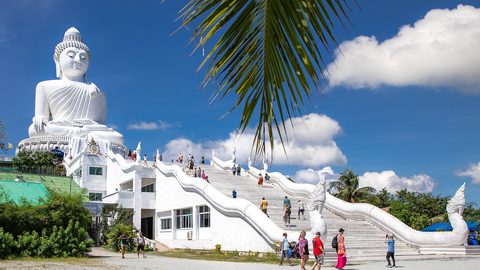
 Phuket is a free, unfinished marble statue on Nakkerd Hill with the best panoramic island view, reached by a steep road that tuk-tuks charge a premium to climb.
Big Buddha
Big Buddha Phuket is a free, unfinished marble statue on Nakkerd Hill with the best panoramic island view, reached by a steep road that tuk-tuks charge a premium to climb.
-
 Thailand Travel Guide From First Timers To Island Hoppers
A realistic Thailand travel guide covering regions, seasons, and pacing so you avoid the classic Bangkok Chiang Mai island mistake.
Thailand Travel Guide From First Timers To Island Hoppers
A realistic Thailand travel guide covering regions, seasons, and pacing so you avoid the classic Bangkok Chiang Mai island mistake.
-
 Thailand eSIM Costs Per Gigabyte And Which Network Covers The Islands
Compare Thailand eSIM options by cost per gigabyte and check AIS versus TrueMove coverage for the Andaman islands before you land.
Thailand eSIM Costs Per Gigabyte And Which Network Covers The Islands
Compare Thailand eSIM options by cost per gigabyte and check AIS versus TrueMove coverage for the Andaman islands before you land.