How Vietnam Public Holidays Affect Travel Plans
Vietnam's public holidays can shut down transport and businesses for days. Here's what travellers need to know before booking around Tet and other dates.
Your entire travel schedule can collapse around Tet. Transport sells out two to four weeks in advance. Family-run restaurants close at rates between 50 and 90 percent during the first few days. Hotel prices spike two to three times normal. The single most disruptive event among Vietnam public holidays is the Lunar New Year celebration, and you need to plan around it months ahead if you are moving between cities. The other five national holidays disrupt specific routes and raise prices, but none shut down the country the way Tet does.
How Vietnam Public Holidays Affect Travel Plans
Vietnam has six official public holidays. Tet (Vietnamese New Year) lasts five official days but the practical shutdown runs seven to fourteen days depending on the business. Reunification Day on 30 April and International Labour Day on 1 May combine into a three to five day break. National Day on 2 September stretches to two to four days. Hung Kings Temple Festival falls on the tenth day of the third lunar month and grants one day off. Mid Autumn Festival on the fifteenth day of the eighth lunar month has no official day off but fills streets with lantern and mooncake stalls for two to three weeks before.
Every holiday except Mid Autumn triggers a domestic travel price rise. Tet sees the steepest jump at two to three times normal fares. The 30 April to 1 May period pushes prices thirty to one hundred percent above normal. National Day adds thirty to eighty percent. Hotel prices follow the same pattern: during the 30 April to 1 May break, beach and mountain destinations raise rates fifty to one hundred fifty percent. National Day lifts them forty to one hundred percent.
What stays open during every holiday: international chain hotels, convenience store chains, hospitals, pharmacies, and airports. What closes during Tet days one through three: most family-run restaurants, local markets, government offices, and banks. Some tourist-area eateries and hotel dining rooms operate on limited hours. Large supermarkets in major cities also keep limited hours. Museums and public sites close during the first three days of Tet but mostly stay open on 30 April, 1 May, and 2 September.


Tet Holiday Vietnam Travel: the Single Most Disruptive Event
Tet dates shift every year because it follows the lunar calendar. For 2026, Tet falls 17 to 21 February. For 2027, it falls 6 to 10 February. The window always lands between 21 January and 20 February. If you are traveling during that period, you need to understand what happens on the ground.
Transport Sells Out Two to Four Weeks Before Tet
Trains and flights for Tet book out sixty to ninety days ahead. By the time you are two to four weeks from Tet Eve, domestic travel is effectively sold out on the popular routes: Hanoi to Ho Chi Minh City, Hanoi to Da Nang, Ho Chi Minh City to Da Nang. If you have not booked by then, you will pay two to three times normal fares on whatever remains. The same applies to sleeper buses. Your failure case: if you arrive in Vietnam during the sell-out window without a ticket, you cannot leave the city by ground. Book everything before you arrive or accept that you are staying put.
Businesses Shut and Cities Empty Out
Hanoi and Ho Chi Minh City lose fifty to seventy percent of their population during Tet as residents return to home provinces. The countryside sees a twenty to forty percent population rise during the same period. That means the cities become quieter and less congested, but also emptier. Family-run restaurants close at rates between fifty and ninety percent during the first three to five days of Tet. Local markets shut. Government offices and banks close. You can eat at hotel dining rooms, international chain outlets, or convenience stores, but your options narrow sharply. Many travellers find themselves eating instant noodles from a Circle K for dinner.
The Best and Worst Windows for Visiting During Tet
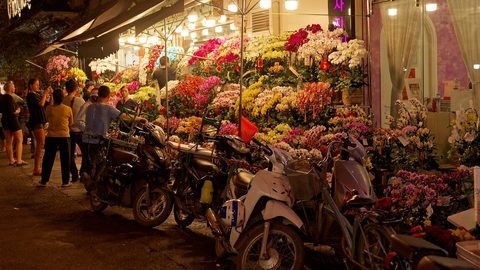
The best atmosphere window is three to seven days before Tet Eve. That is when the cities are decorated, flower markets are open, and families are preparing. Streets are busy but not yet sold out. The worst visitor window is the first three to five days after Tet Eve, when everything is shut and the cities feel like a ghost town. If you want to experience Tet energy rather than Tet emptiness, arrive before the shutdown begins and plan to be in a major city during the buildup, then leave before the holiday itself hits.
| Holiday | 2026 Date | 2027 Date | Shutdown Scale | Booking Horizon | Price Spike |
|---|---|---|---|---|---|
| Tet (Lunar New Year) | 17–21 Feb | 6–10 Feb | 7–14 days, 50–90% restaurant closure | 60–90 days ahead | 2–3x normal fares and hotels |
| Hung Kings Temple Festival | 26 Apr | 15 Apr | 1 day, mainly Phu Tho province | Not usually needed | Minimal outside Phu Tho |
| Reunification Day + Labour Day | 30 Apr – 1 May | 30 Apr – 1 May | 3–5 days, beach destinations crowded | 30–60 days ahead | 30–100% transport, 50–150% hotels |
| National Day | 2 Sep | 2 Sep | 2–4 days, tourist hubs busy | 30–45 days ahead | 30–80% transport, 40–100% hotels |
| Mid-Autumn Festival | 25 Sep | 14 Sep | No official day off, street stalls only | Not needed | None |
Vietnam Reunification Day April 30 and Labour Day May 1: Beach Crowds and Booked Trains
Reunification Day on 30 April marks the fall of Saigon in 1975. It combines with International Labour Day on 1 May to create a three to five day break depending on how the weekend falls. This is the second most disruptive holiday period after Tet.
Domestic travel prices rise thirty to one hundred percent above normal. Train and flight bookings open thirty to sixty days ahead and sell out fast on routes to Da Nang, Nha Trang, and Phu Quoc. Hotels in beach and mountain destinations raise rates fifty to one hundred fifty percent above normal. If you want to be on the central coast during this period, book your accommodation four to eight weeks ahead. What stays open: museums and public sites mostly operate normally on both days. The Reunification Palace in Ho Chi Minh City, the War Remnants Museum, and the Cu Chi Tunnels run regular hours. The failure case: arriving in Da Nang without a hotel reservation on 29 April means paying triple or sleeping outside the city.
Vietnam National Day September 2: a Shorter, Milder Disruption
National Day on 2 September commemorates Ho Chi Minh declaring independence in 1945. The break runs two to four days depending on weekend alignment. It is less disruptive than the April break but still pushes domestic travel prices thirty to eighty percent above normal. Hotel prices in tourist destinations rise forty to one hundred percent. Book trains and flights thirty to forty five days ahead.
Museums and public sites stay open. The Ho Chi Minh Mausoleum in Hanoi operates on its regular schedule, closed afternoons and Mondays, no shorts allowed, on the days around the holiday. Expect crowds at major landmarks. The failure case: showing up at the Temple of Literature on 2 September without a morning plan means queuing for an hour in the heat. Arrive by 08:00 and enter through the main gate.
Hung Kings Temple Festival: Localised and Light
The Hung Kings Temple Festival falls on the tenth day of the third lunar month. In 2026 that is 26 April. In 2027 it is 15 April. The holiday honours the legendary Hung Kings with ceremonies at the Hung Kings Temple in Phu Tho province, about 90 kilometres northwest of Hanoi. The disruption is localised. If you are not travelling through Phu Tho or nearby provinces on that day, you will barely notice it. Government offices close, but tourist businesses in Hanoi and Ho Chi Minh City operate normally. The failure case: planning a day trip from Hanoi to Phu Tho on the festival day without booking transport two weeks ahead means hitting sold out buses and crowded temple grounds.
How to Plan Around Vietnam Public Holidays: Practical Timing Advice
If you want to avoid disruption entirely, travel outside the Tet window and outside the 30 April to 1 May period. November to March is peak season for weather: the north is cool and dry, the centre is mild, the south is least humid. But domestic travel around Tet itself spikes prices and fills trains and buses. If you must travel during Tet, book everything sixty to ninety days ahead, plan to be in one city for the duration, and accept that you will eat at hotel dining rooms or convenience stores for the first few days.
If you want the full Tet experience, arrive three to seven days before Tet Eve. The cities are decorated, flower markets are open, and families are preparing. Book accommodation and transport before the sell-out window hits. Leave before the holiday itself begins or plan to stay in place until restaurants reopen around day four or five. Hanoi Old Quarter during Tet buildup is genuinely interesting. Ho Chi Minh City District 1 during Tet emptiness is not.
For the 30 April to 1 May break, book trains and flights thirty to sixty days ahead and expect beach destinations like Da Nang, Nha Trang, and Phu Quoc to be crowded and expensive. For National Day on 2 September, book thirty to forty five days ahead. For Hung Kings Temple Festival, avoid Phu Tho unless you specifically want the ceremony. For Mid Autumn Festival, which has no day off, the only change is lantern and mooncake stalls appearing two to three weeks before. Peak street activity is one to three nights before the full moon. No transport disruption.
Single most common mistake travellers make around holidays: they assume that because a holiday is only one or two days on the calendar, the disruption is equally short. Tet shuts down for one to two weeks. The 30 April to 1 May break fills hotels for the entire weekend. A holiday that falls on a Tuesday means the preceding Monday and following weekend are also affected. Check the actual calendar dates, not just the holiday name.
Common Questions
What are the exact dates for Tet in 2026 and 2027?
Tet 2026 runs 17 to 21 February. Tet 2027 runs 6 to 10 February. The holiday always falls between 21 January and 20 February on the lunar calendar.
How far ahead should I book transport for Tet?
Book trains and flights sixty to ninety days ahead. The domestic travel sell-out window begins two to four weeks before Tet Eve. After that, remaining fares cost two to three times normal and availability is very limited.
Which businesses stay open during Tet?
International chain hotels, convenience store chains, hospitals, pharmacies, and airports stay open. Some tourist-area eateries and hotel dining rooms operate limited hours. Large supermarkets in major cities keep limited hours. Museums and public sites close during the first three days of Tet.
What happens on Reunification Day 30 April and Labour Day 1 May?
These holidays combine into a three to five day break. Domestic travel prices rise thirty to one hundred percent above normal. Hotels in beach and mountain destinations raise rates fifty to one hundred fifty percent. Book trains and flights thirty to sixty days ahead. Museums and public sites mostly stay open.
Is National Day on 2 September as disruptive as Tet?
No. National Day runs two to four days. Transport prices rise thirty to eighty percent above normal. Hotels rise forty to one hundred percent. Book trains and flights thirty to forty five days ahead. Museums and public sites operate normally.
Does the Hung Kings Temple Festival affect travel outside Phu Tho?
No. The holiday is localised to Phu Tho province. Government offices close nationwide but tourist businesses in Hanoi and Ho Chi Minh City operate normally.
Should I avoid Vietnam entirely during Tet?
Not necessarily. The best atmosphere is three to seven days before Tet Eve, when cities are decorated and families are preparing. The worst time is the first three to five days after Tet Eve, when restaurants and shops are closed. If you plan to be in one city, book everything early, and accept limited food options, Tet can be interesting. If you need to move between cities or eat at local restaurants, avoid the Tet window entirely.
Read next
-
 Vietnam eSIM Guide for Reliable Data in the Mountains and Cities
Compare Vietnam eSIM and local SIM options, and learn why Viettel is the network to choose for Sa Pa, Phong Nha, and the Mekong Delta.
Vietnam eSIM Guide for Reliable Data in the Mountains and Cities
Compare Vietnam eSIM and local SIM options, and learn why Viettel is the network to choose for Sa Pa, Phong Nha, and the Mekong Delta.
-
 Best Time to Visit Vietnam by Region and Month
Find the best time to visit Vietnam by region, with honest advice on typhoons, Tet closures, and the north-south climate split.
Best Time to Visit Vietnam by Region and Month
Find the best time to visit Vietnam by region, with honest advice on typhoons, Tet closures, and the north-south climate split.
-
 Getting Around Vietnam by Train, Sleeper Bus, Flight, and Grab
Compare Vietnam's trains, sleeper buses, domestic flights, and Grab to plan realistic transit times and costs between cities.
Getting Around Vietnam by Train, Sleeper Bus, Flight, and Grab
Compare Vietnam's trains, sleeper buses, domestic flights, and Grab to plan realistic transit times and costs between cities.
-
 Vietnam Visa Rules and the E-Visa Mistakes That Stop Check-In
Understand Vietnam e-visa rules, the exemption list, and the check-in mistakes that can stop your trip before you board the plane.
Vietnam Visa Rules and the E-Visa Mistakes That Stop Check-In
Understand Vietnam e-visa rules, the exemption list, and the check-in mistakes that can stop your trip before you board the plane.
-
 Vietnam Money Guide to Dong, ATMs, and Avoiding Bad Exchange Rates
Learn how to handle Vietnamese dong, choose ATMs that don't gouge you, and know when cash is the only option in Vietnam.
Vietnam Money Guide to Dong, ATMs, and Avoiding Bad Exchange Rates
Learn how to handle Vietnamese dong, choose ATMs that don't gouge you, and know when cash is the only option in Vietnam.
-
 Vietnam Safety Guide for Traffic, Scams, and Health
Understand Vietnam's real safety risks, from crossing Hanoi roads to motorbike insurance gaps and the scams that target tourists.
Vietnam Safety Guide for Traffic, Scams, and Health
Understand Vietnam's real safety risks, from crossing Hanoi roads to motorbike insurance gaps and the scams that target tourists.
-
 Da Nang
 is a liveable coastal city and central Vietnam base, not a museum town. Here is what it is actually for and where to go next.
Da Nang
Da Nang is a liveable coastal city and central Vietnam base, not a museum town. Here is what it is actually for and where to go next.
-
 Hanoi
Hanoi hits with a full-sensory assault of motorbike swarms and constant horns, then rewards the persistent with Vietnam's deepest food city and layered neighbourhoods beyond the Old Quarter.
Hanoi
Hanoi hits with a full-sensory assault of motorbike swarms and constant horns, then rewards the persistent with Vietnam's deepest food city and layered neighbourhoods beyond the Old Quarter.
-
 Ho Chi Minh City
An honest Ho Chi Minh City travel guide for travellers who thrive on sensory overload, street-food obsession, and 10 million motorbikes rather than quiet temples.
Ho Chi Minh City
An honest Ho Chi Minh City travel guide for travellers who thrive on sensory overload, street-food obsession, and 10 million motorbikes rather than quiet temples.