Independence Palace Ho Chi Minh City: Why the Basement Bunker Is the Real Story
The Reunification Palace in Ho Chi Minh City is famous for its tank gate, but the basement war command bunker is the part that explains the building.
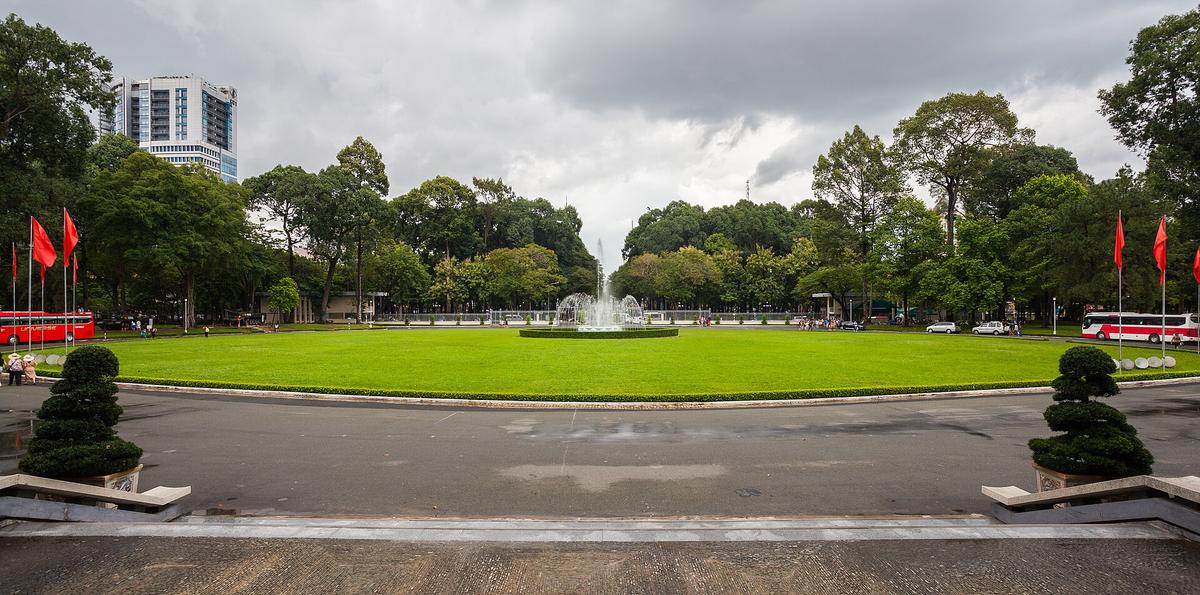

Visitors Miss the Real Reason to Go Underground
Most visitors to the Independence Palace in Saigon walk through the 1960s state rooms, photograph the tank at the gate, and leave satisfied. They have seen the building where the war ended. They have not understood it. The preserved upper floors show the official life of a president. The basement shows what happens when official life stops working. The command bunker under the building, with its map tables, teletype machines, and claustrophobic operations rooms, is where the decisions of April 30 1975 were actually made. That is the room that explains the building. Skip it and you have seen the set dressing without the play.
The Reunification Palace is a time capsule, but a divided one. Above ground, the 1960s interior is frozen in a state of calm prosperity. The Cabinet room has chairs arranged around a long table. The state banquet hall is ready for a formal dinner. The rooftop helicopter on its pad looks prepared for a routine departure. Below ground, the rooms shrink, the ceilings drop, and the purpose narrows to a single question: how do you manage a war you are losing? The preserved mid-century design above only makes the grim functionality of the bunker below feel more deliberate, more desperate.
- Original Name: Independence Palace
- Current Building Completed: 1966
- Architect: Ngô Viết Thụ
- Architectural Style: Modernist
- Date of Fall of Saigon: 30 April 1975
- Tank That Breached Gates: T-54, number 843
- Time Tank Breached Gates: Approx. 11:30 ICT
- Adult Admission (2024): 65,000 VND
- Child Admission (2024): 15,000 VND
- Audio Guide (2024): 90,000 VND
- Opening Hours: 07:30-16:00 daily
- Ticket Counter Closes: 15:00
- Typical Visit Duration: 90 minutes
- Address: 135 Nam Kỳ Khởi Nghĩa, District 1
- Distance to War Remnants Museum: Approx. 500 m walking
- Recommended Visit Order: War Remnants Museum first, Reunification Palace second
Saigon Presidential Palace: What the Above Ground Rooms Actually Show
The State Rooms
The Independence Palace was designed by Ngô Viết Thụ and completed in 1966 in a Modernist style with a screen facade of breeze-block brise-soleil that filters heat and light. The above ground rooms are spacious, open, and decorated in the preserved 1960s interior that survives intact. The state banquet hall is formal and proportioned for receptions. The presidential quarters feel domestic in a way that surprises visitors. The Cabinet room holds the table where the South Vietnamese government met, and the rooftop helipad still carries a UH-1 helicopter.
These rooms matter, but they matter as context for what sits below them. The contrast between the airy reception rooms and the war command bunker is the point of the visit. The building functions as a time capsule of a government that still believed in state dinners and Cabinet meetings while the war was already inside the gates.
Getting Your Sequence Right
Arrive at 07:30 when the gates open at 135 Nam Kỳ Khởi Nghĩa in District 1. The War Remnants Museum opens at the same hour about 500 metres walking distance away. Visit the museum first to understand what the war looked like from the ground, then cross to the palace to see where the decision makers were when it ended. That sequence creates a narrative that neither building delivers alone.
Independence Palace Saigon: Why the Basement Bunker is the Real Story
Finding the Bunker
The command bunker is poorly signposted. The entrance is easy to miss, and the staircase down into the basement does not announce itself the way the main reception rooms do. Visitors who do not know it is there walk through the upper floors and exit onto the ground in front of the tank gate, satisfied and unenlightened. Do not be one of them.
The bunker is a series of rooms arranged for function, not comfort. The radio room holds the teletype machines that received and sent messages during the final hours. The map rooms have tables covered with operational charts, left as they were on April 30 1975. The operations rooms are small, low ceilinged, and windowless. Escape tunnels connect the basement to exits beyond the palace grounds, though limited public access means you see only the main rooms.
What the Map Room Tells You
Stand in the map room and you are standing in the room where officers watched Saigon collapse. The teletype machines are silent now, but the physical arrangement of the space makes the tension readable. This is where the decision was made not to resist. This is where the war end Saigon palace narrative reaches its physical point of origin. The tank gate outside records the moment of arrival. The bunker records the moment of surrender.
Budget for the audio guide. The 2024 rate was 90,000 VND, above the ticket price of 65,000 VND for adults and 15,000 VND for children, but visitor reviews rate it worthwhile. The audio guide gives context to the map tables and the teletype machines that the rooms alone cannot provide. Without it, the bunker is a collection of old equipment. With it, the bunker becomes a narrative.
Reunification Palace Tour: How to Do it Right
Entry and Timing
Buy your entry ticket at the gate. There is no advance booking. The ticket counter closes at 15:00, though the palace remains open until 16:00. Arrive well before the cut off to give yourself the full 90 minutes the visit requires.
The common visitor omission is the basement. Do not make that mistake. Walk the upper floors quickly to get the lay of the land, then spend your time in the war rooms. The above ground rooms are worth seeing, but they are not where the building earns its place in history.
The tank that breached the gates, T-54 number 843, sits in front of the palace. It arrived around 11:30 ICT on April 30 1975. Photograph it as you enter. Then understand that the tank is a symbol of what happened, not the event itself. The event happened below your feet.
Practical Reminders
- Cash only for entry tickets and audio guides. No card payment on site.
- No advance booking. No timed entry. Arrive early to avoid the queue.
- Leave bags and phones in pockets during the basement visit. The rooms are narrow and the light is low.
- Combine with the War Remnants Museum 500 metres north. Walk it in under ten minutes.
- Do not skip the audio guide. It costs more than the ticket and it is worth more than the ticket.
If you only have one hour, skip the state banquet hall and go straight down to the bunker. The above ground rooms are the same shape as any other mid-century official building. The bunker is unique.
| Item | Cost (2024 Rates) | Notes |
|---|---|---|
| Adult entry ticket | 65,000 VND | Managed by the site. Verify current rate at the gate. |
| Child entry ticket | 15,000 VND | For children under a certain height. Check at ticket counter. |
| Audio guide | 90,000 VND | Consistently rated worthwhile in visitor reviews. |
| Total (one adult with audio) | 155,000 VND | About USD 6.50 at typical exchange rates. |
War Memorials in the Neighbourhood
The Two-Site Sequence
The War Remnants Museum is a five minute walk north on the same street. Visit it before the palace. The museum contextualises the war from the Vietnamese perspective. The Palace narrative then culminates in the specific event the museum explains. Together, the two sites form a single afternoon of the most concentrated war history in the city.
Nearby Colonial Landmarks
Other nearby landmarks include the Notre-Dame Cathedral Basilica, currently under long-term renovation with exterior viewing only, and the Central Post Office, a functioning colonial masterpiece with arched ceilings worth a ten minute stop. Both are within walking distance of the palace, east along Nam Kỳ Khởi Nghĩa Street. Cover the cathedral exterior and the post office before the ticket counter closes.
The Bitexco Financial Tower Saigon Skydeck on the 49th floor is a short ride south. It gives a 360 degree view of the city and helps orient you for your next day. But finish the war history first. The palace and the museum are heavy. Do not rush them to fit in a skydeck photo.
Common Questions
How long do I need at the Reunification Palace?
90 minutes is the typical visit duration. Spend at least 30 of those minutes in the basement command bunker. The above ground rooms move quickly. The bunker requires slow attention.
Is the Reunification Palace worth visiting if I skip the basement?
No. Without the war command bunker, the palace is a preserved mid-century office building with nice furniture. The bunker is the reason the building is a historic site. Do not skip it.
Can I buy tickets in advance for the Reunification Palace?
No. You buy your entry ticket at the gate at 135 Nam Kỳ Khởi Nghĩa in District 1. The ticket counter closes at 15:00. Arrive before that. No online booking exists.
Should I visit the War Remnants Museum or the Reunification Palace first?
Visit the War Remnants Museum first. It is 500 metres walking distance north. The museum explains the war context. The palace then gives the physical location of the surrender. The sequence makes both sites stronger.
Read next
-

 Ho Chi Minh City Hotels From Converted Villas to Skydeck Towers by Price Band
Ho Chi Minh City hotels sorted by property type and price band, from converted District 3 villas to skydeck towers near the Saigon River.
Ho Chi Minh City Hotels From Converted Villas to Skydeck Towers by Price Band
Ho Chi Minh City hotels sorted by property type and price band, from converted District 3 villas to skydeck towers near the Saigon River.
-
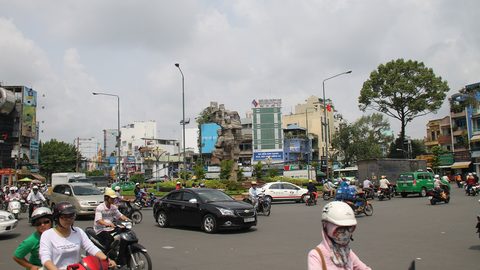 Ho Chi Minh City Where to Stay District by District for Every Travel Style
Where to stay in Ho Chi Minh City: a district-by-district breakdown of Saigon neighbourhoods from chaotic District 1 to the expat calm of Thao Dien.
Ho Chi Minh City Where to Stay District by District for Every Travel Style
Where to stay in Ho Chi Minh City: a district-by-district breakdown of Saigon neighbourhoods from chaotic District 1 to the expat calm of Thao Dien.
-
 Flying to Ho Chi Minh City Airport Guide and the Airlines That Serve SGN
Airlines flying into Tan Son Nhat Airport (SGN), terminal details, and a step-by-step arrival guide for getting from the plane into Ho Chi Minh City.
Flying to Ho Chi Minh City Airport Guide and the Airlines That Serve SGN
Airlines flying into Tan Son Nhat Airport (SGN), terminal details, and a step-by-step arrival guide for getting from the plane into Ho Chi Minh City.
-
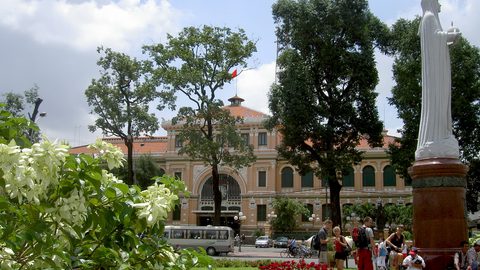 Ho Chi Minh City Things to Do Ranked From War History to Wholesale Flower Markets
Ho Chi Minh City things to do ranked with honest verdicts: which Saigon war-history sights, markets, and temples earn your three days and which to skip.
Ho Chi Minh City Things to Do Ranked From War History to Wholesale Flower Markets
Ho Chi Minh City things to do ranked with honest verdicts: which Saigon war-history sights, markets, and temples earn your three days and which to skip.
-
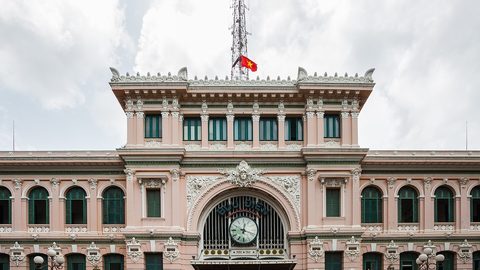 Ho Chi Minh City Best Time to Visit Month by Month Avoiding Tet Closures and Monsoon Flooding
Ho Chi Minh City best time to visit month by month: dry season windows, Tet holiday closures that empty the city, and the monsoon flooding to avoid.
Ho Chi Minh City Best Time to Visit Month by Month Avoiding Tet Closures and Monsoon Flooding
Ho Chi Minh City best time to visit month by month: dry season windows, Tet holiday closures that empty the city, and the monsoon flooding to avoid.
-
 Ho Chi Minh City Getting Around Without Losing Your Phone or Your Nerve
Getting around Ho Chi Minh City: Grab app tactics, airport transfers from Tan Son Nhat, and how to cross a Saigon street without stopping or running.
Ho Chi Minh City Getting Around Without Losing Your Phone or Your Nerve
Getting around Ho Chi Minh City: Grab app tactics, airport transfers from Tan Son Nhat, and how to cross a Saigon street without stopping or running.
-
 War Remnants Museum
The War Remnants Museum in Ho Chi Minh City is the most emotionally affecting stop in the city. Here is what to expect and how to prepare.
War Remnants Museum
The War Remnants Museum in Ho Chi Minh City is the most emotionally affecting stop in the city. Here is what to expect and how to prepare.
-
 Ben Thanh Market
 in Ho Chi Minh City is a tourist trap for souvenirs but genuinely good for lunch. Here is what to eat and what to skip.
Ben Thanh Market
Ben Thanh Market in Ho Chi Minh City is a tourist trap for souvenirs but genuinely good for lunch. Here is what to eat and what to skip.
-
 Cholon
, Saigon's vast Chinatown in District 5, is best explored in the morning: Binh Tay Market, Thien Hau Temple, medicinal herb streets, and sui cao dumplings.
Cholon
Cholon, Saigon's vast Chinatown in District 5, is best explored in the morning: Binh Tay Market, Thien Hau Temple, medicinal herb streets, and sui cao dumplings.