Exploring the Miura Peninsula on a Day Trip from Tokyo
The Misaki Tuna Market is Only Open Three Days a Week
Most visitors planning a Miura Peninsula day trip assume the morning fish market runs daily, like Tsukiji or Toyosu. It does not. The Misaki morning market operates only on Saturday, Sunday, and public holidays, from 05:00 to 09:00. Show up on a Tuesday and you will find a working port. Not a market. This is the single most important fact about the peninsula's food scene. If you are here on a weekday, skip the market entirely and head straight for the coastal walk or the aquarium. The peninsula is worth your time either way. But the market is the reason to get up at 06:00, not the walk.
How to Get There and What to Buy
From Shinagawa Station, take the Keikyu Main Line express to Horinouchi, then switch to the Keikyu Kurihama Line for Misakiguchi. The trip takes about 1 hour 10 minutes and costs roughly ¥930. From Tokyo Station, take the JR Yokosuka Line to Kurihama, then the Keikyu Kurihama Line to Misakiguchi: roughly 1 hour 40 minutes and about ¥1,690. Haneda Airport to Misakiguchi via Keikyu is 1 hour 20 minutes and about ¥1,000. The fastest option from central Tokyo is Shinagawa.
Buy the Misaki Maguro Kippu
This one-day ticket from Keikyu covers round-trip train travel from any station in the Tokyo 23-ku area to Misakiguchi, unlimited local bus rides, one set maguro meal at a participating restaurant, and a discount at a leisure facility such as the Aburatsubo Marine Park. From Shinagawa or Haneda the ticket costs between ¥3,500 and ¥4,500 depending on which meal you choose; from Yokohama it is ¥3,000 to ¥4,000. Purchase it at Keikyu station ticket offices, some convenience stores, or online. It saves you roughly ¥1,000 compared to buying everything separately. The bus free-ride area is essential for reaching the island and Aburatsubo without worrying about exact change.
Bus Connections Once You Arrive
From Misakiguchi Station, Keikyu buses run to the island every 20 to 30 minutes. The ride takes about 20 minutes. For Aburatsubo Marine Park, take a bus from the station or the port area for 10 to 15 minutes. Do not walk to the island unless you want to add 575 metres across the bridge plus a further 2 km loop. The bus is cheap and frequent.
A Realistic Day Trip Itinerary
Start from Shinagawa by 07:00. Arrive at Misakiguchi by 08:15. Walk to the Misaki fish market area. The morning market runs until 09:00, so you have roughly 45 minutes to watch the wholesale action. You cannot view the tuna auction itself; that is closed to the public. What you can do is watch longline vessels unload, see the catch being sorted, and browse the small stalls selling fresh cuts. Do not expect a curated tourist market. This is a working port with concrete floors and hoses.
By 09:00, the market stalls are packing up. Walk to one of the tuna restaurants near the station or port. Kaisen Misaki, Misakikan, and Umi no Sachi all serve maguro bowls priced between ¥1,500 and ¥3,500. The Misaki Maguro Kippu covers one set meal at a participating restaurant. Order the negitoro don or a mixed sashimi set. The tuna is from longline vessels operating out of Misaki port, not farmed. The difference in texture is noticeable.
Coastal Walk on the Island
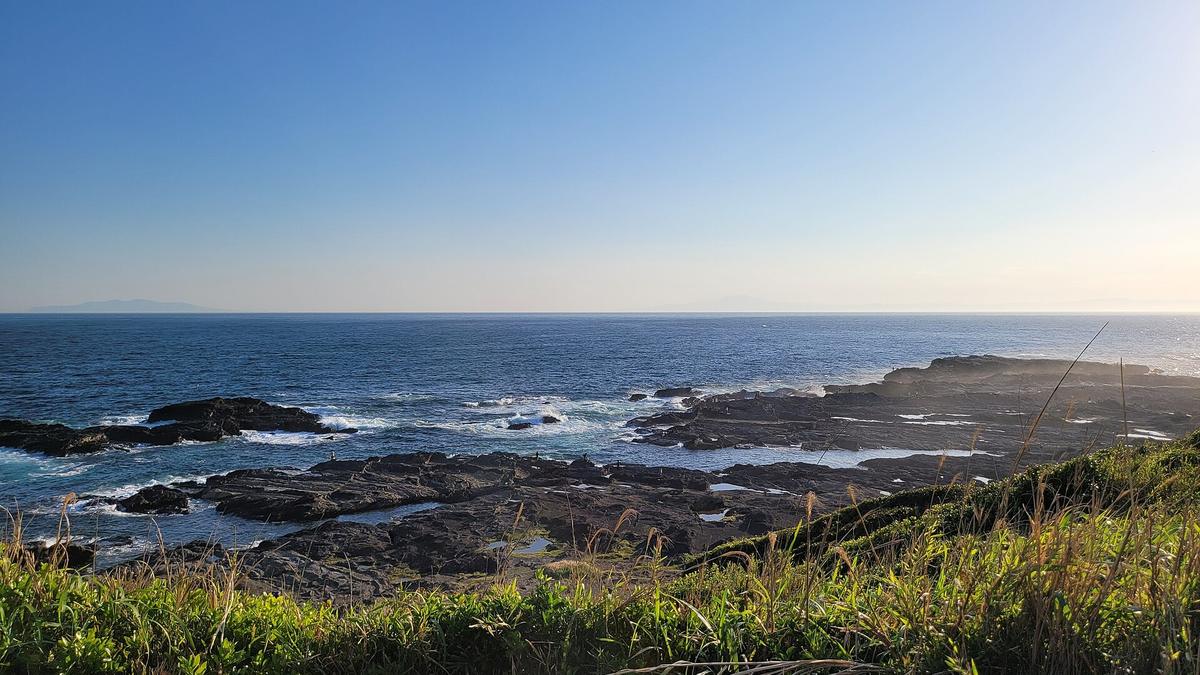
Take the bus from the station to the island. The 575-metre bridge is free for pedestrians and vehicles. Once across, follow the Nature Trail, a roughly 2 km loop. The key features are the Umanose rock platform, a wave-eroded shelf of volcanic rock where you can see tide pools at low tide, and the Lighthouse, first lit in 1870 and rebuilt in 1928. The lighthouse itself is 12.5 metres tall, but its focal plane sits 29.6 metres above sea level, giving you a view across Sagami Bay. On clear winter days you can see Mount Fuji. In summer, the hydrangeas peak in mid-June. In winter, the daffodils peak from late December to early February. The walk takes about an hour at a slow pace. The cliffs are steep and unfenced in sections. Do not bring small children here unless you hold their hand the entire way.
Miura Kaigan Beaches or Aburatsubo Marine Park
After the island, you have two options. Option one: take the bus back toward Misaki and then to one of the Miura Kaigan beaches. Miura Beach, Isshiki Beach, Nagahama Beach, Moroiso Beach, and Kembutsu Beach are the main strips. Swimming season runs from mid-July to late August, and water quality varies by beach and week. On a summer weekend these beaches are crowded. On a weekday or outside swimming season they are quiet and good for a walk. Option two: head to Keikyu Aburatsubo Marine Park, a small aquarium with dolphin shows and a marine biology focus. Admission is ¥1,700 for adults and ¥850 for elementary-age children. The park has no fixed closing days, but hours vary seasonally. If you have seen a larger aquarium like Osaka Kaiyukan, skip this. If you have children or a strong interest in local marine life, the dolphin shows run multiple times daily.
Return to the station by 16:00 to 18:00. The train back to Shinagawa takes just over an hour. Total door-to-door time for this day trip is 8 to 12 hours.
| Departure Area | Price Range | What It Includes |
|---|---|---|
| Shinagawa | ¥3,500–¥4,500 | Round-trip Keikyu train + local bus free-ride area + one maguro meal + leisure facility discount |
| Haneda | ¥3,500–¥4,500 | Round-trip Keikyu train + local bus free-ride area + one maguro meal + leisure facility discount |
| Yokohama | ¥3,000–¥4,000 | Round-trip Keikyu train + local bus free-ride area + one maguro meal + leisure facility discount |
When to Go and What to Expect
Summer daytime temperatures range from 25°C to 32°C, with sunrise around 04:30 and sunset around 19:00. The beaches are crowded on weekends, and the water is swimmable from mid-July to late August. Winter daytime temperatures range from 3°C to 12°C, with strong north winds and clear air that sometimes reveals Mount Fuji from the island. The swimming season is closed, and sunset comes as early as 16:30. The best compromise is late spring or early autumn, when the hydrangeas or the autumn foliage are at their peak and the crowds are thinner than summer. Avoid Golden Week (29 April to 5 May) and the New Year period (29 December to 3 January), when domestic travel peaks or independent restaurants close. The rainy season from mid-June to mid-July delivers weeks of grey drizzle and 80% humidity. If you go then, you can still do the aquarium and the market under cover, but the coastal walk loses its appeal.


Who This Day Trip Suits and Who Should Skip it
This trip is for the traveller who has done Kamakura and wants a less manicured coast. It suits solo explorers who enjoy working ports, food-obsessed travellers who want to eat tuna within sight of the boats that caught it, and couples who prefer a raw coastline over a beach resort. It is not for anyone who expects a compact historic core, a polished tourist market, or a wide sandy beach with amenities. The Miura Peninsula is a working peninsula. The best parts are the concrete fish market floor at 07:00, the unfenced cliff path on the island, and the quiet bus ride between them. That is the whole point.
Read next
-
 Tokyo Hotels by Type and Budget from Capsules to Luxury
Tokyo hotels organised by type and price band, from efficient capsule pods to full-service luxury towers, to help you book the right room.
Tokyo Hotels by Type and Budget from Capsules to Luxury
Tokyo hotels organised by type and price band, from efficient capsule pods to full-service luxury towers, to help you book the right room.
-
 Where to Stay in Tokyo by District and Travel Style
A comparison of Tokyo's major districts to help you choose the right base for your travel style, whether you want calm or chaos.
Where to Stay in Tokyo by District and Travel Style
A comparison of Tokyo's major districts to help you choose the right base for your travel style, whether you want calm or chaos.
-
 Narita or Haneda for Tokyo and What That Airport Choice Costs You
Narita or Haneda for Tokyo: compare door-to-district time, transfer cost, and what the wrong airport choice eats from your trip.
Narita or Haneda for Tokyo and What That Airport Choice Costs You
Narita or Haneda for Tokyo: compare door-to-district time, transfer cost, and what the wrong airport choice eats from your trip.
-
 Things to Do in Tokyo That Are Worth Your Limited Days
A curated list of Tokyo's highest-impact sights and experiences, from immersive art to quiet backstreets, to help you prioritise your days.
Things to Do in Tokyo That Are Worth Your Limited Days
A curated list of Tokyo's highest-impact sights and experiences, from immersive art to quiet backstreets, to help you prioritise your days.
-
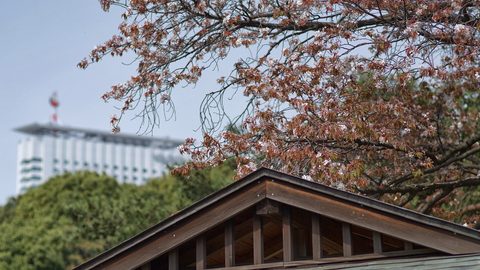 Best Time to Visit Tokyo Month by Month Tradeoffs
A month-by-month guide to visiting Tokyo, laying out the trade-off between weather, crowds, price, and what's actually open.
Best Time to Visit Tokyo Month by Month Tradeoffs
A month-by-month guide to visiting Tokyo, laying out the trade-off between weather, crowds, price, and what's actually open.
-
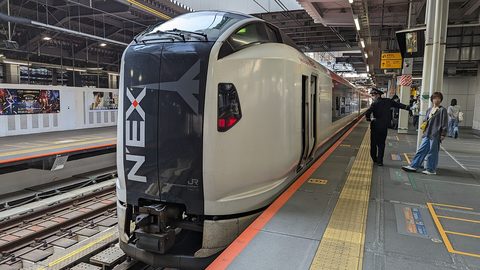 Getting Around Tokyo by Train Airport Transfers and IC Cards
A practical guide to Tokyo's rail network, covering airport transfers, IC cards, and how to avoid the station navigation mistakes that eat your day.
Getting Around Tokyo by Train Airport Transfers and IC Cards
A practical guide to Tokyo's rail network, covering airport transfers, IC cards, and how to avoid the station navigation mistakes that eat your day.
-
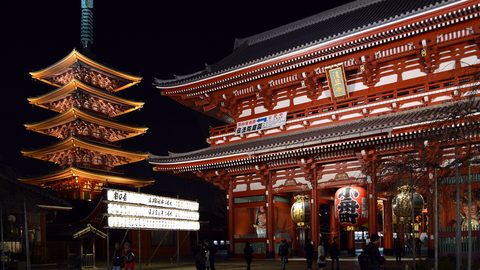 Senso-ji
 is free and never closes, but the experience at 6am with empty Nakamise stalls is nothing like the 11am crush under Kaminarimon. Here is when to go and what you get at each hour.
Senso-ji
Senso-ji is free and never closes, but the experience at 6am with empty Nakamise stalls is nothing like the 11am crush under Kaminarimon. Here is when to go and what you get at each hour.
-
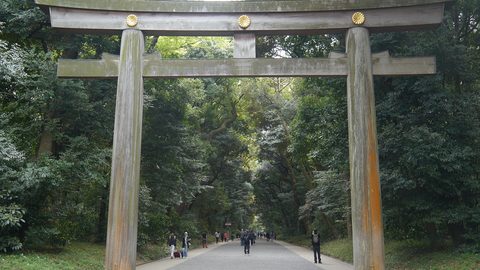 Meiji Jingu
The Meiji Jingu visit changes completely depending on which torii gate you enter. One drops you from Harajuku noise into sudden forest, the other builds quiet slowly from Yoyogi.
Meiji Jingu
The Meiji Jingu visit changes completely depending on which torii gate you enter. One drops you from Harajuku noise into sudden forest, the other builds quiet slowly from Yoyogi.
-
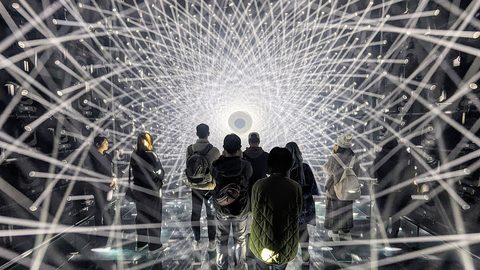 teamLab
 Borderless and Planets are two different Tokyo venues with separate booking systems. Borderless tickets at Azabudai Hills sell in timed slots and the maze has no fixed route.
teamLab
teamLab Borderless and Planets are two different Tokyo venues with separate booking systems. Borderless tickets at Azabudai Hills sell in timed slots and the maze has no fixed route.