Phuket Hotels: Sorting Property Types and Price Bands Across a Saturated Island
Phuket hotels range from gated luxury resorts in Bang Tao to walkable guesthouses in Phuket Town. Price band and location matter equally.
Phuket Hotels: Sorting Property Types and Price Bands Across a Saturated Island
A taxi driver in Patong will tell you Phuket has 80,000 hotel rooms. He is not wrong. The island holds more accommodation than almost any destination in Southeast Asia, and the sheer volume produces a paradox: too much choice makes it harder to book well. Every beach claims perfect sand. Every property calls itself luxury. The marketing categories blur until you cannot tell a hillside room with a partial glimpse from a true beachfront suite. This guide cuts that noise. It organises Phuket hotels by what the properties actually are, what the surrounding area delivers, and what you pay in high season. The rest is decoration you can ignore.
Phuket Luxury Resorts: What You Pay for and What You Do Not
Phuket has 60-plus international-brand properties on the island. Names like Banyan Tree, Aman, COMO, Six Senses, Rosewood, and InterContinental compete for the top end of the market. Their entry-level rooms run from THB 4,000 to 8,000 per night in low season. In peak season, December through January, that same room jumps to THB 12,000 to 25,000 per night.
What an International Brand Delivers
A Banyan Tree or an Aman buys you a resort bubble. These properties sit inside gated complexes with multiple dining outlets, large kids clubs with structured programming, private beach access or a dedicated stretch of sand, and full brand loyalty integration. The tradeoff is that few of them own the beachfront land. Most lease it. Your view is secure. The legal argument over who controls the foreshore is not your problem, but the arrangement explains why some properties share public beach access rather than offering a private one.
The Thai Resort Group Alternative
Thai-owned groups like Centara, Dusit International, Katathani Collection, and owner-operated properties such as The Slate, Trisara, and Sri Panwa offer a different value equation. At the same star rating, expect a nightly rate 20 to 40 percent lower than the international equivalent. Standard room sizes run 5 to 15 square metres larger. The catch is fewer dining outlets, smaller kids clubs, and no brand loyalty programme that integrates with a global chain. If you do not need a Marriott points balance, a Thai group room gives you more square footage and a lower bill.
Villa Rentals vs. Three Resort Rooms
A three-bedroom private pool villa in low season costs THB 8,000 to 18,000 per night. Peak season pushes that to THB 20,000 to 50,000. Compare that to booking three separate rooms at a five star resort in peak season: THB 36,000 to 75,000 per night. The villa wins on price and privacy. The hidden cost comes if the villa sits on a hillside. You then need a car or motorbike rental at THB 800 to 1,500 per day, there are no walkable restaurants or shops within a kilometre, and every tuk tuk trip into town costs a minimum of THB 200 to 400 even for a short ride. A hillside villa is a good deal only if you budget for the car.

Phuket Family Hotels: Where the Infrastructure Works
Kata and Karon hold the highest density of family friendly properties on the west coast. The beaches are gentler than Patong, the crowds thinner, and the hotel stock leans toward mid range Thai resort groups and international brands like Novotel, Club Med, and Centara Grand. The key variable is the kids club. International brands run larger facilities with age range programming that separates toddlers from teenagers. Thai groups offer smaller clubs. Check the square footage and the opening hours before you book. A kids club that closes at 5 PM does you little good if you want a dinner reservation at 8 PM.
Kamala offers a quieter family option. The bay is calm, the expat and retiree presence keeps the pace slow, and the hotels here are mostly mid range Thai groups with a smaller footprint. The downside is fewer dining options within walking distance. You rely on the hotel restaurant or a short tuk tuk trip to the main road.
The Mandatory Gala Dinner Charge
The compulsory gala dinner charge on 24 December and 31 December applies at most four star and five star properties. The 2024 rate ran from THB 3,000 to 12,000 per adult for Christmas Eve and THB 5,000 to 20,000 per adult for New Year's Eve. Children are charged THB 1,500 to 6,000 depending on age brackets. This charge is mandatory for all in house guests regardless of whether you attend the dinner. Factor it into your peak season budget. It is not optional.
Phuket Budget Accommodation: Where to Find it and What You Get
Budget guesthouses cluster in two areas. Patong has the highest concentration on Nanai Road and the Soi Sansabai side streets. Karon has another cluster on Patak Road sois near the Karon Circle. A typical room in low season runs THB 500 to 1,200 per night. Peak season pushes that to THB 1,200 to 3,000 per night. The room includes air conditioning and a hot shower. It does not include breakfast, an elevator, or more than 15 to 22 square metres of space.
Phuket Town Boutique Shophouses
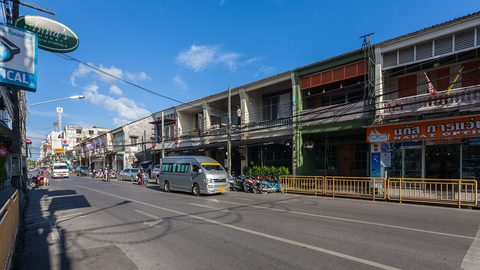
Phuket Town offers a different budget option. The boutique shophouse hotels on the heritage streets, mostly on or near Thalang Road, run THB 1,500 to 4,000 per night year round. There are 15 to 25 of these properties. Room size is 20 to 30 square metres. Common features include no pool, no parking, steep staircases, no lift, and a ground floor café. The tradeoff is location: you are in Old Phuket Town, within walking distance of the Sunday market, the hip cafes, and the Sino Portuguese architecture. You are a 20 minute drive from the beach.
Phuket Beachfront Resorts: the Difference Between the Name and the Reality
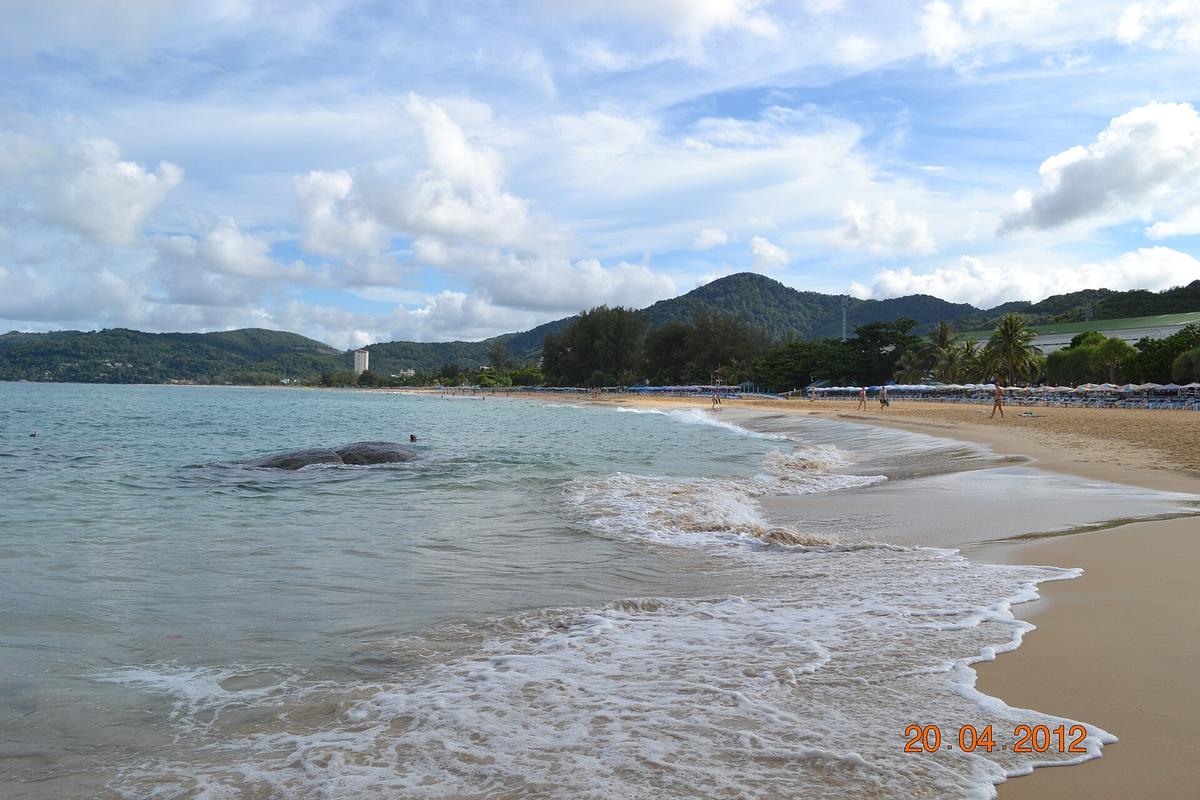
Beachfront means something specific on Phuket. A hotel that advertises beachfront may sit directly on the sand, or it may sit across a public road with a tunnel access. The industry definition of a sea view is a full unobstructed view of the ocean from inside the room. A sea glimpse means partial ocean visible between buildings or foliage, often only from the balcony. Verify which one you are buying before you pay the premium.
Beach walk time from your hotel to the water varies from 0 to 15 minutes. Hill gradient to the beach can be flat or exceed a 15 percent incline. Some properties run a shuttle to the beach every 30 minutes. Some run on demand. Some offer none. Book a room on a flat property if you are travelling with small children or anyone with mobility issues. A hillside room with a view is a bad trade when it takes 15 minutes and a taxi to reach the sand.
Bang Tao and Laguna: The Predictable Choice
Bang Tao and the Laguna complex offer the most predictable beachfront experience. The gated resort complex integrates seven or more hotels on site, with shared access to a 7 kilometre stretch of sand. This is the safest choice for a no surprises beach holiday. The tradeoff is the resort bubble: you are minutes from the beach and hours from anything that looks like local life. Surin and Kamala mix luxury villas and mid range Thai hotels on a beach that is shrinking each year. Check recent erosion reports before you book a ground floor room.

Pricing Bands and What They Actually Buy You
The research sheet for this guide lists exact price bands from the 2024 season. A five star international entry level room in low season costs THB 4,000 to 8,000 per night. Peak season pushes that to THB 12,000 to 25,000. A four star Thai group room in low season runs THB 2,000 to 4,000. Peak season runs THB 5,000 to 9,000. A budget guesthouse in low season starts at THB 500. Peak season tops out at THB 3,000. These bands repeat every year with adjustments. The real figure is published by the Phuket Tourist Association and the Thai Hotels Association. Look up the current year's data before you book.
Check the Map Before You Commit
The biggest mistake travellers make is booking a hotel based on a beach name without checking the specific location. A property listed as Patong on the far northern hillside requires a 30 minute, 400 THB tuk tuk ride to reach the sand. You are trapped in a remote bubble with no walkable options. Open the map view on your booking site. Zoom in. Check the walk time to the beach, the nearest minimart, and the nearest restaurant. If the street view shows a steep hill and no footpath, plan for the car rental or choose a different hotel.
Getting Around: the One Thing That Wrecks a Trip
The taxi and tuk tuk mafia is the single biggest daily stressor on Phuket. Drivers refuse to use meters. Prices are non negotiable extortion in tourist zones. A five minute trip costs 200 to 400 THB. A 20 minute trip costs 600 to 800 THB. The app based services Grab and Bolt work, but only in areas where drivers are not blocked by the local cartel. Patong and Kata are the worst. Drivers from the apps cancel if a tuk tuk gang is watching.
Stay in a walkable area or rent your own transport. A car or motorbike rental costs THB 800 to 1,500 per day. If you rent a motorbike, get an International Driving Permit. Police checkpoints are frequent and the fine for driving without one is 500 to 1,000 THB. The roads are chaotic. The accident rate spikes during Songkran, 13 to 15 April, when drunk driving turns the streets lethal. Avoid driving during that window.
The Smart Bus runs along the west coast from the airport to Rawai for 100 THB, but it stops at every beach and is impractical with luggage. Do not rely on it for airport transfers.
A Realistic Start: One Moment That Tells You Everything
The first iced coffee you order in Phuket will cost 50 THB at a street stall and 250 THB at a beach club. The decision you make between those two options is the decision that defines your entire trip. This island does not do middle ground. You stay inside a manicured resort bubble or you deal with the friction outside it. There is no authentic village experience waiting around the corner. The commercialisation is intense. The traffic is real. The tuk tuk drivers will overcharge you. Accept that in advance and the island delivers exactly what it promises: a massive, efficient, slightly exhausting machine built for tourism. Book the property type that matches your tolerance for that machine, and you will leave satisfied.
Common Questions
What is the real peak season for Phuket hotels and how much more do they cost?
November to February is the official peak season. Dry weather, average temperatures around 28°C, and calmer seas drive accommodation prices up 50 to 100 percent. The highest rates apply from 20 December to 10 January, with some properties extending to 15 January. Many hotels impose a 5 to 10 night minimum stay during the Christmas and New Year period.
Which area has the highest hotel density on Phuket?
Patong, Karon, and Kata on the west coast south of Patong hold the highest hotel density. Mai Khao and Nai Yang on the northwest coast have the lowest density. Phuket Town has a low density of hotels, mostly small boutique and budget properties. Rawai and Nai Harn are predominantly villas and small Thai owned properties.
Are the gala dinner charges on Christmas and New Year's Eve really mandatory?
Yes. Most four star and five star properties apply a compulsory gala dinner charge on 24 December and 31 December. The 2024 rate was THB 3,000 to 12,000 per adult for Christmas Eve and THB 5,000 to 20,000 per adult for New Year's Eve. Children are charged THB 1,500 to 6,000 depending on age. The charge applies to all in house guests regardless of attendance.
What is the cheapest way to get from Phuket Airport to my hotel?
A shared minibus costs 180 to 200 THB but runs slower due to multiple drop offs. The Smart Bus along the west coast to Rawai costs 100 THB but is impractical with heavy luggage. A metered taxi to Patong costs 600 to 800 THB and takes 60 to 90 minutes. Budget for the taxi if you value your time.
Why do Phuket tuk tuks cost so much and can I negotiate?
Tuk tuk drivers on Phuket operate a monopoly in tourist zones like Patong and Kata. They block app based ride hail pickups and charge fixed fares of 200 to 400 THB for a five minute trip. Negotiation is effectively non existent. Use Grab or Bolt where available, but expect the same driver to cancel if a tuk tuk gang is watching.
Should I book a three bedroom villa or three hotel rooms for my family?
In peak season, three hotel rooms at a five star property cost THB 36,000 to 75,000 per night. A three bedroom private pool villa costs THB 20,000 to 50,000 per night. The villa wins on price, but be careful with hillside locations. Budget for a car rental at THB 800 to 1,500 per day and accept that there will be no walkable restaurants nearby.
Which beaches on Phuket have the best swimming conditions in peak season?
Nai Harn Beach offers calm lagoon like water in high season. Kata Beach has gentle waves in high season. Avoid swimming on the west coast from late May to October, when the monsoon brings dangerous rip currents and beach closures. Patong and Karon beaches can have raw sewage and rubbish problems after heavy rain, making the sea unswimmable for 24 to 48 hours.
Read next
-
 Where to Stay in Phuket Which Beach Area Matches Your Trip
Where to stay in Phuket depends entirely on which beach area matches your trip. Patong, Kata, Bang Tao and Rawai are not interchangeable.
Where to Stay in Phuket Which Beach Area Matches Your Trip
Where to stay in Phuket depends entirely on which beach area matches your trip. Patong, Kata, Bang Tao and Rawai are not interchangeable.
-
 Phuket Flights Direct Routes Airlines and HKT Airport Arrival Guide
Phuket flights and HKT airport guide covering direct routes, airlines, arrival procedures, visa queues, and the real cost of getting from the airport to Patong.
Phuket Flights Direct Routes Airlines and HKT Airport Arrival Guide
Phuket flights and HKT airport guide covering direct routes, airlines, arrival procedures, visa queues, and the real cost of getting from the airport to Patong.
-
 Phuket Things to Do Worth Your Days and What to Skip
Phuket things to do range from the Big Buddha and Wat Chalong to speedboat day trips. Some earn your days; many do not.
Phuket Things to Do Worth Your Days and What to Skip
Phuket things to do range from the Big Buddha and Wat Chalong to speedboat day trips. Some earn your days; many do not.
-
 Best Time to Visit Phuket Month by Month Weather and Crowds
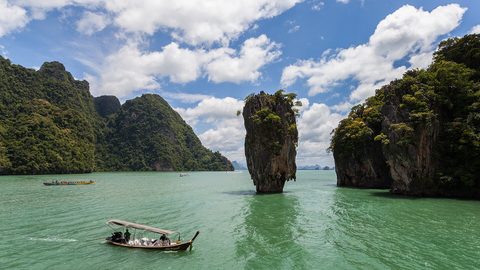
Best time to visit Phuket is November to February for dry weather and calm seas, but prices jump 50 to 100 percent. Monsoon months bring beach closures.
Best Time to Visit Phuket Month by Month Weather and Crowds
Best time to visit Phuket is November to February for dry weather and calm seas, but prices jump 50 to 100 percent. Monsoon months bring beach closures.
-
 Getting Around Phuket Without Losing Your Mind or Your Cash
Getting around Phuket means navigating tuk-tuk monopolies, blocked ride-hail zones, and fixed fares. Plan your transport before you book a hotel.
Getting Around Phuket Without Losing Your Mind or Your Cash
Getting around Phuket means navigating tuk-tuk monopolies, blocked ride-hail zones, and fixed fares. Plan your transport before you book a hotel.
-
 Phuket Itinerary Five Days Alternating Beaches and Boat Days
A five day Phuket itinerary should alternate beach recovery with activity days. Consecutive boat trips in Phuket heat and traffic are a mistake.
Phuket Itinerary Five Days Alternating Beaches and Boat Days
A five day Phuket itinerary should alternate beach recovery with activity days. Consecutive boat trips in Phuket heat and traffic are a mistake.
-
 Phuket Old Town
 is a compact Sino-Portuguese quarter of shophouse cafes, dim sum trolleys and street art that most beach visitors never make the 45-minute drive to see.
Phuket Old Town
Phuket Old Town is a compact Sino-Portuguese quarter of shophouse cafes, dim sum trolleys and street art that most beach visitors never make the 45-minute drive to see.
-
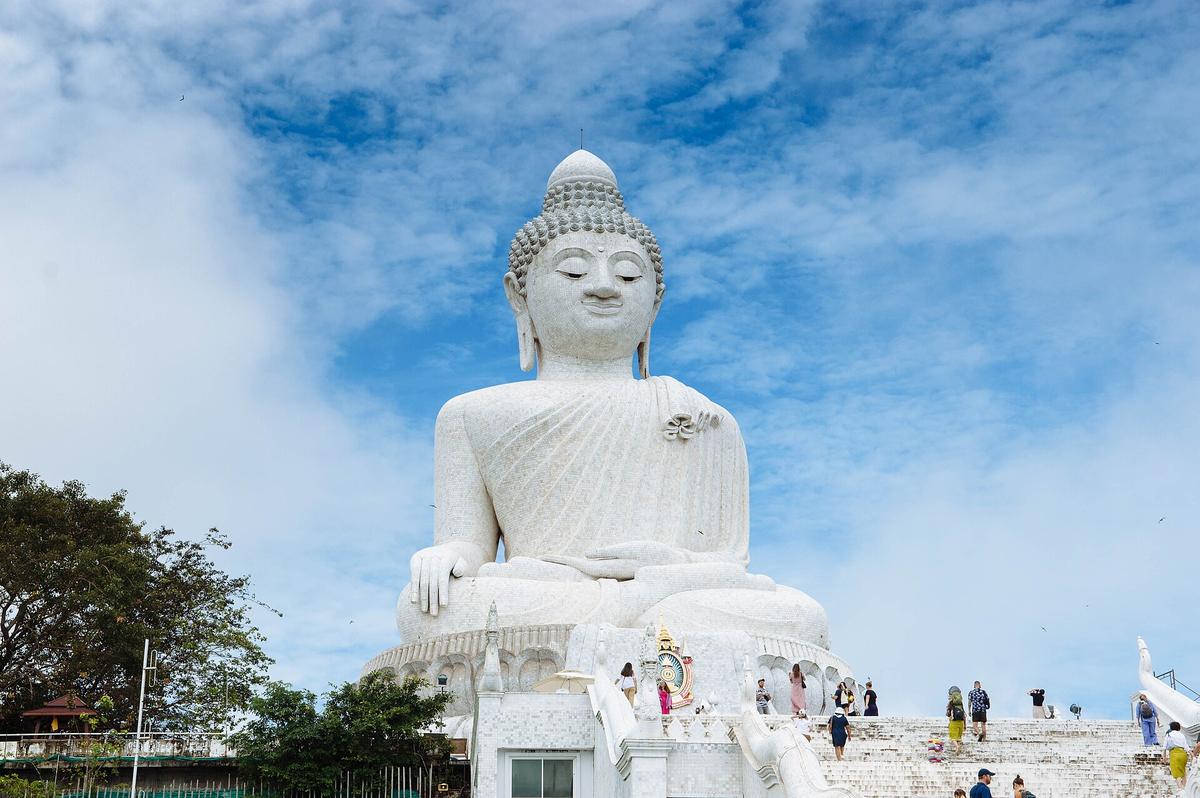
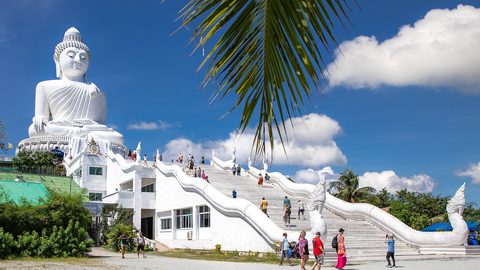 Big Buddha
 Phuket is a free, unfinished marble statue on Nakkerd Hill with the best panoramic island view, reached by a steep road that tuk-tuks charge a premium to climb.
Big Buddha
Big Buddha Phuket is a free, unfinished marble statue on Nakkerd Hill with the best panoramic island view, reached by a steep road that tuk-tuks charge a premium to climb.
-
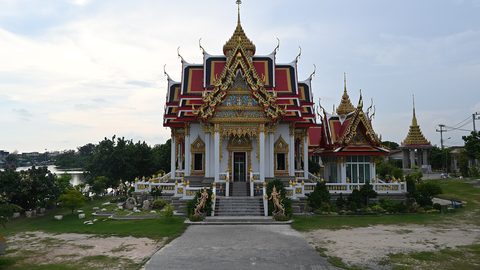 Thailand Travel Guide From First Timers To Island Hoppers
A realistic Thailand travel guide covering regions, seasons, and pacing so you avoid the classic Bangkok Chiang Mai island mistake.
Thailand Travel Guide From First Timers To Island Hoppers
A realistic Thailand travel guide covering regions, seasons, and pacing so you avoid the classic Bangkok Chiang Mai island mistake.